Memoir

There’s something about Marianne – but can French identity be defined?

From our UK edition

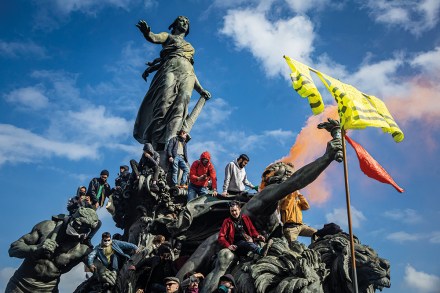
In October 2018, Andrew Hussey, the convivial and courageous observer and analyst of the political and social travails of modern France, was cycling back to his office after lunch through the rather staid and un-bohemian environs of the Boulevard Raspail on the Left Bank in Paris. To the ‘middle-aged man who already has a heart condition’, the scene into which he pedalled near the Montparnasse cemetery was terrifying, but to the veteran historian of the fractious Fifth Republic not particularly unusual. Parisians were sitting on café terraces and queuing for ice cream while just around the corner ‘a mini-civil war’ was taking place.

Whatever happened to the stiff upper lip?

From our UK edition

At some point in the past ten years, trauma became a joke in my household. Should any Ditum suffer a minor mishap, the correct reaction is to adopt a wounded expression, bob your head to the side and whimper: ‘My trauma!’ Not because trauma is funny, but because what Darren McGarvey refers to as the ‘trauma industrial complex’ has become so consuming, the only option is to laugh about it. By ‘trauma industrial complex’, McGarvey means the culture that treats trauma, and those who have been traumatised, as commodities. He’s a good person to write this book because he personally has been commodified in this way. His first book, 2017’s Poverty Safari, detailed his working-class background in Glasgow – a story of alcoholism, addiction, abuse and homelessness.

The ‘idiot Disneyland’ of Sin City

From our UK edition

In italics at the very end of the preface to Slouching Towards Bethlehem (1968), Joan Didion spills the beans: ‘Writers are always selling somebody out.’ It’s hard to improve on that, but we can at least specify that she had journalists in mind, not poets or novelists, though probably she looked on all scribblers with a cold eye. Six years later, Didion’s husband John Gregory Dunne published Vegas: A Memoir of a Dark Season, which isn’t really a memoir, more a queasily auto-biographical novel. Or, as he puts it, ‘a fiction which recalls a time both real and imagined’. A time and also a place – Las Vegas, Nevada, in the early 1970s.

A sensory awakening: the adventures of a cheesemonger

From our UK edition

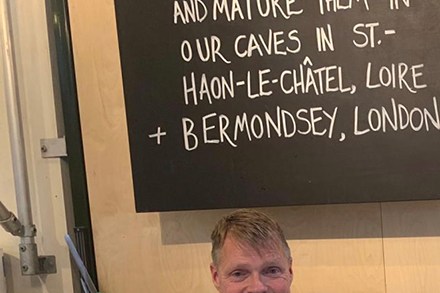
Food memoirs, as distinct from cookery books, and from the relatively new genre of ‘biographies’ of ingredients, used to fall into three rough groups: foraging, hunting or gathering food; producing or cooking food; and eating. Like the restaurateur Keith McNally’s recent I Regret Almost Everything, Michael Finnerty’s The Cheese Cure adds a fourth category, memoirs of those who sell or serve food. These foodie books often blur at the margins and merge at the borders but usually share the characteristic of being narrated in the first person – and if recipes are given they are often incidental. (Of course, many of these authors also write cookery books.) There is a canon of such tomes by writers including Elizabeth David, M.F.K.

‘My ghastly lonely life’ on the Costa Brava – Truman Capote

From our UK edition

‘I can’t write books drinking all day and going to every soiree in Manhattan,’ Truman Capote complained. In order to write In Cold Blood, his ‘non-fiction novel’ about the murder of the Clutter family in Holcomb, Kansas, Capote and his partner Jack Dunphy therefore went to Palamos, a fishing town on the Costa Brava. Leaving New York in April 1960, they sailed to Le Havre, then drove across France with two dogs, one cat, ‘25 pieces of luggage’, and 4,000 pages of notes and transcripts. The killers, Dick Hickock and Perry Smith, were on death row. Their executions, Capote hoped, would take place later that year, at which point he would return to America and have his ending.

The woman I’m not – Nicola Sturgeon

From our UK edition

Nicola Sturgeon has all the usual things she wants to achieve in her memoir: rumours to scotch, a legacy to spell out, and so on. But the most important thing to the former first minister seems to be telling her readers that she is in fact not Nicola Sturgeon. The ‘seemingly confident, combative woman who dominated Scottish politics for more than a decade, unnerved the Westminster establishment, helped lead Scotland to the brink of independence and steered it through a global pandemic’ (her words) is in fact an outfit that the real author of Frankly has been wearing for a very long time. She seems quite keen to cast it off. In 1992, she says, ‘Nicola the soundbite, facsimile politician was born’.

Deception by stealth: the scammer’s long game

From our UK edition

We all know that life is full of people who try to con us, often starting with a voice on the phone. ‘I’m speaking from the fraud department of your bank.’ ‘I’m your local BT engineer.’  No, you’re not from either my bank or BT. In all likelihood you are speaking from a scam farm somewhere in south-east Asia.  This book, however, deals with the serious con artists, the ones who infiltrate your life over a period of time, using psychological skills, imagination and often charm until they have finessed you into a position where you willingly hand them a large sum of money, often your life savings. Then whoosh! – and neither the scammer nor the money is ever seen again.

A road trip like no other – crossing America by Greyhound bus

From our UK edition

There were years when, like many others, I dreamed of crossing America coast to coast, riding the Greyhound bus. It was the thing to do – a rite of passage. For those who never made it, all is not lost: Joanna Pocock has done it for us. Twice.  In 2006, fending off depression after her third miscarriage and the death of her sister, Pocock took the Greyhound from Detroit to Los Angeles, ‘running away from loss’. Seventeen years later she has gone back, looking for the motels, diners, cities, suburbs and truck stops encountered on that first trip, and she is stunned by what she finds – stations closed or pared back, with nowhere to wash, rest or buy food.

Eat your way round Paris

From our UK edition

‘Paris, like many old cities, is saturated with blood.’ The food writer Chris Newens certainly knows how to draw the reader in. A Londoner who has lived in Paris for the past ten years, he sets out to eat his way through all the arrondissements, starting with the 20th and spiralling backwards through the coil of the capital. Each chapter evokes the history and atmosphere of a different neighbourhood and focuses on one dish, which the author then attempts to cook in his authentically cramped Parisian kitchen. Newens, who read anthropology at the LSE, comes from a family that ran a bakery and tearoom for six generations and had their own recipe for the custard tart known as Maid of Honour.

The shocking state of perinatal care in Britain

From our UK edition

We think of PTSD as something that happens to war veterans, but the Conservative politician Theo Clarke’s harrowing account of birth trauma proves otherwise. Her perspective is unique. When the former MP for Stafford was in the last weeks of her pregnancy, the government was in shambles. Boris Johnson was about to resign, to be succeeded by Liz Truss and Rishi Sunak in embarrassingly short order; and Queen Elizabeth was on her deathbed. It was a stressful time for an MP to have a baby. We are acutely aware of this in the first half of Breaking the Taboo, which is part political memoir and part exposé of the UK’s birth trauma crisis. Clarke wrote a letter calling for a vote of no confidence in Johnson from hospital.

A walk through Geoff Dyer’s childhood

We all know we’re supposed to draw a line between the artist and the art. The veteran English essayist Geoff Dyer himself once had cause to remind me, mid-enthusiastic gabble, that his book on D.H. Lawrence was, in fact, “a conceit.” But as a reader often more interested in the lives of writers than their works, I must confess the idea of a full-blown memoir – finally! – from Dyer had me excited. I was not disappointed.

Dyer

There was no escaping the Nazis – even in sleep

From our UK edition

Soon after Hitler came to power in 1933, Charlotte Beradt, who as a Jewish journalist and a communist had been barred from publishing, found her sleep wracked by nightmares that unmistakably reenacted the terrors of the Nazi regime. Deprived of her regular employment, her own dream experiences prompted the subversive if dangerous idea of recording the dreams of her fellow citizens. ‘I began to collect the dreams that the Nazi dictatorship had, as it were, dictated,’ she wrote. Citing a dictum of a Nazi official that in Hitler’s Germany no one has a private life except while asleep, the material she collected demonstrated how dreams ‘as minutely as a seismograph’ can record impinging external realities.

Whatever happened to Caroline Lane? A Margate mystery

From our UK edition

Should you search for someone who has disappeared seemingly of their own volition? David Whitehouse, the author of novels that scooped the Betty Trask and Jerwood prizes and were shortlisted for the Gordon Burn and CWA Golden Dagger awards, happened upon a real-life mystery. Having his hair cut in Margate, he was told about a woman who had lived in the neighbourhood and vanished. The story came from a resident of the same block as the missing Caroline Lane. Whitehouse’s interest was piqued. This is the background to Saltwater Mansions, the name of the apartment block from which Lane, a feisty (even grumpy) middle-aged woman had seemingly evaporated with no explanation.

The importance of bread as a symbol of Ukrainian resistance

From our UK edition

When Russia invaded Ukraine three years ago, the chef Olia Hercules lost the will to cook. With food so deeply connected to pleasure and to her Ukrainian roots, it somehow felt like an unbearable frivolity to be thinking about recipes while family members were under fire. ‘How,’ she asked, ‘can I cook while my brother is running with a gun in a forest defending Kyiv and my mum and dad are living under occupation?’ When her parents finally managed to leave the country and meet her in Italy, she began cooking again to welcome them. First she made borscht, following her mother’s recipe; then pasta. She could have just bought the dough ready-made – ‘but the gates are now open wide, and I can’t stop’, she writes in Strong Roots.

Tim Franks goes in search of what it means to be Jewish

From our UK edition

It’s hard to classify this thought-provoking book – part memoir, part philosophical exploration, but mostly a deeply researched family history. And what a history that is. Tim Franks, born in 1968, has been a BBC reporter for almost two decades, and now presents Newshour on the World Service. So he knows how to tell stories about other people. But the events here concern himself, and many of them are heartbreaking, as he searches for an answer to the question of what comprises identity and to what extent we are products of our ancestors.

Putin’s stranglehold on the Russian press

From our UK edition

Since Vladimir Putin came to power in 2000, the Russian press has been slowly, methodically strangled, which has forced existential choices on newspaper and TV journalists. Twenty-one have been killed – beaten, poisoned or gunned down. Others, such as Andrei Soldatov and Irina Borogan, highly regarded investigative reporters, have been forced into exile. Yet others, like the ‘dear friends’ of this book’s title, have chosen a different path – to cleave ever closer to the regime. The authors tell the fascinating story of those choices and allow us a glimpse of why they were taken.

A life among movie stars can damage your health

From our UK edition

Mothers of America             let your kids go to the movies! get them out of the house so they won’t know what you’re up to it’s true that fresh air is good for the body                               but what about the soul that grows in darkness, embossed by silvery             images... So wrote Frank O’Hara in ‘Ave Maria’, in 1964.

Being stalked by a murderer was just one of life’s problems – Sarah Vine

From our UK edition

Private Eye asked last week: Which of Michael Gove’s luckless staff at The Spectator will be assigned to review this grisly account of their editor’s marital woes? Reader, it’s me! I’m happy to do this, though, because I have an interest in how to be a political wife (I am married to Alex Burghart MP), and perhaps have something to learn here, though I’m struggling to understand, eek, ‘lesson seven’: Realise... that when you step over the salt circle into the five-pointed star coven of politics, you have ceased to become a person. You are now a c**t. There’s a feeling that the author still has a touch of PTSD. Readers with expectations of schadenfreude will not be disappointed.   Sarah Vine shoots thunderbolts.

The Spectator letter that marked a turning point in gay history

From our UK edition

On 3 June 1960, a letter appeared in The Spectator which began: Sir, We are homosexuals and we are writing because we feel strongly that insufficient is being done to enlighten public opinion on a topic which has for too long been shunned. The letter was prompted by the government’s failure to act upon the recommendation of the 1957 Wolfenden Report that homosexual acts between consenting adults in private should no longer be a criminal offence. This had led to the founding of the Homosexual Law Reform Society (HLRS) in 1958, and it was for this organisation that the letter’s three signatories worked as volunteers.

Haunted by my great-grandfather’s second wife – by Alice Mah

From our UK edition

Alice Mah didn’t enjoy finding her roots. Even though ‘ancestor tourism’ is increasingly popular among westernised descendants of Chinese émigrés like her, she felt a nameless sort of dread when visiting the village in the Cantonese county of Taishan where her great-grandfather came from. It didn’t help that she’d just attended the morbid Qingming festival, when the Chinese remember their dead by sweeping their tombs. Mah’s memoir opens here, and we nervously anticipate the tragedy or horror that will surely strike – and are left waiting. Other than the pushiness of Taishanese cousins, who demand ‘red pockets’ (a traditional way of gifting money in small red envelopes) and donations for the village from their richer compatriots, the trip seems uneventful.