Memoir

The sexual escapades of Edmund White sound like an improbably sordid Carry On film

From our UK edition

Edmund White grew up in a world where sex, and gay sex in particular, was an unspoken reality. In 1950s Cincinnati, ‘no one “came out” except drag queens and the campy peroxided waiter at the diner’, he writes in the first chapter of The Loves of My Life. That blanket of near-silence doesn’t seem to have inhibited him much. He was sexually precocious from the age of 12, as his autobiographical novel A Boy’s Own Story (1982) first suggested. But it may account for the determined frankness with which he has treated sex in both his fiction and memoirs. For an author who came of age in pre-liberation America, erotic candour has always been a political act, at least in part – never merely profligate.

Bill Gates’s memoir offers an oddly revealing look into the Microsoft founder’s psyche

In 2024, a Swiss company called FinalSpark claimed to have built the world’s first computer processor fired by human brain cells. To do this, the company evidently took small samples of living brain tissue, and — so the press release says — “connected them to specialized electrodes to perform computer processing and digital analog conversions to transform neural activity into digital information.” Frankenstein undertones aside, the whole FinalSpark initiative raises the issue of how far a computer can be humanized, made not only to respond with factual accuracy but with something approaching emotional intelligence.

Gates

The nerdy obsessive who became the world’s richest man

From our UK edition

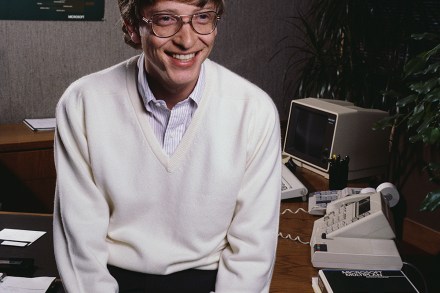
Shortly before Bill Gates’s seventh birthday in 1962, his parents stuffed their son into a button-down shirt and blazer for a visit to Century 21, a bold showcase of scientific prowess in their home town of Seattle. This futuristic fair was intended as the nation’s rebuff to Soviet Russia following the Sputnik satellite launch, which sparked the space race. The family enjoyed the new 600ft Space Needle. They also saw the Mercury capsule that carried the first American into space; Ford’s concept of a six-wheeled nuclear-powered car; and IBM’s idea of a cheap computer, costing $100,000. Best of all in the boy’s view was rattling around on the Wild Mouse Ride, which felt risky and thrilling, stoking a lifelong love of rollercoasters.

The strange potency of cheap perfume

From our UK edition

Ah, the scents of one’s youth! What hot, sour teenage kisses and grinding youth club discos would be conjured up for me by one whiff of Aqua Manda or the original Charlie. Adelle Stripe has constructed a memoir around 18 key fragrances, one for each chapter of her life, but true perfume addicts may find ‘the juice’ somewhat lacking. It might just be scented scaffolding, but fortunately the story underneath is captivating. Dune, CK One and the rest do not trigger madeleine-like waves of memory for Stripe; neither is this a paean to the olfactory art. The perfumes crop up casually rather than crucially: her dairy farmer father’s ancient bottle of Brut; her hairdresser mother’s Rive Gauche; a friend’s cloying Angel, which ‘fills every corner of the room like tear gas’.

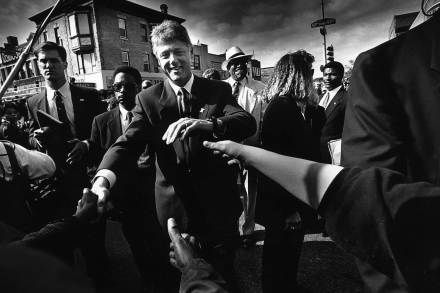
Bill Clinton’s latest memoir sees him at his chirpiest — and most combative

In February 1974, the British prime minister Edward Heath, then facing one of his country’s cyclical economic crises, called a snap general election. The result was close; Heath’s Conservative Party won the popular vote but secured fewer parliamentary seats than the Labour opposition. After power-sharing discussions broke down, Heath resigned from office. A fifty-seven-year-old bachelor without a London home of his own, he lodged for the next several months at a small Westminster flat owned by his political secretary Timothy Kitson. The man who had served as his nation’s head of government for the previous four years was left with a typist, a single daytime detective and a part-time driver at his disposal.

Clinton
Cher

Cher should stick to what she knows best

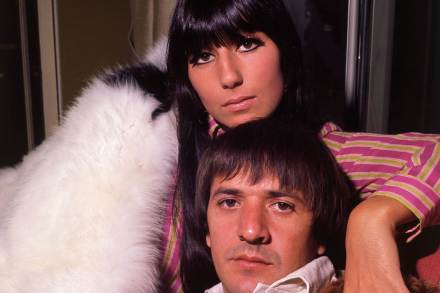
The worst celebrity memoirists write first-person Wikipedia pages. Like Michelangelo carving a beautiful posterior out of Italian Carrara marble, the best celebrity memoirists edit their lives into tawdry yet moving epics. When they work, celebrity memoirs are the Warhols of American literature. When they fail, they’re the literary equivalent of a CVS receipt: boring and destined for the trash. Cher: The Memoir, Part One falls somewhere in between. It takes a miracle to reach Cher’s narrative peak. For more than a hundred pages, she details her childhood criss-crossing America as her mom marries and divorces man after man. I lost track of how many jerks Cher’s mother married, but according to Google, she married six different men (Cher’s heroin-addict biological father twice).

Red-letter days for Gilbert & George

From our UK edition

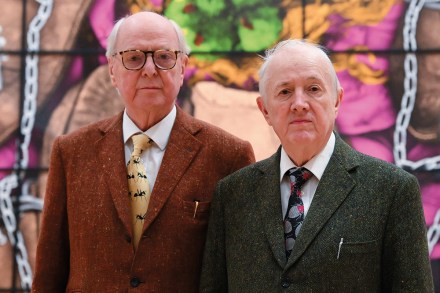
James Birch is a somewhat mysterious art dealer and curator, whose first great triumph was mounting a Francis Bacon exhibition in Moscow in 1988. He wrote a gripping book about that adventure, Bacon in Moscow, and has now written an even more gripping follow-up, about taking Gilbert and George to Moscow, Beijing and Shanghai. Mounting the Moscow exhibition meant getting drunk every night, but Birch carried it off with aplomb Birch was born ‘circa 1956’, according to Wikipedia, and grew up in Primrose Hill, London. Both his parents were artists and also communists, which he claims was not unusual in the 1960s (though I’d say it was, quite).

The next best thing to visiting a really clever friend in New York

From our UK edition

I was on the phone to a friend recently, who asked me what I was reviewing. ‘It’s a book by a lady intellectual,’ I began. ‘Oh my God,’ she said, ‘I hope you don’t put that in your review.’ ‘I’m not that stupid,’ I replied, ‘but it is very important that she’s a woman.’ A self-described radical feminist in the 1960s and 1970s, Vivian Gornick says that that flame has died down a bit now (she was 79 when this book was first published ten years ago). Her perspective in this meandering, delightful memoir-cum-essay is still, obviously, feminine – yet there is a kind of detachment; and from what she says about her past life, and her experiences with men, and with love, there always was, in a way. Hence the ‘odd’ in the title.

Four legs good, two legs bad – the philosophy of Gerald Durrell

From our UK edition

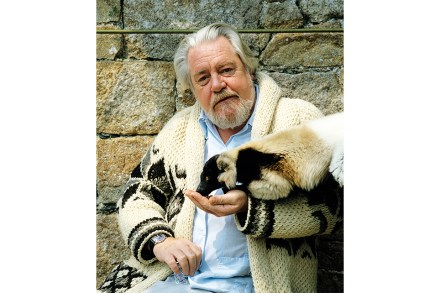
We know of the Durrells mainly through their own writings, outstandingly My Family and Other Animals, about their years in Corfu in the 1930s, and from the image of them created by TV and film adaptations of this work. Gerald and Lawrence were the best known members of the family, the first as a zoologist and conservationist, the second as an experimental writer. Their siblings, Margaret (Margo) and Leslie, will always be perceived through the lens Gerald turned on them in My Family – the former as a flighty eccentric, something like an extra from a Carry On film, the latter as a pantomime villain. Their mother, Louisa, was loved unreservedly by her children and comes across in My Family as a kindly eccentric.

Was Graham Brady really the awesome power-broker he imagines?

From our UK edition

The great parliamentary sketchwriter Quentin Letts, the Henry Lucy of our day, has described Sir Graham Brady (now Lord Brady) thus: ‘Were he a yacht, his galley would gleam, the decks would be scrubbed daily and there would be a large brass bell to summon matelots to morning parade. Commodore Brady runs a tight ship.’ After 27 years in the Commons, 14 of them as Chair of the 1922 Committee, the commodore has swapped his deck garb for ermine and written a kiss-and-tell about his political encounters with five Tory prime ministers. The 1922 Committee – the fabled men in grey suits who represent the parliamentary party’s backbenchers – is ‘the closest thing the Conservative party has to its own trade union’.

A rare combination of humour and pathos: the sublimely talented Neil Innes

From our UK edition

Fans of that beloved British cultural institution Doctor Who are wont to talk about ‘their’ doctor – that is, which iteration of the character was their entry point to the franchise. The same might be said of fans of Neil Innes, the much loved songwriter, musician and comedian who died in 2019, aged 75. Creating happiness seems to have been one of Innes’s gifts, in public as well as private In the 1960s, Innes was a key member of the exhilaratingly unpredictable Bonzo Dog Band, whose blend of verbal, musical and visual humour remains matchless in its absurdity, breadth and daring.

The good soldier Maczek – a war hero betrayed

From our UK edition

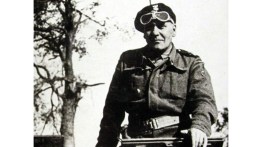
Who could forget the Polish squadrons in RAF Fighter Command when, in the 1969 film The Battle of Britain, a British squadron leader, frustrated by the excited radio chatter on being allowed into action at last, orders ‘Silence! In Polish!’ Or the Polish Parachute Brigade at Arnhem, whose commander, Stanislaw Sosabowski, played by Gene Hackman in A Bridge Too Far (1977), thinking the venture disastrous, growls ‘God Bless Field Marshal Montgomery’ as he jumps from his Dakota? Commander Eugeniusz Plawski, the captain of the Polish destroyer Piorun which first spotted the Bismarck and charged at her to draw fire, might be better known if he had featured in the 1960 film Sink the Bismarck! – but that wasn’t expedient, with the honours going instead to a Royal Navy officer.

Besieged Odesa is still caught in a conflict of identities

From our UK edition

How can you break the mental manacles of an empire that has occupied not only your physical world but also your education, publishing, media, high culture and popular entertainment? In his endearing memoir of Odesa, Undefeatable, Julian Evans quotes the Ukrainian author Viktoria Amelina, who describes growing up in post-Soviet Ukraine surrounded by all things Russian. She attended a Russian school, acted in children’s Russian theatre, listened to Russian rock and prayed in a Russian Orthodox church: ‘There was an entire system in place that aimed to make me believe that Moscow, not Kyiv, was the centre of my universe.’ When she was 15, Amelina felt flattered to be invited to Moscow for a Russian language contest. She was thrilled to be interviewed on state television.

A father’s love: Childish Literature, by Alejandro Zambra, reviewed

From our UK edition

Serious books about fatherhood are hard to come by; indeed, next to distinguished literary mothers such as Rachel Cusk, Sheila Heti, Jacqueline Rose, and Elena Ferrante, the male sex is beginning to look decidedly inarticulate. In his new, genre-blurring work Childish Literature, the Chilean novelist Alejandro Zambra seeks to right this imbalance. In doing so, he aims to correct the failings of prior male generations, who may have ‘tried, in their own ways, to teach us to be men’, but never quite ‘taught us to be fathers’. Before he became one of Latin America’s most inventive prose writers, Zambra was an acclaimed poet and, like many poet-novelists, he treats narrative unities with healthy suspicion.

Fortitude, emotional intelligence and wit – the defining qualities of Simon Russell Beale

From our UK edition

The path to National Treasureland is no paved highway. Simon Russell Beale, the finest classical actor of his generation, was nearly lost to academia (he swerved a PhD in Victorian literature), and faced down pigeon-holing from an agent who wanted to change his name to Simon Beagle, the better to capitalise on a knack for dopily jolly comedy roles. Now – and not before time – he’s written an elegant study of Shakespeare that does double duty as a juicy actor’s autobiography. The pleasure here is in the mix of green room gossip and literary insight. There’s plenty of the former: dining next to Lauren Bacall at the chat show queen Barbara Walters’s place? Good. Watching Top Gun with Imelda Staunton and Penny Downie? Even better.

Seeking forgiveness for gluttony, sloth and other deadly sins

From our UK edition

Professor Guy Leschziner writes that he was raised in a secular household that was ‘entirely irreligious’ yet with ‘a strong sense of morality, of right and wrong’. As an eminent neurologist and a rational atheist, it’s striking that his study of the extremes of human behaviour should reach for such Biblical terms. Is there an element of ghoulishness here? Seven Deadly Sins has a structure of which David Fincher, director of the gruesome film Seven, might approve.  To zero in on the sins is undoubtedly a darkly entertaining approach, if not for the squeamish. Having been a consultant at Guy’s hospital for more than 25 years, Leschziner has seen ‘the full spectrum of human morality’: inexplicable altruism, generosity, kindness, love.

Surviving an abusive mother-daughter relationship

From our UK edition

In The Brothers Karamazov Dostoevsky writes: ‘It would be strange in times like ours to expect to find clarity in anyone.’ Given where the times have got to in the intervening 140 years, one would suspect that clarity would be even further from us. The clarity we seek is generally externalised, about the world and its workings; that which is most hidden is about our personal histories and our families’ intergenerational legacies. Nightshade Mother is the Welsh poet Gwyneth Lewis’s quest for clarity – a memoir of excavation positioned between what the infant experienced and what the adult has sought to understand. Multiple narratives are in play: the voice of the child, the poet, the scientist and the psychologist. Lewis is adept at all these stratagems.

The shame of being an alcoholic mother

From our UK edition

Recollections of crimes, misdemeanours and shameful stories can pall, especially when viewed through the bleary-eyed lens of alcohol. But In the Blood, a memoir of devastating clarity – the result of an unprecedented collaboration between a mother and daughter whose alcoholic gene was ‘baked into them like a curse’ – provides a frightening insight into the labyrinthine workings of the addict’s devious mind.  The illness had run riotously through many generations until Julia Hamilton and Arabella Byrne both rejected what had ‘zig-zagged through [their] family like a knight in chess’.

From public bar to cocktail bar: books for the discerning drinker

From our UK edition

One of the joys of getting older is the appreciation of the solitary pint. But what to do as you sip your hard-earned beer? Usually after a suitable period of contemplation I’ll start fiddling with my phone. Not Adrian Tierney-Jones; he writes books, and his latest, A Pub for All Seasons (Headline, £20), is a poetic meditation on the public house, its history and place in our culture with some memoir deftly thrown in. Most of all it’s an appreciation of what makes a pub great: the layers accumulated by decades – centuries, sometimes – of human interaction. ‘The perfect pub,’ he writes, ‘is a kind of metaphysical palimpsest which we should try to imagine as a constantly evolving space.

‘I had once been a cat’ – the feline fantasies of Caleb Carr

From our UK edition

One of my favourite cartoons is of the owl and the pussycat going to sea in their pea-green boat. The caption is the owl’s guilty admission: ‘I’m afraid there have been… other cats.’ Caleb Carr, in this memoir of his own love affair with a pussycat, is straightfaced: ‘I should own up to the fact that I’d had similar relationships with other cats – even (and in some cases especially) cats who were not mine.’ I have a high tolerance for cat books, but after this one I turned in relief to a ‘Simon’s Cat’ animation on YouTube. There’s one in which a hapless man opens the door for a kitten who has spent hours scrabbling hysterically at the glass like a prisoner longing for escape. The animal then decides that, on reflection, outdoors is overrated.