Memoir

Inside Jim Harrison’s life of excess

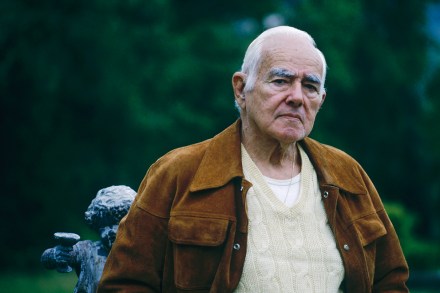
Todd Goddard opens his biography of Jim Harrison, the first since the poet’s death in 2016, with an account of a 37-course meal Harrison once consumed in France, over the course of 11 hours. Harrison composed a comic recital of the event, “A Really Big Lunch” for the New Yorker. He loved gourmet dining to the point of gout and revered alcohol as well, guzzling potent vintages in quantity. “Eat the world” was the phrase Harrison lived by, Goddard tells us, which alludes to an appetite for all existence. The cumulative effect of such global consumption is evident on the cover of Devouring Time: Jim Harrison, a Writer’s Life.

jim harrison

What is going on with Amy Griffin?

Memoir, we are told, is the new growth genre within publishing. It used to be the preserve of the famous and successful, but now it has expanded to include anyone with a story to tell, whether heartwarming and inspirational or downbeat and miserable (but eventually inspirational). Many of these memoirs are New York Times bestsellers and can change the weather in the industry, helped by their prominence within such high-profile book clubs as Reese Witherspoon’s and Oprah’s. But what if the story in a memoir’s pages is exaggerated or simply fabricated?  Turning one’s life into invention may not be so much a lie as a gift for fiction, but when it comes to this area, it is deeply frowned upon from all sides.

Griffin

A walk through Geoff Dyer’s childhood

We all know we’re supposed to draw a line between the artist and the art. The veteran English essayist Geoff Dyer himself once had cause to remind me, mid-enthusiastic gabble, that his book on D.H. Lawrence was, in fact, “a conceit.” But as a reader often more interested in the lives of writers than their works, I must confess the idea of a full-blown memoir – finally! – from Dyer had me excited. I was not disappointed.

Dyer

Bill Gates’s memoir offers an oddly revealing look into the Microsoft founder’s psyche

In 2024, a Swiss company called FinalSpark claimed to have built the world’s first computer processor fired by human brain cells. To do this, the company evidently took small samples of living brain tissue, and — so the press release says — “connected them to specialized electrodes to perform computer processing and digital analog conversions to transform neural activity into digital information.” Frankenstein undertones aside, the whole FinalSpark initiative raises the issue of how far a computer can be humanized, made not only to respond with factual accuracy but with something approaching emotional intelligence.

Gates

Bill Clinton’s latest memoir sees him at his chirpiest — and most combative

In February 1974, the British prime minister Edward Heath, then facing one of his country’s cyclical economic crises, called a snap general election. The result was close; Heath’s Conservative Party won the popular vote but secured fewer parliamentary seats than the Labour opposition. After power-sharing discussions broke down, Heath resigned from office. A fifty-seven-year-old bachelor without a London home of his own, he lodged for the next several months at a small Westminster flat owned by his political secretary Timothy Kitson. The man who had served as his nation’s head of government for the previous four years was left with a typist, a single daytime detective and a part-time driver at his disposal.

Clinton
Cher

Cher should stick to what she knows best

The worst celebrity memoirists write first-person Wikipedia pages. Like Michelangelo carving a beautiful posterior out of Italian Carrara marble, the best celebrity memoirists edit their lives into tawdry yet moving epics. When they work, celebrity memoirs are the Warhols of American literature. When they fail, they’re the literary equivalent of a CVS receipt: boring and destined for the trash. Cher: The Memoir, Part One falls somewhere in between. It takes a miracle to reach Cher’s narrative peak. For more than a hundred pages, she details her childhood criss-crossing America as her mom marries and divorces man after man. I lost track of how many jerks Cher’s mother married, but according to Google, she married six different men (Cher’s heroin-addict biological father twice).

Michael Richards’s memoir is heavier on introspection than laughs

An unusual disclaimer greets the reader on the title page of this memoir of an actor chiefly known for starring as the lovable goofball Cosmo Kramer on the hit TV sitcom Seinfeld. “Neither the US Army nor any other component of the Department of Defense has approved, endorsed, or authorized this book,” it notes. But in the event the Pentagon probably needn’t have worried. Drafted into the army in 1970, the actor in question, Michael Richards, seems to have avoided any Sergeant Bilko-like shenanigans and instead separated from the service with a heightened appreciation for the punctuality, discipline and meticulous preparation that characterized his later career.

Richards

Melania Trump disgusted by assassination attempt in book promo

“The attempt to end my husband's life was a horrible, distressing experience,” Melania Trump, former first lady, said in a polished video on her social media pages Tuesday. The short reel was a promo for her new memoir coming out on October 8, per the book’s Amazon page. https://twitter.com/i/status/1833476085998063741 Melania continued: “Now, the silence around it feels heavy. I can’t help but wonder, why didn’t law enforcement officials arrest the shooter before the speech? There is definitely more to the story, and we need to uncover the truth.” Cockburn was riveted as he watched Melania’s beautifully edited face fade into the background and her new book, titled Melania, appear with the words “order now, melaniatrump.com.

melania trump

An incisive memoir of life in the cloisters

Bishop Fulton J. Sheen, the immaculately Brylcreemed megastar of the golden age of Catholic television and radio evangelism in the United States, famously hated hearing the confessions of nuns. Doing so, Sheen is reported to have said, was “like being stoned to death with popcorn.” Despite this, Sheen — at one point broadcasting to over 30 million Americans — found himself hearing a lot of nuns’ confessions in his later career. He was reduced to this, alongside what was rather euphemistically referred to as his “international cassette tape ministry,” having fallen foul of the archbishop of New York, the doughty Cardinal Spellman.

Cloistered
Rushdie

Salman Rushdie’s memoir is a devastating and powerful account of near-death

In late summer 2022, at the Chautauqua Institute in upstate New York, the celebrated novelist Sir Salman Rushdie was stabbed many times as he was about to give a lecture, the subject of which, ironically, was keeping authors safe. The attack sent shockwaves throughout the literary establishment, and the world. It seemed as if civilization itself was under threat, as if our fundamental freedoms to create, associate and speak as we wish were defunct, reduced to the point of a knife. His new memoir, Knife, examines the attack and its implications for him, and for such freedoms generally.

Britney Spears’s much-anticipated memoir is a desperate cry for help

Biological differences exist between men and women. Hamas lacks a justifiable reason to kill Israelis. Joe Biden won the 2020 election fair and square. Vaccines work. These are truths which, depending on the political class you’re speaking to, you can no longer say in public. Reading Britney Spears’s memoir, The Woman in Me, I thought, “We should add ‘the Free Britney Movement was wrong’ to the unspeakable truths list.” Two years into her freedom, Spears should celebrate her memoir as her umpteenth comeback. She should be sitting down with Oprah, confessing what really led to her 2007 breakdown, and releasing a new album pegged to The Woman in Me.

britney spears

Christine Blasey Ford to release memoir

Christine Blasey Ford is back and ready for more — disbelief, tears? Perhaps all of it. The professor of sociology who testified in 2018 that Supreme Court nominee Brett Kavanaugh had committed sexual assault against her in high school is set to release a memoir this March detailing the trial.   Cockburn suspects your opinion on whether the book will be fiction or nonfiction depends on how you vote, though One Way Back promises to be “the compelling true story behind the testimony that awed the nation.”   According to St. Martin’s Press, the memoir recounts the months leading up to the Kavanaugh confirmation hearing as Ford attempted to get information “into the right hands” without bringing backlash on her friends and family.

Bernie Taupin is more than just ‘Elton John’s lyricist’

It takes only a couple of hours by train from the southern reaches of rural Lincolnshire to central London. But for seventeen-year-old Bernie Taupin, leaving home in June 1967 to try his luck in the big city, the journey might as well have been to a distant planet, such was the gulf between his life as a casual farm-laborer and his ambitions to become an internationally acclaimed songwriter like his heroes Hank Snow or Merle Haggard.

taupin

Drew Gilpin Faust, a rebel with a cause

In 1957, when Drew Gilpin Faust was nine years old and growing up in the Shenandoah Valley, she learned from the car radio that in Virginia, black children were forbidden by law from going to school with white children. Disturbed by this egregious instance of Jim Crow segregation, she sent a letter to the president. “Please Mr. Eisenhower,” she wrote, “please try and have schools and other things accept colored people.” Young Drew’s sense of what was and wasn’t fair lay at the heart of her childhood rebelliousness, as well as her battle, as a young woman coming of age in the 1960s, against unjust social hierarchies.

faust

Elliot Page’s memoir is a tale of tragic self-destruction

In 2010, the twenty-three-year-old actress Ellen Page appeared on the British talk show Friday Night with Jonathan Ross. Plonking herself down on the guest couch, and noticing there was a lot of room left, she announced: “I’m petite.” The affable Ross seized on this new avenue of conversation. “Do people comment on your height when you first meet them?” “They often comment on how incredibly short I am.” “And is this something you welcome or would you rather they didn’t?” “Oh, it’s just fine. I’m used to being short. It’s been a part of my life. And it’s something that I’ve begun to accept.” Back then, Page came across as confident and resilient. But according to Page, this was an act, carefully constructed for her by homophobes.

page

Men at War examines homosexuality among World War Two soldiers

As a little boy, Luke Turner, like so many other little boys, was fascinated by World War Two. He used to spend hours carefully making Airfix models of warplanes, and his favorite haunt was the Royal Air Force Museum in Hendon, a suburb of North London. Men at War, his second book, is an attempt to explore and explain both this interest and his own sexuality (he is bisexual, with a female partner), in response to what he sees as the dominant, jingoistic attitude propagated via general British cultural discourse. He claims that we do not see those who fought as individuals, but as clipped, heroic avatars, like Captain Sir Tom Moore, who raised millions of pounds for NHS charities during the lockdowns: dignified, silent, brave.

war

There’s more to Pamela Anderson than Playboy and sex tapes

Pamela Anderson cites Joseph Campbell’s The Hero with a Thousand Faces as the template for her memoir, Love, Pamela. The pop literary critic’s analysis of mythical heroes famously inspired George Lucas’s Star Wars. As Lucas deconstructs the heroes of western literature, Anderson dismantles the banal Madonna/whore template that has dominated tabloid coverage of her life. Unfortunately, Anderson supplants one boring motif with an even more tedious one: the archetype of the celebutante victim.

Pamela

Blake Bailey deserves to be heard one more time

At the beginning of 2021, author Blake Bailey might have been forgiven for thinking that his literary career was not merely assured but stellar. He had gathered significant accolades for his writing, including a Guggenheim Fellowship and the National Books Critics Circle Award, and he was a Pulitzer Prize finalist. He had specialized in writing about heavy-drinking Great American Novelists, including the perennially underrated Richard Yates, John Cheever and The Lost Weekend’s Charles Jackson. His most recent subject was the elusive Philip Roth, a man whose literary brilliance was matched by his checkered reputation both on and off the page. Eighteen months later, matters have changed beyond recognition.

How not to live a life

When Thomas de Quincey wrote Confessions of an English Opium-Eater in 1821, he could not possibly have guessed what he would set in motion. Over two hundred years later, the addiction memoir looks different: less subversive, more sentimental, undeniably more commercial. Since the advent of Alcoholics Anonymous in Akron, Ohio, in 1935, the formula of the recovery memoir now yokes the moral to the medical: alcoholism may be a moral disorder, but it is underwritten by a chemical condition marked by incessant craving — in recovery parlance, an “allergy,” a state of “dis-ease.” For Matt Rowland Hill, the two are inextricably combined. Original Sins is the debut memoir from a writer whose two great loves, “Jesus and heroin,” never quite slip out of one another’s grasp.

original sins

‘We are not cattle, we’re people’: everyday hell in Stalin’s labour camps

‘No testimony from this time must ever be forgotten,’ the great Lithuanian poet Tomas Venclova says in his afterword to Dalia Grinkeviciute’s memoir. The author was 14 in 1941, when the Soviets deported her with her mother and brother from their native Kaunas, Lithuania’s second largest city. In 1949, the women escaped from Siberia and went into hiding. Grinkeviciute began writing about her ordeal, but soon, facing another arrest, she buried the unfinished manuscript in a garden. More prisons and camps followed before she eventually returned home in 1956. Found in 1991 after her death, the memoir was published and became part of the school curriculum in Lithuania.