London

Too high, too fast

From our UK edition

You have to get nearly halfway through this book before it starts to show some life. Until that point, as Rowan Moore ambles in his wry manner through pages of familiar description of the capital’s built and social history, you find yourself wondering what it is all for. After all, if you choose to write a book about the architecture of London you are putting yourself in some pretty distinguished company. Ian Nairn, say, whose magnificently off-kilter, beer-goggled 1966 hymn to the city, Nairn’s London, has been reissued as a Penguin Modern Classic to universal acclaim. Or Peter Ackroyd, whose colossal 2001 London: The Biography is drizzled with lazy assumptions but is an eloquent advocate of the city as living organism.

The smelly, snobbish death of the public loo

From our UK edition

I blame Nancy Mitford: she made the English so frightened of saying ‘toilet’ that now they have hardly any left — of the public variety, that is, the sort that traditionally proved so useful to anyone who wanted to do a daring thing like leaving the house. I’m quite happy with ‘toilet’ personally, being from Belfast, where pretending to be ‘U’ is a greater source of potential embarrassment than simply being ‘Non-U’ like everyone else. Still, once the waspish Miss Mitford tagged talk of the ‘toilet’ or the ‘lavatory’ as an unshakeable indicator of one’s place in the class system, I can see why many people preferred to shut up about the subject altogether. Not any more.

Anarchy in the EU

From our UK edition

It is 40 years since the band in which Paul Cook banged the drums, the Sex Pistols, detonated a bomb called punk in post-war Britain. The shards are still visible. ‘We didn’t have a manifesto, but we wanted to shake things up,’ he says. ‘We didn’t know how much we would shake things up. Music, art, design, films, books. Punk is part of our social and cultural history.’ We’ve come a long way from 1976, when Johnny Rotten and ‘Anarchy in the UK’ put the pestilential Pistols on the front pages, and a prime-time television exchange with Bill Grundy, the celebrated ‘fucking rotter’ interview, kept them there. The band were banned from concert venues, denounced in every bully pulpit, damned as ‘illiterate sub-humans’.

Round-up of new opera

From our UK edition

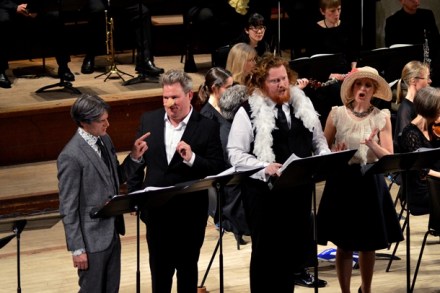
A mixed year so far for new opera. A few really dismal things have appeared from people who should know better. Did the world really need an operatic treatment of Dante’s Divine Comedy for orchestra and chorus? Louis Andriessen thought so; his La Commedia (2004–8) luckily only reared its drab head for one night at the Barbican. If you’re going to splurge as much money as opera often has to splurge, you have to ask yourself why. If you don’t, you create a situation in which operas come about merely because they can, often just to continue the tradition in the most inoffensive way possible. ‘Don’t mind me!’ says this kind of zombie opera.

Sell the London Stock Exchange? OK, but not to the Germans

From our UK edition

The London Stock Exchange is no longer the red-hot crucible it once was, given the multifarious ways by which shares, bonds and derivatives now change hands. But the prospect of the LSE passing into the control of Deutsche Börse — in what was announced as a ‘merger of equals’, but with the Germans holding the larger stake and the top job — is a mighty provocation to Brexit campaigners. The Express claims it would reduce the London market ‘to an insignificant regional afterthought’. Brexit or not, there’s logic to a pan-European trading platform with shared technologies and harmonised listing rules: but who can doubt that the German agenda must be to hoover as much business as possible from London to Frankfurt?

Zac Goldsmith promises to be ‘pansexual’ for London

From our UK edition

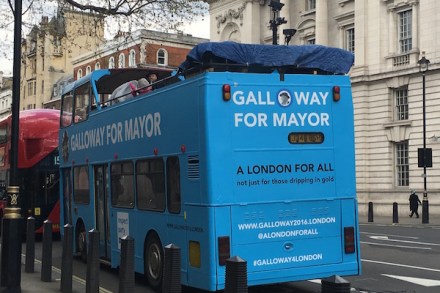
As Zac Goldsmith fights to be the next Mayor of London against Labour's Sadiq Khan, he is striving to appeal to all Londoners. Alas, somewhere in the process of doing this, he appears to have got a bit confused. In an interview with Pink News -- the news website aimed at the LGBT community, Goldsmith said that he wanted to be a mayor for everyone, employing the term 'pansexual' to try and make his point: Pink News: Would you like to be the mayor for everyone? ZG: I would use the term pansexual here, if my understanding is correct. https://vine.co/v/iXa9lEB5Jrx While Mr S suspects that Goldsmith means that he wants to appeal to all Londoners, given that the term pansexual means not being limited by gender in sexual choice, he may wish to rephrase in future...

Easy to swallow

From our UK edition

Pharmacy 2 is the reanimated child of Damien Hirst; it lives inside the Newport Street Gallery in a forsaken patch of Lambeth by the railway arches. This makes it look, inevitably, like the set of The Bill, but with a painting of Damien Hirst on a nearby wall, which would surely confuse the Bill. Pharmacy 1 was, for five years until 2003, in Notting Hill. So we are already doing better. It is said that the Royal Pharmaceutical Society of Great Britain complained about Pharmacy 1, and worried it would confuse people looking for a real pharmacy, but I do not know if this was true. If it was, they were too stupid to live, even if they did eventually find a pharmacy. The gallery looks like the interior of a shell. I ask a man behind a desk: is the gallery open?

Who steals books?

From our UK edition

[audioplayer src="http://rss.acast.com/viewfrom22/donaldtrumpsangryamerica/media.mp3" title="Emily Rhodes talks to Isabel Hardman about book thieves" startat=1139] Listen [/audioplayer] Notoriously, during the riots in London five years ago, Waterstones was the only high-street shop that wasn’t looted. But that depressing lack of book-pinching belied a thriving -tendency. Think of a bookshop and you think of a musty, hushed spot where people browse and whisper. In fact, it is thick with thieves. As a bookseller, I’ve encountered many a thief over the years. Most dramatic was the Mr Men thief, who used to steal a whole shelf of these tiny children’s books every couple of months. One afternoon I emerged from the stockroom to find the shelf newly emptied.

Better that the Americans take over the London Stock Exchange

From our UK edition

The London Stock Exchange is no longer the red-hot crucible it once was, given the multifarious ways by which shares, bonds and derivatives now change hands. But the prospect of the LSE passing into the control of Deutsche Börse — in what was announced as a ‘merger of equals’, but with the Germans holding the larger stake and the top job — is a mighty provocation to Brexit campaigners. The Express claims it would reduce the London market ‘to an insignificant regional afterthought’. Brexit or not, there’s logic to a pan-European trading platform with shared technologies and harmonised listing rules: but who can doubt that the German agenda must be to hoover as much business as possible from London to Frankfurt?

Strangers in their native land

From our UK edition

Though it seems to begin as an affectionate memorial to his maternal grandparents, a testimonial to a rare and perfectly happy marriage, Their Promised Land by Ian Buruma has a deeper purpose. The cache of letters to and from Winifred (‘Win’) and Bernard (‘Bun’) Schlesinger is the pre-email, daily correspondence of two people who could not bear to be apart, yet were separated for years at a time by both world wars. Although his grandparents died in 1984 and 1986, this artful volume reveals a good deal about the world we live in today.

You’ve been framed

From our UK edition

‘I like ordinary people,’ says the extraordinary photographer Martin Parr, pushing a few high-concept smoked sprats around his plate at St John, the Smithfield restaurant. Parr is Britain’s best-known photographer, but he is no acolyte of celebrity. Like the Italian anti-designers, his Seventies contemporaries who wanted to dull the sheen of modernism by elevating the mundane (or valorising crap, as I would put it), he is a devotee of the ordinary. But is he celebrating the everyday or mocking it? He never quite answers, although he does say, ‘I enjoy the banal.’ Ask me and I’d say the banal is what we want to avoid. Since 2014, Martin Parr has been president of Magnum, the celebrated international photographers’ collective.

Your problems solved | 25 February 2016

From our UK edition

Q. Former colleagues, with whom I got on very well in the context of the office, are buying a house near my own and say they are depending on me and my husband to introduce them to ‘all’ our friends in this area. This has been giving me nightmares. Like us, our friends down here are busy with jobs and children and would not thank us for foisting on to them new neighbours who would not be on the same wavelength. It’s a sense of humour thing. We are so tired we just want to relax when socialising. But I don’t want to be unneighbourly. How can I tactfully dispel the newcomers’ presumption that we will provide some kind of springboard into a ready-made social scene? — Name and address withheld A. You don’t have to introduce them to your real friends.

Diary – 25 February 2016

From our UK edition

The Prime Minister is pretty angry with Boris. But the idea that they’ve competed with each other since school is wrong. Boris is two years older than Cameron — and differences in age are like dog years when you’re young. When I was 13, 15-year-olds seemed like grown-ups, 6ft tall with three days’ growth. When I interviewed Cameron last year, he said he’d hardly known Boris at Eton because he was in College — the scholars’ house — and two years above him. Cameron did remember Boris on the rugby field because he was so dishevelled and ferocious. And he watched him in a few debates at the Oxford Union. But that was as close as they got in their youth. I asked Cameron if there was anything in the idea of these two boys vying to be PM.

The City says it’s for staying in but I wonder what the big beasts think

From our UK edition

‘The City is in no doubt that staying in Europe is the only way ahead,’ declared Mark Boleat for the City of London Corporation. Likewise Chris Cummings of the lobby group TheCityUK praised David Cameron for delivering ‘a really special deal’. The official Square Mile is squarely for ‘remain’, confident that the Prime Minister has secured safeguards to let the UK keep control of a thriving financial sector in a multi--currency EU. But with all due respect, I wonder what the real players think. The economists Gerard Lyons and Ruth Lea are two other respected City voices, and they warn that those safeguards won’t be worth much as Paris, Frankfurt and Brussels pursue their long-term aim of grabbing financial activity from us.

Real life | 18 February 2016

From our UK edition

My upstairs neighbours are terribly nice, but too naive to be allowed to renovate their flat in peace. The two brothers in their twenties bought the apartment together and are doing it up, I suppose, because they hope to sell and divide the spoils so they can buy one flat each. Such are the struggles of the younger generation to get on the housing ladder, and their efforts are laudable. They are young, idealistic and full of enthusiasm. However, it would be much easier for all of us if they would listen to me when I try to explain to them that doom lies around every corner and nothing is more certain than that things can always get worse.

Italian cuts

From our UK edition

Sartoria is a pale grey restaurant on Savile Row. As evidence that this is London’s destination street — if menswear is your compulsion — Bill Nighy walked past me as I searched for Sartoria; I had walked, obliquely, into his film and I was not dressed for it. But when am I ever? I wore Gap to the Valentino couture show in Paris, out of sheer spite. Sartoria — a preening name which I dislike — wafts on reams of praise. Male critics love it; and it is a masculine restaurant. It is long and wide, with dark woods, expensive lamps and what here are called ‘neutral colours’.

Could a piece with no singing be the future of opera?

From our UK edition

Nowhere are human beings so magnificently self-assertive as in opera.  Everything about operatic characters is outsize; their bodies, their flowing gowns and capacious cloaks, and their desires. No sooner has the hero set his eyes on the leading lady than he trumpets his desire to possess her; when the villain spots his victim, he tells us how he longs to send him to hell. All this fervent emotion is channelled through those great ringing voices, aided and abetted by the orchestra’s surges and swells. It’s exhilarating to behold, partly because we envy these creatures their unbuttoned emotional life. We, by contrast, are held back by a thousand scruples and doubts. The question T.S. Eliot put into the mouth of J. Alfred Prufrock – ‘Do I dare to eat a peach?

Is Russell Brand thinking about going to university?

From our UK edition

During Russell Brand's brief foray into politics, the comedian struggled to be taken seriously by members of the establishment. On one such occasion, Peter Hitchens hit out at the BBC for inviting the comedian to discuss drugs policy on an episode of Newsnight. The incident irked Brand so much that he later asked for the scene to be omitted from a documentary charting his career. So Mr S is intrigued to learn that Brand may be taking steps to bolster his academic credentials. Word reaches Steerpike that Brand has been spied looking around the School of Oriental and African Studies -- part of the University of London -- which counts Aung San Suu Kyi among its almuni.

Household incomes are rising – but are Londoners really reaping the benefits?

From our UK edition

Household incomes have finally topped the levels they were at just after the financial crash. The average household in Britain now earns £24,300 a year, above the last peak in 2009. The picture looks rosy, with rising employment and low inflation helping income growth rise. But is there more to it than meets the eye?  It certainly seems that way if you live in London. Although those in the capital have enjoyed a healthy rise of nearly three per cent in their household incomes since the downturn, when you factor in housing costs, most Londoners are actually still losing out, according to the figures put out today by the Resolution Foundation.

The gangs of north London

From our UK edition

I covered another stabbing the other day, a particularly nasty one this time. An 18-year-old was repeatedly knifed in the stomach and beaten over the head with a baseball bat. Witnesses told me he’d been outside his mum’s tower-block flat in Islington, north London, when he was rushed by a group of about ten or 15 boys. He suffered serious head injuries and multiple stab wounds and was soon in hospital in a medically induced coma. By some miracle, he survived. Who would have committed such a brutal and pointless crime? A source told me police believed the attackers to be from two London gangs: the Hoxton N1 gang, whose turf is east of Kings Cross, and the Cally Boys, named for the Caledonian Road, which runs from Kings Cross north to Holloway.