London

‘I wanted to like it more’: Cloth Cornhill, reviewed

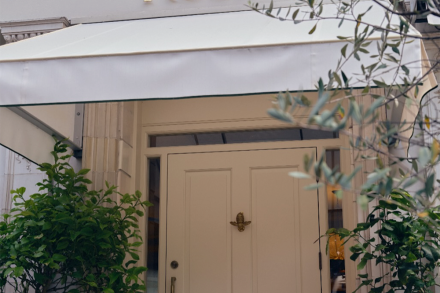
In 1757, the same year that Admiral Byng was executed pour encourager les autres, Simpson’s Tavern opened in the City of London at 38½ Cornhill. It became a popular chophouse in Georgian and Victorian London and people think it’s where Ebenezer Scrooge has dinner in A Christmas Carol. Simpson’s survived wars, pandemics and downturns, but couldn’t get through a rent dispute in 2022. At some point in that 265-year history, someone thought it was clever to outsource the job of landlord to a group of companies in Bermuda. Four years after the tavern shut, the site was bought by the restaurateurs behind Cloth, an English brasserie in Smithfield that opened in 2024.

The end is nigh: Switzy, by Emma Cline, reviewed

Emma Cline’s first novel, The Girls (2016), sold more hardback copies than any other debut novel published in the UK that year. It was an atmospheric treat of a book about young women in a Mansonesqe cult. Her next novel, The Guest (2023), was a haunting story about a beautiful, brittle grifter trying her luck in the Hamptons and coming unstuck. In between came Daddy (2020), a collection of short stories united by their exploration of toxic masculinity. This latest novel, Switzy, which won her her first Booker Prize longlisting, is quite a departure, in that it is about a man with dementia contemplating the end of his life. Cline is attempting something even more difficult here than producing an interesting story about a boring man in the style of, say, John Cheever.

Fentanyl, coming soon to a park near you

How do you explain to a child what “sharps disposal” means and why a “sharps disposal unit” for throwing out used needles is needed in a toilet next to the playground in our local park? It’s a nice park, actually, with tennis courts and trees, and the playground’s recently been redone. There are climbing frames, nets, a wooden castle and middle-class mothers repeating: “Good job, Oscar!” every time their child takes a step. Opioids make good business sense: more addictive and the highs are short so the customer’s always calling The toilets are all right too, clean with a surprising lack of smears, and there are little signs in Braille beside each feature: tap, soap, loo roll.

‘I won’t bury the lede: I loved it’: Cloudstreet, reviewed

I had this meal where I was perched on the end of a dining table inside a kitchen. My friend and I had to sit side by side. There was a dog there. I think it was a restaurant, but I’m not really sure. We were in a converted Victorian horse stable. Most of the space was outside, in the stable yard. You couldn’t book it: you had to pop your name down then head to the pub for an hour. And there were just six things on the menu, all of them cold. And the only people working there were a couple, and one waitress. And the guy from the couple went round the restaurant at the end with a bucket of his homemade vermouth, topping up people’s spritzes. And when the bill came, you just told them what you’d had.

Can you get a real pumpkin spice latte in London?

From our US edition

“Excuse me,” I said to the girl in the coffee bar on the Strand. “Do you have anything with pumpkin spice?” The signboard over the espresso machine was noticeably pumpkin free, though autumn was betokened both by the calendar and – come to think of it – the sudden coolness in the air. “I’m on a mission,” I added quickly, to save face. “Sorry, no,” she said with thinly veiled contempt and added brightly, waving me out the door, “Starbucks is just across the road!” I slunk out, chastised. But I didn’t go to Starbucks – not yet. Rumor had it the PSL, having turned the North American continent a seasonal orange, was flooding London, and it had fallen to me to find out the truth.

pumpkin spice latte

The truth about Princess Diana’s brother

“Mr. Morgan,” said the faux-regal voice at the end of the line, “this is Earl Spencer. I’ve got you now, you bastard.” Suffice it to say, this call didn’t happen last week after the alleged “historian” was forced to publicly apologize for publishing a lie about me in his new book. (He accused me of being Mirror editor in 1993 when it published gym photos of Princess Diana in a notorious invasion of her privacy that cost £1 million in damages – but I didn’t join the Mirror until 1995.) However, the irony of what that call was about isn’t lost on me, 31 years later.

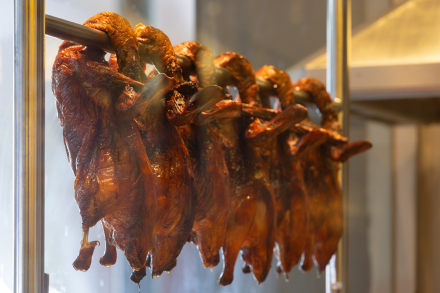
‘The best roast duck in Birmingham’: Look In, reviewed

You know what, I was looking forward to Reform’s party conference in Birmingham. Up there as a journalist, not a member, mind you. Yet you hear a lot of sighing and moaning from journalists about going to these things (never mind the fact that many would kick off if their editors didn’t let them go). What’s the matter, guys? It’s a trip away, lots of mingling, lots of material. But there’s not much in the way of good food. Not to sound like a child emperor demanding a veal sweetbread at every meal, but the offering at these things is really, really bad. And I think Reform needs to sort it out. Reform-coded conference food could be very good.

‘In a word: go’: Kid, reviewed

Well, I’m still full. That’s the first thing to know. -Probably will be at the time you read this too. It’s 16 hours since I finished dinner at Kid, and I think I might be ready to eat again at dinner tomorrow. So was it worth it? I’m writing this more quickly after the meal than usual. Why the rush? This is because, for one time only, I wanted to be the FIRST critic to review a HOT NEW OPENING. There was nothing in the papers last week, so I think I’ve done it… although the Times puts Giles Coren online on a Wednesday, and as I have to write on Tuesday, I don’t know yet. It’s an utterly pointless thing to strive for, but you’ve got to show commitment.

Driverless cars must learn to drive like Brits

I’ve ridden in Waymo driverless taxis in both Miami and Austin and it is, as you would expect, a slightly surreal experience. When an empty vehicle turns up, displays your glowing initials on the roof, then invites you to unlock the doors via your phone, you feel as if you’re in a science-fiction film. Once you drive off, it feels doubly weird. Yet what’s most surprising is how quickly it ceases to feel strange. After three minutes, you pay scarcely more attention to the progress of the vehicle than you would when riding in a car driven by any competent human driver. A colleague of mine who has used Waymo on faster roads tells me you experience another burst of unease when the car first hits 50mph, but this, too, rapidly dissipates.

Nature is an assassin

From our US edition

My last night in London, I met a smart journalist (not always an oxymoron) for dinner at the “original” Ivy, who explained the disastrous state of conservatism in a country that badly needs it. For openers, Boris Johnson won a landslide victory in 2019 as the champion of Brexit and a hard-ass immigration enforcer. He then proceeded to quadruple migration to the UK. So trust is low for any politician on the right. I already knew that. What I didn’t know is that Johnson is the monster who implemented Britain’s kooky ban on plastic straws. My companion seemed surprised at how aghast I was, and also the fact that I don’t believe in global warming. I pointed out that, as a late sleeper who’s awoken by light, it is impossible to keep the sun out.

The Greens are coming for north London

When Sir Keir Starmer announced that he was standing down as an MP on Tuesday, jubilation erupted among Green activists. Zack Polanski’s party has already proved it can take on Labour’s campaign machine in ethnically diverse parts of Manchester; Starmer’s resignation now presents the perfect opportunity to do the same in London. At the time of the 2021 census, the constituency of Holborn and St Pancras was 21 per cent Muslim and 45 per cent non-white. At the 2024 general election, Starmer received almost 50 per cent of the vote, while the Green party and the independent pro-Gaza candidate Andrew Feinstein secured a combined 29 per cent.

Taking on the Cornish culinary mafia: Four Boys reviewed

‘Expect David Cameron to be there.’ This was the main thing I had been told before I went to Four Boys in Rock, Cornwall. As I arrive, it makes sense. This is a Cameron-y sort of place and not just because every man in here looks a bit like David Cameron. Why? Well, Cameron’s big idea as leader of the Conservative party was to modernise it. ‘We’ll get elected if we hug hoodies and manage to not pull a face when we see an avocado.’ Four Boys, with its awareness of fashion, is doing something similar. I notice something at the top of the menu when I sit down. ‘We recommend sharing our food.’ What? Small plates?! Sharing?! I’m trying to get away from east London! Yet all has been done judiciously.

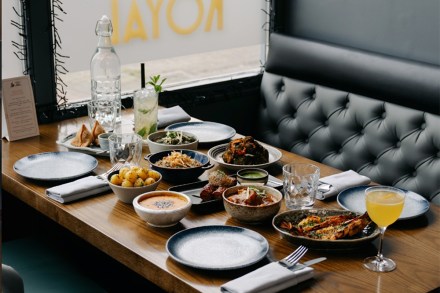
‘If you’re a lamb chop ultra, then start your car’: Koyal reviewed

One of the things I find most confusing is the practice of going for a curry when you’re hammered. Having tried this with friends a couple of times, I have concluded that anyone who likes the pints-then-curry act is a liar or feels so awful regularly that the feeling afterwards is nothing abnormal. There is no type of food I dislike more than bad Indian: the places where a vindaloo means three scoops of curry powder and a rogan josh means two; where onion is undetectable in the sunflower oil bhaji.

Do we really want to live in a world where we’re perpetually spied on?

Some people think that the United Kingdom ranks as an unusually surveillance-heavy society, what with all the CCTV installations, doorbell cameras and automatic number plate recognition systems that have proliferated in the public sphere – but they would be wrong. In fact, according to Ruben Andersson’s Age of Security, the whole world is sliding towards a state of perpetual surveillance, where everybody is spied on all the time, by cameras and communications interceptions and data capture, without debate or accountability or even much public reflection on what is happening. Do we actually want to live in this state of heightened supervision, looked over by what we are told are ‘machines of loving grace’ (as the novelist Richard Brautigan once wrote)? Does it matter?

Together and apart: How to Make a Woman, by Marie Darrieussecq, reviewed

Two girls in Basque south-west France in the 1980s have been best friends since early childhood. Rose is the good one, studious and kind, with a sweetheart she plans to marry. Solange is the wild child: rebellious, dishonest and pregnant at 15. How to Make a Woman might sound like a Gallic take on Elena Ferrante territory, but it’s much more than that. Visceral and cerebral, with echoes of Simone de Beauvoir, it describes what it means to live in a world apparently created by and for men. The novel unfolds as a triptych: Part One ‘According to Rose’; Part Two ‘As told by Solange’; and, finally, ‘Together’. Typically, while Rose goes on a school trip to Madrid, Solange survives a horrific birth, described in unflinching detail.

There’s no excuse for a plastic plant

Monstera deliciosa, otherwise known as the Swiss cheese plant, is perhaps the most popular houseplant of them all, probably because it’s so easy to care for. In normal circumstances, you almost have to try to mess it up. A heatwave, however, can put a monstera under stress. Subject one to warm weather for too long and you’ll find its poor leaves scorched, its roots damaged and its stems desperately dehydrated. For this reason, you might feel the temptation to turn to a shockingly popular alternative: the plastic plant. It should be resisted at all costs. A potted history takes us back to the 1950s, when a postwar manufacturing boom saw the mass production of cheap polyvinyl chloride and polyethylene.

plastic plant

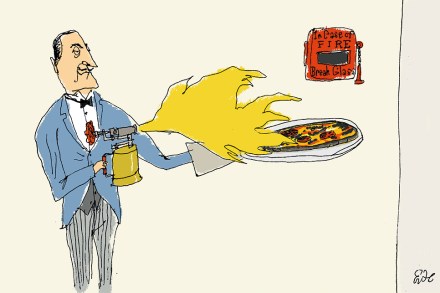
What ‘London-style’ pizzerias could learn from America

From our US edition

“London-style pizza.” People think there is such a thing. Somewhere over the past three years, the pizza hype in Britain’s capital city has gotten out of control. Our economy is struggling and chefs have turned to the food that literally nobody dislikes. Loads of new places have opened: we’ve had Vincenzo’s, Carmy’s, Breadstall, Gracy’s, Lenny’s, Dough Hands, etc. Can’t you tell they’re all incredibly different? All of them really (although they would quibble) have been putting out the exact same style of pizza. The problem is: what do you call it? It’s hard to describe. Critics say it’s “burnt.” There’s some truth to that.

london-style pizzerias

‘Thank goodness it’s not going for a star’: Rosina reviewed

The worst areas to eat in London are the best places to live. Hampstead, Chelsea, Chiswick, St John’s Wood: all would be lucky to have even one restaurant that would be an 8/10 in Hackney. This is disappointing because Hackney is annoying, but, hey, hipsters make good restaurants. I wonder why these areas are so lacking. Is it because St John’s Wood Man has an underpaid cook on speed dial? Is it because Belgravian Influencer orders a shawarma every night? Is it because Hampstead Family don’t eat where they sh– hmm, yes... A little bruschetta of chopped rabbit livers comes next, visible through a translucent sheet of lardo Whatever the explanation, the exception to this rule is Wandsworth Common.

Dear Mary: how should I have dealt with a seat thief?

Q. When guests are leaving our house they sometimes ask: “Would you like me to strip my bed?” The truthful answer is often: “No, because you are very clean and only stayed one night and I may decide to reuse your bed for one of the hulking slob friends of my son who stay.” But if I say this, the guest might wonder if they went into “pre-used” sheets. Worst-case scenario, they do not ask and turn up downstairs with an armful of bedding. What should I do? – C.W., Stoke Abbott, Dorset A. When asked by a guest if they should strip the sheets, reply: “Please don’t. Our daily has such little self-esteem as it is, she would really mind if you cheated her of the whole job.” Q.

seat
plane

Trapped with the plane passengers from Hell

Under late June’s ferocious heat dome, during what turned out to be an almost eight-hour drive to join Martin Vander Weyer and his guests for three nights in the Dordogne, my car was telling me it wouldn’t start due to a recurring AdBlue emissions fault. And my old phone was pegging out. At home I hadn’t had hot water – or cold – for five days because the boiler was broken. There was also a leak. I had to turn the water on and off at the mains when I needed it. Life was turning out to be more troglodyte than I bargained for. Although the water, when it ran, was chilly, my brain was overheating even before the temperature hit 111 degrees in the Dordogne. Like in the UK, I don’t have enough income or savings to cover all my bills.