Lockdown

The best “unwoke” comedy to watch during lockdown

From our UK edition

Comedy is booming during lockdown. The clubs may be closed, indefinitely it seems, but the internet has come into its own. And the backlash against the liberal consensus is gathering pace. Here are seven of the best unwoke comedians. All are available on YouTube. The snag is that each clip is preceded by an advert for Monday.com or a bossy lecture from a web entrepreneur eager to enrol you in a free seminar which will make you a billionaire. Indian-born Sindhu Vee makes jokes about her Danish husband which might be interpreted as racist. ‘His entire parenting method is, “Darling, please be very happy, here’s some Lego.”’. When Vee got a British passport she was infuriated that he hadn’t followed suit.

changes come covid pakistan

The changes to come in the post-COVID world order

The Democrats are taking their stand on the coronavirus crisis in an untenable position. It is like building a defensive redoubt in a valley surrounded by hills in the hands of the enemy (like the French at Dien Bien Phu in 1955, as President Eisenhower warned them). Whether this is tactical stupidity by the president’s enemies or strategic genius by the president or — more likely — a bit of both, is not clear except to insiders. Readers will recall that the Democrats charged out of the gate on the issue of taking science seriously and reacting comprehensively; the president picked up the gauntlet, brought prominent scientists forward, and 'flattened the curve'.

Why men don’t read books anymore

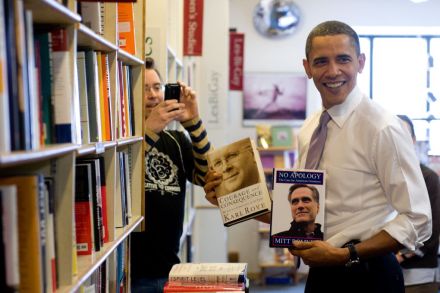
When John F. Kennedy was dating Jacqueline Bouvier, he gave her two books. One was Pilgrim’s Way (1940) a memoir by the British spy and author John Buchan. The other was The Young Melbourne (1939) by Lord David Cecil, which describes the raffish exploits and political intrigues of a Whig aristocrat, and later prime minister, in the early 19th century. Quite what Jackie thought of this is unrecorded. Later President Kennedy told Life magazine what his favorite books were. Both of the titles above were in this proto-listicle, along with works about Byron, John C. Calhoun, Talleyrand and Gibbon’s The Decline and Fall of The Roman Empire.

read books
connected lockdown heads covid-19

Heads in the cloud

‘Nothing will ever be the same again.’ You hear a lot of that glibly categorical punditry around the COVID-19 outbreak. Already, the progress of a mindless virus through the human population is being touted as the herald of the reorganization of the world’s economic system and the end of neoliberalism, the harbinger of a world in which nurses and shelf-stackers are valued more highly than investment bankers. Well, we’ll see. There are, as has been often said, two great things of which we can always be certain: death and taxes. The former is currently enjoying a bit of a moment. But the latter, sooner or later, is going to make the sort of roaring comeback not seen since First Blood Part II.

resistance

COVID-19 vs the American spirit of resistance

If the coronavirus were as deadly as the bubonic plague, which killed about a third of the population of Europe in the 1340s, there would be no doubt about the need for extreme measures. But this virus spares far more people than it kills, and is sometimes mild to the point of invisibility, even as it proves lethal to others. It’s almost as though nature had calibrated the virus exactly to the point where risk-avoiders saw the lockdown as vital for survival while risk-accepters saw it as so economically destructive as to be worse than the disease itself. America is polarized not just politically but in its attitude to risk.

Ten lessons we’ve learned from the lockdown so far

From our UK edition

Yep, the end is in sight, courtesy of other countries organising the practicalities for the return to some sort of normal life – shopping and schooling, as in Germany. That means Britain will, like it or not, be playing catchup sooner rather than later. And when this oddly dreamlike existence is over, it’s going to feel like that bit of the Sleeping Beauty when the court wakes up after its hundred year sleep, yawning and blinking and eyeing each other rather shyly. It’s partly the warm weather; being obliged to stay away from work when it’s sunny, with quite a lot of your wages paid by the government (if like me you’re on furlough), has given these weeks an unreal quality.

Our impatience will end the lockdown

From our UK edition

At the farm shop this morning there was a chap panic-buying a large metal and plaster flamingo. It was the last one in stock and he looked very pleased with himself. I wondered if he had a few score more at home, hoarded in the attic. And then his long-suffering wife saying, when he arrived home: “Did you get the milk and chopped tomatoes?” And him replying with excitement: “No, but I managed to get another one of THESE, love...” As I mentioned in my column this week, the government will be a fait accompli to the ending of lockdown. The glorious silence of two weeks ago is already a fading memory.

Britain can’t rely on a vaccine to ease lockdown restrictions

From our UK edition

Six weeks ago Britain stood as a bit of an outlier among western countries in that our government seemed set to manage, rather than suppress, coronavirus. It rejected the idea that it was pursuing ‘herd immunity,’ but seemed to do just that. Now we stand out for a different reason: we are the only country which appears to be committing itself to remain in lockdown, or close approximation thereof, until a vaccine arrives. In much of Europe, lockdown restrictions are tentatively being relaxed as infection rates and death rates fall. Here, ministers tell us it is far too early for that sort of thing – we will need restrictions on our lives, in one form or another, until we have a vaccine available. Is that a plausible strategy?

Why Joe Biden’s America loves a lockdown

COVID-19, the Wuhan virus, is an epidemiological scourge — but it’s also a clarifying catalyst for American politics. The virus’s relevance for globalization has been widely noted: this disease of Chinese origin has exposed how incapable the de-industrialized West has become of providing its own masks, drugs, and ventilators. It has highlighted the class divide that globalization produces within countries such as America as well. The highly educated professional classes can work from home, and their jobs are relatively secure; the service class, on the other hand — the waiters and cooks and hotel maids and retail clerks and others — are out of their jobs and shit out of luck. Not to worry: the professional class will write all of them checks for $1,200.

joe biden lockdown

Felt longer than the lockdown itself: BBC1’s One World – Together At Home reviewed

From our UK edition

You have to admire the spirit of the organisers of last weekend’s One World: Together at Home concert. To put on an event that seemed to last longer than lockdown itself is the sort of can-do attitude we love to see. The main event — the really star-studded portion that was shown live on Saturday night on the big three US networks, and then adapted for the UK and shown on BBC1 on Sunday — began only after six whole hours of preamble from slightly lesser turns. Six hours. That’s an awful lot of watching people sit with an acoustic guitar in front of their webcam. Or sometimes not even sit with an acoustic guitar — Jessie J appeared to be doing karaoke with her own CDs and singing over the top of them.

Ian McEwan: The strange vocabulary of coronavirus

From our UK edition

The vocabulary of Brexit has passed into oblivion. Now there’s fresh work to be done. We all know about ‘flattening the curve’, but are you comfortable yet with ‘fomite’, a word my older son, a virologist, taught the family early on? It’s an object or surface on which an infectious agent like a coronavirus might be lying in wait — just for you. A cheque in the post, next door’s cat, the tennis balls you are about to double-fault with — all good candidates. You knew that already. Then how about ‘lipid envelope’, the outer shell of certain viruses. We learn with relief that the envelope of our coronavirus of concern is easily destroyed by soap and water.

We don’t have lockdown in Surrey

From our UK edition

The man was unloading cycles from the boot of his car just as I was about to take the turning for my house. It was the last straw. In the space of a mile and a half drive from field to home, I had passed 79 cyclists. I photographed each swarm as it approached me, pulling over to use the camera on my phone, before anyone accuses me of dangerous driving. At the entrance to the cricket club, a group of three men and a woman in Lycra were standing shoulder to shoulder, bikes propped idle, having a good old chinwag. I pulled up next to them and snapped them through my window. The woman put her hand on her hip and pushed her lips out in a stubborn pout as if to say, ‘What are you going to do about it?’ We don’t have a lockdown in Surrey.

Getting coronavirus does not bring clarity

From our UK edition

I had thought that actually getting the coronavirus would bring clarity — that there would be some satisfaction in meeting the enemy, feeling its spectral hands around my lungs. No such luck. Uncertainty is the hallmark of Covid-19. Even its origins are murky: wet markets or the Wuhan Centre for Disease Control? Who knows, and who would ever believe the Chinese government anyway? When you’ve got it, the sense of medieval unknowing only deepens. Is this definitely it? Will it get worse? Will it come back? My version of the virus began with a nasty headache and a grubby feeling of unease, after which I threw up on the bathroom floor. ‘That’s disgusting, Mum,’ said my four-year-old son, handing me a towel with a look of patronising distaste.

Real problems erase fake ones

From our UK edition

Last week, a friend quoted a two-year-old email of mine: ‘I’m starting to root for a plague or world war to purify western culture, burning to cinders all the petty, neurotic, witch-hunting cliques with the white heat of real problems.’ Depressed by my own foresight, I wrote back: ‘The trouble with this solution is that then you still have the real problems.’ Yup. But since the real problems aren’t going anywhere any time soon, and we’ve so little to celebrate while the world goes to hell without the comfort of even a hand basket, let’s consider the possible benefits. I’ve often remarked that identity politics is the product of prosperity.

Coronavirus lockdowns are cowardice

This is a piece about death. Obviously death is a serious topic, perhaps as serious as anything you could possibly write about, but in these truly weird times of a global pandemic and unprecedented threat to what most people would conceive as normality, let’s start with a joke. How do you make ordinary citizens accept an indefinite period of economic shutdown and deprivation of their most basic civil liberties? Two weeks at a time!There seems to be a bit of a trend regarding disclaimers among those who have an opinion in favor of a return to everyday life anytime soon so I’ll start with the usual caveats: I accept that coronavirus, COVID-19, SARS-CoV-2 or whatever you prefer to call it, is a serious health threat.

cowardice

When will the public accept an end to the lockdown?

From our UK edition

In the weeks leading up to Boris Johnson announcing lockdown measures, ministers and aides wondered how in the world you could enforce a lockdown like the one seen in authoritarian China in a liberal democracy such as the UK. But following Dominic Raab confirmation on Thursday that there will be another three weeks of lockdown, public resistance is the least of ministers' concerns. The biggest surprise about the lockdown within government has been the level of public support for it. Polling has repeatedly shown that rather than fighting the social distancing measures, Britons are embracing them more obediently than anyone in might have dared imagine.

Five measures that could prevent future lockdowns

From our UK edition

That the World Health Organisation hasn’t exactly shone in the coronavirus crisis is now well-documented. It should remind us of the dangers of following one centrally-guided approach to tackling the disease. Thankfully, given how even experts have been unsure about how to respond to this enormous challenge, there was no unified EU response to Covid-19. Instead, European countries have been dealing with the virus using trial and error. As a result, looking at the responses of European and Asian countries, we can now distinguish five important things that seem to have worked to prevent the need for a strict, economically devastating lockdown. 1.

Climbing the walls

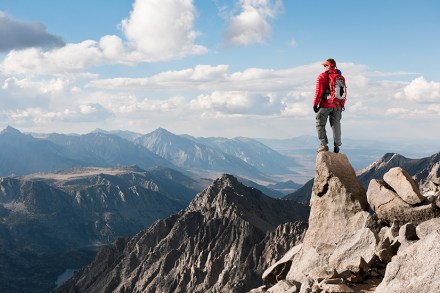
Colombo In January, I promised a visiting Army reservist friend that we’d climb Adam’s Peak. That plan was scotched when I came down with dengue fever. But I’d climbed Adam’s Peak before (the first time, Christmas 2004, when the tsunami struck, probably saved my life) and there would always be another chance to do it, right? Things change. Like everyone else in town, I was already bored and irritable from the first week of our lockdown when I saw a burst of British news items on COVID-19 nixing Everest expeditions, pensioners trying to keep fit indoors and some chap figuring out how many stairs it took to ‘top’ the mountains of the British Isles. Challenge accepted.

climbing

Leaked US document suggests Covid may be less lethal but more widespread

From our UK edition

Have we been vastly underestimating the number of people who have been infected with Covid-19 and correspondingly overestimating its mortality? No one knows because we don’t know just how widespread this infection is in the population at large. But a leaked document from the US Department of Homeland Security suggests that the US government, at least, is working on the assumption that the virus is a lot harder to contain – but a lot less deadly – than is widely assumed. The document compares the likely outcome of two scenarios: one in which the outbreak is ‘unmitigated’ – i.e. life carries on as normal – and one in which the government imposes a 30-day 'shelter in place' order followed by further mitigation measures.