Literature

Nineteen Eighty-Four is not a guidebook for the present day

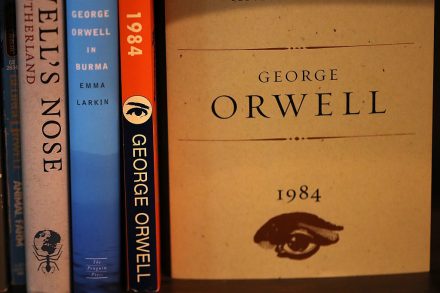
Is there a literary cliché more dull than saying of some old yellowing book that it is 'as relevant today as it was when it was written'? This month marks the 70th anniversary of George Orwell’s Nineteen Eighty-Four. Journalists on both sides of the Atlantic – to whom Orwell is a holy patron saint – have clacked out lengthy tributes (and entire whole books) to St Orwell’s most famous work. What, they ask, does Nineteen Eighty-Four mean today? Well my answer, for whatever that’s worth, is: nothing. Nineteen Eighty-Four has nothing new to say to us and we have almost nothing new to say about Nineteen Eighty-Four. Realistically, we have very little left to say about George Orwell too.

nineteen eighty-four

The gifts of Gabo

From our UK edition

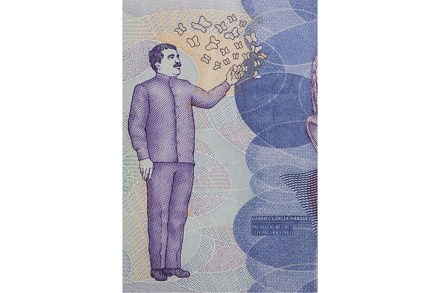
Gerald Martin’s titanic biography of 2010, Gabriel García Márquez: A Life, was the product of 17 years of research and 300 interviews, including one with Fidel Castro. So what does Solitude & Company add to the fairytale history of ‘Gabo’, as Latin America’s greatest teller of historical fairy tales is generally known? In the year 2000, when García Márquez was still alive, Silvana Paternostro began conducting her own interviews with Gabo’s family, his ‘first and last friends’, his agents, editors and fellow writers. She has now cut, spliced and transcribed the tapes in order to create the effect of a bar full of drunks interrupting one another. ‘Is that tape recorder off?

Writing as exorcism

From our UK edition

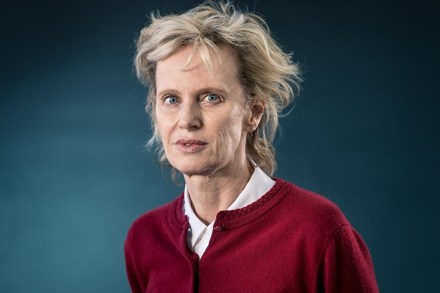
Why are people interested in their past? One possible reason is that you can interact with it, recruiting it as an agent of the present and the future. Siri Hustvedt’s novel, masked as a memoir, suggests you should rely not so much on your recollection of particular events as on your ability to interpret them, which can produce something truer than bare facts. ‘Yes, it is a memoir,’ the narrator says, ‘but memory is not fixed… memory and imagination are a single faculty.’  The outcome of Hustvedt’s attempts to commit the past to the page depends on memory acting as her editor. The book is centred on one year in the heroine’s life, beginning in 1978, when the 23-year-old S.H.

Squabbling over Kafka

From our UK edition

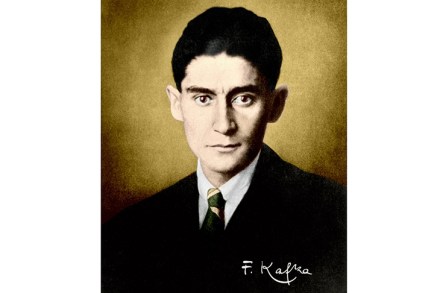
Benjamin Balint’s Kafka’s Last Trial is a legal and philosophical black comedy of the first water, complete, like all the best adventure stories, with a physical treasure to be won or lost. Balint lays out with cool, collected passion the full absurdity of the 2011 court struggle which climaxed when a couple of boxes of aged, yellowing jottings, upon which an elderly Tel Aviv lady had allegedly allowed her cats to sit for many years, were taken under armed guard, besieged by writs and counter-writs, to the highest court in Israel. Until 1973, you see, these boxes had belonged to Max Brod, best friend of Franz Kafka, the legendary Nostradamus of Prague who (as any fool knows) somehow predicted the Holocaust.

Amos Oz, a giant of Israeli literature and politics

From our UK edition

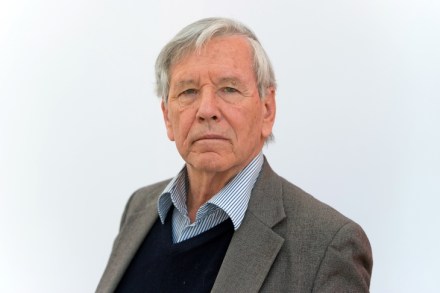
In Western democracies, literature no longer matters to politics. Once, literature and politics could co-exist on the same typewriter or in the same person: George Orwell in Britain, André Malraux in France. But that was a long time ago. Still, the powers of politics remain linguistic, whether bureaucratic or rhetorical: the war criminal at his desk, the elected representative on her Twitter. Amos Oz, the Israeli novelist who died today aged 79, was living proof of the political powers of literature. In Israel, which is a Western democracy most of the time, Oz is seen as a great writer but a failed politician. In the West, he is seen as the still-living conscience of a political failure. Nothing shows us both sides of a story so well as a novel.

Critical injuries

From our UK edition

A decade ago, a publisher produced a set of short biographies of Britain’s 20th-century prime ministers, which I reviewed unenthusiastically. My wife reproved me: ‘What did you do that for? For a fee of a few hundred pounds you have made a dozen entirely gratuitous new enemies. If you don’t have something good to say about books, don’t write about them.’ Honest reviewing would grind to a halt if all its practitioners deferred to her advice. It is nonetheless true that victims of an unfavourable notice seldom forget or forgive. As authors, we commit our souls as well as our bodies. Memories of the most flattering reviews of my own books fade within hours. Yet wounds from the stinkers fester for years.

Another tale of star-crossed lovers

From our UK edition

It’s hard, in Britain, to imagine a popular museum devoted to a single poem. The Polish city of Wrocław hosts just such a shrine. It celebrates Pan Tadeusz, the verse novel written in his Parisian exile by the poet, dramatist and freedom fighter Adam Mickiewicz in the early 1830s, and now taught as a keystone of collective identity to every Polish schoolchild. Even the idea of a ‘national epic’ sounds like a great big bore, especially as the action of this one turns on a sideshow in the Lithuanian backwoods during the Napoleonic wars, while ‘the wide world ran riot/ In blood and tears’.

Sins of the fathers | 13 December 2018

From our UK edition

‘To have a father is always big news,’ according to the narrator of Sebastian Barry’s early novel, The Engine of Owl-Light. Stephen Dedalus puts it differently in Ulysses: ‘A father is a necessary evil.’ But later, he qualifies this: ‘Paternity may be a legal fiction. Who is the father of any son that any son should love him or he any son?’ Colm Tóibín has repeatedly squared up to fathers as well as mothers in his own work (a dead father haunts the family in Nora Webster, and fatherhood is a central theme in The Heather Blazing). His new book takes on the theme of fatherhood in relation to three great Irish writers, supplying a scintillating new perspective on each.

Life ‘n’ Arts podcast: celebrating American audacity with William Giraldi

The Spectator USA Life 'n' Arts podcast launches this week with fanfares, the popping of corks, and much coughing and wheezing into microphones. From now on, every week I’ll be casting a pod with artists, writers, thinkers, painters and even people who do something useful for a living too. First up is the novelist and essayist William Giraldi. Author of the novels Busy Monsters and Hold the Dark, and The Hero’s Body, a memoir of misspent youth as a bodybuilder, Giraldi is one of the few contemporary American critics worth reading. This month, he publishes his first collection of essays, American Audacity: In Defense of Literary Daring (Norton).

william giraldi podcast

Adventures with robots

From our UK edition

Imagine a world where we’re all hooked to our individual electronic devices, which feed us our music, communicate with our friends and know our needs; imagine a tech company that dominates an entire city, where your social pecking order is reflected in the devices you possess. Actually, you don’t have to imagine. It’s all there already… Apple, Google, Facebook. So Jinxed, by the young Canadian Amy McCulloch (Simon & Schuster, £7.99), is very much of the moment. It’s set in a city in Canada dominated by a tech corporation: ‘The final goal of Moncha Corp is to make life better... And to make people happier.’ Its academy is where every bright teenager wants to go.

Impish secrets

From our UK edition

Long ago, I interviewed Edmund White and found that the photographer assigned to the job was the incomparable Jane Bown — a bit like having Matisse turn up to decorate your kitchen. After we talked, Jane shot. She managed to convert a tiny hotel courtyard into a sort of antique Grecian glade. In her pictures, White peeped through the foliage with the smile of some demonic faun come to spread ribald chaos in the service of the great god Pan. I remembered that look when, in this patchwork of pieces about his life as a reader, he discloses that a heart attack followed by surgery in 2014 had one weird outcome. Temporarily, he felt ‘no desire to read’.

Feminist children’s books

From our UK edition

A friend of mine who commissions book reviews has added a sub-category to the list of titles coming up: ‘femtrend’, books about the female condition from a feminist perspective. ‘Grit lit is over,’ she says wearily, referring to edgy books about the marginalised. ‘Now publishers can’t get enough of the feminist trend about women who for centuries have been airbrushed out of history by toxic masculinity and oppressive patriarchy. Airbrushing the toxic white male. Female tribes. Modern courtesan. Now it’s draining down into children’s books too.

Three concepts of freedom

From our UK edition

There’s a tiny mistake in Zadie Smith’s new collection of essays. She describes Geoff Dyer’s unimprovably funny ‘trick while introducing an unsmiling J.M. Coetzee at a literary festival’. And it’s a suggestive mistake. The moment she refers to is Dyer, bashful, blurting that he wondered how his younger self would have reacted if he’d one day known he’d be sharing the stage with ‘a Booker prize-winning, South African, Nobel prize-winning novelist’… and then deciding that his younger self would have said: ‘That’s incredible, because Nadine Gordimer is my favourite writer.’ The joke is all the funnier because the camera pans to Coetzee, utterly stony of face as Geoff giggles.

Books Podcast: Mohsin Hamid

From our UK edition

In this week’s books podcast I’m talking to the award-festooned writer Mohsin Hamid about his latest novel Exit West — touching on the effects of technology, the migrant crisis, political writing and why his eight-year-old daughter is shaping up to be an emo kid. You can listen to our conversation here: And do subscribe on iTunes for more like this, every week.

Cat among the pigeons

From our UK edition

Back in 1990, Roald Dahl wrote a book called The Minpins, which was illustrated by Patrick Benson, a very good artist. By now we regard Dahl (when writing for children) to be inescapably linked with Quentin Blake, to the point where any other combination seems fundamentally unsatisfactory, like trying to decouple Goscinny and Uderzo in the Asterix books, or Kenneth Grahame and Ernest Shepard for The Wind in the Willows. The whole is somehow bigger than both halves. So it’s a matter of pure delight that Blake has now illustrated the book (Puffin, £10.99). At a stroke, the atmosphere of the story has changed from menacing to spirited and intrepid. The Midas touch of QB has worked again.

A h(a)ppy ending for Nicola Barker – a true experimentalist

From our UK edition

Nicola Barker has just won the Goldsmiths Prize for experimental fiction with her new novel H(a)ppy. She earned it. If anyone is writing fiction that deserves to be called experimental at the moment (the rubric for the prize is 'fiction at its most novel'), it’s Nicola Barker. Everything she does, as far as I can tell, is completely original – her work has included medieval jesters, dyspeptic golf pros, Indian mystics, Paraguayan guitarists and David Blaine – and each novel finds its own completely new form.

How I write

From our UK edition

How do they do it? Among writers, the earnest audience member at a literary festival who asks, ‘Do you write by hand or on a computer?’ is a sort of running joke; an occasion for the rolling of eyes. And yet, let’s enter a note in defence of that audience member: how novelists and the authors of literary nonfiction go about their work is interesting. If, as Kingsley Amis argued, most of a writer’s work is the application of the seat of one’s trousers to the seat of the chair, it’s legitimate to ask: what trousers, what chair, sexuality where and when? In my experience the answers are wildly different from writer to writer; an experience borne out by our sampling — 400 words a day, or 15,000? A bath for inspiration, or exercise?

A bookseller’s duty

From our UK edition

To my mind, a bookshop is like a library — the only difference is that you buy the books, you don’t borrow them. But both have a duty to provide books (space and budgets allowing) reflecting a wide range — as wide as possible — of interests, reading tastes, subjects and points of view. Walk into one of either and there are the thoughts and feelings, beliefs and dreams and creations and discoveries of many men and women, and that is part of their never-ending excitement.

The classic that conquered the world

From our UK edition

Somewhere between his first and second drafts, Victor Hugo decided to change the title of his great novel from Les Misères to Les Misérables, shifting the focus from society’s problems to the people suffering them. And what problems they were. Hugo had never been brutally poor himself, but he’d borne witness to enough brutal poverty around him to know it was real, and to understand what it did to people. He knew, too, how ill-equipped his society was to help the poor, or to fix the causes of their predicament. Not least because in the 1840s, when he started writing Les Misères, only land-owning citizens voted, so as long as the poor didn’t create trouble they weren’t a constituency in whom politicians were especially interested.

From Balzac to the Beatles

From our UK edition

All biography is both an act of homage and a labour of dissection, and all biographers are jealous of their subjects. Most keep it cool, but some like it hot and have created a distinct category in which jealousy becomes murder followed by necromancy: the one they hug is asphyxiated — but lo! — they breathe their own air back into it. Sartre’s book on Jean Genet is such a work, as are Brigid Brophy’s on Ronald Firbank and Roger Lewis’s on Anthony Burgess. Claude Arnaud’s on Jean Cocteau is yet another. Its approach is intensely romantic. Everyone is heaving in lurid colours.