Libya

Ed Miliband should be careful when discussing foreign policy errors

From our UK edition

If someone accuses you of doing something that you haven’t done, there’s a really easy way of convincing them that you are not in fact guilty. The first thing you can do is deny the accusation. Very clearly, emphatically and categorically. Let me give you an example taken completely at random: 'Are you accusing David Cameron of being personally to blame for the refugee crisis in Libya and hence the deaths of hundreds of desperate people in the Mediterranean?' Now, can anyone think of a good way of answering that question which would be unequivocal and make it clear beyond any doubt whatsoever that this is not in fact what you are doing? One suggestion might be to say something roughly along the lines of this: 'No, I am not.' See, it’s really easy.
Ed Miliband thinks Libya’s failure is so obvious he’s barely mentioned it until now

From our UK edition

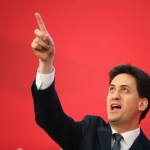
With less than two weeks until polling day, it’s nice to see that Ed Miliband has discovered foreign policy as an important issue worth discussing. The Labour leader will attack the Tories today on a failure of post-conflict planning for Libya which has contributed to the migrant crisis in the Mediterranean. The Conservatives have decided to get very cross about this, claiming that the overnight briefing on this included Labour spinners saying the Tory party was responsible for the deaths. They have decided to make this about Miliband’s fitness to be Prime Minister.

Campaign kick-off: 13 days to go

From our UK edition

For the first time in this campaign, foreign affairs are not only being discussed but also dominating today’s agenda. Ed Miliband is set to criticise the coalition’s record on foreign policy, putting at least some of the blame for the Libyan migrant crisis on David Cameron. To help guide you through the melée of stories and spin, here is a summary of today’s main election stories. 1. The Libya blame game At Chatham House this morning, Ed Miliband will deliver a speech on Britain’s international role and responsibilities. Before Miliband has even taken to the podium, a row has broken out over whether he is accusing the government of abandoning Libya, after failing to properly plan for the aftermath of the 2011 bombing campaign.

Will jailing Katie Hopkins save the lives of migrants? I have my doubts

From our UK edition

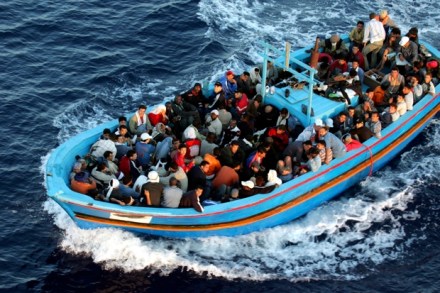
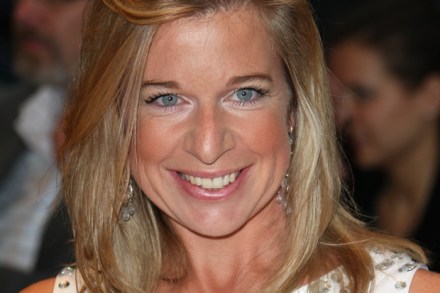
More than a thousand migrants have died attempting to get into Europe over the past week, including 900 who perished horribly, trapped in the hold of a Tunisian ship near the Libyan coast. Many thousands have died before and many thousands will die in the near future attempting the same venture unless we in Europe change our policies. Everybody is agreed that something has to be done. For the liberal left, the answer is to sack Katie Hopkins, a fellow columnist of mine at the Sun. Not just sack her but also prosecute her and prosecute the editor of the Sun. More than 200,000 people have signed a petition got up by someone called Izzy Saunders demanding her removal from the paper because she wrote something with which they disagreed.

Don’t get angry at Katie Hopkins if you don’t support policies that could save migrants

From our UK edition

The latest issue of The Spectator carries an interesting piece by James Bartholomew on ‘virtue signalling’, the bane of social media and political debate; that is, people expressing how ruddy good they are by telling the world how much they hate bad things like Ukip and the Daily Mail. He writes: ‘It’s noticeable how often virtue signalling consists of saying you hate things. It is camouflage. The emphasis on hate distracts from the fact you are really saying how good you are. If you were frank and said, ‘I care about the environment more than most people do’ or ‘I care about the poor more than others’, your vanity and self-aggrandisement would be obvious, as it is with Whole Foods. Anger and outrage disguise your boastfulness.

Nigel Farage: David Cameron’s ‘fanaticism’ is to blame for Libya migrant crisis

From our UK edition

Nigel Farage tends to stick to one line on foreign affairs: no more foreign wars. On the Sunday Politics today, the Ukip leader claimed that the migrant crisis and tragedies in the Mediterranean are the fault of countries such as Britain and France who bombed Libya in 2011: ‘Actually, it was the European response that caused this problem in the first place — the fanaticism of Sarkozy and Cameron to bomb Libya and what they’ve done is to completely destabilize Libya; to turn it into a country with much savagery; to turn it into a place where for Christians the situation is now virtually impossible and we ought to be honest and say have we directly caused this problem.

The EU’s asylum policy is to blame for the tragedy unfolding in the Mediterranean

From our UK edition

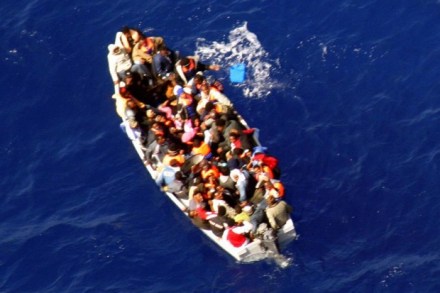
As the leading article in The Spectator this week pointed out, thousands of people are fleeing war and anarchy in Africa and setting sail across the Mediterranean bound for Europe. The latest tragedy comes today, after a boat carrying between 500 and 700 migrants from Libya capsized. So far, only 28 people have been rescued. Coaxed by traffickers who demand huge sums, refugees have been piling into rickety boats which often disintegrate en route. Aid groups, human rights activists, the pope and the EU itself all say the EU-funded rescue operation Triton is inadequate. Well, they're right in a way, but they're also missing the point. The real culprit isn't Triton but the EU's tragic asylum and immigration policy.

A deadly silence

From our UK edition

One Friday, 28 people were rescued by the Italian coastguard when the boat on which they were fleeing Libya capsized in the Mediterranean. Arriving homeless and without prospects in a strange land, these were — relatively speaking — the lucky ones. As many as 700 are thought to have drowned. Add them to the tally. On Monday, another boat capsized with 400 souls feared lost. Last year more than 3,000 died in the Mediterranean trying to get to the West. It has become a phenomenon of our times. We do not hear much about life in the supposedly liberated Libya, but the fact that even immigrants into Libya would rather risk death than stay there gives a fair idea.

Portrait of the week | 26 February 2015

From our UK edition

Home Sir Malcolm Rifkind, the former Conservative foreign secretary, resigned as chairman of Parliament’s Intelligence and Security Committee and promised not to stand for Parliament in May after he and Jack Straw, the former Labour foreign secretary, were suspended from their parties. This followed their being separately secretly filmed apparently offering their services for payment to reporters from the Daily Telegraph and Channel 4’s Dispatches programme pretending to be acting for a Chinese company. Ed Miliband, the Labour leader, declared that Labour candidates would in future not to be allowed to have second jobs.

Islamic State will flourish if the West picks sides in Libya

From our UK edition

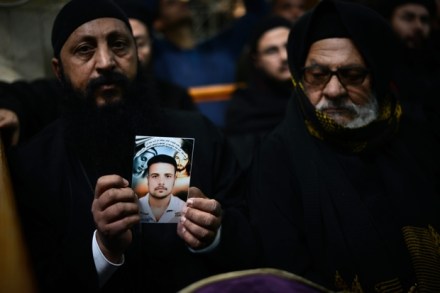
Conventional wisdom suggests that Islamic State and its affiliates have mastered social media. Yet the group's real talent lies in dominating the traditional media cycle and using sensational violence to goad its enemies into overreactions. Hours after Isis released one of its more gruesome videos showing the beheading of 21 Egyptian Coptic Christians on the shores of Sirte, Egyptian fighter jets pummelled several Isis targets in Derna. The Egyptians claim to be fighting the terrorists by propping up General Khalifa Haftar’s anti-Islamist Operation Dignity. However, if the Egyptians want a UN-resolution authorising international military intervention in Libya, this must be resisted.

Arabian Motorcycle Adventures review: enthralling and constantly surprising

From our UK edition

There were great numbers of young men who had never been in a war and were consequently far from unwilling to join in this one.(Thucydides, 5th century BC) I love that quote, inscribed on the walls of the Imperial War Museum, because it tells you so much both about the reason wars happen and about the nature of men. Most of us go through a phase where we think it would be terribly exciting to ‘see the elephant’. And for a lucky few, it’s everything they hoped it would be and more. One of those lucky few is an extraordinarily jammy sod called Matthew VanDyke. By rights this young American filmmaker from Baltimore ought to be dead a thousand times over.

Why BBC Arabic is booming

From our UK edition

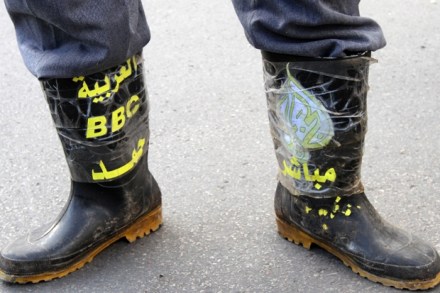
Last weekend BBC Arabic celebrated 77 years since John Reith (as he then was) launched the first foreign-language service of the fledgling BBC Empire Service with an announcement (in English) in which he declared that the programmes would always be ‘reliable, accurate and interesting’, values that have become virtually cast in stone as the Reithian model of broadcasting. ‘You have to remember the BBC was very, very young at this time, but there was no limit to its ambition,’ says Tarik Kafala, the current head of BBC Arabic, which now broadcasts on radio and (since 2008) on TV also, 24 hours each and every day. Reith’s statement was ‘a fabulous declaration of intent’, an intention which has meant 77 years later that BBC Arabic reaches 36.

Why does Isis slay hostages? To cover up the fact that it’s losing

From our UK edition

At this point in the war between the jihadist group known as the Islamic State and a US-led international coalition, many observers are wondering how Isis keeps winning. Isis is up against western air power and powerful regional opponents, and yet has apparently seized a territory larger than the United Kingdom, and is expanding into Egypt, Libya, Algeria, Yemen, and elsewhere. It seems incredible. But the truth is that it’s difficult to say Isis is winning by any objective measure. In Iraq, the group has been put on the defensive in the provinces of Nineveh, Salahaddin, and Diyala, and may soon face a major offensive on its stronghold of Mosul. It’s true, unfortunately, that Isis is on the offensive in Anbar province, and could potentially capture new territory there.

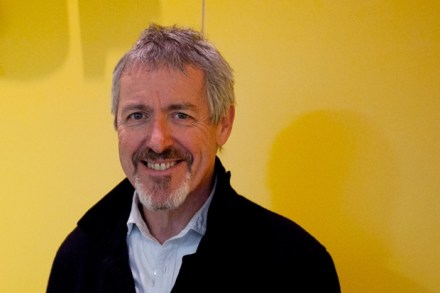
Griff Rhys Jones’s diary: I am now less of a celebrity than my daughter’s dog

From our UK edition

In order to promote the Dylan Thomas in Fitzrovia festival, I am trying to persuade Jason Morell, the director, that he must help me come up with stunts. ‘It’s stunts that will get us into the meeja,’ I tell him. So we launch the ‘Dylan Thomas Fitzrovia Breakfast Challenge’. Gary Kemp, Tom Hollander, Owen Teale and myself swallow a glass of beer with a raw egg in it — the great Celtic bard’s preferred nutritional morning kick-off. We are supposed to film it and challenge three others to do the same in aid of inner-city charities, and thus news of our festival will spread like a west African disease. Nobody else wants to do it. My other ideas have been a parade (‘Bermondsey Poets Say Do Not Go Gentle into the Good Night’ etc.

Jonathan Powell interview: middle-man to the terrorists says ‘secret talks are necessary’

From our UK edition

Jonathan Powell is a British diplomat who served as Tony Blair's chief of staff from 1997 to 2007. During this period, he was also Britain's chief negotiator for Northern Ireland. These days, Powell runs a charity called Inter Mediate, which works as a go-between among terrorist organizations and governments around the globe. David Cameron appointed him last May as the UK's special envoy to Libya. His book 'Talking to Terrorists' was published this month, a review of which can be found in the October 4 edition of The Spectator. In it, Powell argues the British government has failed to learn lessons from the history of diplomacy with guerrilla groups.

Italy is killing refugees with kindness

From our UK edition

The next time you eat a fish from the Mediterranean, just remember that it may well have eaten a corpse. As the Italian author Aldo Busi told the press just the other day: ‘I don’t buy fish from the Mediterranean any more for fear of eating Libyans, Somalis, Syrians and Iraqis. I’m not a cannibal and so now I stick with farmed fish, or else Atlantic cod.’ Personally, I prefer my fish natural, fattened on drowned human flesh, but there you go. I take the point.

Portrait of the week | 28 August 2014

From our UK edition

Home Theresa May, the Home Secretary, said that Britons who went to Syria or Iraq to fight could be stripped of their citizenship, if they had dual nationality or were naturalised. Her words came during a search for the identity of the British man in a video of the beheading of the American journalist James Foley. David Cameron had returned to London from his holiday in Cornwall to confer with security officials, but decided against recalling Parliament. In revenge the Daily Mail carried photographs of him in a wetsuit, which gave him a phocine look. Lord Dannatt, the former Chief of the General Staff, suggested Britain should deal with President Bashar al-Assad of Syria, but Philip Hammond, the Foreign Secretary, said: ‘That would poison what we are trying to achieve.

It’s time we contemplated the possibility of a post-conflict Kurdistan

From our UK edition

There’s a  curious aspect to the debate – or what passes for it – about Britain getting involved in military action against the Islamic State. Isabel Hardman put her finger on it in her piece in this week’s magazine, identifying the defeat of the PM’s bid to take action in Syria for his reluctance to take military action now in Iraq. As she says: 'This post-Syria timidity frustrates many of Cameron’s own MPs. Even under the new leadership of Michael Gove, the Tory whips made no efforts to sound out backbenchers on where they stand on a British response to the so-called Islamic State’s brutal campaign in Iraq. If they did, they might find that some of those who spoke out against action last year are far more hawkish now.

Portrait of the week | 7 August 2014

From our UK edition

Home The Duke and Duchess of Cambridge joined 50 heads of state at the St Symphorien cemetery near Mons to commemorate the invasion of Belgium in 1914. The Prince of Wales attended a service at Glasgow cathedral; the Duchess of Cornwall attended a service at Westminster Abbey where a lighted flame was put out at 11p.m., the hour that Britain had declared war on Germany on 4 August. Many people in Britain kept one light burning for an hour that evening. The Queen attended a private service at Craithie church, near Balmoral. In the grassy moat of the Tower of London, 888,246 ceramic poppies were being planted, one for each British and Colonial death in the first world war.

Libya is imploding. Why doesn’t Cameron care?

From our UK edition

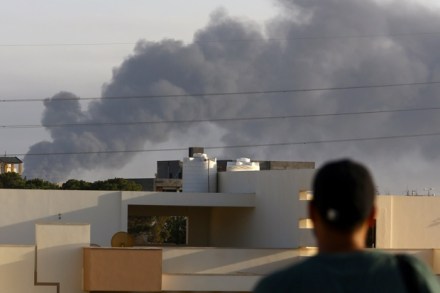
The US has said it has temporarily evacuated its staff from the Libyan capital Tripoli over security concerns. Earlier this year Mary Wakefield discussed in The Spectator how David Cameron wasn't paying due attention to the troubles in Libya: A few days ago I went to a talk about Syria; one of those events for the concerned layman, in which a panel of experts give a briefing. Everything sounded depressingly familiar until expert number three piped up: I hear people blame Saudi Arabia and Qatar for the Islamists in Syria, he said, but in fact, they more often come from Libya. The crowd shifted in discomfort. Isn’t Libya done and dusted? Oh no, said the expert, it’s full of al-Qa’eda training camps now, especially in Benghazi.