Libya

Listen: Pulitzer Prize winner Hisham Matar discusses The Return

From our UK edition

Back in October, I spoke to Hisham Matar — who has just won the Pulitzer Prize for Biography/Autobiography — about his book The Return: Fathers, Sons and the Land In Between. When Hisham was 19, his Libyan dissident father was abducted from exile by the Gadaffi regime and disappeared into Tripoli’s most notorious jail. The writer spent 20 years not knowing what had really happened. He talks here about his long struggle to find out, and his first trip back after the regime had fallen…. You can listen to our conversation here: And please subscribe on iTunes to get a new episode every Thursday.

The rescue racket

From our UK edition

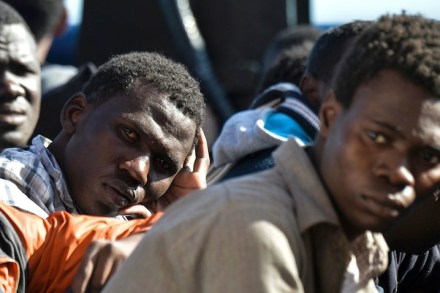
What is happening in the 300-mile stretch of sea between Sicily and Libya, day in and day out — in other words, what ‘we’ are doing there — is beyond reasonable doubt insane. A sane person would assume that the 181,436 migrants (a new record) who made it by sea to Italy last year had done so under their own steam in flimsy fishing boats and dinghies at least some of the way across the Mediterranean. This, after all, is the message aid agencies and governments put out. In fact, every one of those 181,436 was picked up by EU and non-government aid-agency vessels off the Libyan coast just outside the 12-mile territorial limit, then ferried across to Europe.

A scandalous scramble

From our UK edition

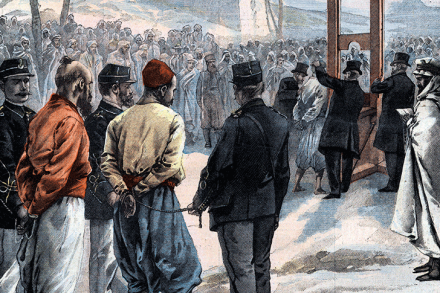
Empires in the Sun might conjure up romantic visions for some, but this book’s essence is distilled in its subtitle, ‘The Struggle for the Mastery of Africa’. Lawrence James’s panoramic survey of imperial and then neo-colonial subjugation of the African continent between 1830 and 1990 is a timely reminder, if any were needed, of the devastating consequences of chauvinistic nationalism and expansionism. Violence, inflicted on a continent wracked by the slave trade, internal wars and epidemics, is the dominant theme: empire-building is always brutal. France’s conquest and settlement of Algeria, the first European colony in Africa in modern times, sets the scene.

The lying game | 27 October 2016

From our UK edition

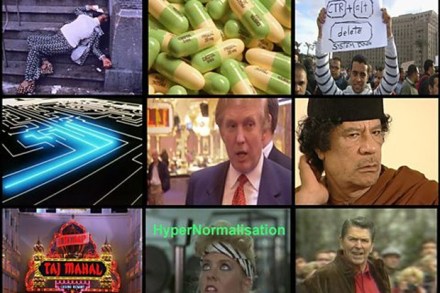
‘Adam Curtis believed that 200,000 Guardian readers watching BBC2 could change the world. But this was a fantasy. In fact, he had created the televisual equivalent of a drunken late-night Wikipedia binge with pretentions to narrative coherence...’ You really must watch Ben Woodhams’s brilliant 2011 Adam Curtis-pastiche mini-documentary The Loving Trap, which you’ll find on YouTube. It’s so devastatingly cruel, funny and accurate that when I first saw it I speculated that Curtis would never be able to work again. https://www.youtube.com/watch?v=x1bX3F7uTrg But this was fantasy. Of course, I knew that Curtis would be back, not least because to be parodied in this way is not an insult but a sure sign that you’ve seriously made it.

Head ache

From our UK edition

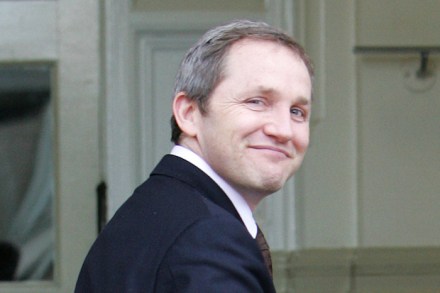
Quite how one person is expected to oversee not just radio but also ‘arts, music, learning and children’s departments’ was not made clear by the BBC when it announced the stratospheric rise to power within the corporation of James Purnell as the new director of everything that’s not TV or light entertainment. You may recall that Purnell was once culture minister under the Labour government and in 2013 became head of strategy at the BBC, an appointment that at the time was excused (given Purnell’s lack of programme-making experience) by Tony Hall, the director-general, as ‘of course not editorial’.

David Cameron is only partly to blame for Libya’s problems

From our UK edition

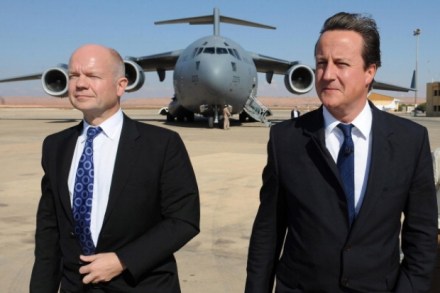
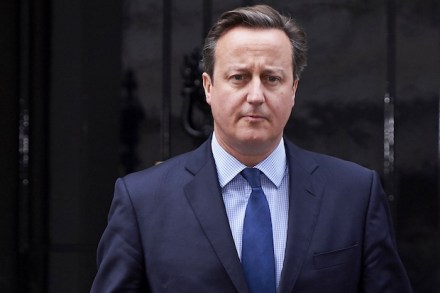
David Cameron is not having the best of weeks and the Foreign Affairs Committee’s highly critical report on his Libya intervention will not improve his mood. When the Chilcot Report came out, Cameron made much of how the National Security Council structure that he had put in place had improved policy making. But the FAC report states that despite the National Security Council, there was still no coherent strategy for the intervention. Indeed, it calls for an inquiry into how the NSC actually makes policy. The Libya intervention might have prevented a massacre in Benghazi. But the chaos in Libya since, the migrant crisis and the increase influence of Islamic State there mean that it cannot be judged a success.

Diary – 18 August 2016

From our UK edition

Throughout our holiday, reports from Rio rippled in — last thing at night, first thing in the morning — a regular golden swoosh of heartwarming news. We are only an averagely sporty family, but these Olympics made us all happier. Across the media, there’s been a mild controversy about whether the remarkable achievements of Team GB say anything bigger about Britain — ‘We always punch above our weight’ — or very little; ‘Sport is sport and only sport, and that’s why we like it.’ But of course there are wider lessons. First, there was real, big long-term investment provided by the National Lottery and the foresight of Sir John Major. Second, the unsentimental and even ‘unfair’ way this money was channelled by Sport UK.

Italy’s migrant purgatory

From our UK edition

 Ravenna At a car park a short walk from Dante’s tomb, one of the gang of illegal immigrants who tell motorists where to park and hound them for cash agreed to talk to me for €20. His name was Billy, he said, and he was 22. He was from Senegal and a Muslim. He had come to Italy by fishing boat 14 months ago from Libya, where he had arrived via Mali and Algeria. He paid €200 for the trip (the going rate is said to be at least €1,000) and his boat landed at Lampedusa, 160 nautical miles from Tripoli. ‘Why did you come?’ I asked. ‘In Senegal, no jobs,’ he replied. No war either, I pointed out: ‘You’re not refugees.’ ‘Yes, we are,’ Billy insisted. ‘Tribes are fighting in Senegal.

Misadventures in Libya

From our UK edition

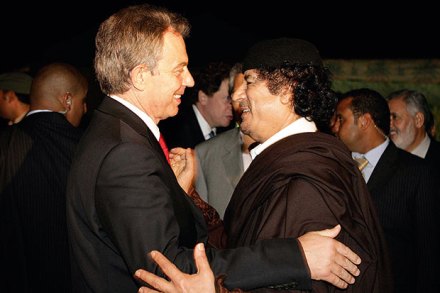
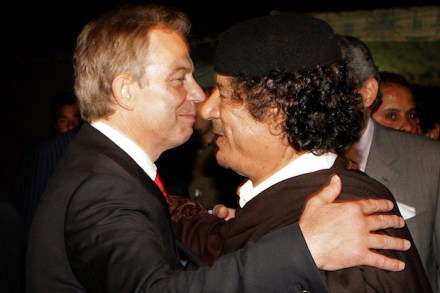
If photographs of ‘the deal in the desert’ made you queasy — you remember, Tony Blair and Muammar Gaddafi shaking hands for the cameras in 2004 — imagine how you would have felt if you were in exile in London and your father under torture in Gaddafi’s cells at the time. Now Blair is not looking forward to the Chilcot report, Gaddafi is dead and Hisham Matar, who was the helpless onlooker, has published The Return, a memoir about his father and about Libya which will attract many readers and prizes. It may also help focus our ideas about whom we protect, whom we betray, and how we deal with the devil. Gaddafi’s death might not have been a source of sorrow to Blair (and co).

The West has totally misjudged the situation in Libya

From our UK edition

Libya’s former Prime Minister Dr. Mahmoud Jibril has become the first senior leader of its Arab Spring revolution to call time on the country’s new western-backed government, saying 'the chances of success are very slim'. This apparent failure hasn't been caused by a lack of support, which has poured in from London and Washington in a bid to get the Government of National Accord (GNA) to stand up and walk on its own two feet. It was also hoped that by doing this, a fix could be found for the twin problems of Islamic State and mass migration. But Dr Jibril, who helped steer the country through its brutal uprising against Muammar Gaddafi, says foreign powers made a mistake by installing an unelected regime without popular support.

Portrait of the week | 28 April 2016

From our UK edition

Home Junior doctors went on strike for two days, refusing to provide even emergency treatment. The 96 Liverpool fans who died in the Hillsborough football stadium disaster in 1989 were unlawfully killed, an inquest jury found. Philip Hammond, the Foreign Secretary, contemplated British forces being sent to Libya, but said ‘if there were ever any question of a British combat role in any form — ground, sea or air — that would go to the House of Commons’. Big Ben is to be silenced for months while its clock and tower are restored.

Barack Obama is right: David Cameron let Libya fall into the abyss

From our UK edition

In their interview in the Christmas edition of The Spectator, Fraser Nelson and James Forsyth asked the Prime Minister whether he now considered that his intervention in Libya had been a mistake. David Cameron accepted that matters could have gone better since the fall of Gaddafi, but insisted that ‘what we were doing was preventing a mass genocide’. Like Saddam Hussein’s weapons of mass destruction, Gaddafi’s genocide seems to have been a fiction. It was reiterated over and over again by government and in the media in order to whip up support for the imposition a no-fly zone in March 2011. However, there was never any convincing evidence.

Portrait of the week | 28 January 2016

From our UK edition

Home Donald Tusk, the president of the European Council, prepared a paper on the four areas of concern between Britain and the European Union, as formulated by David Cameron, the British Prime Minister, for the EU to chew on at a summit in February. Nicola Sturgeon, the leader of the Scottish National Party, said that to hold a referendum on the EU in June would be ‘disrespectful’ to elections being held in Scotland. Tony Blair, the former prime minister, said he thought Scotland would leave the Union if the United Kingdom voted to leave the EU. Lord Parkinson, who as Cecil Parkinson was party chairman when the Conservatives won a landslide in 1983, died, aged 84. Lieutenant-Colonel Henry Worsley died aged 55 after being rescued from his attempt to cross Antarctica unsupported.

Chance encounters

From our UK edition

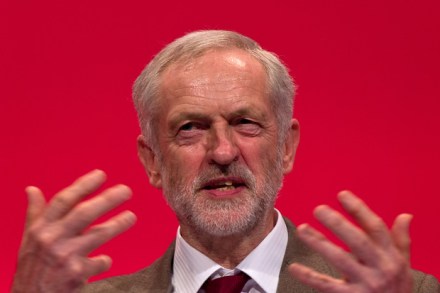
Some might say that Jeremy Corbyn is cloth-eared, tone-deaf, socially inept but on Monday morning, as the death of the pop artist David Bowie scrambled the agenda on Radio 4’s Today programme, he was as graceful and twinkle-toed as Bowie himself. The opposition leader had been invited on to the ‘big slot’ just after the eight o’clock bulletin to talk about his ‘shock’ reshuffle last week. David Cameron and the Archbishop of Canterbury, no less, had already provided their rent-a-quote verdicts on Bowie’s life and death. Nick Robinson asked Corbyn for his thoughts. Quick as a flash, he responded, ‘Does that mean I’m joining the great and the good...?

Letters | 31 December 2015

From our UK edition

What Blair omitted to say Sir: Mr Blair’s latest in these pages, like his recent Foreign Affairs Committee appearance on Libya, papers over so much history that one hardly knows where to start (‘What I got right’, 12 December). His own Libyan history will do. We all know the ‘deal in the desert’, whereby Gaddafi relinquished a feeble ‘WMD’ programme to come in from the cold, lift the sanctions, and pave the way for oil deals. What was not known until 2011 was the real price of this bargain. The price was a UK-US-Libyan conspiracy to kidnap two whole families from exile and ship them to Gaddafi. Had we not seen the proof in black and white after the dictator’s fall, who would have believed it? But documents don’t lie.

Benghazi notebook

From our UK edition

In their interview in the Christmas edition of The Spectator, Fraser Nelson and James Forsyth asked the Prime Minister whether he now considered that his intervention in Libya had been a mistake. David Cameron accepted that matters could have gone better since the fall of Gaddafi, but insisted that ‘what we were doing was preventing a mass genocide’. Like Saddam Hussein’s weapons of mass destruction, Gaddafi’s genocide seems to have been a fiction. It was reiterated over and over again by government and in the media in order to whip up support for the imposition a no-fly zone in March 2011. However, there was never any convincing evidence.

David Cameron: why bombing Libya wasn’t a mistake

From our UK edition

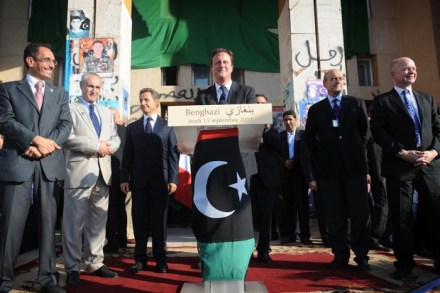
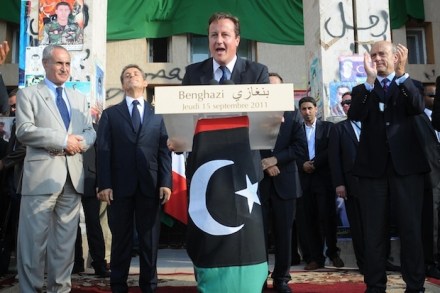
Libya has been in the news again over Christmas: the UN Security Council has endorsed a new government but as Peter Oborne found out when he visited Benghazi, the city that David Cameron addressed after his 2011 bombing campaign (video above), there isn't much government to speak of. The World Food Programme says that 2.4m Libyans will need humanitarian assistance; the country's population is 6.2m. Its economy shrank by 25pc last year alone and private enterprise is collapsing: the state now employs 80pc of Libyans. At the height of the 2011 uprising there were about 17,000 militiamen: today they number in the hundreds of thousands and they're tearing Libya apart. [datawrapper chart="http://static.spectator.co.uk/V0BIj/index.

Tony Blair: bringing Colonel Gaddafi ‘in from the cold’ prevented future terrorism

From our UK edition

Tony Blair was hauled up in front of the sparsely-attended Foreign Affairs select committee today for a grilling about his links to Colonel Muammar Gaddafi — particularly around the time of the 2011 uprising. The former prime minister said he met with Gaddafi 'once or twice' because 'it was important to bring them in from the cold'. If Britain hadn’t engaged with the regime, Blair said it would be 'continuing to sponsor terrorism, was continuing to develop chemical and nuclear weapons and would have remained isolated in the international community'.

‘Voters think: Oh Christ, push Europe away from me!’ – David Cameron interview

From our UK edition

This is an extended version of an interview with the Prime Minister from the Christmas special issue of The Spectator. The last time David Cameron sat down with The Spectator for an interview, he was on a train and looking rather worried. There were just weeks to go until the general election and the polls were not moving. At the time, almost no one — and certainly not him — imagined that he was on the cusp of a historic election -victory that would not just sweep the Tories to power but send Labour into an abyss. This time, we meet on another train. But he’s far more relaxed, reflecting on winning The Spectator Parliamentarian of the Year award and recalling how election night brought him some of the ‘happiest hours’ of his life.

Cameron’s great escape

From our UK edition

The last time David Cameron sat down with The Spectator for an interview, he was on a train and looking rather worried. There were just weeks to go until the general election and the polls were not moving. At the time, almost no one — and certainly not him — imagined that he was on the cusp of a historic election victory that would not just sweep the Tories to power but send Labour into an abyss. This time, we meet on another train. But he’s far more relaxed, reflecting on winning The Spectator Parliamentarian of the Year award and recalling how election night brought him some of the ‘happiest hours’ of his life. These occurred in the men’s changing room at Witney Leisure Centre.