Libya

Portrait of the week | 19 November 2015

From our UK edition

Home After the killings in Paris, David Cameron, the Prime Minister, said that seven terrorist attacks on Britain had been prevented in the past six months. He met President Vladimir Putin of Russia at a G20 meeting at Antalya in Turkey. Mr Putin said: ‘We should join efforts in preventing terror. Unfortunately our bilateral relations are not of the best.’ Mr Cameron said in the Commons: ‘Raqqa, if you like, is the head of the snake… we need to deal with it not just in Iraq but in Syria too.’ He said funds from maintaining defence spending at 2 per cent of GDP would go to special forces, drones and fighter aircraft. MI5, MI6 and GCHQ would be able to recruit an extra 1,900 officers to their 12,700 staff.
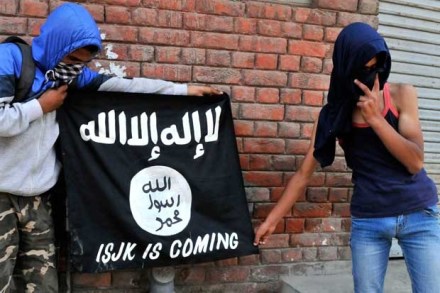
Isis takes its British schoolgirl jihadis seriously. Why don’t we?

From our UK edition

When the first schoolgirls ran away to Isis I had some sympathy for them — at least, I could see how they’d been suckered in. The girls were young, daft, desperate for a cause. They’d nosed about online, and found the Twitter feeds of jihadi wives who sell Syria as a teenage paradise: all fast food, deathless love, martyrdom and shopping. Because I felt for those first schoolgirls, I kept following their progress, checking for them online as they set up in Syria, married, and began to tweet themselves. But as I followed them on social media, my sympathy soon turned to disgust. ‘Happy #9/11’ wrote young Zahra Halane, one of the twins from Manchester who fled to Isis last year. ‘Happiest day of my life. Hopefully more to come. InSha Allah #Is.

The chaos of Libya returns to haunt David Cameron

From our UK edition

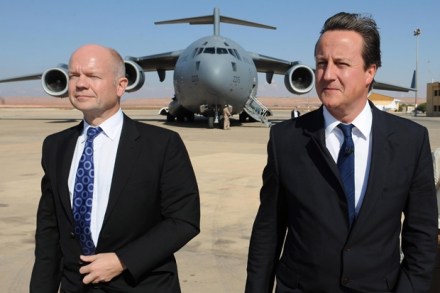
'Were we right to stop a massacre? Yes, we absolutely were,' said David Cameron on his Radio 4 Today programme interview. But the real question is different: were we right to depose Gaddafi, given the chaos (and bloodshed) that has followed in Libya? Are things so much better for the citizens of Benghazi (and the 80,000 souls in Sirte) now that Islamic State has moved in? The Prime Minister stopping a potential massacre at Benghazi was fairly uncontroversial. But should he have then pressed on to topple the Libyan and created the vacuum now being filled with sectarian warfare and the migration crisis? https://soundcloud.

The royal road to peace

From our UK edition

Watch the videos of 1950s Iraq on YouTube and you glimpse something close to an idyll. It’s true that Pathé News was not big on gritty realism, but history relates that here it was not using a heavily rose-tinted lens; Hugh Trevor-Roper even went so far as to describe Iraq at the time as a Levantine Switzerland. Or you can go to Google Images, tap in ‘1960s Afghan women’ and be offered photographs of a mixed university biology class, and others of young women with short skirts, long hair and smiling faces. This was life under the kings, and knowing what followed is enough to make a grown man weep. But let’s be hard-headed and forward-looking: the creation of new constitutional monarchies is a sensible solution to such clear and present dangers as Isis.

Monumental heroes

From our UK edition

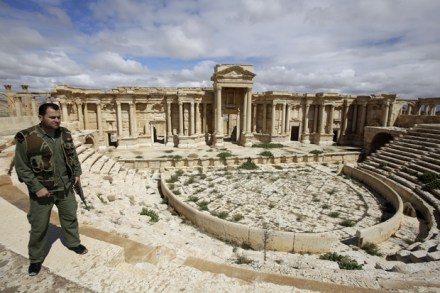
Leptis Magna was deserted when I last visited — no wonder. Tourists daren’t visit Libya these days and so I had the ruins to myself. I climbed the steps of the vast Roman theatre, looked out to where the Wadi Lebda meets the sea, then stopped. Men with AK-47s. My immediate fear was that they were Islamic State. Isis move closer to Leptis Magna every day and it would make sense for this most spectacular site to be next on their hit list. Their last great coup was on the other side of the Med, when they blew up the Temple of Baal Shamin in Palmyra, known as ‘the Pearl of the Desert’. It’s part of their cultural jihad, but they also do it for the global outrage that follows. No such thing as bad press for Isis.

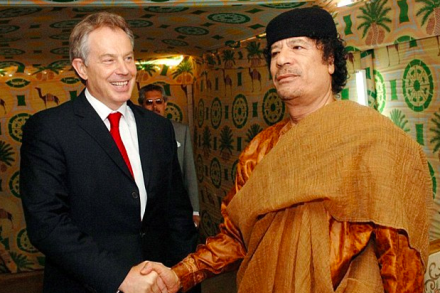
If Tony Blair thought that Gaddafi wanted to cut a deal, why did no one follow up?

From our UK edition

Just a few months ago, almost everyone thought that David Cameron was a goner. That he was about to go down in history as a one-term Prime Minister who failed to win against a bad Labour leader in 2010 then lost to a worse one in 2015. During this period, Anthony Seldon spoke to a long line of well-placed people for his biography of David Cameron; people who would have imagined they could talk freely because his book would be an autopsy. As a result, the former Master of Wellington College seems to have drawn plenty information from people who perhaps regret their candour now. David Richards, the former head of the military, is candid about how he believed that the Libyan project was a disaster – embarked upon primarily to assuage the Prime Minister’s friends in Notting Hill.

Portrait of the week | 20 August 2015

From our UK edition

Home Andrew Burnham described calls from Yvette Cooper, a rival candidate for the Labour leadership, for him to withdraw from the contest as ‘quite strange’. The problem was how to prevent Jeremy Corbyn, a left-winger, from being elected by the alternative vote system by 610,000 party members and registered supporters. Gordon Brown, the former disastrous Labour prime minister, contributed by making a 50-minute speech in a small room at the Royal Festival Hall, during which he paced up and down continuously for an estimated 1 mile 1 furlong 5 chains and did not mention Mr Corbyn’s name. Kezia Dugdale, a Member of the Scottish Parliament, was elected leader of the Scottish Labour party; the party has only one seat in the Parliament of the United Kingdom.

Who’s running Libya?

From our UK edition

When I covered Libya’s revolution in 2011, I had a driver named Mashallah. Mashallah was a decent and stoical man with an interesting propensity for malapropisms. He was regarded with fondness by us journalists — so when I decided to return to Libya recently, I sent him an email: did he want to work for me again? Unfortunately, replied Mashallah, he was in Paris. This seemed strange. How would he have got a French visa? I emailed again suggesting another week and received another profound apology. That week he was going on to Ankara and Istanbul. A quick look online solved the mystery.

The Calais crisis needs a better response than fences and dogs, Prime Minister

From our UK edition

David Cameron should be in real trouble over Calais. It goes to the heart of two of the central issues by which British voters judge governments: are you competent and can you control immigration. Judging by the unstoppable growth of the chaotic 'Jungle', the increasing number of assaults on Eurotunnel staff and the rising number of tragic and needless deaths, we know the answer to the competence question. To paraphrase Sam Goldwyn, there are two words for the government: incompetent. Every time a minister comes on the radio or TV to explain what the government is doing, I immediately think 'who is that useless Lib Dem junior minister? No 10 must hate having to compromise on immigration policy.' Then I remember.

Yet another tragedy in the Mediterranean. Here’s an actual rescue plan

From our UK edition

Another week, another appalling boat disaster in the Mediterranean, another round of the same tired row on migration. Yesterday a boat carrying 600 people sank off the coast of Libya; 400 people were rescued, the rest are feared dead, trapped in the belly of the boat. This morning the same round of cliches are being trotted out. The pro-immigration lobby says our restrictive policies are cruel. The anti-immigration brigade say we must not encourage masses of people to come. But the migrant crisis is too great for such shallow responses. In this week's Spectator, Paul Collier says that this 'lazy thinking' gets us nowhere. He has an alternative, and it involves more than just a few Royal Navy ships fishing people out of the water.

We’ve always messed up the Middle East. Let’s stay out, for once

From our UK edition

I suppose I should cease carping. We got a Blue Labour budget (except for the ludicrous stuff on inheritance tax), and far better than anything we would have got under my party, Labour. And at least the Prime Minister is addressing the issue of Islamic 'extremism'. Yes, I suppose, I would concur that taking away the passports from juvenile wannabe jihadis is a good idea. Just about. A horrible part of me thinks they should be taken away once they have left the country, though. Certainly that should apply to the adults. Encourage them to go, then nullify their passports. However, to disavow our own role in facilitating the Islamic State is evidence, to my mind, of a delusion.

Africa’s most wanted

From our UK edition

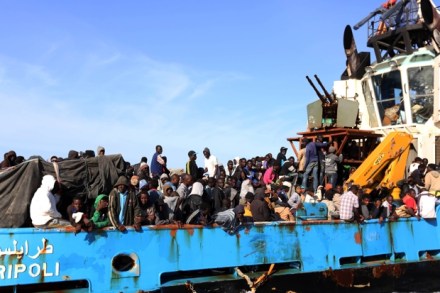
It’s Saturday morning in the courtyard of the Al-Zawiyah detention centre on the outskirts of Tripoli and Colonel Nourdeen Mishaal of Libya’s Ministry of Interior’s Department for Combating Illegal Immigration is about to have his weekend ruined. The Colonel has delivered an impassioned speech praising his own government and exhorting the West to do more to help in the battle against the people smugglers responsible for the thousands of migrants arriving in Europe every week. He dismisses his regime’s pariah status (the Islamist government has no international recognition). If there is a problem with migrants, he states with the full authority of his office, then the blame lies with western intransigence.

Aid is no substitute for defence, and Michael Fallon knows it

From our UK edition

It’s been obvious for a while that the Prime Minister is exasperated by the way American and other allied officials – including President Obama himself – keep expressing concern about Britain’s rapidly shrinking defence capabilities and the prospect of yet more defence cuts. David Cameron also dislikes being reminded that he lectured other Nato leaders about meeting the alliance’s minimum of spending 2 per cent GDP on defence, when by any honest calculation the UK is not going to meet that target. He hasn’t responded directly to the multiple warnings from Washington.

Letters | 18 June 2015

From our UK edition

Growing congregations Sir: I would like to take issue with Damian Thompson (‘Crisis of faith’, 13 June) and his assertions that England’s churches are in deep trouble. Last Saturday 250 Christians ranging in age from zero to 80, from two independent and orthodox local churches in Lancaster and Morecambe, met in a school to sing, pray, and hear preaching about Jesus Christ — this as well as our normal Sunday services. We believe we are doing what the Bible tells us to: preaching the good news of Christ from the pages of the Bible — and our churches are growing. Indeed, we can testify to growth in many local churches in the UK (whether independent or within a denomination).

The invasion of Italy

From our UK edition

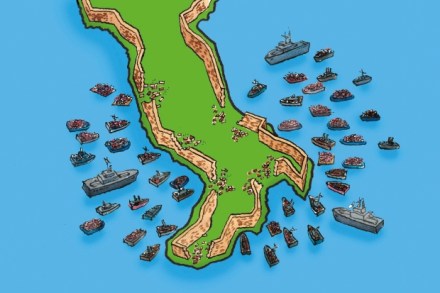
Let us suppose that along the coast of Normandy up to one million non-EU migrants are waiting to be packed like sardines in small unseaworthy vessels and to cross the English Channel. Let us suppose that first the Royal Navy, then the navies of a dozen other EU countries, start to search for all such vessels in the Channel right up to the French coast, out into the North Sea and the Atlantic even, and then ferry all the passengers on board to Dover, Folkestone, Hastings, Eastbourne and Brighton in a surreal modern-day never-ending version of the Dunkirk evacuation of 1940. Would the British government agree to take them all? What of the British people? And if they did agree, what would the British government and people do with all the migrants? How would they cope?

Portrait of the week | 11 June 2015

From our UK edition

Home David Cameron, the Prime Minister, said of the EU referendum: ‘If you want to be part of the government, you have to take the view that we are engaged in an exercise of renegotiation to have a referendum and that will lead to a successful outcome.’ This caused a certain amount of uproar, with newspaper headlines saying things like ‘PM: Back me or I will sack you.’ Mr Cameron the next day said: ‘It’s clear to me that what I said yesterday was misinterpreted.

Why does no one blame Cameron for Libya?

From our UK edition

Call me petulant, but I’m not sure Britain is getting enough credit for our fine, fine work in Libya. The Islamic State, so recently present only in the semi-mythical lands of Syria and Iraq — places you see on the news, but don’t really have to believe in — has now set up residence a short hop away from Italy, in the Libyan town of Sirte. Which is, just to be clear, a hell of a lot closer to Italy than we are. Maybe one-and-a-half times the stretch of a Hull– Zeebrugge ferry. We did that. Well done everybody. Top marks all around. Also, Derna. That’s another town they’ve got. I’d never heard of Derna before, but apparently, Isis has held it since last October.

Europe cannot allow an ungoverned space to exist on its doorstep

From our UK edition

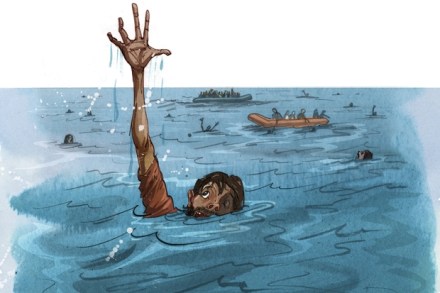
Last month, 700 migrants attempting to sneak into Europe drowned when their rickety vessel capsized in the Mediterranean. This week, the European Union announced a naval initiative to crack down on migrant smugglers. It won’t work. These tragedies are going to recur endlessly, as long as a steady fleet of unsafe boats are able to set sail from Libya. The country has become a political vacuum which no longer deserves to be identified as a sovereign state. The civil war has left no functional state; in many parts, nobody is keeping the electricity running or schools open, let alone policing the coastline to stop illegal migration or the flow of jihadists.

The people from the sea

From our UK edition

 Lampedusa The young hang about in packs or speed around town, two to a scooter. Old women group together on benches around the town square in front of the church. The men continually greet each other as though they haven’t met for years. The likelihood is small. With fewer than 6,000 inhabitants, and as close to Libya as it is to Italy, Lampedusa is the sort of place from which any ambitious young Italian would spend their life trying to escape. Yet every day hundreds and sometimes thousands of people are risking their lives to get here. ‘Please tell people we have nice beaches,’ one islander pleads.

Miliband’s position on Libya is deeply hypocritical

From our UK edition

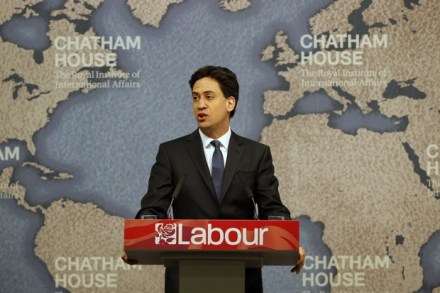
What Ed Miliband lacks in charisma, he is attempting to make up for in polemic. Tragically for the UK's future, this represents an 'Americanization' of British electoral politics. In all likelihood, its origins are David Axelrod cynically taking a page out of the Republicans' playbook. Fortunately, repeated screaming of 'Benghazi' as if it were a primordial voodoo incantation, is unlikely to work on this side of the Atlantic. Speaking at Chatham House on Friday, Miliband sought to pre-empt his critics by laying out a cohesive vision for foreign affairs - usually considered his weakest policy area.