Liberal democrats

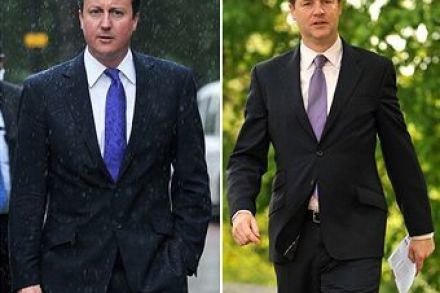
The Coffee House A-Z of the Coalition: A-F

The coalition is 1 today. Unfortunately, we can't serve jelly and ice cream over the internet — but we can write an A-Z to mark the first year of Cameron and Clegg's union. Below is the first part of that, covering the letters A to F. But, first, a little piece of political nostalgia for CoffeeHousers. A year ago today, this happened: And now for the A-Z… A is for Andrew Lansley Rap John Healey, make way for MC NxtGen. The Loughborough rapper may not be part of Her Majesty's Most Loyal Opposition, but his three-minute denunciation of the coalition's health reforms — video above — did the job better than most politicians ever could.

Breaking Laws | 10 May 2011

When David Laws resigned from government last year, his return was thought to be only a matter of time. Today, it is looking considerably more indefinite. Not only has Cameron been talking down the prospect of a reshuffle any time soon, but the Evening Standard is reporting that Laws has been found guilty of breaching six — six! — Commons rules related to his expense claims. No word, yet, on the details, or whether there will be any formal punishment for the former Chief Sec. But it doesn't look good for him, nor for his ministerial prospects in the short-term. Sky's Sophy Ridge tweets that certain Lib Dems are "still keen" to transfer Laws back to government "within weeks". Perhaps so — but I'd be surprised were they to pull it off.

Cameron sets out the bounds of Lib Dem assertiveness

Our coalition government was forged one year ago tomorrow — and we shall have more on that then. But the Sun has already marked the occasion by publishing an interview with David Cameron today. It is a wide-ranging sort of conversation, touching on everything from the Prime Minister's workload ("every day feels like a week") to the shelf life of the government ("five years"), although much of it is unsurprising. It does, however, contain one or two useful insights into how the coalition's game of give-and-take is going to operate from now on. First up, Cameron's insistence — contra Clegg — that the Lib Dems should not be portrayed as a "moderating influence" on his party.

Labour’s New Strategy: Fight the Tories

You might think this should have been their strategy all along. But just as Labour in Scotland misidentified their primary enemy, concentrating on the Conservatives when they should have been opposing the SNP so Labour in London has spent the past year looking for monsters in all the wrong places. Peeved by being thrown from office after saving the world, Labour have since moaned and whined and whinged about how beastly the Lib Dems are and how, in some rum fashion, it's unfair that they've broken their promises and are dancing with the Conservatives. Never mind that the Tories made a better offer.  Still, while this has not been much fun for Nick Clegg and his camp followers it's been quite good news for David Cameron.

Credit where it’s due

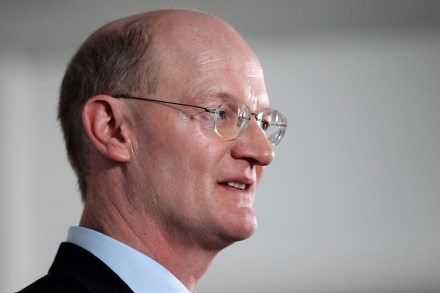
One of the worries of Tory modernisers about the coalition back in May last year was that the Tories would end up being seen as being responsible for all the tough but necessary stuff, eg deficit reduction, while the Lib Dems would claim the cuddly stuff, for example the pupil premium — a policy that was in both the Tory and Lib Dem manifestos.   David Willetts in a piece in the Telegraph today, taken from a speech he’s giving tonight, makes this point anew in the context of the new, frostier coalition relations: “This agenda is shared, so it would be a mistake to get into a game of identifying Liberal measures and Tory ones in a perpetual trade-off.

Can Lansley stay?

The Prime Minister, it seems, is now finally accepting what everyone else has been saying for a long time: that the NHS reforms were dangerous and would hurt the government. If Nick Clegg forced a re-think — even one that is supported by many Tories — then he may, in the end, play a greater part in delivering the next election for Cameron's party than many triumphalist right-wingers now realise. For CameronCare was badly-timed, poorly-delivered and strikes at the heart of the PM's message that the Conservative Party can be trusted. Large-scale reforms need time. Time for people to accept a problem. Time for people to accept the solution.

The Lib Dems’ hostage situation

Norman Lamb’s comment on the Daily Politics about the Lib Dems having become a "human shield" for the government sums up the mood on the Liberal Democrat benches. Lamb went onto wonder whether this was inevitable: "Whether that's inevitably the case for the junior partner I don't know... But we are in this for the long term." The bad news for the Liberal Democrats is, I fear, that it is. On Friday I was having a discussion with a senior Labour figure who was explaining how the party was now going to concentrate its fire on Cameron not Clegg.

Salmond sees out his rivals

Two down and one to go: that’s the score among the opposition leaders in the Scottish Parliament as the parties continue to sift through the wreckage left by the SNP tsunami last week. Iain Gray, the Scottish Labour leader, didn’t wait long. He announced he was quitting on Friday afternoon, even before the full extent of Alex Salmond’s landslide victory was officially declared. Mr Gray will stay on until the autumn but will go then to allow someone else to start the unenviable task of picking Scottish Labour up from its disastrous performance last week. Yesterday Tavish Scott, the Scottish Liberal Democrat leader, told his parliamentary party that he was resigning too.

Why Clegg will get his way on NHS reform

On Andrew Marr this morning, Nick Clegg made clear that changes to the NHS bill are his new priority. He said that there would be ‘substantial’ changes to it and declared that ‘no bill is better than a bad bill.’ I suspect that Clegg will get what he wants on the NHS bill. When I spoke to one senior Clegg ally after the AV vote, I was told that Number 10 is ‘conceding everything to us in that area.’ My source went on to say that because of the Tories’ traditional weakness on the the NHS, the Tories ‘are mortally afraid of a row over the NHS with us on side and them on the other and rightly so.’ The NHS, though, was the only area where Clegg appeared to be setting a new tack.

Huhne on the rack

It may not be reflected in the popular vote, but politics is still mostly about the Liberal Democrats this morning. We have Ed Miliband's latest sally for their affections. We have the usual veiled threats and dread innuendo from Vince Cable. And then there's the weird, but piercing, accusation on the cover of the Mail on Sunday: Chris Huhne pressurised others – and, specifically, a constituency aide – to take speeding points on his behalf, as he didn't want to lose his driving licence. The accusation, it is said, is inspired by rumours spread across Westminster – and now by testimony from Huhne's former wife. While, for his part, the Energy Secretary is denying it all. Whomever you believe, the story has flared up at an intriguing time.

An election before 2015 could soon be illegal

Amazingly, the forces of conservatism derided by Tony Blair, are in the ascendant, their enemies scattering and in retreat. Bin Laden is dead, the oil price tumbling, the Royal Wedding was a triumph and now Labour and the Lib Dems beaten at the ballot box. Surely, we tell ourselves, this is an alignment of the stars, a Conservative moment. David Cameron must seize the day, or at least the year, by abandoning the Coalition and calling a general election soon. Landslide, here we go! Hold your horses. Britain’s electoral machinery is off the road, its parts all over the workshop floor. Thanks to the constitutional tinkering of the Coalition, the procedural and practical obstacles to holding a general election in the next four years are substantial and rising.

The winners and losers from Thursday’s elections

After every election, the political stock exchange goes into a frenzy trying to work out who is a buy and who is a sell. Thirty-six hours after the polls closed, it is a little clearer who the winners and losers of this election season have been. Here are our selections: Winners Alex Salmond, the biggest winner of Thursday night. Salmond has achieved what the Scottish electoral system was meant to prevent, an overall SNP majority in the Scottish parliament. Salmond now has the votes he needs for a referendum on independence.

Weapons-grade Cable

Which Lib Dem can be rudest about the Tories? Chris Huhne, you must admit, gave it a decent shot yesterday, describing his parties' "extraordinary anger" with their coalition stablemates. Even Nick Clegg had a go, with a little swipe at Thatcherism. But I reckon Vince Cable's remarks this morning will take some beating. The Tories – on his utterly unscheming, non-partisan account – are "ruthless, calculating and very tribal". Although he did add that, "that doesn't mean to say we can't work with them." How very broadminded of him. The trick of the next few days will be sifting out the Lib-Con separations that have Downing Street's blessing from those that are simply vicious attacks by one coalition partner on the other.

It’s official: Britain says NO to AV

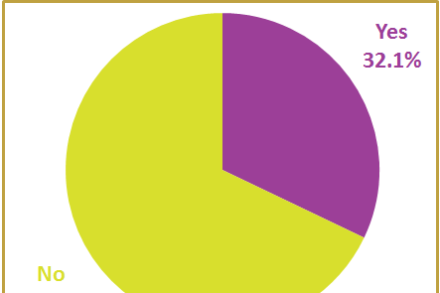
The count hasn't quite finished yet, but the Noes already have it – having crossed the threshold for victory only a few minutes ago. The official Electoral Commission website is lagging a bit behind, but it captures just how comfortable this win has been for the defenders of FPTP. So comfortable, in fact, that you imagine we're done with major voting reform for at least a generation. And for the Lib Dems, Ed Miliband and the Yes campaign, the recriminations that were simmering away earlier can now come to a boil. What joy. We will update this post as soon as the final tallies are available. UPDATE: Final results shown in the pie chart above.

Team A Thumps Team B

What a year! First Fianna Fail in Ireland, now Labour in Scotland. If only all elections were this entertaining and satisfying. At long last the anti-Labour vote was organised properly. Indeed, the SNP have won a lop-sided victory of the type Labour have been accustomed to winning in Scotland, taking more than 70% of the constituency seats on 45% of the vote. This included a victory in Edinburgh South achieved with fewer than 30% of the votes. First Past the Post for the win, eh? Labour spent much of the night complaining that there was a ball and the Liberal Democrats ran away with it and gave it to the SNP and that wisnae fair. Too bad.

Lessons for the Lib Dems

Chris Huhne’s behaviour still has everyone at Westminster talking. Earlier in the week, senior Liberal Democrats were saying that once the voting had happened, Paddy Ashdown and the party president Tim Farron would communicate the party’s anger at the behaviour of the No campaign, while the party’s Cabinet ministers began to rebuild relations with their coalition colleagues. Vince Cable, for example, has been far more restrained today than he was during the campaign, blaming AV’s defeat on the failings of the Yes campaign not the No campaign’s tactics. But Huhne either didn’t get these instructions or has chosen to ignore them.

Clegg versus Huhne, at a local level

While the Lib Dems lost control of Nick Clegg's city of Sheffield to Labour, losing 9 councillors, they won every seat up for election Chris Huhne's constituency of Eastleigh. They even took Labour's only council seat in the borough. It is worth remembering that the Lib Dems are waging very different types of battle in these two areas: against Labour in Sheffield and mainly the Tories in Eastleigh. Of all the Cabinet members, Huhne ran probably the most anti-Tory campaign in 2010, and many predicted a strong backlash against the Lib Dems in Eastleigh for going into coalition with them, perhaps with Labour supporters refusing to back them tactically over the Tories. On today's evidence, at least, this does not seem to be the case.

Three points from a remarkable night

This has been a remarkable election night. To my mind, there are three big stories out of the polls. First, the George Osborne masterminded campaign for a new Conservative majority is on track. AV, barring some shock, has been defeated and the Conservative vote has held up remarkably well in the English local elections. Indeed, right now the Tories have actually gained councilors in England. Add to this that the next election, if the coalition lasts to 2013, will be fought on new constituency boundaries that are more favourable to the Tories and things are looking promising for the party.    The coalition looks secure. Even after last night's drubbing, the Lib Dem leadership is not considering leaving government.

Surprise, surprise … the Lib Dems are taking a battering

If you fell asleep expecting heavy losses for the Lib Dems, then you will not have been disappointed upon waking up. At time of writing, around 100 English councils, comprising roughly 2,400 councillors, have declared their results – and the yellow brigade have already lost four of them, along with 270 councillors. There's some way to go yet, so the picture could alter, but Labour appear to making sweeping gains, while the Tory vote is holding unexpectedly firm. As it stands, the local wing of Cameron's party has actually gained a council, along with 22 councillors in the process. Stir in the likely result of the AV referendum, and the Tory leader is looking like a net winner on the night.