Letters

Rifling through a writer’s desk

From our UK edition

Frantumaglia isn’t strictly a book by Elena Ferrante. Frantumaglia isn’t strictly a book at all. It’s a celebration of the life of the novel and a manifesto for the death of the author, told in a collection of interviews, letters from journalists requesting interviews, letters within letters, stories within letters, and letters from Ferrante’s editor in which the idea of publishing all these letters, dating from 1991 to the present day, is initially proposed. The whole caboodle is a dizzying ‘jumble of fragments’, ‘a miscellaneous crowd of things’, a mass of ‘contradictory sensations’ which ‘make a noise in your head’.

Dear Mary | 17 November 2016

From our UK edition

Q. Following a lavish house party I received a flood of effusive thank-you letters, the bulk of which praised the impeccable service, the luxurious treats laid on nightly, and my attentiveness to my guests’ every whim. One letter, however, commenced in a fairly complimentary vein but soon devolved into a letter of complaint about a fellow guest. So vehemently did the author express his antipathy that he covered two sides of paper. I concede that the young woman in question is an acquired taste, but I resent my friends being subject to character assassinations. How can I reprehend the scribe? — Name withheld, London W2 A. Bear in mind that this letter is something of a compliment. The author defies convention to put your welfare above his own.

Dear Mary | 20 October 2016

From our UK edition

Q. Next month, four of us from university are going up on a wildfowling trip north of Inverness. We are catching the night sleeper from Euston and I have been charged with booking the berths. Two of the team are in a heterosexual relationship whilst the fourth, a man I have met just once, is homosexual. Inevitably I will be expected to bunk up with him in a cabin. The problem is that I am considerably better off than the others and would much rather have my own space but I fear a personal move to first class may prompt suspicions of homophobia (which couldn’t be more wrong). How can I get around this one? — S.H., London SW10 A. Since, in your age group, homophobes are as rare as hen’s teeth, there is virtually no risk of anyone thinking you are homophobic.

Cocktails, castles and cadging

From our UK edition

Here is a veritable feast for fans of Paddy Leigh Fermor. This is the story of a well-lived life through letters. The first is from a 24-year-old recruit eager to do battle with the enemy in 1940. The last is by a tottering nonagenarian of 2010, still hoping, 75 years after his ‘Great Trudge’ across Europe, that he might just finish the final volume that had eluded him for decades. The anthology offers the most vivid explanation yet for why he didn’t. Letters were flying to and from all corners of the world — Adam Sisman reckons that Paddy wrote a whopping 5,000 to 10,000.

The food of love | 30 June 2016

From our UK edition

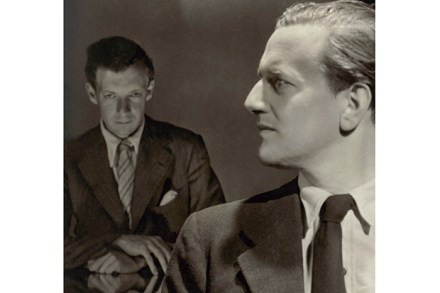
‘You are the most adorable man and artist, intelligent, gifted, simple, loving and noble… I am really very, very lucky to be alive with you around....’ The relationship between the tenor Peter Pears and the composer Benjamin Britten is part of our cultural and national furniture. A partnership spanning nearly 40 years drove each artist to the peak of his creative and expressive powers, producing works like Peter Grimes, Winter Words and the War Requiem, as well as their definitive recordings. But music is only half of the Britten-Pears story. Before his death in 1976, Britten asked his friend and publisher Donald Mitchell to ‘tell the truth about Peter and me’.

Your problems solved | 21 April 2016

From our UK edition

Q. A friend of mine’s husband is in his nineties. They are a delightful couple but the husband has started refusing to wear his hearing aids. As a consequence his loving wife has to shout at him to get him to do what she wants — which is only ever something that is to his own advantage, for example go for a short walk in the garden, or go to the television room where there is something on in which he will be interested. In order to achieve a result she has to bawl her lungs out. This is exhausting for her. How can one persuade a recalcitrant old boy to do the decent thing and wear his hearing aids? — M.K., London W11 A. Your friend can spare herself the indignity of shouting like a fishwife by making recordings of regular instructions.

Your problems solved | 31 March 2016

From our UK edition

Q. Twice recently our host has clinked his glass, required us to stop relaxing and instead take part in a round-table discussion. My wife and are involved in the maelstrom of the Westminster village by day and we have had enough of it by the evening. Is there a courteous way to reject the request of a host attempting to hijack his own dinner party in this way? — Name and address withheld A. Clink your own glass and say your doctor has ordered that in the short term you don’t blur the boundaries between work and play and, since you would find it impossible not to join in, would they mind pausing the discussion until you have gone home. Q. My godson recently turned 18 and I invited him to dine with me at my London club to receive his birthday present.

Your problems solved | 11 February 2016

From our UK edition

Q. I recently rediscovered a wonderful 22-year-old godson. He came to shoot for the first time and was a marvellous guest — impressing others to the extent of even receiving a potential job offer. He has wonderful manners but although he thanked us profusely while under our roof, he has not as yet written his thanks. Shooting thank-you letters are still much appreciated by hosts. It does not matter a jot to us that he has not written, as he is now ‘family’. However, as godmother, I worry that his maybe not knowing that a handwritten thank-you letter for a shooting invitation is de rigueur could jeopardise his success elsewhere. How can I tactfully convey this? — O.A., Suffolk A. Email the boy promptly. Say ‘I must have given you the wrong postcode.

Dear Mary: Another way to deal with a maddening blackhead

From our UK edition

Q. Might I suggest an alternative solution to E.B. of London’s problem (3 October) about the person sporting a ‘maddening’ blackhead at a poolside party? Surely a more tactful way of drawing the man’s attention to the blackhead would have been for E.B. to pretend she thought it was an insect that had landed. On failing to shoo it away, she could have exclaimed that it might be a tick and he should remove it and then offered to assist in this operation. The nuisance could thus have been dealt with without the poor man even discovering that he had an embarrassing zit. — J.P., Stratford upon Avon A. Thank you. The first part of your solution is good but the second part is unusable, since a tick bite can be such a real menace.

Remembering P.J. Kavanagh

From our UK edition

‘Elms at the end of twilight are very interesting,’ wrote Gerard Manley Hopkins in his journal: ‘Against the sky they make crisp scattered pinches of soot.’ P.J. Kavanagh, who has died aged 84, plucked out this observation for one of the columns that he wrote for The Spectator between 1983 and 1996. He was right to call a volume collecting these Life and Letters columns (with a later series from the TLS) by the name A Kind of Journal, for they possess the kind of narrative impetus that makes classic diaries such as Woodforde’s or Kilvert’s so compelling. But they were also a poet’s work-books, just as living in rural Gloucestershire, as he had since 1963, was to be in a poet’s workshop.

Credible

From our UK edition

In a wonderfully dry manual of theology on my husband’s bookshelves, written in Latin and printed in Naples in the 1830s, there is a discussion of whether ‘rustics and idiots’ are supported in their belief by ‘motives of credibility’, such as miracles. The same question has been asked about belief in Jeremy Corbyn, except that the city stands in for the country, and the idiots are often useful ones. ‘I am the only candidate who can offer a bold but credible vision,’ Andy Burnham has said. ‘I’ll have the confidence to reject Tory myths and the credibility to demolish them,’ countered Yvette Cooper. John Curtice, the political scientist, noticed that Labour MPs think Mr Corbyn’s ‘economic policy is not credible’.

Asking too much

From our UK edition

Jack Nicholson’s moving portrayal of a lonely old man in About Schmidt convinced me that I should sponsor a child. You may remember the scene at the end: he gets a letter from a nun in the Tanzanian village where a little boy has been receiving his largesse and realises that his life has not been meaningless. He has made a difference to somebody. I wept buckets as the credits rolled and not long afterwards signed up to a sponsorship programme with a leading charity in the hope that I too could make life better for one person. And maybe I did. I was allocated a child in Armenia. I pledged an embarrassingly low sum of money, really, when you consider how needy half the world is, and how much we in the West lavish on luxuries and incidentals.

Dear Sirs and Madams

From our UK edition

Those who write letters and send them by post are a dying breed. I was fortunate to have served as a newspaper columnist and received a great many. Often eloquent, sometimes humorous, their breadth and depth of experience was wonderful. With the exception of letters that were racist or completely mad, I tried to answer every one of them. If a reader took the trouble to write to me, it was the least I could do to send him or her a personal reply. There was the occasional correspondent from London, but most lived in the country or in provincial towns or cities. Most were Conservatives and many were lifelong readers of the Daily Telegraph.

Dear Mary: How can I stop my neighbour pacing the ceiling?

From our UK edition

Q. The woman who lives above me has insomnia and walks around all night. I’m also disturbed by her rather noisy cat, which seems to be constantly jumping around. Together they are keeping me awake and my work is suffering. But we are in a small house converted into two flats and I don’t wish to make an enemy of my only neighbour. How can I tactfully ask her at least to stop walking around so much in the night without infringing her freedom to roam? — M.R.-H., London W12 A. You can’t ask her without infringing it. Instead, write in the most friendly way to apologise in advance for the terrific amount of noise which will shortly take place by builders coming in to soundproof your ceilings.

Dear Mary: Can I run out on an apprenticeship for my dream interview?

From our UK edition

Q. I have been trying to get an apprenticeship in fashion for over a year without success. I just had a day-long interview where I had to sew and cut and was employed on the spot. My problem is that a few hours later, I got the call to come in to be interviewed by a designer who has been my fashion idol since I was 15. He would be much cooler to work for. He may not offer me a job but it seems like a chance of a lifetime. How should I play this, Mary? —Name and address withheld A. Honour is all. ‘Employed on the spot’ means that you accepted. Start the apprenticeship but still turn up for the interview with your idol, explaining as you walk in that, although you are sadly no longer available, you wanted to tell him this in person as you are such an admirer.

Nabokov’s love letters are some of the most rapturous ever written

From our UK edition

After the publication of The Original of Laura, Nabokov’s last and most disappointing novel in a very sketchy draft, you might have been forgiven for thinking there wasn’t much left to discover in the great novelist’s writings. If the posthumous fiction has been mostly fairly thin, this extraordinary and wonderful collection of letters to his wife restores him to us as the virtuoso of prose. They are some of the most rapturous love letters anyone has ever written, love letters from the length of a lifelong marriage; beautiful performances for Véra, Nabokov’s wife, and incidentally for us. The publishers have immediately issued this volume as a Penguin Classic. I don’t think we will quibble with that.

Why won’t suspected terrorist John Downey be tried?

From our UK edition

The Hallett Review was published yesterday. This is the review ordered by the Prime Minister in February after the collapse of the trial of John Downey. Readers will remember that Downey was about to face trial over the 1982 Hyde Park bombing – in which four British soldiers were murdered – when his lawyers produced a letter from the Police Service of Northern Ireland saying that Downey was not being sought for any offences. This opened up the remarkable discovery that unbeknown to most people involved in the political process in Northern Ireland: that such ‘amnesty letters’ had been sent to almost 200 ‘on-the-runs’ (people being sought for terrorism offences who had not yet faced trial). The people given these letters of assurance were all Republicans.

The Spectator’s Notes: French presidents used to have a touch of the monarch. Not any more

From our UK edition

When I interviewed Valéry Giscard d’Estaing, the former president of France, for my biography of Margaret Thatcher, I asked him why, when she lunched with him at the Elysée Palace for the first time, he had been served before her: she had been offended. M. Giscard explained that no slight had been intended. It was a matter of protocol — the president is the head of state, the British prime minister only the head of government. ‘You must remember,’ he added, ‘that the president is in the line of sovereigns.’ I recalled these words when reading about President Hollande and his amorous adventures in his helmet. To the British, it is a puzzle that French presidents are protected from the media scrutiny we inflict on our own leaders.

‘God has given me a new Turkish colleague called Mustapha Kunt…’

From our UK edition

Under normal circumstances, Simon Garfield’s chatty and informative excursion into the history of letter-writing would be a book to recommend. In recent years this author has produced eloquent and witty accounts of his fascination for maps and for typefaces: To the Letter makes a nice companion piece. Part of the book is a gentle lamentation about the end of letters; a death hastened, Garfield believes, by the digital age.

Did Leonard Bernstein do too much to be a great artist?

From our UK edition

Nigel Simeone’s title for his edition of Leonard Bernstein’s correspondence rings compellingly, novellistically, through the force of the definite article, as in The Aspern Papers, or The Scarlet Letter. The reality, though, is more diffuse. Bernstein was a man of enormous endowments. One correspondent, after listing his talents as a composer, orchestrator, pianist, conductor, lecturer and general all-round musical functionary, ends by enquiring ironically, ‘Can you cook?’ The list might have been extended. It could have included a wild diversity of sexual activity, a seemingly limitless gift for affection and friendship, an inexhaustible capacity for work, and a genius for self-promotion. What it could hardly have included was focus.