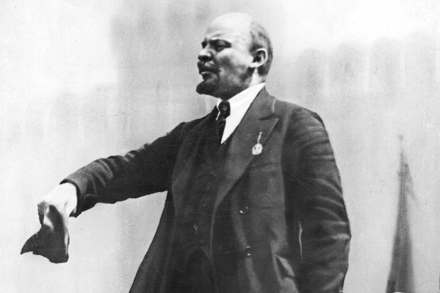
Lenin

In Putin’s Russia, feminism is an ugly word

From our UK edition

The excellent Moscow-born journalist Julia Ioffe’s first book recounts a well-known slice of Russian history from a fresh perspective – that of the mighty Russian woman who, it’s said, can ‘stop a galloping horse and run into a burning hut’. And how superhumanly brave and resilient they have had to be. Women were granted sweeping rights following the Revolution, then watched them dwindle for the rest of the century, in law but mainly in practice. What remained was the Soviet obligation to work regardless of gender, which created a country of professional women in every sphere: engineers, cosmonauts, judges, professors and 70 per cent of doctors by the 1970s.

A rebellious childhood: Lowest Common Denominator, by Pirkko Saisio, reviewed

From our UK edition

How do you dispose of 48 uniform volumes of the collected works of Lenin and Stalin? Pirkko Saisio and her mother hatch a plan. The books are ‘dumped into the trash bin’ by their apartment block, then coated with ‘a week’s worth of eggshells and fish guts and newspapers’. No one will find them, Mother insists. If anybody did, ‘there’s no way they’ll know they’re ours’. So Pirkko no longer has to hide the embarrassing tomes when friends drop round. Executed during true-believing Father’s absence, Lenin and Stalin’s stinky downfall is one of many bittersweet episodes that make Lowest Common Denominator such a piquant account of a childhood and a time.

Everyone who was anyone in Russia was spied on – including Stalin

From our UK edition

Vasili Mitrokhin was a KGB colonel smuggled out of Russia by MI6 in the early 1990s with a treasure trove of notes from the KGB’s archive. The resulting 3,500 CI reports (CI meaning counter-intelligence – information about hostile spies) identified 1,000 KGB agents around the world and were shared with 36 countries. The CIA rated it ‘the biggest CI bonanza of the post-war period’, while the FBI described as ‘the most detailed and extensive pool of CI ever received’. The story behind it was as remarkable as the haul itself. Gordon Corera’s fluent narrative draws on many sources, including the magisterial two-volume Mitrokhin Archive compiled by the historian Christopher Andrew and Mitrokhin himself.

The Russian spies hiding in plain sight

From our UK edition

In June 2022, Vladimir Putin tipped up at a party at the headquarters of Russia’s foreign intelligence service, the SVR. This was to mark, of all things, the centenary of the country’s programme of deep-cover spies, who live for years abroad under elaborate false identities while passing secrets back to their masters at home. The weirdness of that espionage hoopla, just four months after the invasion of Ukraine, leaves one wondering what other bizarre birthday events Putin might have in his diary. The 85th anniversary of the assassination of Leon Trotsky, perhaps? Ah, you can imagine the banter. The cracker hats. The roll-out noisemakers.

The Democratic war machine

To understand what’s wrong with the American left and the Democratic party – two different but entwined things, to be sure – look to Vladimir Ilyich Lenin. Look also to the work of the historian Sean McMeekin, including his latest book, To Overthrow the World: The Rise and Fall and Rise of Communism. Earlier this spring I emceed an event in McMeekin’s honor, as he received the award for “Conservative Book of the Year” from the Intercollegiate Studies Institute. It gave me the opportunity to chat with him about Lenin’s doctrine of “revolutionary defeatism” and much else, including the fairy tale the West tells itself about how communism ended.

Democratic

‘A group of deranged idiots’ – how the Soviets saw the Avant-Gardists

From our UK edition

The Avant-Gardists tells the story of the small group of brilliant, punky outsider artists who, after the Bolshevik coup in 1917, to everyone’s amazement suddenly found themselves holding important posts in government (as if Sid Vicious were made minister of education). They were soon demoted, and by the end of the 1920s persecuted or driven abroad. Yet news of their breathtaking originality spread internationally, playing an important role in transforming not only our understanding of art, but the aesthetics of modern life, from buildings to household objects, textiles to the printed word. Sjeng Scheijen has written an exhilarating history of the movement, illuminated by new research and insights, and with many comic moments amid the unfolding tragedy.

The Biden administration’s race-based tax plan is disgusting

Do you like scary stories? How about this recent report from the United States Treasury, “Advancing Equity through Tax Reform: Effects of the Administration’s Fiscal Year 2025 Revenue Proposals on Racial Wealth Inequality.”  That sleep-inducing mouthful of grade-A bureaucratese may seem anodyne, the sort of thing that requires a surgeon general’s warning. But even a cursory trip through this twelve pages of reader-proof gobbledegook will be enough to give any sentient being nightmares. For what this malodorous blueprint aims at is nothing less than the confiscation of your wealth and property. Beginning with its title, this report bristles with loaded buzzwords —“equity,” “racial wealth inequality.

How Britain sobered up

From our UK edition

36 min listen

This week:  The Spectator’s cover story looks at how Britain is sobering up, forgoing alcohol in favour of alcohol free alternatives. In his piece, Henry Jeffreys – author of Empire of Booze – attacks the vice of sobriety and argues that the abstinence of young Britons will have a detrimental impact on the drinks industry and British culture. He joins the podcast alongside Camilla Tominey, associate editor of the Telegraph and a teetotaler. (01:27) Also this week: could Mongolia be the next geopolitical flashpoint?

The looming Lenin comeback

The year 2024 marks the centenary of Vladimir Lenin’s death. In April of that year, the consummate communist, having blighted as many lives as he could, finally shuffled off his mortal coil, aged fifty-three.“That was young,” you may say. But I reply, “Not nearly young enough.” As we embark on what is sure to be an eventful year, it is worth pausing to remember the hideous legacy of that ice-cold totalitarian. What I have in mind is not so much Lenin’s butcher’s bill as his more general modus operandi. Estimates of the number of people Lenin had tortured, maimed and murdered vary, but are always well into the millions. But what is somehow even creepier is his model of government.

lenin

In seven years, Lenin changed the course of history

From our UK edition

The upheavals convulsing the Russian empire in 1917, Victor Sebestyen argues convincingly, were the seminal happenings of the past century. From them directly stemmed the second world war, the Cold War, the collapse of European imperialism and the dangerous world we inhabit today. There are many weighty modern accounts of these epochal events by historians such as Richard Pipes, Robert Service and Orlando Figes, and it is these that Sebestyen chiefly relies on in this brisk, well-informed and chilling account. He makes no pretence of original research. How did Trotsky’s childlike vision become a nightmare system, dependent on evil, oppression and violence?

The Marxist writer who railed against Lenin

The writer Maxim Gorky edited the Menshevik newspaper New Life during its short run from May 1, 1917 to July 16, 1918, before Vladimir Lenin gave the personal order to shut it down. Gorky was a one-time friend of Lenin’s and a committed socialist (when Lenin gave the order to shut down New Life, he is reported to have said, “Gorky is one of us”), but he was also a frequent critic of the Bolshevists. In his column for the paper, which ran under the heading “Untimely” — because it focused on culture and morality rather than on practical matters of the revolution — he complained frequently about the politicking of party leaders and the stupidity of the masses.

Nothing is certain in Russia, where the past is constantly rewritten

From our UK edition

Enforced brevity focuses the mind wonderfully. And when the minds in question are two of the West’s most interesting historians of Russia, the result is a distillation of insight that’s vitally timely. Sir Rodric Braithwaite was Britain’s ambassador to Moscow from 1988-92 during the collapse of the USSR (where he was the boss of Christopher Steele, of Trump dossier fame), then chaired the UK’s Joint Intelligence Committee. He went on to write the brilliant Afgantsy, a history of the USSR’s disastrous Afghan war and its impact on the Soviet Union’s collapse, and Moscow 1941, a people’s history of the heroic Soviet fight against Nazism.

Inverted Tsarism

From our UK edition

From ‘News of the week’, 1 June 1918: Bolshevism is the negation of democratic government. There is no pretence on the part of M. Lenin and M. Trotsky that they wish the will of the people to prevail. What they say is that the proletariat must rule, and must crush both capitalism and the bourgeoisie. They are opposed to the existence of everybody who does not agree with them… Even the Russian peasants in the mass are not Bolshevik by conviction. Bolshevism, now that its principles are thoroughly understood, turns out to be nothing but an autocracy ‘by the proletariat’ — and not even by the proletariat, but by that part of the proletariat which believes in Bolshevism.

The art of persuasion

From our UK edition

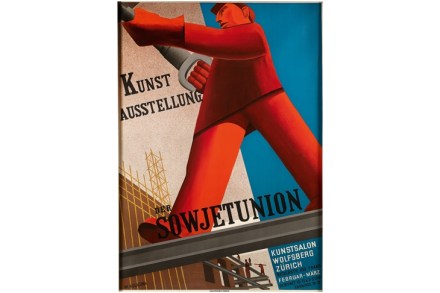
It’s hard to admire communist art with an entirely clear conscience. The centenary of the October revolution, which falls this month, marks a national calamity whose casualties are still being counted. When my father-in-law comes to visit, I have to hide my modest collection of Russian propaganda: he grew up under the Soviets and has few fond memories of the experience. He can’t work out why old agitprop is so popular today. But the simple fact is, for all the disaster they wrought, the Bolsheviks did leave a legacy of images so striking that, even now, they can draw thousands into a museum. As Tate Modern is about to demonstrate. Its new exhibition, Red Star Over Russia, showcases one of the greatest collections of Soviet propaganda posters.

High life | 24 August 2017

From our UK edition

When the Germans smuggled arguably the world’s most evil man into Russia 100 years ago, they did not imagine the harm they were unleashing on the human race. Once Lenin had prevailed, he decided to forge a new consciousness, New Soviet Man, as the Bolshies called it, someone who would overcome ‘the antinomies of subjective and objective, body and spirit, family and party’. Leave it to a horror like Lenin to design a new human being (although a certain Austrian tried to emulate him less than 20 years later) and you get Yakov Sverdlov, who ordered the murder of the Tsar and his family, and the hanging of their dogs. We hear a lot about the Nazis nowadays, and very little about monsters such as Lenin and Sverdlov, and their enablers.

A brave new world – at gunpoint

From our UK edition

Of the many books published this year to mark the centenary of the Russian revolution, this is perhaps the most curious. China Miéville is best known as an imaginative and entertaining writer of ‘weird’ (his word) science fiction and magic realism. October is a narrative history of the two 1917 revolutions in Russia, written from an ultra-left perspective — with a novelist’s eye for a good story and colourful characters. So it’s an examination of why the communist experiment failed miserably — at the cost of much blood — that is also wonderfully well written: smart, witty and full of fresh insight. But it can also read like an A-level essay, regurgitated from textbooks. Weird indeed.

How Lenin manipulated the Russian Revolution to his own ends

From our UK edition

The centenary of the Russian Revolution has arrived right on time, just as the liberal democratic world is getting a taste of what it’s like to feel political gravity give way. In 2017, Lenin lives. ‘In many ways he was a thoroughly modern phenomenon,’ writes Victor Sebestyen in Lenin the Dictator, the kind of demagogue familiar to us in western democracies, as well as in dictatorships. In his quest for power, he promised people anything and everything. He offered simple solutions to complex problems. He lied unashamedly. He identified a scapegoat he could later label ‘enemies of the people’. He justified himself on the basis that winning meant everything….

The good, the bad and the ugly

From our UK edition

Vladimir Putin notoriously declared the collapse of the Soviet Union in 1989 to be one of the greatest disasters of the 20th century. However, as Revolution: Russian Art 1917–32 — an ambitious exhibition at the Royal Academy — helps to make clear, the true catastrophe had occurred 82 years earlier, in 1917. Like many of the tragedies of human history, the Russian revolution was accompanied, at least in the early stages, by energy, hope and creativity as well as by murderous cruelty and messianic delusion.

The Baron is back

From our UK edition

Sigizmund Krzhizhanovsky was born in the wrong place at the wrong time. Had his Polish ancestor not been exiled to Siberia, he might have become a figure in European literature; living in Soviet Russia he was, in his own words, ‘known for being unknown’. His fiction and plays, written in the 1920s–1930s, remained mostly unpublished — unpublishable — till 1989. That he can now be read in English is thanks to the translator Joanne Turnbull, who in collaboration with Nikolai Formozov has brought him out of obscurity. What Krzhizhanovsky lacks in popularity he makes up for in the fame of his hero, Baron Munchausen, an incorrigible fantasist created by the 18th-century author Rudolf Erich Raspe.

Red with the people’s blood

From our UK edition

Few 20th-century historians doubted that the 1917 Russian revolution was one of the most influential events of their time, indeed of all time. As the centenary commemoration approaches, however, it seems remarkable how far and how fast the ideology that inspired Lenin and millions of his worldwide followers has receded in significance. Many are the imperfections of capitalism, but almost nobody outside Jeremy Corbyn’s office any longer supposes that communism, least of all the old Soviet brand, offers a credible alternative. This would amaze our grandparents’ generation on both sides of the struggle. The novels of C.P. Snow are indifferent fiction but intriguing middle-class social history.