Lenin

Box of tricks

From our UK edition

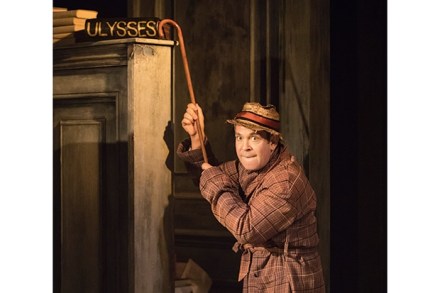
Travesties is a multi-layered confection of art, song, literature and pastiche. Tiny snippets of it are true. In Zurich, in 1917, James Joyce directed a production of The Importance of Being Earnest featuring a British diplomat, Henry Carr, in the role of Algy. Joyce and Carr fell out over the costume budget and became embroiled in a brief legal wrangle. That’s the starting-point for Tom Stoppard’s dazzling intellectual pantomime which features cameos from Lenin and Tristan Tzara, both residents of Zurich at the time. Tzara was an experimental vandal whose penchant for slicing sonnets into pieces was taken up by copycats and flowered, or degenerated, into the Dada movement.

Enemies of history

From our UK edition

At the start of the 21st century, no one felt the need to reach for studies of ‘third-period’ communism to understand British and American politics. By 2016, I would say that they have become essential. Admittedly, connoisseurs of the communist movement’s crimes have always thought that 1928 was a vintage year. The Soviet Union had decided that the first period after the glorious Russian revolution of 1917 had been succeeded by a second period, when the West fought back. But now, comrades, yes, now in the historic year of 1928, Stalin had ruled that we were entering a ‘third period’ when capitalism would die in its final crisis. As the Wall Street crash was only months away, this was not as fanciful as it seemed.

Fleeing Mother Russia

From our UK edition

‘Ah! Scrubbing the deck! My childhood dream! As a child I had once seen a sailor hosing the deck with a large hose while another sailor scrubbed away with a stiff, long-handled brush with bristles cut at an angle. I had thought at the time that nothing in the world could be jollier.’ This is Russian writer Teffi accepting her enforced labour on board a refugee ship fleeing Bolshevik Russia. Moments before, a dispossessed landowner has proclaimed his right to idleness — ‘Hire someone! Do whatever is necessary! If you prefer all this socialist nonsense, then what are you doing on this ship?

Reds against Whites

From our UK edition

On the 24–25 October 1917 (according to the Julian Calendar, or 7–8 November according to the Gregorian) the political disputes which had shaken the Russian empire reached a peak. The provisional government, or All-Russian Soviet of Workers’ and Soldiers’ Deputies (which had been formed in the wake of the February revolution and abdication of Tsar Nicholas II) was stormed by the Bolsheviks. These men and women — whom Churchill later described as ‘swarms of typhus-bearing vermin, vampires, troops of ferocious baboons’ — quickly consolidated power in Petrograd, now St Petersburg.

Rhodes’s statue should remain, on one condition

From our UK edition

Lobengula was the second king of the Matabele people in what is now Zimbabwe. He was also the last. Cecil John Rhodes smashed his authority, and broke his tribe. The Matabele (a breakaway people from the Zulu kingdom to the south) had been making their way north, and by the time Rhodes arrived on the scene were in effective control of a vast area of southern Africa, stretching from the Limpopo river to the Zambezi. Matabeleland was rich in -minerals and the tribe were being pestered by white prospectors. Rhodes saw his opportunity. He made an ally of Lobengula, who had been king since 1869, and in 1888 persuaded him to grant Rhodes’s emissaries an exclusive deal known as the Rudd Concession.

The threat from Russia’s spies has only increased since the fall of Communism

From our UK edition

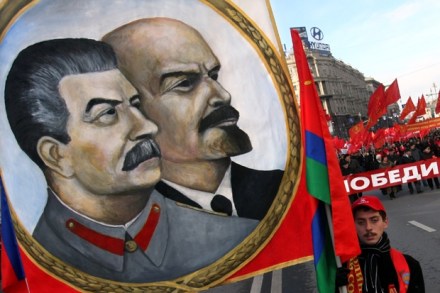
‘No, we must go our own way,’ said Lenin.  The whole world knows him as Vladimir, while he was in fact Nikolai. ‘Nikolai Lenin’ was the party alias of Vladimir Ilyich Ulianov, a terrorist leader and psychopath whose ideas changed the history of the greater part of the 20th century. This era ended on 26 December 1991 with the collapse of the 74-year-old Soviet Union, founded by Lenin, who seven years after the Bolshevik revolution died of syphilis, only to be succeeded by Stalin. ‘Stalin’ was also an alias. The Soviet dictator’s real name was Ioseb Vissarionovich Jugashvili, born into the family of a Georgian cobbler. His education, which he never finished, was limited to a theological seminary.

Charlie Chaplin, monster

From our UK edition

No actual birth certificate for Charles Spencer Chaplin has ever been found. The actor himself drew a blank when he went on a rummage in Somerset House. The latest research suggests that he was born ‘in a gypsy caravan in Smethwick, near Birmingham’. But surely the truth has been staring people in the face ever since the Little Tramp first popped on the screen: Chaplin is the lost twin of Adolf Hitler. Peter Ackroyd almost suggests as much. Both men first drew breath in April 1889. They had drunken fathers and nervous mothers. There were patterns of madness and illegitimacy in the family tree. They were short and sported an identical moustache. They had marked histrionic skills, each man ‘appealing to millions of people with an almost mesmeric magic’.

The many attempts to assassinate Trotsky

From our UK edition

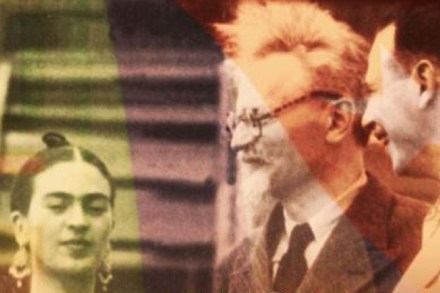
Leon Trotsky’s grandson, Esteban Volkov, is a retired chemist in his early eighties. I met him not long ago in the house in Mexico City where his grandfather was murdered in 1940 with an ice-pick. Volkov had grown up in that house surrounded by 20-foot garden walls and watchtowers with slits in them for machine-guns. The protection was no defence against Trotsky’s eventual assassin, the Spanish-born Stalinist Ramón Mercader, who very ably infiltrated Trotsky’s Mexico circle and, on 20 August, struck the revolutionary on the front of his head with that gruesome weapon. Trotsky bellowed in pain but managed to fend off his assailant before collapsing. His bodyguards hurried in and beat off the intruder; Trotsky was rushed to hospital, where he died the following day.

Secrets of the Kremlin

From our UK edition

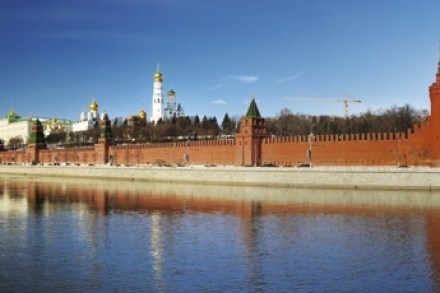
A building bearing testimony to the power of eternal Russia; a timeless symbol of the Russian state; a monument to Russian sovereignty. To the modern eye, the Kremlin fortress seems as if it had always been there, as if it had never changed and never will. All of which is utter nonsense, as Catherine Merridale’s fascinating history reveals: the story of this famous compound is not one of continuity, but of construction, destruction and reconstruction. Every reincarnation of the Russian state over the centuries — and there have been many — has been accompanied by a corresponding reincarnation of the Kremlin. Its history is thus a metaphorical history of Russia, as Merridale understands very well.

The Lady on Lenin

From our UK edition

A delightful anecdote in Jonathan Aitken's new biography of Margaret Thatcher, which is out today. Visiting the French estate of the late Jimmy Goldsmith in 1997, with Denis and Bill and Biddy Cash, Lady T posed for a photograph in front of the giant statue of Lenin that resides in the woodland of Montjeu. ‘I just want to show him we won,’ declared the late PM. History is written by the victors.

The Tragedy of Liberation, by Frank Dikötter – review

From our UK edition

The historian of China Frank Dikötter has taken a sledgehammer to demolish perhaps the last remaining shibboleth of modern Chinese history. This is the notion, propagated in countless books and documentaries, that Mao’s regime started off well, deservedly coming to power on a wave of popular support and successfully tackling the evils left behind by the corrupt and incompetent Nationalists. Then, at the end of the 1950s, it all started to go wrong. There were terrible natural disasters, followed by famine; and, seemingly unaccountably, the brotherhood of brave revolutionaries fell out, creating the bloodbath of the Cultural Revolution. This is the version still served up to A-level students in Britain.