Labour party

Diary – 24 September 2015

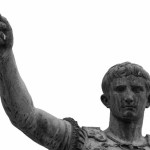
Jeremy Corbyn has been compared to plenty of people over the past few months — a geography teacher, Michael Foot, Brian from the Monty Python film — but my favourite comparison was to a horse. Steve Fielding, professor of politics at Nottingham, declared Corbyn’s election ‘an act of political stupidity unparalleled since Caligula appointed his horse to the Roman senate’. As someone with a book just published on Rome’s first imperial dynasty, I was doubly thrilled. First, Professor Fielding had confirmed the conviction in which I had written my history of the first Caesars: that two millennia on, the West’s primal examples of political excess continue to instruct and appal.

Kerry McCarthy defends saying that meat-eaters should be treated like smokers

Today Labour's vegan shadow environment secretary Kerry McCarthy has come under fire for comments she has made about meat. In an interview with 'Viva!Life' magazine -- given before she was given a role in Jeremy Corbyn's shadow cabinet -- McCarthy said 'meat should be treated in exactly the same way as tobacco with public campaigns to stop people eating it'. Naturally this has gone down like a lead balloon with farmers, especially since she appeared to suggest people should give up meat and dairy completely: 'Progress on animal welfare is being made at EU level … but in the end it comes down to not eating meat or dairy.

Gloria De Piero interview: Labour let children like me down in the 1980s. It can’t do that again.

Gloria De Piero is one of Labour’s most confident performers: a former television presenter who is well-liked in her party for speaking ‘normal’, she rarely seems ruffled. But when we meet in her Westminster office, the MP for Ashfield seems oddly anxious. Her party has been behaving in a similarly unsettled way ever since it started facing up to the fact that it was about to elect a backbencher as its leader, so perhaps it’s not all that surprising. But De Piero has agreed to serve in Jeremy Corbyn’s Shadow Cabinet in the rather nebulous-sounding ‘Young People and Voter Registration’ brief, so she can’t be as unsettled by his victory as some of her moderate colleagues, who have fled to the backbenches. So what’s up?

Podcast: the great British kowtow and do all right wingers have bad music taste

Britain’s policy towards China appears to be quite simple: doing exactly what China wants. On this week’s View from 22 podcast, Jonathan Mirsky and Fraser Nelson discuss this week’s Spectator cover feature on George Osborne’s visit to China and our interview with the Dalai Lama. Why is the Chancellor so keen to please the Chinese government? Is David Cameron wrong to say he will never meet with the Dalai Lama again? And what does the Dalai Lama think of the Prime Minister’s position? Rod Liddle and James Delingpole also debate whether they have bad music tastes, following revelation that Delingpole enjoyed listening to Supertramp with the Prime Minister at university. Do all right-wingers inherently have bad music taste?

Will anyone fight, fight and fight again to save what’s left of New Labour?

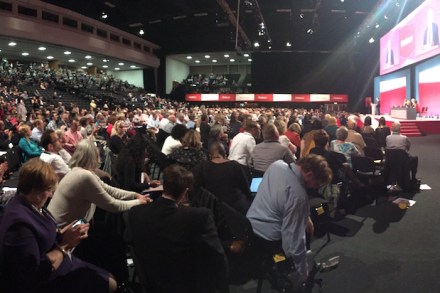
[audioplayer src="http://rss.acast.com/viewfrom22/thegreatbritishkowtow/media.mp3" title="James Forsyth and Stephen Bush discuss the upcoming Labour party conference" startat=1650] Listen [/audioplayer]Five years ago this Saturday, Ed Miliband was crowned Labour leader. Three days later, he had to deliver his first conference speech in that role. It was a distinctly underwhelming address. Miliband was overshadowed by his brother, who ticked Harriet Harman off for clapping. To try to give its new leader a better start this time round, Labour decided to announce the result of its leadership contest a fortnight before the party conference. But two weeks has been nowhere near enough time for Labour to come to terms with what has happened.

Corbyn’s salvation

On religion, Jeremy Corbyn is interestingly moderate, circumspect — not the angry atheist you might expect. In a recent interview with the Christian magazine Third Way, he said his upbringing was quite religious: his mother was a ‘Bible-reading agnostic’ and his father a believer, and he went to a Christian school. ‘At what point did you decide that it wasn’t for you?’ he was asked. He replied very carefully, even challenging the premise of the question: ‘I’m not anti-religious at all. Not at all… I find religion very interesting. I find the power of faith very interesting. I have friends who are very strongly atheist and wouldn’t have anything to do with any faith, but I take a much more relaxed view of it.

Labour would benefit from a stronger position on Europe, says former policy chief

Jon Cruddas’ speech warning that Labour is lost in England has attracted plenty of attention for that line alone. But there was another section that is worth taking note of, given the former party policy chief is keen to play such a big role in rebuilding Labour after its febrile summer. Cruddas also spoke about Labour’s challenge on Europe, arguing most significantly that the party should support two categories of EU membership and take a stronger position on the renegotiation. He said: ‘We need to strengthen our pro-European politics with a clear position.

Who are Jeremy Corbyn’s outriders?

Jeremy Corbyn may have a Shadow Cabinet and a full frontbench team, but the Labour leader doesn’t have many genuine outriders even amongst those he has given jobs to. Most frontbenchers seem rather refreshed by how happy he is for them to have open discussions at meetings: yesterday’s Shadow Cabinet meeting, for instance, was quite discursive and friendly, which was quite different to its atmosphere in the Miliband years. But most of those frontbenchers have agreed to serve because they believe it is the best thing for the Labour party, not because they want to help Corbyn.

Emily Thornberry risks another Twitter gaffe with pig jibe

Emily Thornberry has only just made it back onto the frontbench after she had to resign from the shadow cabinet over a tweet she sent of a photo of a house covered with St George flags during the Rochester and Strood by-election. However, despite discovering the dangers of Twitter first hand, the Labour MP has not been put off using it to share her more risqué thoughts.

Coffee Shots: Labour press office taunts David Cameron with Percy Pigs

With the Downing Street press office declining to comment today on allegations from Lord Ashcroft involving the Prime Minister and a dead pig, Labour has also stayed quiet over the claims. However, members of the Labour press office were unable to resist ignoring the alleged incident completely, with press officers giving out sweets to hard-working lobby journalists. The choice of candy? Percy Pigs, of course.

Jeremy Corbyn should forget railways if he wants Labour to be a success

Jeremy Corbyn’s first policy pronouncement as Labour leader hasn’t been all that surprising: he wants a ‘People’s Railway’ that will bring the railways back into public ownership line by line. He will have noticed the excited noises that party members made at hustings whenever he mentioned rail renationalisation - and the impatient sighs from the same audience when his rivals for the leadership were cool on the issue. But as Peter Kellner explains today, even though this individual measure is popular, unless Corbyn is able to deal with the public’s fundamental lack of trust in Labour over the economy, he could promise voters every single retail offer they’ve ever dreamed of and they still wouldn’t back his party.

Looking good by doing nothing: Corbyn and the slackactivist left

The Save Darfur page on Facebook was one of the most heart-warming successes of the early years of social media. Between 2007 and 2010, more than a million people joined to protest against the world’s indifference to the genocide in Darfur. Concerned and compassionate, their virtue shone forth for all their friends to see. They had every reason to protest, and still do. When I was at refugee camp in Calais a few months, I did not meet any Syrians. By contrast, Sudanese, fleeing conscription by the militias in Darfur, and Eritreans fleeing a prison state, which is becoming Africa’s North Korea, were everywhere.

Twelve disagreements Charlie Falconer has with his party leadership

Charlie Falconer is one of the few figures closely associated with Blairism serving in Jeremy Corbyn’s shadow cabinet, which isn’t surprising given the new leader's mandate. In an extraordinary interview on the Sunday Politics, the shadow justice secretary said he was serving under Corbyn because ‘I want to make the opposition as effective as possible in holding the government to account’ — while outlining a long list of policy areas he is at odds with the leadership on. As well as saying he would quit if Labour campaigns for a Brexit, Falconer has revealed no fewer than twelve other areas where he differs with Corbyn and John McDonnell. 1.

Jeremy Corbyn’s first week as Labour leader: a series of gaffes, u-turns and general chaos

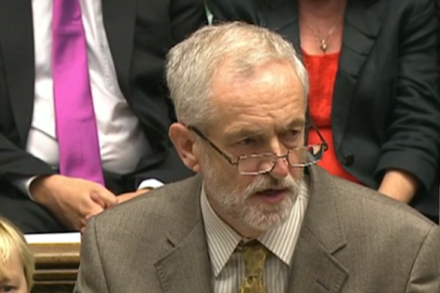
Harold Wilson’s remark that ‘a week is a long time in politics’ has never been more apt than at the beginning of Jeremy Corbyn’s leadership. The hopey-changey rhetoric that lead him to victory last Saturday has inevitably given way to a more traditional form of compromise politics. While Corbyn’s debut at the Dispatch Box was the high point of his first week as Labour leader, the rest of his time has been devoted to fighting fires — literally in one incident. Women in the shadow cabinet: Sky News’ Darren McCaffrey revealed how the first Corbyn shadow cabinet was put together last Sunday and how the Labour leader attempted to deal with a lack of women shadowing the Great Offices of State.

Jeremy Corbyn appoints convicted arsonist Mike Watson as his education spokesman

Given that Jeremy Corbyn is a Hamas sympathiser with an IRA sympathiser as his Shadow Chancellor, I imagine he didn't think too much about promoting a little-known Scot named Mike Watson. He is a Labour peer, who now takes a place in Corbyn’s frontbench as education spokesman. He is also a convicted arsonist, who quit the Scottish Parliament in disgrace after being caught drunkenly setting fire to a set of curtains during the Scottish Politician of the Year ceremony 2004. He was sentenced to 20 months in prison, which he served in HMP Edinburgh. Watson's undeserved rehabilitation says much about how Corbyn is having to scrape the very bottom of the barrel for people willing to serve under him.

John McDonnell’s slick performance on Question Time was worthy of Tony Blair

Hats off to John McDonnell. We've all been fretting about how the Corbyn gang would cope against the media slick Tories. We all think that, despite the appeal of conviction politics, a shadow chancellor such as McDonnell will be eaten alive by the Tory front bench. John McDonnell's performance on BBC Question Time last night suggested otherwise. Question Time is a good test for politicians: they have to look and sound passionate while saying nothing much at all. McDonnell did exactly that, and with gusto. He masterfully shrugged off his 'joke' about killing Margaret Thatcher. When asked about his support for the IRA, he managed almost simultaneously to apologise and to take credit for bringing peace to Northern Ireland.

Alistair Darling: there’s no ‘silver lining’ to Jeremy Corbyn’s leadership

Today marks one year since the Scottish independence referendum and many of the key figures are reflecting on how politics has changed. Alistair Darling, the former Labour Chancellor and leader of the Better Together campaign, spoke on the Today programme about Scotland, but it was the remarks on his own party that were the most striking. He said Jeremy Corbyn was elected leader thanks to the ‘disillusionment’ of people who are ‘fed up with the established order’. But Darling said ‘I honestly don’t know’ whether John McDonnell will ever become Chancellor: ‘Just at the moment, it seems to me to be difficult [to judge] but I’m willing to be surprised.

Barometer | 17 September 2015

It’s their party Jeremy Corbyn won the Labour leadership contest with 60% of the vote among four candidates in the first round. Which leader has the largest mandate from their party? — David Cameron was elected in 2005 with 28% of the vote out of four candidates in the first round (held among MPs only). He won 68% of the party vote in the run-off with David Davis. — Tim Farron won 57% of the Lib Dem vote this year. Only two candidates stood. — Nicola Sturgeon was appointed as SNP leader unopposed last November. — Nigel Farage was elected Ukip leader in 2006 with 45% of the vote (among four candidates) in a first-past-the-post system. — Natalie Bennett was elected Green leader in 2012 with 59% in the final round of voting.

Diary – 17 September 2015

With four days to go until the result of Labour’s leadership election, a call from the Sunday Times. Would I like to write a piece, along the lines of the opening chapter of my 1980s novel A Very British Coup, about the first 100 days of a Corbyn government? Anything up to 3,000 words, he says. I am sceptical that the sense of humour of the censors at Murdoch HQ will stretch to the prospect of a Corbyn government, however fanciful. Especially since any such government is likely to be interested in breaking up the concentration of media ownership. What they are really looking for, I suspect, is tale of chaos, mayhem and a breakdown of the social order. Nevertheless he is bursting with enthusiasm. After nailing down terms I decide to give it a go.