Labour party

David Cameron: Corbyn poses a threat to Britain's financial security

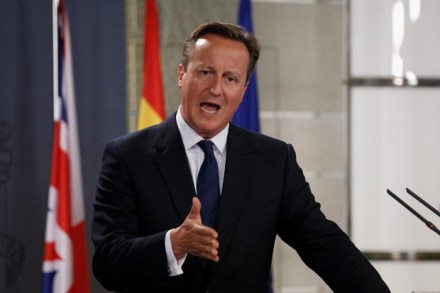
Jeremy Corbyn hasn’t even been elected Labour leader but the campaign to undermine him begins today. David Cameron will give a speech on the economy, in which he will warn that Corbyn will threaten Britain’s security — a strategy I wrote about earlier this week. According to today’s Times, the Prime Minister will make his first significant attack on a Corbyn-led Labour by focusing on the threat to Britain’s financial security: ‘I have watched with some bewilderment the Labour leadership election of the past few months. ‘Whoever wins . . . this is now a party that has completely vacated the intellectual playing field and no longer represents working people. It is arguing at the extremes

Credible

In a wonderfully dry manual of theology on my husband’s bookshelves, written in Latin and printed in Naples in the 1830s, there is a discussion of whether ‘rustics and idiots’ are supported in their belief by ‘motives of credibility’, such as miracles. The same question has been asked about belief in Jeremy Corbyn, except that the city stands in for the country, and the idiots are often useful ones. ‘I am the only candidate who can offer a bold but credible vision,’ Andy Burnham has said. ‘I’ll have the confidence to reject Tory myths and the credibility to demolish them,’ countered Yvette Cooper. John Curtice, the political scientist, noticed that

Liz Kendall says farewell to frontline politics (for now)

Liz Kendall has all but admitted she is not going to be the next Labour leader. At a speech in Westminster this morning, the shadow care minister spoke about the future of the party and referenced ‘whatever happens on Saturday’ — but she was no longer talking about her plans as leader. Kendall urged Labour to stick together after the new leader is elected, specifically if Jeremy Corbyn wins: ‘First, everyone must – and I believe will – accept the result and mandate of the new Leader. They will have won the right to pursue their agenda and must be given the space and scope to do so. If Jeremy Corbyn wins, it would

Why Labour will lose in 2020

If Jeremy Corbyn is elected Labour leader on Saturday, does this mean the party will lose the next general election? Lord Ashcroft has produced a new report, Project Red Dawn, which examines why Labour lost the 2015 general election and what it needs to do to win again. His findings all point to another defeat under Corbyn’s leadership. Ashcroft’s research says the single biggest reason Labour lost was Ed Miliband, who defectors said was not up to the job of Prime Minister. The Tories will undoubtedly do their utmost to paint Corbyn — who has less experience in office than Miliband — in exactly the same light. Defectors to the Conservative party were put off by the

How Gordon Brown’s hit man became Labour’s peacemaker

[audioplayer src=”http://rss.acast.com/viewfrom22/merkelstragicmistake/media.mp3″ title=”Dan Hodges and John McTernan discuss whether Tom Watson can save Labour” startat=772] Listen [/audioplayer]Last week I was talking to a member of the shadow cabinet about Jeremy Corbyn’s impending victory as Labour leader. ‘Forget about coups and resistance movements. There’s only one person who can save the party now — and that’s Tom Watson.’ It’s a common theme: those who had just recently denounced Watson as a fat thug now see him as the party’s only hope of salvation. On Saturday, half an hour before Corbyn’s almost certain coronation, Watson will be unveiled as his party’s new deputy leader. He will appear a rather unlikely saviour. His

Will Jeremy Corbyn end up 'doing a Blair' as Labour leader?

Jeremy Corbyn’s lack of experience in office makes it hard to predict how he will act as Labour leader. His tens of thousands of supporters are crowing that a new political age will begin on Saturday and are looking forward to a shadow cabinet made of like-minded folk from the hard-left — Diane Abbott, Michael Meacher etc. But the signs so far suggest that Corbyn as Labour leader will operate differently to Corbyn to march leader. Today’s Guardian offers an explanation why. The list of shadow cabinet ministers who would refuse to serve under Corbyn is growing, along with a unease among Labour MPs about a split between its Parliamentary party and grassroots. Chris Leslie, Emma Reynolds, Yvette Cooper and Tristram Hunt have

How will the Conservatives react to a Jeremy Corbyn victory?

If the bookmakers and pollsters are to be believed, there is little doubt that Jeremy Corbyn will be crowned Labour leader on Saturday. Westminster is therefore wondering: what happens next? I’ve written a piece for POLITICO Europe today looking at the personal and policy battles ahead if Corbyn is the new opposition leader. Instead of treating him as a joke, it seems the Tories would take Corbyn seriously and use the bucketloads of research they have built up over the summer to undermine and destroy him. While Conservative HQ and Downing Street are not revealing too much about their plans if Corbyn wins, insiders suggest that their core message of ‘Labour hasn’t changed’ would be continued. Repeating the same

Labour defaults to Universal Credit attack at welfare questions

Labour has had a difficult summer over welfare, so it’s no surprise its frontbench played it safe at Work and Pensions questions today. Instead of ruthlessly quizzing the government on the recent statistics showing the death of those being found fit to work or even the Welfare Bill, its frontbench team chose to attack on Universal Credit, something it tends to turn to in times of trouble. Iain Duncan Smith, the Work and Pensions Secretary, claimed ‘Universal Credit is going to be a remarkable success’ despite the endless delays and technical missteps: ‘Universal Credit is now available in over half of job centres across Great Britain and available in all Jobcentres early next year. The national roll out is

Welcome to the era of emoji politics, where debate and rationality are suffocated

I break off the family holiday to campaign for my colleague Liz Kendall in the Labour leadership election. In Ipswich and Colchester, I found party members not so smitten by Corbynmania. In both constituencies, more people voted Tory than Labour: it remains unclear to me why heading further left would appeal to them. At every leadership election since the demise of Tony Blair the party has chosen a more left-wing candidate, and while Neil Kinnock might have ‘got his party back’, the country got a Tory government back. What is also evident is the anger among party members who have spent years delivering leaflets and are being called ‘Tories’ for

Labour moderates hold talks on dealing with leadership result

Anti-Corbynite planning for the aftermath of what looks like certain victory for the Islington socialist in the Labour leadership contest is still in disarray. Though Chuka Umunna’s intervention calling for ‘solidarity’ earlier this week was a bold move designed to take some of the poison out of the contest, it hasn’t gone down well in some quarters, with those involved in the other campaigns feeling rather frustrated that he is talking as though it’s a done deal (though his attitude on the result is understandable), and others irritated by the suggestion that Umunna could work with Jeremy Corbyn. But as I wrote earlier this week, Umunna’s speech was one of the

Corbyn and the plebs

Last week, guru Corbyn was invited to reflect on the 2,500-year-old Roman origins of the republicanism to which he is so devoted. This week, the ageing seer may care to ponder the plebeian fight for equality, a struggle Corbyn holds dear. The picture as the historian Livy (c. 60 BC–AD 17) paints it is that Romans were full of hopes in 509 BC that, with the king thrown out, all would be peace and love. But now it was the patricians — the hereditary advisers to the kings — who were doing the exploiting: holding a monopoly of power and running the show in their own interests, with serious consequences for the plebeians

Diary - 3 September 2015

‘Devon, Devon, Devon/ Where it rains six days out of seven.’ Nothing beats a British seaside holiday. And north Devon is especially blessed when it comes to vibrant weather patterns. We have watched in awe this summer as high-pressure systems from the Continent have collapsed in the face of sturdy Atlantic lows and extreme weather warnings punctuated the news. Our companion in all this has been the Met Office, whose forecasts are dashingly presented by the hunky Tomasz Schafernaker. So it was a shock to see the third-rate bureaucrats running the BBC replace it with some cheap and rather remote New Zealand outfit. Until recently, an institution like the BBC

What a Corbyn victory will mean for the Tories

A Jeremy Corbyn victory in the Labour leadership race now seems like a racing certainty. The consequences of this for Labour have been much discussed but in the magazine this week, I look at what it would mean for the Tories. The first, and most obvious, thing to say is that it would make 2020 the Tories’ election to lose — and they would have to make an epoch defining mistake to do so. But some Tories are worried about the prospect of a Corbyn victory. This isn’t just because they fear that bad opposition leads to bad government. But because they fret that Cameron and Osborne’s response to it will

Tristram Hunt stands firm on Corbyn despite threat of 'Labour purge'

Yesterday Channel 4’s Michael Crick reported that a pro-Corbyn Unite official had told him ‘careerist’ MPs will be purged from Labour if Jeremy Corbyn gets in. Among those on the list of targets for de-selection was Tristram Hunt, who would ‘make a wonderful scalp’. Yet despite all the noise, Hunt doesn’t seem too bothered. Although his fellow New Labour comrade Chuka Umunna performed a reverse ferret earlier this week over whether he would support a Corbyn-led government, Hunt appears not to be backing down. Writing in this week’s issue of The Spectator, the shadow education secretary says that he does not understand why a lurch to the left would lead to success at the polls: ‘I break

Surviving the purge

[audioplayer src=”http://rss.acast.com/viewfrom22/jeremycorbynsbritain/media.mp3″ title=”Dan Hodges, James Forsyth and Ellie Mae O’Hagan discuss the impact of a Corbyn victory” startat=40] Listen [/audioplayer]How long does it take to rebuild a political machine? Twelve months? Two years? Three years? Maybe it can’t be done at all. Jeremy Corbyn has won. Everyone within Labour’s ranks acknowledges that now. The issue concentrating minds is how long it will take to remove him, how bloody the process of removing him will be and how much effort it will take to repair the damage once he has been removed — assuming the damage is reparable. This is why Labour MPs are thinking about the machine. Perhaps one or

The Corbyn enigma

[audioplayer src=”http://rss.acast.com/viewfrom22/jeremycorbynsbritain/media.mp3″ title=”Dan Hodges, James Forsyth and Ellie Mae O’Hagan discuss the impact of a Corbyn victory” startat=40] Listen [/audioplayer]Just because something is absurd doesn’t mean it can’t happen. This is the lesson of Jeremy Corbyn’s seemingly inevitable victory in the Labour leadership contest. At first, the prospect of Corbyn leading Her Majesty’s Loyal Opposition was seen to be so ridiculous that bookmakers put the chances of it at 200 to 1. Labour MPs were prepared to nominate him to broaden the ‘debate’. Now, almost everyone in the Labour party thinks we are days away from Corbyn’s coronation, and some bookies are already paying out. Even Tony Blair has accepted

The green ink brigade is now running the show

Daily they drop into my email account — alongside the more obviously useful stuff about how I might elongate my penis or ensure it performs with greater fortitude than at present, and the charitable offers from women who live ‘nearby your house, Roderick’ and apparently wish to test whether or not those previous solicitations I mentioned have been acceded to with success. Alongside all that stuff are the fecund exhortations from a bunch of online campaigning organisations. Click democracy, a sort of spastic form of activism whereby you stick it to da man simply by pressing a button. They come, these missives, from the likes of Change.org and 38 Degrees. Sometimes

Jeremy Corbyn's opponents are finally starting to show political nous

Chuka Umunna’s call for Labourites to unite around their new leader and show ‘solidarity’ does show a growing acceptance that Jeremy Corbyn is on the brink of being installed as the party’s new chief in just ten days’ time. But it also shows that the Blairites in the party are finally starting to come up with a plan for dealing with the rise of the hard left. Labour’s centrist modernisers have spent the summer scratching their heads at the Corbyn phenomenon, which they hadn’t predicted at all – indeed, I was initially briefed by one of their number that ‘we will get hundreds of thousands of new supporters. Social media

Labour’s centrists have held up the white flag of surrender

Smart political operators are often the stupidest people. In conventional Westminster terms, it was smart of Labour’s Chuka Umunna to say last night that everyone in Labour should work with Jeremy Corbyn. Received wisdom expects us to applaud Umunna as he bows his head to conventional pieties and says Labour should get down with the kids, ‘celebrate’ the Corbyn-supporting yoof, ’embrace’ them and ‘harness’ their energy to revitalise Labour. We are expected to nod sagely as political journalists tell us that Umunna is calculating that ‘if Corbyn, the clear frontrunner, is to fail, Umunna’s wing of the party must not have done anything to make it responsible’. Clever move, we