Labour party

The politics of envy has failed

Last week I put £25 on Lady C to win I’m A Celebrity… Get Me Out of Here. At 25/1, I thought it was quite a good bet – until she withdrew for medical reasons. For those not watching the 15th series of the jungle reality show, Lady C is Lady Colin Campbell, a self-proclaimed ‘socialite’ and author of several royal biographies. Some of her fellow contestants, such as ex-Spandau Ballet frontman Tony Hadley, have accused her of not being a ‘real lady’, but they don’t have a clue, obviously. They mean she swears a lot, which hardly disqualifies her from being a toff.

Podcast: the real victims of climate change and the oddballs in youth politics

Are the elderly and poor the real victims of climate change? In this week’s View from 22 podcast, presented by Isabel Hardman, Matt Ridley and Michael Jacobs debate the Paris climate change conference and whether politicians are too concerned about protecting ‘our grandchildren’. What is the point of this conference and will anything be achieved? Are attitudes towards the environment changing? James Forsyth and Fraser Nelson also discuss the Labour party’s civil war over the Syria airstrikes and whether this will help Dan Jarvis’ leadership chances. How much has the party damaged its reputation over national security? Is Jeremy Corbyn still safe as Labour leadership or will moderates in the party try to unseat him in the near future?

Yesterday’s vote wasn’t about Syria’s war. It was about Labour’s

Parliament is always in a way a comedy of vanity. Yesterday it was a narcissistic farce. Our elected representatives spent ten hours making the same unconvincing points over and over again. The standard of speaking was poor because nobody had much worth saying. The pro-bombers kept arguing that we had to stand with our allies, and that Isis was horrid. The anti-bombers urged us not to make another tragic mistake in the Middle East. And everybody had to say how they felt personally — as if personal feelings are more important than right or wrong. Yet all the MPs knew deep down that Britain's intervention in the Syrian conflict would be so small-scale as to be pointless.

Hilary Benn’s speech was just a shallow historical re-enactment

What’s with the orgy of fawning over Hilary Benn’s Syria speech? It was eloquent, yes, but content-wise it reminded me of those historical re-enactment shebangs where sad men in their fifties try to inject meaning into their lives by pretending to be a Viking in a field for a couple of hours on a Saturday afternoon. Only instead of donning archaic armour and a horned helmet, Benn and his overnight Bennites - those currently clogging up Twitter with wild claims that his speech was the best oration since the Gettysburg Address - are wrapping themselves in the moral garb of the mid-20th century warriors against Nazi Germany.

The other side to the division of labour: the concentration of attention

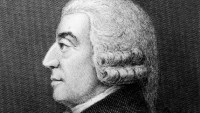
Adam Smith’s theory on the division of labour first appeared in 1776 in The Wealth of Nations. The idea was later revived by The Coasters in their early 1960s B-side ‘My Baby Comes to Me’. Well, she go to see the baker when she wants some cake She go to see the butcher when she wants a steak She go to see the doctor when she’s got a cold She go to see the gypsy when she wants her fortune told But when she wants good loving my baby comes to me When she wants good loving my baby comes to me. As Mr McClinton explains, rather than dividing his efforts between the supply of cake and fortune-telling, the baker is better off concentrating on the former.

After Labour’s Syria shambles, step forward Major Dan

[audioplayer src="http://rss.acast.com/viewfrom22/thegreendelusion/media.mp3" title="James Forsyth and Fraser Nelson discuss Labour's civil war over Syria airstrikes" startat=700] Listen [/audioplayer]It makes no sense for Britain to bomb Islamic State in Iraq but not Syria. Attacking a group that does not respect international borders on only one side of a border makes no strategic or military sense. From the Prime Minister down, government ministers are acutely aware of this absurdity. That is why they have been so keen to gain the Commons’ permission to extend the strikes to Syria. Yet this week Westminster has been gripped, not by the strategic case for taking the fight to Islamic State in Syria, but by the effect that this debate has had on the Labour party.

The Corbyn crack-up

Jeremy Corbyn is a rarity among politicians. All his enemies are on his own side. For the Tories, Ukip and the SNP, Corbyn is a dream made real. They could not love him more. As the riotous scenes at the shadow cabinet and parliamentary Labour party meetings this week showed, his colleagues see Corbyn and John McDonnell as modern Leninists who are mobilising their cadres to purge all dissidents from the party. Conversations with Corbyn’s aides show a gentler side to the new regime, however. They suggest the Corbynistas are unlikely to be able to control Labour MPs when they can barely control themselves. ‘Chaos’ was the word that came up most often, followed by ‘panic’ and ‘unforced errors’. Corbyn’s staffers were working 12-hour days.

Podcast special: Syria airstrikes and Hilary Benn’s extraordinary speech

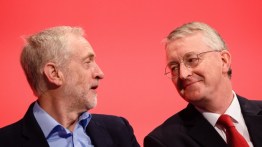
The House of Commons has voted to carry out airstrikes in Syria this evening by a majority of 174, but today's debate has been overshadowed by an incredible speech from Hilary Benn. In this View from 22 podcast special, Fraser Nelson, James Forsyth, Isabel Hardman and I discuss the implications of the Commons vote and what the shadow foreign secretary's address means for the Labour party. Has Benn challenged Corbyn's authority with his barnstorming speech that has won praise from all parties? How long will the glow last? Did Benn inspire the large number of Labour rebels?

Full text of Hilary Benn’s extraordinary speech in favour of Syria airstrikes

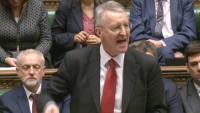
Thank you very much Mr Speaker. Before I respond to the debate, I would like to say this directly to the Prime Minister: Although my right honourable friend the Leader of the Opposition and I will walk into different division lobbies tonight, I am proud to speak from the same Despatch Box as him. My right honourable friend is not a terrorist sympathiser, he is an honest, a principled, a decent and a good man and I think the Prime Minister must now regret what he said yesterday and his failure to do what he should have done today, which is simply to say ‘I am sorry’.

Jeremy Corbyn gives his half of the Labour response to Syria

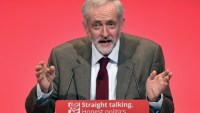
By the time Jeremy Corbyn got to his feet in today’s debate on action in Syria, the House of Commons was in a fractious mood, with interventions from MPs focusing as much on the Labour party as the issue up for debate. The Labour leader did not find much support from his own side, either, with a number of pro-intervention MPs frowning and muttering as he ploughed on with his speech. Hilary Benn appeared to be grinding his teeth during much of the response. It opened, inevitably, with a man who could quite reasonably be described as a ‘terrorist sympathiser’, given his dealings with the IRA and his ‘friends’ in Hamas, complaining about the Prime Minister’s comments last night.

David Cameron will be kicking himself for calling Corbyn and co ‘terrorist sympathisers’

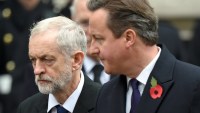
Today's debate and vote on airstrikes in Syria has already descended into name calling. At last night’s meeting of Conservative MPs, David Cameron reportedly urged his party to vote for the airstrikes because: ‘You should not be walking through the lobbies with Jeremy Corbyn and a bunch of terrorist sympathisers’ It’s a line that echoes the Tories' prior attacks on Corbyn as a threat to Britain’s national security, as well as and the Prime Minister’s accusation in his conference speech this year that the Labour leader ‘hates’ Britain. On a day which was set to be about ideas and arguments, and not personalities, Cameron's remarks have provided ammunition for Corbyn and his New Politics.

Corbyn has done enough damage to Labour. It’s time for him to step down

Jeremy Corbyn is a rarity among politicians. All his enemies are on his own side. For the Tories, Ukip and the SNP, Corbyn is a dream made real. They could not love him more. As the riotous scenes at the shadow cabinet and parliamentary Labour party meetings this week showed, his colleagues see Corbyn and John McDonnell as modern Leninists who are mobilising their cadres to purge all dissidents from the party. Conversations with Corbyn’s aides show a gentler side to the new regime, however. They suggest the Corbynistas are unlikely to be able to control Labour MPs when they can barely control themselves. ‘Chaos’ was the word that came up most often, followed by ‘panic’ and ‘unforced errors’. Corbyn’s staffers were working 12-hour days.

Jeremy Corbyn isn’t destroying Labour: backstabbing is

First things first: there is no force in Heaven or on Earth that could induce me to vote for Jeremy Corbyn and his sad brand of sixth-former state socialism. In fact, as someone who believes in freedom and growth, the idea of ever giving my beloved ballot to the illiberal, eco-miserabilist Labour Party, regardless of who’s leading it, fills me with horror. Or is it mirth? It’s one or the other. And yet, despite my Corbynphobia, and my humane desire to see dying Labourism put out of its misery, I increasingly find myself shaking my head in something like fury at Corbyn’s Labour critics. They accuse him of destroying their party. Which is both chronologically and factually wrong.

Hilary Benn on Labour’s Syria split: ‘People of principle can reach different decisions’

Tomorrow, Labour will try out something curious during the Commons debate on airstrikes in Syria. The opposition side of the debate will be opened by Jeremy Corbyn, who will argue against airstrikes, and later closed by Hilary Benn, who will make the case for them. This may sound all very dynamic and different but there is a simple and important question ordinary folks will be wondering: what is Labour's policy on Syrian airstrikes?

Behind the scenes with Momentum: what are they up to?

On Saturday evening, the Eastern Pavilion Banqueting Hall was taken over by Momentum for a curry after a cold and very wet day of campaigning for the Oldham West and Royton by-election. Momentum is a political activist group, founded in the wake of Jeremy Corbyn’s rise to the Labour leadership. As with most things under his watch, it has received a bad press. Critics in and outside of the Labour party say Momentum is trying to be a party within a party — an effort by hard-left activists to infiltrate Labour as Militant did in the 1980s and make it their own. Everyone I spoke in the Eastern Pavilion vigorously denied this charge, simply telling me they were enthused by Corbyn’s victory in the leadership contest and want to keep the spirit going.

Cameron says that the Commons will debate Syria strikes on Wednesday

David Cameron has just said that the Commons will debate extending air strikes against Islamic State to Syria on Wednesday. Given that Cameron has repeatedly made clear that he wouldn’t bring the issue back to the Commons unless he was confident he could win a vote with a clear majority, this must mean that he calculates that Labour granting its MPs a free vote means that he now has the numbers he needs. Speaking from the Cabinet Room, Cameron argued that this ‘was the right thing to do’ as the UK’s allies had asked for this country’s help and because Islamic State does not respect the Iraqi / Syrian border, it makes little sense to attack it only on one side of this border.

Corbyn survives ‘balanced’/‘ferocious’ meeting of Labour party

Tonight’s meeting of the parliamentary Labour party could have been a lot worse. It was full of very concerned MPs, many of whom had complaints they wanted to air. A senior Labourite did say it was the most ‘uplifting’ meeting he had attended because of the ‘ferocity’ of attacks on Corbyn. Jack Dromey gave an angry speech about Ken Livingstone’s comments about the 7/7 bombers, which colleagues leaving said was ‘brilliant’, while others expressed concerns about Corbynite grassroots group Momentum, arguing it was going to divide the party. David Winnick described the group as a ‘party within a party’.