Labour party

Cameron road tests his anti-Ed message

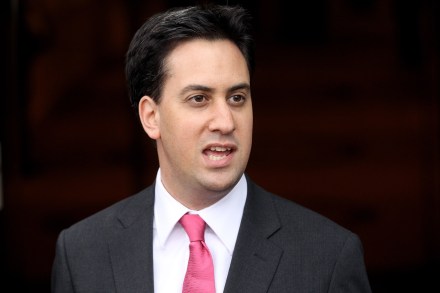
After Fern Britton's triumph over Gordon Brown a couple of years ago, we should know that This Morning interviews can have a certain bite to them. But if you needed more convincing, then how about David Cameron's appearance on the show this morning? Lurking behind all the talk of baby Florence and the Obamas, was a sprightly discussion of both defence cuts and the new Labour leader. Cameron was combative on both. Most noteworthy were Cameron's attacks on Ed Miliband. I imagine they will set the template for how the anti-Ed operation is conducted in future. The main aim, it seemed, was to defuse Miliband's talk of an optimistic New Generation – a woefully specious phrase, to be sure, but one that some Tories fear might gain traction.

Smutty Hattie closes the conference

Those earnest, pale and dimpled young men who staff the Labour party need to watch their drinks: Ed Miliband’s ‘New Generation’ is a haven for a well-heeled cougar. Inspired by Lady Bercow of Easy Virtue, Harriet Harman closed the Labour conference with a soliloquy in lust.   A cynic would say it was HRT talking, but Hattie was in playful and coquettish mood, as she often is - you know, young at heart and all that. More importantly, she was effective. Though I cringed through bits of her homily of the bordello - praying she’d segue into less alarmingly evocative subjects like gender equality, VAT and rape anonymity - she put nationalised train-set gags into relief, and didn’t sound like a human adenoid.

When Brown beat Blair in an election

With the merry dance of shadow cabinet elections upon us, it's a good time to look back on the last time Labour went through all this. There's a useful list of all the results from the 1992 Parliament here, but here's my summary of some of the more eyecatching outcomes: 1) Gordon Brown, from hero to zero (to Chancellor). In 1992, Gordon Brown came top of the shadow Cabinet rankings. By 1996, he had dropped to 14th. And bear in mind that the number of MPs standing fell from 53 to 26 over the same time. As we all know, though, he still made it to the Chancellorship.   2) Blair less popular than Prescott.

Farewell David Miliband

There we have it, David Miliband has announced that he is standing down from frontline politics. In his statement just now, he fluted all the anticipated notes. "The party needs a fresh start from its new leader," he started, before adding that, "I genuinely fear perpetual, distracting and destructive attempts to find division where none exists, and splits where they don’t exist, all to the detriment of the party." He said he will stay on as an MP, although he wants to do further work in the areas of education, the environment and foreign policy. It puts something of a fullstop under his career at the top of the Labour party, although I'm sure that new paragraphs will be written in future. How will he be judged? With a mixture of respect and mockery, I expect.

David Miliband keeps the door ajar

The list for the shadow Cabinet elections shows that no David Miliband supporter who was going to stand for the shadow Cabinet has decided not to run following Ed Miliband’s victory. It’ll be intriguing to see what the party balance of the shadow Cabinet is following these elections. There is an expectation that Yvette Cooper will top the poll now that David Miliband is not standing. David Miliband’s decision not to stand was as expected. As one fellow hack pointed out to me the other day, if David had stayed on the public would never have worked out which Miliband was which and the press would have constantly looked for a split story.

Balls spills the beans

File David Miliband's decision not to stand in the shadow Cabinet elections in the folder marked "Worst kept secrets in Westminster". Here's what Ed Balls has just told ITV: "I don't think David Miliband is leaving because of reasons of politics or ideology or policy. I don't think this is a political divide, I think this it's a personal decision. He's decided, and it seems he's decided in the last few days if he has, that for personal reasons he doesn't want to serve with his brother. I understand that because it must have been incredibly difficult to have lost to your brother in that way ... If as a brother you've decided that it's too difficult I think people would understand that. I don't think it's fair to find some big political split or divide here.

Miliband’s dilemma

The day after the leader’s speech is always a slightly flat time at a party conference. But Manchester today feels particularly flat. Everyone knows that the two big political stories are happening down in London: David Miliband’s expected announcement that he is not standing for the shadow Cabinet and the Fox flap. One of the challenges for Ed Miliband is going to be asserting his authority with his parliamentary colleagues, most of whom didn’t vote for him. Added to this is the fact that many of them remember him as a young bag-carrier. Members of the shadow Cabinet were openly mocking his ‘new generation’ line last night. All this is going to make his performances in the Commons chamber more important than usual.

Ed Balls saves the pitch till last

Predictable lines from Ed Balls this afternoon. ‘DIY free schools’ are iniquitous; Michael Gove is like the child snatcher in Chitty-Chitty Bang-Bang. Naturally, he made a pitch for the shadow chancellorship. Nick Clegg was his target and his pitch was avowedly left-wing: 'It was Nick Clegg: the man whose own election leaflets said ’Vote Liberal Democrat or you’ll get a Tory government, who said ‘stop the Tory VAT bombshell, who said spending cuts now would be ‘reckless’ and put jobs and the recovery at risk.

Kinnock: “We’ve got our party back”

Oh dear. I know Neil Kinnock is trying to rally the troops and all that but, really, I don't think this is terribly helpful. Of Ed Miliband and his little speech: "It was magnificent and I will never be able to praise him enough," the peer told a packed hall. "A trade union delegate leaned over and said 'Neil, we've got our party back'. I thought that was so accurate as an instantaneous response to the leader's speech." Ooops. The young voters of today probably have little to no recollection of Neil Kinnock*, but this is a little like receiving an endorsement from Jimmy Carter**. Except that Carter actually won.

Ed Miliband: Voice of a New Generation?

I was playing golf this afternoon and so didn't watch Milifest live. But having watched Ed Miliband's speech and, more importantly, having read it one thing is clear: there was a good speech in there. Unfortunately it was the speech Miliband gave defending the record of the first two Blair ministries. That part of his address had a coherence to it that was absent once he started to talk about the here and now and, even more problematically, the future. Indeed, defending the first two parliaments of New Labour only served to remind one how pointless the third was and how little thought  - in part because there hasn't been enough time for said thought - has gone into retooling Labour for opposition.

David Miliband torpedos his brother’s big speech

Make no mistake: David Miliband has handled himself with a fair amount of dignity over the past few days. But now some of his frustration has simmered to the surface. ITV news cameras were trained on him earlier, and caught him leaning towards Harriet Harman as she applauded his brother's claim that the Iraq War was "wrong" (see from two minutes into this video). According to the lipreaders, he says to her: "Why are clapping? You voted for it." To which she replies, "I'm clapping because he's leader and I'm supporting him." The elder Miliband does not look impressed. To be honest – and although I didn't support the Iraq War myself – I feel some sympathy for his position here.

Reaction to Miliband’s speech

Here is a selection of the blogosphere’s reaction to Ed Miliband’s speech. James Forsyth thinks Miliband did what he had to do. Peter Hoskin watches a Janus act from the Leader of the Opposition. David Blackburn sees Red Ed turn into a social conservative. Mary Riddell thinks that Ed’s speech has frozen out David. Tim Montgomerie reflects on a speech of clichés. Michael White praises a good first speech. Janet Daley thinks that Miliband’s 'optimism' is a euphemism for statism. And Will Straw has collated Ed Miliband’s world cloud. It spells: ‘New Generation must change country.

Miliband goes Cameron-lite

Well, it turns out that ‘Red Ed’ is really a social conservative. As both Pete and James say, his speech contained notable sallies into Cameroon territory – community and family. He didn’t follow Cameron’s trail to the metre, but fell into many of the same ditches. Two things struck me: 1). Ever the opportunist, Miliband sees that there is the kernel of a good idea at the root of the ‘Big Society’ and tried to exploit Cameron’s inability to present it. Miliband’s gave us the ‘Good Society’, a clear though sanctimonious slogan for community renewal. However, he, like Cameron, can’t define what he means by community. He talked about post offices, high streets and, of course, the local pub.

Ed Miliband’s speech: neither here nor there

Where are Ed Miliband's editors? If twenty minutes had been lopped off that speech, then it might have been quite a decent little number. As it was, it dwelt too long on the past at the beginning; it hit all of its high notes in the middle; and sagged again during an protracted conclusion. Maybe if David Miliband doesn't stand for the shadow cabinet, he might be persuaded to stick around and at least fine-tune his brother's speeches. As for what we learnt about the MiliE leadership, most of it was presentational. The phrase "new generation" popped up with machine gun regularity, as did words like "optimism" and "change". This was all about setting himself apart from New Labour – but not too much.

Ed Miliband’s speech: live blog

1522, PH: We'll leave it there. More reaction on Coffee House shortly. 1520, PH: And there's the closing summary. He manages to squeeze "new generation" and "optimists" in several times. Then, a standing ovation, natch. 1519, PH: Weird blip as Miliband says that he wants to take on "David ... Cameron". Did he have another rival called "David" in mind? 1518, PH: A bit of life to the speech now, as Miliband takes on the Red Ed label. "Come of it," he swipes, "let's debate the issues that matter to Britain." 1518, FN: A huge sigh of relief in Tory HQ, I suspect, as he says he supports Ken Clarke's plans to cut prison numbers. "I'm not going to say he's soft on crime". Blair, I suspect, certainly would do.

Behind the times

Anyone who isn't interested in political party websites look away now. For both of you remaining, then it's worth adding to Ben Brogan's observation about Labour's site. The photograph of Ed Miliband that greets you upon clicking here isn't the best, he notes (perhaps MiliE should have used this image instead). But there's more: at time of writing, the pages for the leadership election are still available, and Harriet Harman is still logged as the leader of the Labour party. These are only small faults, sure. No doubt it will all be fixed in the next couple of days.

Opportunistic Ed stuttering for an authentic voice

The fightback begins here. To that end, Ed Miliband is being offered plenty of advice by the swords around his throne. The Mirror trails his speech, pleased that it will be honest about Labour’s failings and inaugurate Labour’s ‘golden generation’. Tom Harris hopes that Miliband will remember that New Labour was successful because it was the party of aspiration, not just the dispossessed. Steve Richards wants Miliband to reach for Middle England by talking with an authentic voice, a simple contrivance that worked miracles for Tony Blair. However, we can add schizophrenia to psychodrama among Miliband’s afflictions. He was the author of a manifesto he immediately disowned, whilst refusing to concede that he bore responsibility for defeat.

Miliband hampered by Labour’s ongoing vacuum

Time is against Ed Miliband: there is a void where there should be a new shadow chancellor. The party leadership cannot refine its arguments ahead of next month's spending review, upon which the immediate success of Miliband's regime depends. A further problem is that all of Labour’s arguments are made in the past tense. The previous government’s economic record is defended with evangelical fervour; but each speaker is struck dumb when asked about specific future savings and plans. Alistair Darling closed his front-bench career this afternoon by saying, ‘The deficit is the result of the banking crisis – and the economic crisis that followed it. We had to take that action.