Labour party

Labour leaves behind contractual IEDs for the coalition to clear

Before they left office, Labour laid a number of contractual IEDs, primed to blow up sooner or later. Last year, the SDSR revealed that the Government had to buy the two aircraft carriers – whether they were needed or not – lest the taxpayer lose even more money. Now the Sunday Telegraph reveals that the coalition is powerless to stop money from Britain's overseas aid budget being spent on hosting coffee mornings and salsa dancing to "raise awareness" of poverty abroad. Keen to scrap all such schemes, International Development Secretary Andrew Mitchell has found to his frustration that contracts signed by the Labour government cannot simply be scrapped, but need to be reviewed first. At least he has called for a halt to any further payments.

Breaking the curious silence on upcoming tax changes

This week, Nick Clegg added his name to the fast-growing list of politicians addressing the critical question of living standards. His phrase of choice was ‘alarm clock Britain’, in effect his version of Ed Miliband’s ‘squeezed middle’. It is, of course, a clunking label for what is a serious topic (hardly the first time a politician has achieved such a feat). But quibbles over terminology aside – and as Miliband’s article on Friday confirmed – these are the first serious shots in the political battle to frame the coalition’s crucial March Budget.

How it’s going right for Ed Miliband

Ed Miliband has had three launches in three months – but, much as I hate to admit it, things are getting better for him. His party are now consistently ahead in the polls, so in my News of the World column today I look at what’s going right. Here are my main points: 1) Cameron’s embrace has, alas, proved toxic for the Lib Dems. I have been impressed by Nick Clegg since he entered government. I’d like to see him rewarded for the tough decisions he took, and in more ways than being named ‘politician of the year’ by the Threadneedle/Spectator awards. But it just isn’t happening. The ‘merger’ model of coalition that they have chosen (as opposed to the Holyrood model used in Scotland in 1999-07) has robbed them of their identity.

Miliband in denial

Did he get cold feet? Or was his new spin-team overenthusiastic in their pre-briefing? We were told we'd get an apology from Ed Miliband in today's speech, but instead he entrenched himself in his position that Labour did nothing wrong on the deficit. I'm surprised at this decision. Surely Ed Miliband understands, as his Shadow Chancellor understands, the central importance to an opposition party of economic credibility. That credibility will not return while Miliband bases his economic argument on a denial of the facts. First, and critically, he argues that Britain's deficit was not a problem going into the crisis. Not only is this disputed by an impressive array of domestic and international experts, from Tony Blair to the European Commission and Mervyn King.

Miliband’s compliment to Thatcher

Ed Miliband’s speech today contained an interesting compliment to Margaret Thatcher. He said that the challenge for Labour now was to ‘change the common sense of the age’ as the Tories had done in the 1970s. Miliband’s argument is that Labour need to articulate an entirely new political economy. As he put it,’ we can’t build economic efficiency or social justice simply in the way we have tried before.’ What I find interesting about Miliband is that he trying to move the centre ground from opposition, something than no one has done successfully since Thatcher. Both Blair and Cameron moved towards it in opposition and only tried to shift it in government.

Ditching Clegg won’t help the Libs

Despite the brave smiles, the senior Lib Dems are wearing long faces. Matthew Parris considers (£) the collapse of the Conservative vote in Oldham East and Saddleworth as a disaster for the Lib Dems, their own vote sustained by an influx of Tory voters. The Tories may not recover that support, but that does not ease the Liberal Democrats’ dilemma. Parris observes: ‘Privately Nick Clegg will have drawn from this the only sane conclusion, but it is one that I’ve found the Liberal Democrats strikingly reluctant to discuss. It is that in the seats where his party stands a chance next time, it must either re-engage the sympathies of its former supporters who are defecting to Labour, or it must throw itself upon the mercies of Tory sympathisers.

Is Labour really back in the game?

The Oldham East and Saddleworth by-election now raises the distinct possibility that Labour could win the next election by default. People on the left have been wondering for some time what could unite the multiple and often contradictory tribes of the Labour Party and it looks like “Tory cuts” and “Lib-Dem broken promises” could do the trick. Simple, crude, disingenuous – perfect. Krishnan Guru-Murthy is half-right when he tweets “paradoxically, real danger may be for Labour...if they conclude they are 'back in the game' already”. Collectively (and morally) this is true. But the bizarre situation we find ourselves in is that the electorate remains unconvinced by Ed Miliband and yet his party is trouncing the coalition in the polls.

Warsi takes on the Tory right

After the result, the spin. We got the first drafts of each party's response to the Oldham by-election in the dark hours of this morning – but the picture is solidifying now that the sun has risen. What's clear is that both Labour and the Lib Dems are having an easier time putting on a united front than the Tories. The Labour response was typified by Yvette Cooper's appearance on the Today Programme earlier. She broadcast the message that her party would have broadcast whatever the result: that this is defining proof that the public doesn't back the coalition and its economic policy. And as for the Lib Dems, they're all chirping the same lyric of, "Oh, well, yes, we did alright, really, given the circumstances." But it's a little trickier for the Tories.

Comfortable win for Labour in Oldham East & Saddleworth

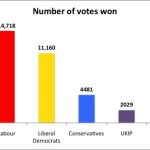
And all on a turnout of 48.1 percent. So far as the Lib Dems and Labour are concerned, these numbers probably met expectations. Overall support for Elwyn Watkins has held firm since the general election, but he was always going to struggle to get within 103 votes of Labour once again. While a 10-point victory for Debbie Abrahams is encouraging for Labour, without quite suggesting a tidal shift in the public mood. The 14 percent drop in the Tory vote is a little more striking, though – and it's telling that Andy Burnham dwelt on it in his response to the Beeb. For their part, the Tories are pointing to the natural squeeze on third parties in by-elections.

The death of the Lib Dems

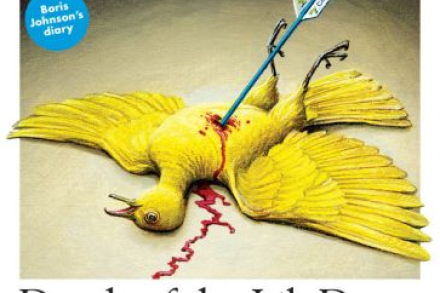
The latest issue of The Spectator is out today, and I thought CoffeeHousers might like to read the cover story by Nick Cohen. Its theme is brilliantly captured by Jonathan Cusick's cover image (left) of the yellow Lib Dem bird shot through its heart with a Tory arrow – but there's more to it than that. The era of spending cuts is returning us to two-party politics, says Nick, and the Lib Dems are being squeezed out of the equation. Here it is in full: Liberal England dies again, Nick Cohen In 1935, George Dangerfield published The Strange Death of Liberal England, one of those rare histories that survive long after the author’s death.

Miliband talks the language of cuts

Much of Ed Miliband's Grand Confession on the economy is wearily familiar. I mean, we've known his take on the deficit for some time: that the drop in tax receipts from a crumbling financial sector was to blame, rather than Brown's spending. And to have him argue that Labour should have made the economy less dependent on the City is just another way of saying exactly the same thing. But there is something new in there, too. Miliband is set to admit that Labour didn't "talk the language of cuts" soon enough. Not that he's saying Labour should have – or still should – cut deeper and faster, mind. It's simply that Brown and his ministers didn't breath the c-word early enough.

An important test for the Lib Dems

Tomorrow’s vote in Oldham East and Saddleworth is the first big event of the political year. It is a marginal seat that Labour just held at the last election, beating the Liberal Democrats by a touch over a hundred votes. But the by-election has been caused by the Lib Dem candidate taking the Labour MP to an election court over false statements which has placed particular pressure on the Liberal Democrats to perform well. The polls at the weekend had Labour romping home. But the Liberal Democrats are confident that they will run Labour close, talking about a margin of a thousand or less. If the Lib Dems come a strong second, the result will be pretty much be a wash politically.

Exclusive – Adonis: I back Gove

Is Michael Gove’s school reform a hideous distortion of the Labour Academies programme, as Ed Balls put it, or the fulfillment of that agenda? Until now Lord Adonis, the architect of the Academies programme, has kept silent on the issue. But he’s interviewed in The Spectator tomorrow by Matthew Smith, editor of Attain magazine. Here is a brief extract: 'Ed Balls has declared Gove’s plans for academies as ‘a total perversion of Labour’s policy, which was about turning round under-performing schools in disadvantaged areas’. Adonis’s response is rather different.  ‘Neither I nor Tony Blair believed that academies should be restricted to areas with failing schools.

Eric Illsley announces his resignation

With the Labour party motioning to unseat him, and David Cameron and Ed Miliband speaking out against him, it was always likely to end thus for Eric Illsley. The receipt offender has just issued this statement: "I would like to apologise to my constituents, family and friends, following my court appearance, for the distress and embarrassment caused by my actions that I deeply, deeply regret. I have begun to wind down my parliamentary office, following which I will resign from Parliament before my next court appearance. I will be making no further comment." Which leaves us with the prospect of a by-election in Barnsley Central, probably in May. It's one that Labour will expect to win, not least because they achieved 47.

PMQs live blog | 12 January 2011

VERDICT: Woah. If you ever needed a PMQs to brush away the last morsels of festive cheer, then this was it. Every question and answer came laced with some sideswipe or other, and it made for a scrappy exchange between the two party leaders. Both struck blows against each other, but both were also guilty of errors and mis-steps. Miliband squandered an easy attack on bankers' bonuses, even allowing Cameron to turn it back against Labour. While, for his part, the Prime Minister was so relentlessly personal that it came across as unstatesmanlike. I don't think either one really emerged victorious, or well, to be honest. It was simply unedifiying stuff. 1230: And that's the end of the first PMQs of 2011 - and what a heated one it was, too. My verdict shortly.

Illsley’s untenable position

After David Chaytor's conviction last week, the dominoes just keep on tumbling. Today, it was Eric Illsley's turn to confess to his expenses-related sins – and he did so by pleading guilty to three "false accounting" charges in Southwark Crown Court. Given that he's still MP for Barnsley Central – although now as an independent, rather than the Labour MP he was elected as – that makes him the first sitting parliamentarian to face sentencing as a receipt offender. A dubious accolade, to be sure. In terms of day-to-day politics, the next question is whether Illsley will be able to hang on to his seat. He could, theoretically, remain in place if his sentence is under a year's jail time.

Ed Miliband’s Tartan Roots

At some point it seems wise to suppose that Ed Miliband isn't playing any devious or subtle long game and that, far from being baffling, his public pronouncements are probably a pretty reasonable guide to what he actually, truly believes. And he really doesn't think that Labour made any significant errors while in office. Surpluses are for wimps; real men run deficits even in boom times. In this, as in so much else, Miliband rejects Tony Blair's analysis and sides with his old mentor Gordon Brown. Fair enough. Iain Martin finds this perplexing, not least from any electoral/political perspective and he's right. Miliband's views are touchingly old-fashioned. So much so, in fact, that perhaps he's in the wrong parliament. He'd be quite at home at Holyrood.

Johnson running out of his nine lives

Ed Miliband's press conference today was a classic example of clever opposition politics. He and Alan Johnson said that Labour would continue the bonus tax on the banks for one more year. This policy has the twin advantage of maximising the coalition's discomfort over the whole issue of bankers' bonuses and expiring well before the next election. The rest of Miliband's press conference was devoted to an attempt to defend the record of the previous Labour government. Miliband kept making the valid point that in the years before the crash Cameron and Osborne weren't saying that Labour was spending too much but were instead committed to matching Labour's spending plans.

Will Balls and Cooper capitalise from Johnson’s mistakes?

You've probably heard about Alan Johnson's latest slip-up yesterday. But it's still worth highlighting the response made by a Labour spokesman – as Dizzy has – because it's simply extraordinary. Here it is: "We have a Shadow Chancellor who lives in the real world. He knows the difference between a progresive and regressive tax. He knows what it takes to get on in the real world. That is more important than taking part in a Westminster quiz game." Extraordinary that Labour should already have to make excuses on behalf of Johnson. But even more extraordinary that they should be made in this manner.