Labour party

Miliband’s two big risks

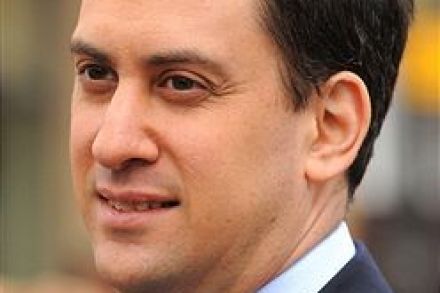
Who would have thought it? Miliband's short speech in Nottingham today went largely unheralded, and doesn't seem to be getting a whole lot of attention now — and yet it tells us more about his approach to Opposition than almost anything he has said previously. Fact is, the Labour leader is taking two risks that may be either bold or foolhardy, depending on your point of view. These risks could come to define his Labour party. The first is splashed right across the entire speech. Miliband dwells on three "challenges" that the country will face over the coming decade: the "cost of living crisis"; declining prospects for the next generation; and the erosion of the "Merrie Englande" that David Aaronovitch wrote about this week.

What Portugal means for the UK

Last night, Portugal's parliament voted to reject its latest measures to deal with its deficit. It was the fourth time that the Portuguese parliament had been asked for more taxes and for more spending cuts. The result has been a further loss of confidence in Portugal’s ability to pay its debts. Market interest rates have risen to over 8 percent. European leaders are meeting this weekend to work out a path forward. The lessons for us here in the UK are starkly clear. First, it is better to set out all the difficult decisions needed to deal with the debt crisis, even if these take place over a number of years, rather than continually going back to ask for more. That the Budget was neutral overall shows that a clear plan is being followed here.

Balls replies with mischief

Ed Balls has just delivered Labour’s Budget briefing. His main point was that the Office of Budget Responsibility now forecasts higher levels of unemployment than it did last autumn. He claimed that this would lead to a £12.6bn increase in spending on unemployment benefit. He also argued that the decision to increase tax thresholds by CPI rather than RPI was an effective tax increase and that it will hit the middle hardest. In a classic piece of Ballsian mischief, he reveled in pointing out that the Office of Budget Responsibility says that it received news of the extra cut in corporation tax and the 1p cut in fuel duty too late to add to its model.

PMQs live blog | 23 March 2011

1232: And that's it. And here's my quick verdict: a solid performance from Cameron is what was, on the whole, a sedate session. The Main Event starts now, follow our live blog here. 1228: More fire from Cameron on the NHS. "Do you want to save ... lives," he quivers," or do you want to stick with the status quo." The PM's rhetorical confidence in this area is striking, particularly given that it is one of his most criticised policy areas. 1226: Matthew Hancock questions why the Labour government used PFI contracts to build hospitals, when there were better value alternatives. The Tories have spent the past few days emphasising Labour waste, as the blame game heats up ahead of the Budget.

The state of public opinion ahead of the Budget

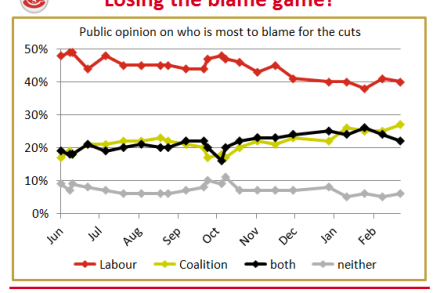
It's a point that I've made before, but here it is again: Budgets don't tend to shift opinion polls, at least not the headline numbers. But opinion polls can give some insight into how Budgetary decisions will go down with the public. So by way of a catch-up with some recent polls, and ahead of tomorrow's Main Event, I thought CoffeeHousers might appreciate a quick overview of public opinion on matters fiscal. Here goes... 1) Who's to blame? When it comes to the overall flow of British politics, the question of who's to blame for the cuts carries clear — and dangerous — implications.

Why Osborne is so interested in merging income tax and National Insurance

When trying to understand George Osborne Budgets, you need to bear in mind the mantra that he and his team live by: in opposition you move to the centre, in government you move the centre. It is this desire to move the centre ground that lies behind Osborne’s keenness to merge income tax and national insurance. As I say in the Mail on Sunday, the thinking behind it is that if people were more aware of how much tax they really paid, they’d be more inclined to vote for low-tax parties. At the moment, National Insurance is one of the taxes people are least aware of as it is simply deducted from their pay cheque. It is no coincidence that the most unpopular taxes—council tax, inheritance tax—are the ones that voters are most aware of paying.

Actually, there’s some solace for Miliband in today’s poll

Much excitement, today, about the fact that Ed Miliband is just as unpopular as Nick Clegg. A pre-Budget package by Ispos-MORI contains the finding that both party leaders are actively disliked by 51 per cent of the public. It's a striking result, particularly after the tuition fee furore — yet, sadly, it isn't new. It actually comes from the political monitor that Ipsos MORI released in January. They didn't ask the question for their March political monitor. So far as the Clegg-Miliband divide goes, the latest Ipsos MORI figures actually have this to offer us: net satisfaction with Miliband's performance as party leader is at -5 per cent, whereas it's at -22 per cent for Nick Clegg. So, not great for either leader, but considerably better for MiliE.

The grade inflation scam

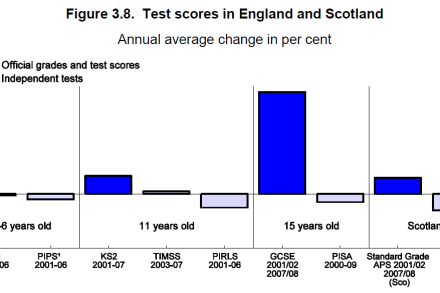
Today’s OECD Economic Survey of the UK (download the complete pdf here ) contains some devastating passages about our education system. As it's 148 pages in size, we thought CoffeeHousers might appreciate some highlights. Here's your starter for ten: “Despite sharply rising school spending per pupil during the last ten years, improvements in schooling outcomes have been limited in the United Kingdom.” This is rather a staggering indictment of Tony Blair's "education, education, education" policy. But what about the ever improving exam results that we hear about each summer?

Rattled Cameron battles through PMQs

A testy PMQs today with Miliband trying to pin Cameron down on the specific question of whether the NHS is now subject to EU competition law, and Cameron responding by dubbing Miliband ‘son of roadblock'. The exchange revealed that although Cameron is not a details man, something that will cause him problems in time, he still has enough presence in the chamber to withstand tricky moments. But I suspect that Labour will be happy if Miliband’s parting shot of ‘you can’t trust the Tories on the NHS’ makes it into the news bulletins this evening.

PMQs live blog | 16 March 2011

VERDICT: A more evenly-matched PMQs that we have been used to, with both leaders parrying and thrusting to some effect. Miliband's chosen topic — the NHS — was a surprise, particularly given today's unemployment figures and the persistent flurry of bad news from abroad. Yet it did open up a clear divide between him and Cameron. On one side, the Labour leader claiming that the the coalition is taking undue risks with a beloved health system. On the other, the PM painting Miliband as Brown Mark II, a roadblock to reform and change. Neither side really won, or lost, the argument today, but you can expect them to return to it in future.

Labour divided on electoral reform

John Healey has become the most senior shadow cabinet minister to declare that he will be voting no to AV. In a pugnacious article for the Independent, the Shadow Health Secretary describes the proposed system as a ‘perverse’ leg-up to extremists and one that will make Nick Clegg a permanent kingmaker. He added that he had not been ‘persuaded that AV is an upgrade to the voting system’. This is a small but important intervention. Until now, Labour’s contribution to the no campaign had been a procession of ghosts from former regimes: messrs Reid, Blunkett and Prescott being the most prominent of these heavyweight has-beens.

Livingstone: Londoners won’t know what I’m planning until after I’m elected

Ken Livingstone was out on the stump in Croydon yesterday. So far, Livingstone has not made any election pledges; his entire campaign has been founded on his past record as London Mayor. So, when can Londoners expect to hear what Red Ken plans to do, and how he intends to fund it? 6:30 into this interview with the Mayor Watch website, he said: “On the morning after the election, I’ll let you know.” Thirty seconds later, he repeated himself for clarity's sake.

Are two Eds better than one?

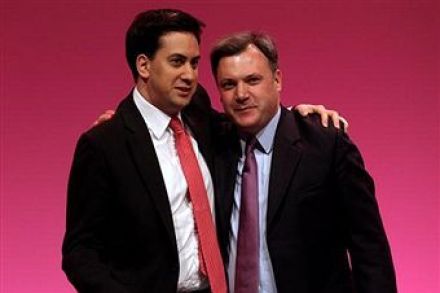
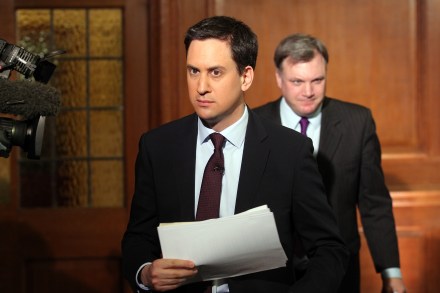
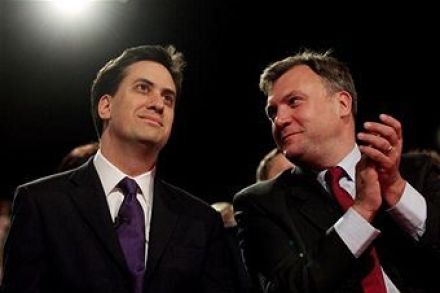
This was the question raised by today’s joint Balls Miliband press conference. The two Eds are very different in both body language and temperament. Balls is the far more pugilistic politician, always looking to dispute the premises of a question and happy to use aggressive language. While Miliband is far more of a conciliator, looking to find consensus and using only gentle humour. They even stand at the lectern in different ways: Balls hunched over his, leaning into the fight. Miliband hanging back from his, and taking a gentle step towards it when answering a question. The danger for Miliband is that Balls appears to be the alpha male, the one taking the fight to Labour’s enemies.

Balls and Miliband fail the credibility test

Eds Miliband and Balls gathered the press corps together this morning to broadcast a straightforward message: oh yes, we do have an alternative. And the shape of that alternative? A repeat of the one-off tax on bankers' bonuses that, Balls claimed, raised £3.5 billion last year. The money would be used for an entire buffet of economic delights, from the creation of new houses to the funding of job schemes for the young. The upshot, apparently, would be 110,000 new jobs. Nice work, as they say — if you can get it. But there are a couple of problems with all that, the first of which Labour has pre-empted. It is that last year's bonus tax may not have raised as much as £3.5 billion, after all.

Clegg defines his liberalism

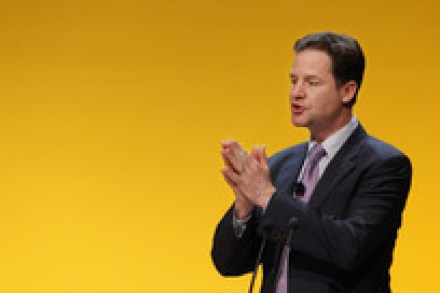
I do feel for Nick Clegg. He’s taken an oppositionalist party into government, and they hate it. He is politically and psychologically prepared for what goes with power; grassroots LibDems less so. And this brings problems. Yesterday, he was complaining that his party is “too male and too pale”; but his main problem is that there are too few of any. At the peak of Cleggmania, the Lib Dem had 30 per cent of the the vote. Now it’s 10 per cent in the polls. If things continue at this rate, he won’t need a ‘ring of steel’ for his next conference: a phone box will suffice. So, what can he do? His speech tries to define a new word: ‘liberal’. He has this to say: 'For the left, an obsession with the state.

Clegg’s pitch for the middle

‘Governing from the middle for the middle’ was the message of Nick Clegg’s unapologetic speech to Lib Dem conference. His effort to redefine the Liberal Democrats continued as he tried to move the party away from its traditional yoghurt-weaving concerns and instead focus on appealing to ‘alarm clock Britain.’ Clegg’s view is that the left wing protest votes that the party used to get are gone for the foreseeable future, repulsed by coalition, and that the Lib Dems need to reach out to new voters. The calculation is that Labour is seen as being for those on benefits and the Tories for the rich, so the Liberal Democrats should try and seize the middle.

Balls sets Labour against Clegg (again)

It's not just the protestors who are rallying against Nick Clegg today. Here's what Ed Balls has to say about the Lib Dem leader, in interview with the Guardian: "'Clegg looks an increasingly desperate, shrill and discredited politician, losing both public and party support. People think that if Clegg says something, it cannot be the truth. The Liberal Democrats need to have some real hard thinking about what they stand for' He says it would be impossible for Labour to govern with Clegg after the election, arguing: 'I don't see how Nick Clegg could change direction again with any shred of credibility, or how he could work with Labour now, but that is not true of Liberal Democrats more widely.

The threat of a general strike increases

As expected, John Hutton’s review of public sector pensions has recommended that final salary schemes end. Hutton was across the broadcasters this morning, explaining that he was reflecting an “inescapable reality”: “The solution to this problem is not a race to the bottom, it's not to hack away at the value of public service pensions. It’s to manage the risks and costs sensibly. The responsible thing to do is to accept that because we are living longer we should work for longer.” Beside realism, Hutton’s guiding principle has been fairness.

Labour’s inflation pitch

Curiouser and curiouser. We in Coffee House have been saying for some time now that – whatever Mervyn King thinks – Britain has the worst inflation in the Western World apart from Greece. An OECD report out today shows we’ve got it worse than most eastern countries too. Korea, Turkey and Estonia are the only eastern nations with higher inflation: But what strikes me most about today is that food prices are soaring here, to an extent far worse than the rest of the world. This is what voters notice most: putting food on the table is very expensive. As Micawber might put it: annual food price inflation 6.3 per cent, annual wage inflation 2.5 per cent, result: misery. And plenty of it.