Labour party

Nimrod: from a symbol of pride to one of decline

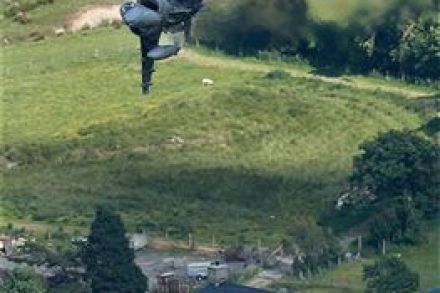
There are contrasting images of Nimrod the Hunter: the mighty king of the Old Testament, and the less fearsome figure of Elmer Fudd. Through no fault of its own, the Nimrod spy plane, the most advanced and versatile aircraft of its type, seems destined to belong in the Fuddian category. Several senior officers have written to the Telegraph, urging the government to reconsider its decision to scrap the aircraft. They argue, not for the first time, that Britain’s defence capabilities are being pulverised by political calculations. (Con Coghlin adds his strategic concerns in the same paper.) The top brass have found an ally in Unite, some of whose members build

The Lib Dems reject Ed Miliband’s overtures (again)

What a joy it is to watch Ed Miliband contort and twist so that he can offer a hand of friendship to the Lib Dems. It has been a three-act show, so far. First, during the Labour leadership contest, he described the Lib Dems as a “disgrace to the traditions of liberalism,” adding that, “I can see the death of the Liberal party to be honest”. Then, he said that he would actually work with those dying Liberals, but only if they ditched Nick Clegg first. And then today, in an interview with the Independent, he suggests that Clegg might be able to stay on, after all. As turnarounds go,

PMQs live blog | 26 January 2011

VERDICT: Ed Miliband had it all, going into today’s PMQs: weak growth figures, the uncertain demise of control orders, rising youth unemployment, and more. And yet, somehow, he let most of it go to waste. Barely any of his attacks stuck – or, for that matter, stick in the mind – and Cameron rebuffed them with surprising ease. It helped that the Prime Minister seemed more comprehensively briefed than usual, with a decent compliment of statistics, and one or two sharp lines, at his disposal. (Although, measuring by the Labour cheers, I doubt he will thank Jacob Rees-Mogg for invoking Thatcher immediately after his exchange with the Labour leader.) In

From control to surveillance

Like husband, like wife. Yvette Cooper has begun shadowing Theresa May where Ed Balls stopped: by lacerating Nick Clegg’s naïveté in believing that control orders should be abolished. There is a faint note of animus in her politicking too. ‘National security,’ she said, ‘should not be about keeping Nick Clegg safe in his job.’ The government invited Cooper’s charge with its own crass political calculation. Spinning the new measures as a Liberal Democrat victory could only elicit that response from an opposition that is intent on exploiting the government’s broad weakness on law and order. In fact, as Lord West has remarked, the government has not even come close to

Brown takes the opportunity to peddle his “global growth plan”

As Iain Martin and Guido have noted, Ed Balls – and, for that matter, Ed Miliband – could probably have done without Gordon Brown hovering from the political graveyard to cast judgement on today’s growth figures. But hover he has, as the above video of his appearance on CNBC News testifies. It’s almost as though he wants to remind people that his spirit lives on in Labour’s rearranged top team. As for the content of his interview, it was stodgy mix of the arguments in his recent book and the attacks that Balls was making earlier. “Europe and America, but particularly Europe,” he said, “are now implementing policies that are

Ed Balls is Having a Good Day

Well, the government would have done better to read Fraser’s response to the fall in GDP before they went and blamed much of the 0.5% decrease on the inclement weather. Cue “Wrong kind of snow” jokes everywhere. And, frankly, Tories would be laughing all the way to the nearest TV studio had Gordon Brown ever suggested something similar. Better, surely, to agree that the figures are disappointing but stress that they are the first and therefore somewhat provisional numbers that may well be revised in due course. Not a great line to sell but some days you take a beating and just make things worse by trying to wriggle out

Ed Balls: I don’t think a double dip is the most likely outcome

And this, folks, is a day where Ed Balls is having his cake and eating it too. Not only is he basking in the grim light of the growth figures, but he is using the opportunity to recast his own stance on the economy. Speaking on the Daily Politics just now, he de-emphasised the argument that in-year cuts were to blame for today’s numbers, instead claiming that people have “changed their behaviour in anticipation of what’s coming in the future.” And, more ear-catching still, he added: “I don’t think [a double dip] is the most likely outcome.” This, as Fraser suggested earlier, is surely necessary caution on Balls’s part. He

What to make of the GDP fall?

“Recession here we come, a snow-dabbed double-dip” tweeted Faisal Islam, Channel Four’s economics editor. He summed up much of the hysterical reaction. It may spoil a good story, but here is what I suspect the broadcasters won’t tell you today. 1. Erratic GDP swings are common when recovering from a recession. Remember how stunned everyone was with the surging quarter three data? Now, we’re all shocked by plunging quarter four figures. I’d advise CoffeeHousers to treat these two imposters just the same. After the 80s recession, quarterly growth rates swung between -0.7 percent and 1.5 percent. Following the ERM-induced recession in the 90s, growth rates swung between -0.2 percent and

Does it matter what the government is called?

Danny Finkelstein has written an interesting post objecting to Channel 4 referring to the ‘Conservative-led coalition’ last night. Finkelstein’s objection, and a valid one to my mind, is that ‘Conservative-led’ makes a judgment about the nature of the coalition. Of course, this whole spat has been set off by a clever letter from Ed Miliband’s communications director Tom Baldwin to broadcasters objecting to their use of the word ‘coalition’ to describe the government on the grounds that it implies that the government is a collaborative enterprise. I suspect that this whole row will rumble on for a while yet. It is tempting to dismiss the whole thing as absurd, as

Re-introducing Ed

We already knew Ed Balls was behind Gordon Brown’s economic policy. He devised the policy on spending that left Britain with the worst deficit heading into the crisis, and wrote the bank regulations that his colleague Douglas Alexander attacked earlier today.   What we have discovered today, from Balls’ first foray into economic policy as Shadow Chancellor, is that he was also behind the old Brown ploy of twisted facts and absurd assertions.   First, he claimed the public finances are better than the Treasury forecast. Yet the independent Office for Budget Responsibility found that the structural deficit – the hole we have to fix – was worse than Labour

Exposing the con man

  To the chagrin of CoffeeHousers, I have long rated Ed Balls and his abilities. He has a degree of brilliance, albeit tragically deployed in the services of a destructive economic agenda. But as we welcome him back, it’s worth reminding ourselves that his abilities are of a specific type. He understands economics (even though he did PPE) but his speciality is in creative accounting. His only tactic is to spend, borrow and cover both up by cooking the books. He is a trickster, not an economist. More Arthur Daley than Arthur Laffer. In my News of the World column today (£) I say he is dangerous to Labour as

And what about the Lib Dems?

After the gales of recent weeks, the past few days must have been relatively blissful for the Lib Dems. No fake constituents with hidden dictaphones. No massive student protests. No especial focus on their opinion poll ratings. But, instead, a mephitic heap of problems, or at least embarrassments, for Labour and the Tories. Warsi, Johnson, Coulson, even EMAs – Clegg & Co. have been spared the worst of it. Which isn’t to say that the Lib Dems will be unaffected by recent events. For instance, as Paul Goodman suggests, Andy Coulson’s departure unsettles the delicate balance of the coalition – and that will always have ramifications, however minute, for the

Two days, two major resignations

Of the two resignations of the past 24 hours, it is Alan Johnson’s that will change the contours of politics. The appointment of Ed Balls makes the dividing line on the economy far starker. But the Coulson resignation is still a highly significant moment. Those Tories who worked with Coulson are downcast today and will brook no discussion of what the whole episode says about Cameron’s judgment. But there’s little doubt that the PM has been harmed by this episode. Not in any limb-threatening way but harmed nevertheless. Cameron also needs a find to way to organise his operation to both ensure that there is someone at the table who

How things are different now that Balls is shadow chancellor

The timing could hardly have been more resonant. On the day that Tony Blair is paraded, once again, in front of the Iraq Inquiry, Team Brown is firmly back in charge of the Labour party. For, I’m sure you’ve noticed CoffeeHousers, three of the four great shadow offices of state are occupied by former members of the Brown coterie: Ed Miliband, Ed Balls and Yvette Cooper. The fourth belongs to someone who doesn’t sit easily in either half of the TB-GB divide: Douglas Alexander. The question, of course, is what this means for Labour’s economic policy. And the answer according to Miliband is “nothing much”. The Labour leader has been

Renaissance Balls

Balls is back. The author of Gordon Brown’s economic policies for 15 years. The man who bears more responsibility for anyone else – other than Brown – for the asset bubble and the consequent crash. But I suspect that, right now, Theresa May is doing cartwheels and George Osborne cursing. Balls, for all his many drawbacks, is the most ferocious attack dog there is. His brilliance (and I hate using that word) at using numbers as weapons far surprassed anything the Tories could manage in Opposition. His policies are reckless: to borrow, and to hell with the consequences. His modus operandi is to launch around-the-clock attacks. He has powerful media

Balls replaces Alan Johnson

Ed Miliband has just taken the biggest risk of his leadership in appointing Ed Balls as his shadow Chancellor. Balls’ is not a man who take orders and his view on the deficit is noticeably different from Ed Miliband’s. He is also the person most closely associated with Gordon Brown’s economic record. George Osborne will relish this fight. During the vacuum between Ed Miliband winning the leadership and the shadow Cabinet elections, Osborne prepared for facing Balls. He told friends, ‘we’ve circled around each other long enough. It is time to get on with it now.’  

Johnson resigns as Shadow Chancellor

James Kirkup is reporting a rumour that Alan Johnson is to resign. More to follow. UPDATE: He has resigned. Sky News is reporting that Johnson has gone for personal reasons. That may be so – and because of the timing (the government was having the day from hell until ten to five this evening) I suspect that it is – but it will be a hard line to hold, given Johnson’s fraught tenure and his very public disagreements with a leader he didn’t back in the first place. A serious problem for Miliband, then, just as his fledgling leadership was beginning to pick up after Oldham.

A soporific session

Labour are on the up. They strolled Oldham. They’ve recruited great armies of Clegg’s defectors. And they’d win a majority if a general election were held tomorrow. There’s been a lot of excited talk in Westminster about Tom Baldwin, Labour’s new communications attack-dog, coming in with his fangs bared and sharpening up their tactics. Well, it ain’t working so far, if PMQs is anything to go by. Ed Miliband had his dentures in today. He was humourless, slow to react and sometimes inaudible. His questions didn’t resemble even the most basic PMQs battle-plan, namely, a pre-meditated onslaught culminating in a simple powerful message presented in a memorable one-liner. He asked

PMQs live blog | 19 January 2011

VERDICT: No winners, and no real losers, from this week’s PMQs. Miliband’s questions were insistent and straightforward. Cameron’s answers were forceful and, in themselves, fairly persuasive. A no-score draw, then, if you want to look at it like that. There were one or two worrying leitmotifs for the coalition, though. First, the PM’s tendency towards grouchiness under fire; far less pronounced than it was last week, but still present. And then the continuing absence of any clear explanation of the NHS reforms, beyond “well, we had to change what was there previously.” The PM has a point about cancer survival rates and the like, but he’s not yet setting out

Is it worth paying young people to stay on at school?

Today’s political news is brought to you by the letters E, M and A. Eeeema. While the political establishment debates the abolition of EMA – the Educational Maintenance Allowance – inside Parliament, campaigners will be protesting against it on the streets outside. The police, who are used to these things by now, have already set up the barricades. Behind all the fuss and froth, the argument is really this: is EMA good value? The coalition claim that paying 16-18 year-olds up to £30 a week to stay on at school is not only expensive, but also wasteful. Labour – who introduced this allowance in the first place – claim that