Labour party

The Tory message in 2015: Vote Cameron for PM

One thing is already apparent about the Tories’ 2015 campaign, it will be even more dependent on David Cameron than the 2010 one was. Why, because as Anthony Wells points out again today, Cameron polls ahead of his party. There’ll be those who criticise this decision. They’ll point out that the big billboard posters of him in 2010 backfired badly. Others will wonder what more juice can be squeezed out of Cameron, given that by the next election he’ll have been leading the party for nigh-on ten years. But to the Tory leadership, the Cameron lead on the best Prime Minister question is one of their trump cards. It is

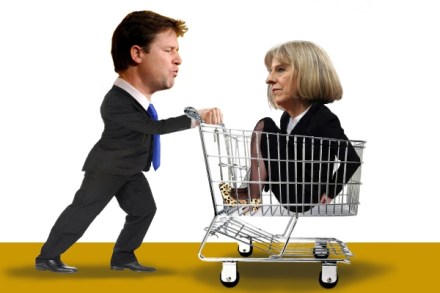
Now Nick Clegg turns on Labour ahead of mid-term review

Nick Clegg is in a pugnacious mood at the moment. First there was the very conveniently leaked memo in which Lib Dem strategists urged MPs to criticise their Tory Coalition partners publicly. Now he’s gone on the attack against Labour’s spending plans, or lack thereof. The Deputy Prime Minister writes in The Times: ‘The Labour leadership continue to complain about the coalition’s approach, but without providing any credible alternative. They’re learning the tricks of opposition and finding their rhetorical refrains. But where are the numbers? Where are their sums? The country has undergone the biggest economic crisis in living memory, yet they offer no explanation of how they’d get us

Shapps’ campaign skirmish

There’s long been a sense on the Tory side that the party’s campaigning isn’t as sharp as it should be, that CCHQ isn’t up to the job. The Ashcroft target seats campaign was so valued not just because of the money but because of the organisational and management muscle behind it. The new Tory Chairman Grant Shapps was sent to CCHQ in the reshuffle with instructions to address the place’s institutionalised incompetence. The early signs are encouraging. When Labour announced that it was launching a campaign in the 60 seats where the number of people on working tax credits, which are only going up by 1%, was larger than the

Ed Miliband vs the working class

Who’s on the side of the strivers? Is it George Osborne, who’s cutting benefits in real terms for the next three years, which he defends as ‘being fair to the person who leaves home every morning to go out to work and sees their neighbour still asleep, living a life on benefits’? Or is it Ed Balls, who’s opposing the move as Osborne ‘making striving working families pay the price for his economic failure’? Both men are convinced that their stance will help win the votes of low- and middle-income workers. At least one of them is wrong. Isabel has explained the sources of Labour’s confidence. One is a YouGov

Why Ed Balls is so confident about benefit wars

The debate over benefit uprating will run and run because both sides think they are winning. George Osborne thinks the public resent generous benefits rises. Liam Byrne and Ed Balls want to call this a ‘strivers tax’ and think blue collar workers will fall into their arms. Byrne told Coffee House yesterday that Labour will be hurt opposing to the Welfare Uprating Bill. I understand that the Shadow Cabinet reached its decision after YouGov’s polling showing C2DE  voters  – the three lowest socio-economic groups – saying benefits should have been increased in line with inflation. Osborne’s Bill would increase welfare by 1pc, behind expected inflation. Some 42 per cent of C2DE respondents said it was

One Nation Labour can’t just be about reassuring voters

Ed Miliband is giving another one of his repositioning speeches today: this time about immigration and integration. We’re going back to the Labour leader’s school and his family again, as well as reminiscing about Olympics: none of which are exactly groundbreaking territory, given Ed explored the first two at length in his conference speech, has explored his family history at length in many speeches since becoming leader, and that all three party leaders used the Olympics for their own purposes in their autumn conference speeches. Mo Farah and Jessica Ennis should start charging politicians royalties for using their names in speeches about culture: they appear, alongside Zara Philips, in Miliband’s

Liam Byrne interview: The welfare system is ‘completely out of whack’

Liam Byrne is a modernising, Blairite Labour MP, and in case you were in any doubt about that, he conducts his interview with Coffee House sitting next to a framed photograph of him with Tony Blair. The party’s Shadow Work and Pensions Secretary is well known for his modernising zeal, which has sometimes led him onto a collision course with his party grassroots and other MPs on the left. This week, though, he’s on a collision course with the Conservatives, who hope they’ve managed to corner Labour into admitting it hasn’t quite modernised its welfare policy enough to win voters back. The Welfare Uprating Bill, launched in last week’s Autumn

The 2011 census proves why politicians are distrusted

What do people take away from the 2011 census? I cannot help but see the clearest possible reason for why trust of politicians is at an all-time low. Perhaps other voting members of the public remember as far back as 2004 when the Labour government predicted that fewer than 20,000 people would come to Britain from those Eastern European countries given full access to the UK labour market. As of last year the Office of National Statistics confirmed at least 669,000 people from these countries working in the UK. Or they might remember Labour immigration minister Phil Woolas promising in an interview with the Times in 2008 that, ‘It’s been

The only Labour business supporter that Chuka Umunna can name is a Labour peer

Chuka Umunna’s interview on The Sunday Politics today highlighted several of the problems facing the Labour party. When Andrew Neil pressed him on whether he could name any heads of big companies backing Labour, the shadow Business Secretary could only name a Labour peer who the party ennobled in 1998. Here’s the exchange: AN: Tony Blair said that Labour can’t go into the next election without the support of a single chief executive from a big company. Can you name the boss of a big major company who’s backing Labour? CU: The Chairman of ASOS who is Waheed Alli. He has backed the Labour Party. AN: Is that a public

Will he, won’t he? Ed Miliband makes noises about benefits war

Ed Miliband is ready to wage war with David Cameron and George Osborne over the Welfare Uprating Bill, which will see benefits rise by 1 per cent a year, rather than in line with inflation. The Labour leader has been talking tough in the papers this morning, with a piece in the Sunday Mirror in which he says: ‘We should be tough on the minority who can work and try to avoid responsibility. But there comes a moment when a government is exposed for who they are. That happened to David Cameron and George Osborne this week. ‘They showed they are not fit to govern because they played political games

The public’s verdict on the Autumn Statement

We’ve only had two days to digest it, but the early signs from YouGov are that George Osborne’s Autumn Statement has gone down a lot better than his March Budget. The Chancellor’s personal ratings are still dire – just 24 per cent think he’s doing a good job — but that’s a lot better than 15 per cent five months ago. His approval rating had tanked after the Budget, but Osborne does seem to have turned that around: And the government’s approval rating on the economy similarly seems to have been helped by the Autumn Statement, and is back up to pre-Budget levels: Though a 35 per cent approval rating

Labour aims to change political dynamic around benefits uprating

It now looks almost certain that Labour will vote against the 1 per cent uprating for most working age benefits. Labour is pointing out that because this also includes tax credits, most of the people hit by this will actually be in work. The party hopes that this changes the political dynamic around this subject. But, as a Liberal Democrat minister pointed out to me last night, the coalition can portray any attempt to uprate by more than 1 per cent as special treatment for those on benefits. The minister stressed that public sector pay was only going up by 1 per cent and the threshold for the 40p rate

Does the South East need its own party?

Kelvin MacKenzie wants a British version of the Italy’s Northern League. His aim is to have a Southern Party that would push for home rule for London and the South East and oppose fiscal transfers from the South East to the rest of the country. The piece is classic MacKenzie polemic. But it does speak to the growing regionalisation of British politics, a subject that Neil O’Brien addressed for us in his final piece before becoming an adviser to George Osborne. Outside of London, Labour only have four MPs in the South East and in the European elections, Labour came fifth in the region — behind even the Greens. For

Pressure on the editors as Labour threatens own Leveson bill

One of the foundations on which David Cameron based his decision to reject statutory underpinning of press regulation was that editors would set up a new system based on Lord Justice Leveson’s recommendations which would prove far tougher than the Press Complaints Commission. The failure of the industry to reach consensus on a new body – and this is a real risk given the refusal of some publications to join the PCC – would pull the rug from under the Prime Minister’s feet as he fights critics pushing for statute. Cameron is also facing claims that he is bowing to bullies in the press, and it is for these two

Labour’s safe seats stay safe

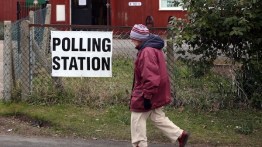
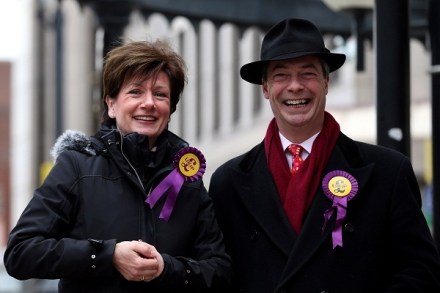
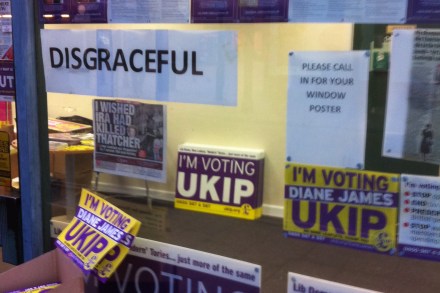
In the end, the threat from smaller parties came to nothing, and Labour easily retained all of the three safe seats it was defending yesterday. In fact, they extended their vote share in all three as well. Respect could only manage a distant fourth in Rotherham and sixth in Croydon North, where former Ken Livingstone adviser Lee Jasper lost his deposit. Instead it was Ukip who came second in Rotherham and Middlesbrough, and third in Croydon North. Both coalition parties saw their vote collapse in all three seats. The Conservatives ended up fourth in Middlesbrough and fifth in Rotherham (their worst results of this parliament), though they did manage to

Labour source tells Coffee House: govt could deliberately overcomplicate Leveson bill

Labour sources are not happy with the Prime Minister’s decision to draft legislation for statutory underpinning of press regulation. I’ve just spoken to one party source, who told me the worry is not that the legislation is being put together quickly, but that the government will draw up a bill that deliberately complicates the issue and undermines Lord Justice Leveson’s call for regulation backed by statute. The source says: ‘The issue with the draft bill is not the speed: we want speed. The issue is that there is a possibility that what they are going to do is overcomplicate and deliberately overload this draft in a bid to stop them doing

Lib Dems seek alternative Leveson statement slot

As teams in secure rooms in Downing Street pore over the half dozen copies of the Leveson report, which arrived this morning, the Liberal Democrats are already starting to work out what they’ll need to do if David Cameron and Nick Clegg find they cannot agree on the government’s response. The Lib Dems have approached the Speaker to find out whether there is a possibility that Nick Clegg could give his own separate statement following Cameron’s own response in the Commons tomorrow afternoon. Sources say they hope that this is an unlikely scenario, but add that ‘he would like to be able to make his position clear in Parliament’ if

Liam Byrne tries to turn David Cameron’s striver language back on him

The Leveson Inquiry will dominate this week. Inside Number 10 they regard it as ‘the most difficult’ of the three big issues dominating their time at the moment – the other two are the autumn statement and the EU Budget. But I suspect that voters will be far less interested in Leveson and the Prime Minister’s response to it than the media and political class are. I’d be surprised if Cameron’s handling of it changed the views of voters—as opposed to those of elites— of him. So, on The Sunday Politics today it was striking to see Liam Byrne, Labour’s welfare spokesman, trying to turn Cameron’s striver rhetoric back on

Labour underestimated Osborne’s deficit

As Fraser reported at the time, Labour put up a deficit clock on its website last month, claiming that the government was borrowing £277 million more during Tory conference than in the same four days last year. It based this on the borrowing figures available at the time, which were for the period April to August. In that period, the government had borrowed £802 a second more than in the same five months of 2011, so Labour assumed it would continue to do so in October. But new figures out yesterday show that this was not the case. In fact, looking just at borrowing in October, Labour was lowballing it

The politics of energy

When David Cameron made his surprise announcement about forcing energy companies to offer customers their cheapest deal, he added, as an afterthought, that the leader of the opposition had missed the chance to be on the side of the consumer when he was energy secretary. I would be surprised if the average voter knows that Miliband was energy secretary; but, from Cameron’s perspective, the line of attack makes sense: energy prices and the cost of living are vital political issues for this government. The government, then, will be thrilled that Energy Secretary Ed Davey’s plans (which appear to be based largely on Ofgem’s recent ideas about simplifying tariffs: Davey will