Labour party

Labour’s safe seats stay safe

In the end, the threat from smaller parties came to nothing, and Labour easily retained all of the three safe seats it was defending yesterday. In fact, they extended their vote share in all three as well. Respect could only manage a distant fourth in Rotherham and sixth in Croydon North, where former Ken Livingstone adviser Lee Jasper lost his deposit. Instead it was Ukip who came second in Rotherham and Middlesbrough, and third in Croydon North. Both coalition parties saw their vote collapse in all three seats. The Conservatives ended up fourth in Middlesbrough and fifth in Rotherham (their worst results of this parliament), though they did manage to hold onto second in Croydon North. The Liberal Democrats fell to third in Middlesbrough, fourth in Corydon North and eighth in Rotherham.

Labour source tells Coffee House: govt could deliberately overcomplicate Leveson bill

Labour sources are not happy with the Prime Minister's decision to draft legislation for statutory underpinning of press regulation. I've just spoken to one party source, who told me the worry is not that the legislation is being put together quickly, but that the government will draw up a bill that deliberately complicates the issue and undermines Lord Justice Leveson's call for regulation backed by statute. The source says: 'The issue with the draft bill is not the speed: we want speed. The issue is that there is a possibility that what they are going to do is overcomplicate and deliberately overload this draft in a bid to stop them doing the right thing. They have betrayed the victims, they should be looking at how to go forward on this.

Lib Dems seek alternative Leveson statement slot

As teams in secure rooms in Downing Street pore over the half dozen copies of the Leveson report, which arrived this morning, the Liberal Democrats are already starting to work out what they'll need to do if David Cameron and Nick Clegg find they cannot agree on the government's response. The Lib Dems have approached the Speaker to find out whether there is a possibility that Nick Clegg could give his own separate statement following Cameron's own response in the Commons tomorrow afternoon. Sources say they hope that this is an unlikely scenario, but add that 'he would like to be able to make his position clear in Parliament' if he does take a different stance.

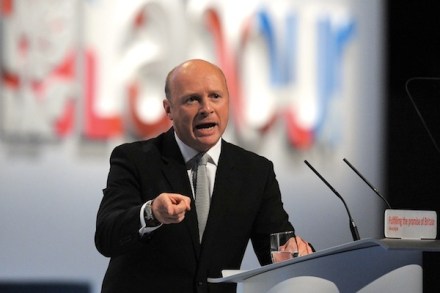
Liam Byrne tries to turn David Cameron’s striver language back on him

The Leveson Inquiry will dominate this week. Inside Number 10 they regard it as ‘the most difficult’ of the three big issues dominating their time at the moment – the other two are the autumn statement and the EU Budget. But I suspect that voters will be far less interested in Leveson and the Prime Minister’s response to it than the media and political class are. I’d be surprised if Cameron’s handling of it changed the views of voters—as opposed to those of elites— of him. So, on The Sunday Politics today it was striking to see Liam Byrne, Labour’s welfare spokesman, trying to turn Cameron’s striver rhetoric back on him.

Labour underestimated Osborne’s deficit

As Fraser reported at the time, Labour put up a deficit clock on its website last month, claiming that the government was borrowing £277 million more during Tory conference than in the same four days last year. It based this on the borrowing figures available at the time, which were for the period April to August. In that period, the government had borrowed £802 a second more than in the same five months of 2011, so Labour assumed it would continue to do so in October. But new figures out yesterday show that this was not the case. In fact, looking just at borrowing in October, Labour was lowballing it by about £67 million. The ONS says the government borrowed £8.6 billion in October 2012, £2.7 billion more than the £5.

The politics of energy

When David Cameron made his surprise announcement about forcing energy companies to offer customers their cheapest deal, he added, as an afterthought, that the leader of the opposition had missed the chance to be on the side of the consumer when he was energy secretary. I would be surprised if the average voter knows that Miliband was energy secretary; but, from Cameron’s perspective, the line of attack makes sense: energy prices and the cost of living are vital political issues for this government.

David Cameron under attack from voters, Ed Miliband, David Davis and Angela Merkel on Europe

The Sunday Papers and the broadcast shows are packed with accounts of Britain’s fractious relationship with the European Union, and what that means for David Cameron. The Observer gives space to a poll, the headline of which says that 56 per cent of Britons would ‘probably or definitely’ vote to leave the EU against 30 per cent who would probably or definitely vote to remain in the union. The Independent on Sunday carries a ComRes poll on the more immediate question of next week’s EU budget discussions. The findings will give Mr Cameron a headache: 66 per cent of voters want the budget ‘cut rather than frozen’. The voters will be disappointed: a cut is a fantasy. Even a freeze is looking unlikely because recipient countries are likely to oppose it.

Reasons for all three parties to worry

Of the three main parties, Labour will be happiest with today’s results. They’ve won Corby, the contest that was always going to get the most media attention. But, I think, there are things to worry all three parties in the results. Last week, Labour sources were talking about how the big two tests for them of the night were Corby and the Bristol mayoralty. In Bristol, they’ve been beaten by an independent candidate. Ben Bradshaw is already complaining on Twitter that this defeat can be put down, in part, to the party’s resource allocations for these elections; the fact that Corby was prioritised above everywhere else. The Police and Crime Commissioner elections also haven’t been great for the party. John Prescott suffered a spectacular defeat in Humberside.

John Prescott battling, and the Tories get thrashed in northern cities

John Prescott's trials continue. There will be a run-off between Prescott and the Tory challenger, Matthew Grove. This has been quite a turn around, with Grove staging a late charge in the race for first preference votes when the rural East Riding area was called in his favour. He displaced the independent candidate, retired copper Paul Davison, who finished third by a mere 300 votes. The race has been very close so far; now it comes down to second preferences. Sky News's Jon Craig reports that the Tories are confident of an upset. There have already been a couple of shocks in the PCC results.

Michael Gove: an adult in a parliament of toddlers – Spectator Blogs

Michael Gove, the most important and successful Aberdonian politician since, well, since I don't know actually, is also that rarest of things: a grown-up cabinet minister. He knows the importance of praise. Consider this passage - highlighted by John Rentoul - from a speech he gave on Child Protection this morning: Just as the Labour Government early in its life felt that teachers needed to be told how to operate – down to the tiniest detail of what should happen in every literacy or numeracy hour – so the Labour Government towards the end of its life felt it had to produce thousands of pages of central Government prescription on social work practice. Both sets of interventions reflected a lack of trust in the frontline.

Too many elections and not enough votes?

More people are interested in low turnout than turned out to vote at yesterday’s PCC elections; that is the story of the day so far. The figures quoted are baleful, ranging between 12 and 24 per cent (Harry Phibbs has a good guide). This makes elections to the European Parliament look popular. Indeed, one polling station in Newport took no votes whatsoever, which tells its own story. In terms of the politics of this, low turnout is thought to suit the Tories rather than Labour because more of their voters make it to the stations in elections like these. Indeed, there are fears for Big Bad John’s effort in Humberside because Tory areas might have been more motivated than Labour ones. (UKIP and the independent candidate are also fancied.

Harman: I cannot vouch for the strength of Tom Watson’s evidence

Tom Watson’s Twitter feed has gone a bit quiet recently. Strange, as he is normally quite vocal about media ethics and their failings. But his silence is well-judged: when he stood up in PMQs and referred to a 'a powerful pedophile network linked to Parliament and Number 10' and referred to 'senior aide of a former Prime Minister' he started a massive and tawdry guessing game, just as the Newsnight investigation did. And was his evidence any stronger? Harriet Harman has just been asked on BBC Sunday Politics, and she didn’t know.

Oh say can you see, MPs on a jolly

Team Cameron, as my colleague James Forysth points out, are rather pleased with Obama’s victory. Downing Street’s finest have been pushing the idea that Barack Obama’s victory speech echoed, word for word, Cameron’s constant refrain that ‘we are all in this together’ and that the 'inherited economic mess' is slowly being overcome. Dave the Statesman, don’t you know? Obama has his admirers on the Opposition benches, as we know. The Labour Party was out in force at the two biggest victory bashes in central London last night: CNN’s opulent shindig at One Mayfair and the tackier affair at the US Embassy.

Ed Miliband talks a good game on the Living Wage

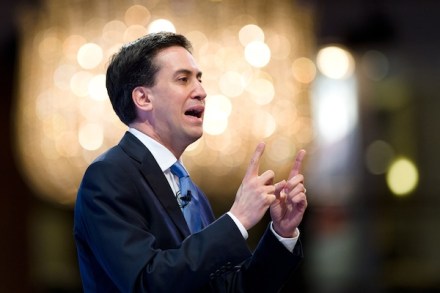
Ed Miliband's One Nation circus moves on to tackle low pay this week, with the Labour leader calling for more companies to pay their staff the Living Wage of at least £7.20 an hour. One of his most striking proposals comes from the Resolution Foundation's Commission on Living Standards, which is to force top companies to publish details of what proportion of their staff are paid below the living wage. Though Miliband isn't hinting at raising the statutory minimum wage to meet the living wage - clearly acknowledging the adverse impact that this hike could have on job creation when the economy remains so fragile - he still wants to name and shame organisations which fail to sign up to a voluntary scheme.

Can Labour avoid another Bradford West?

There’s no such thing as a safe seat in a by-election as Bradford West demonstrated. But it would still be a major shock if Labour lost Rotherham, a seat they’ve held since 1933. But the three by-elections coming up after Corby—Middlesborough, Croydon North and, now, Rotherham—will test how much Labour has learnt from the Bradford West experience. In all three seats, Labour has a large majority and no obvious challenger. Respect are already trying to repeat their by-election success, selecting Lee Jasper—the former Ken Livingstone adviser and chair of the London Race and Criminal Justice Consortium—in Croydon North. Respect have already declared that he’ll be 'targeting' black voters.

Denis MacShane’s career with Labour is over as he faces suspension over expenses claims

The Committee on Standards and Privileges has recommended this morning that Denis MacShane be suspended as an MP for 12 months after he submitted 19 false expenses invoices worth £12,900 over four financial years. The committee's report, which you can read in full here, concluded: 'We accept that Mr MacShane is widely acknowledged for his interest in European affairs, and the funds he claimed could be said to have been used in supporting that interest. Those activities may have contributed to his Parliamentary work, albeit indirectly. He has expressed his regret, and repaid the money wrongly claimed.

Why David Cameron isn’t proposing a cut in the EU budget

Cutting the EU budget is a very good idea. Much of it is spent inefficiently and its priorities are all wrong, 40 percent of it goes on agriculture. Given that a cut would also be popular with voters, why doesn’t David Cameron propose one? The reason is that there’s virtually no chance of getting agreement to it. If there’s no agreement, the EU will move to annual budgets decided by qualified majority voting—stripping Britain of its veto. But Labour’s tactical positioning in calling for an EU budget cut has been, as Isabel said earlier, extremely clever. It has left Cameron defending a complicated position which puts him on the wrong side of public opinion and many of his own MPs.

The test of Ed Miliband’s One Nation brand

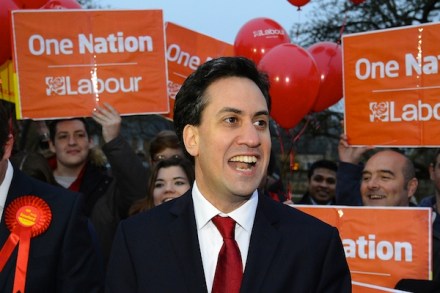
Labour has been pushing its One Nation branding campaign with quite some gusto in the past few days. Stephen Twigg announced at the weekend that 'One Nation Childcare' could include co-operative nurseries, and today Ed Miliband has given a speech on what One Nation means for mental health services, with the party launching a mental health taskforce. As well as trying to drop in as many mentions of the phrase as he could into his speech to the Royal College of Psychiatrists, Miliband continued to make direct links with One Nation's founder, Disraeli. He said: 'But just as Disraeli was right back in the nineteenth century that we could not build One Nation unless we addressed public health, so it is true today we cannot build One Nation unless we all speak out about mental health.

Will David Cameron grant Northern Ireland control of corporation tax? – Spectator Blogs

Monday morning in dreich late October. What more appropriate moment to ponder the questions of corporation tax and Northern Ireland? The question of whether the Northern Ireland Assembly should control the rate of corporation tax payable in the two-thirds of Ulster for which it is responsible won't go away, you know. Nor, despite the fact that the London press has paid little attention to it, is this some local matter of no importance to the rest of the United Kingdom either. On the contrary, David Cameron's decision on this seemingly-arcane or merely local matter is more important than it seems and, in fact, one of the more significant questions demanding his attention right now.