Labour party

Ed Balls reverses over his own progress on fiscal responsibility

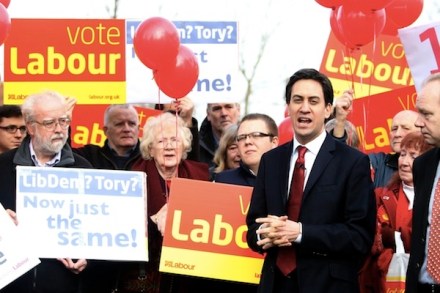
The battle-lines over the Welfare Benefits Up-rating Bill — which faces its second reading in the Commons this afternoon — have been drawn. Labour has tied its opposition to the Resolution Foundation's analysis showing that the bulk of the policy will hit working families. As Ed Balls put it last week, 'Two-thirds of people who will be hit by David Cameron and George Osborne’s real terms cuts to tax credits and benefits are in work.' They've labelled the move a 'strivers' tax', a continuation of the divisive rhetoric from both them and the Conservatives that seeks to pit 'hardworking families' against 'people who won't work' (as a recent Tory ad put it).

Tories make hay with Labour’s welfare stance

The Welfare Uprating Bill won't fall into difficulty when it has its second reading in the Commons today, but with around five Lib Dem MPs expected to vote against or abstain on the 1 per cent rise in benefit payments, it's going to be a lively debate. The Conservatives are focused on making the debate less about Sarah Teather and other angry colleagues in her party and more about Labour's welfare stance. Grant Shapps has a new, bald poster campaign today on six sites in London. Shapps' new posters simply read: 'Today Labour are voting to increase benefits by more than workers' wages. Conservatives: standing up for hardworking people.' Iain Duncan Smith has taken the same line on his morning tour of the television and radio studios.

Let Them Eat Gruel: The Government-Health-Security Complex Invades Your Kitchen – Spectator Blogs

Addressing the American people for the final time as President, Dwight Eisenhower warned that: This conjunction of an immense military establishment and a large arms industry is new in the American experience. The total influence — economic, political, even spiritual — is felt in every city, every statehouse, every office of the federal government. We recognize the imperative need for this development. Yet we must not fail to comprehend its grave implications. Our toil, resources and livelihood are all involved; so is the very structure of our society. In the councils of government, we must guard against the acquisition of unwarranted influence, whether sought or unsought, by the military-industrial complex.

Parts of the Left are beginning to realise that they got the family wrong

One of the more interesting trends in British politics in the last few years has been sections of the left realising that the cultural changes of the 1960s and 70s too often chucked the baby out with the bathwater. Today, Diane Abbott has given an interview to Patrick Wintour in which she calls for more support for the family; arguing that stable families are the best way of preventing social breakdown. She also concedes that feminists were too ‘ambivalent’ about the family. Interestingly, Abbott also comes out in favour of school uniforms. She points out that they are a check against materialism and the designer label arms race. Now, I know that it is easy to mock Abbott — the left-wing fire brand who sent her son to a private school.

The next Labour welfare policy?

As he was selling his party's plan for a jobs guarantee on the airwaves today, Liam Byrne made a passing reference to something that could form another part of Labour's welfare policy offer. The Shadow Work and Pensions Secretary was talking about myths and misconceptions about the benefits system, and said: 'I think a lot of people are surprised when they find out that jobseeker’s allowance is a little bit above £70 a week, and I’ve had constituents who’ve been frankly shocked when they’ve lost their job, they’ve gone down the jobcentre and they’ve discovered what the true rate of JSA is.

Labour revisits old welfare ghosts with its jobs guarantee

Dig out the bunting, fly the red flags in celebration, for finally we have a policy from the Labour party. Ed Miliband promised that 2013 would be the year he'd set out some 'concrete steps' on key policy areas, and to that end he's announced a jobs guarantee for the long-term unemployed. Coffee House readers will already be familiar with this scheme, as Shadow Work and Pensions Secretary Liam Byrne discussed it in his interview on this site in December.

The Tory message in 2015: Vote Cameron for PM

One thing is already apparent about the Tories’ 2015 campaign, it will be even more dependent on David Cameron than the 2010 one was. Why, because as Anthony Wells points out again today, Cameron polls ahead of his party. There’ll be those who criticise this decision. They’ll point out that the big billboard posters of him in 2010 backfired badly. Others will wonder what more juice can be squeezed out of Cameron, given that by the next election he’ll have been leading the party for nigh-on ten years. But to the Tory leadership, the Cameron lead on the best Prime Minister question is one of their trump cards. It is key to their attempt to take seats off the Lib Dems.

Now Nick Clegg turns on Labour ahead of mid-term review

Nick Clegg is in a pugnacious mood at the moment. First there was the very conveniently leaked memo in which Lib Dem strategists urged MPs to criticise their Tory Coalition partners publicly. Now he's gone on the attack against Labour's spending plans, or lack thereof. The Deputy Prime Minister writes in The Times: 'The Labour leadership continue to complain about the coalition's approach, but without providing any credible alternative. They're learning the tricks of opposition and finding their rhetorical refrains. But where are the numbers? Where are their sums? The country has undergone the biggest economic crisis in living memory, yet they offer no explanation of how they'd get us out of this mess, nor any admission of responsibility for their part in creating it.

Shapps’ campaign skirmish

There’s long been a sense on the Tory side that the party’s campaigning isn’t as sharp as it should be, that CCHQ isn’t up to the job. The Ashcroft target seats campaign was so valued not just because of the money but because of the organisational and management muscle behind it. The new Tory Chairman Grant Shapps was sent to CCHQ in the reshuffle with instructions to address the place’s institutionalised incompetence. The early signs are encouraging. When Labour announced that it was launching a campaign in the 60 seats where the number of people on working tax credits, which are only going up by 1%, was larger than the Tory majority, Shapps had a Tory response in place in each of those seats by the time Labour’s campaign actually launched.

Ed Miliband vs the working class

Who's on the side of the strivers? Is it George Osborne, who's cutting benefits in real terms for the next three years, which he defends as 'being fair to the person who leaves home every morning to go out to work and sees their neighbour still asleep, living a life on benefits'? Or is it Ed Balls, who's opposing the move as Osborne 'making striving working families pay the price for his economic failure'? Both men are convinced that their stance will help win the votes of low- and middle-income workers. At least one of them is wrong. Isabel has explained the sources of Labour's confidence. One is a YouGov poll released on Sunday, showing 42 per cent of 'C2DEs' (working class and lower) think benefits should rise at least in line with inflation.

Why Ed Balls is so confident about benefit wars

The debate over benefit uprating will run and run because both sides think they are winning. George Osborne thinks the public resent generous benefits rises. Liam Byrne and Ed Balls want to call this a 'strivers tax' and think blue collar workers will fall into their arms. Byrne told Coffee House yesterday that Labour will be hurt opposing to the Welfare Uprating Bill. I understand that the Shadow Cabinet reached its decision after YouGov's polling showing C2DE  voters  - the three lowest socio-economic groups - saying benefits should have been increased in line with inflation. Osborne's Bill would increase welfare by 1pc, behind expected inflation.

One Nation Labour can’t just be about reassuring voters

Ed Miliband is giving another one of his repositioning speeches today: this time about immigration and integration. We're going back to the Labour leader's school and his family again, as well as reminiscing about Olympics: none of which are exactly groundbreaking territory, given Ed explored the first two at length in his conference speech, has explored his family history at length in many speeches since becoming leader, and that all three party leaders used the Olympics for their own purposes in their autumn conference speeches. Mo Farah and Jessica Ennis should start charging politicians royalties for using their names in speeches about culture: they appear, alongside Zara Philips, in Miliband's speech today.

Liam Byrne interview: The welfare system is ‘completely out of whack’

Liam Byrne is a modernising, Blairite Labour MP, and in case you were in any doubt about that, he conducts his interview with Coffee House sitting next to a framed photograph of him with Tony Blair. The party's Shadow Work and Pensions Secretary is well known for his modernising zeal, which has sometimes led him onto a collision course with his party grassroots and other MPs on the left. This week, though, he's on a collision course with the Conservatives, who hope they've managed to corner Labour into admitting it hasn't quite modernised its welfare policy enough to win voters back. The Welfare Uprating Bill, launched in last week's Autumn Statement, will see benefits rise by 1 per cent, rather than in line with inflation.

The 2011 census proves why politicians are distrusted

What do people take away from the 2011 census? I cannot help but see the clearest possible reason for why trust of politicians is at an all-time low. Perhaps other voting members of the public remember as far back as 2004 when the Labour government predicted that fewer than 20,000 people would come to Britain from those Eastern European countries given full access to the UK labour market. As of last year the Office of National Statistics confirmed at least 669,000 people from these countries working in the UK. Or they might remember Labour immigration minister Phil Woolas promising in an interview with the Times in 2008 that, ‘It’s been too easy to get into this country in the past and it’s going to get harder.’ Mr Woolas even talked about quotas being brought in.

The only Labour business supporter that Chuka Umunna can name is a Labour peer

Chuka Umunna’s interview on The Sunday Politics today highlighted several of the problems facing the Labour party. When Andrew Neil pressed him on whether he could name any heads of big companies backing Labour, the shadow Business Secretary could only name a Labour peer who the party ennobled in 1998. Here’s the exchange: AN: Tony Blair said that Labour can’t go into the next election without the support of a single chief executive from a big company. Can you name the boss of a big major company who’s backing Labour? CU: The Chairman of ASOS who is Waheed Alli. He has backed the Labour Party. AN: Is that a public company on the FTSE? CU: I’m not sure that ASOS is listed. It may be or it may be just outside the FTSE 100. AN: Any others? Any others?

Will he, won’t he? Ed Miliband makes noises about benefits war

Ed Miliband is ready to wage war with David Cameron and George Osborne over the Welfare Uprating Bill, which will see benefits rise by 1 per cent a year, rather than in line with inflation. The Labour leader has been talking tough in the papers this morning, with a piece in the Sunday Mirror in which he says: 'We should be tough on the minority who can work and try to avoid responsibility. But there comes a moment when a government is exposed for who they are. That happened to David Cameron and George Osborne this week. 'They showed they are not fit to govern because they played political games with people's livelihoods. They said they were cutting benefits for the next three years and the mood music was that it was a way to punish the 'shirkers and scroungers'.

The public’s verdict on the Autumn Statement

We've only had two days to digest it, but the early signs from YouGov are that George Osborne's Autumn Statement has gone down a lot better than his March Budget. The Chancellor's personal ratings are still dire – just 24 per cent think he's doing a good job — but that's a lot better than 15 per cent five months ago. His approval rating had tanked after the Budget, but Osborne does seem to have turned that around: And the government's approval rating on the economy similarly seems to have been helped by the Autumn Statement, and is back up to pre-Budget levels: Though a 35 per cent approval rating on the economy is not exactly great, it's notably better than the government's overall approval rating, which is currently just 26 per cent.

Labour aims to change political dynamic around benefits uprating

It now looks almost certain that Labour will vote against the 1 per cent uprating for most working age benefits. Labour is pointing out that because this also includes tax credits, most of the people hit by this will actually be in work. The party hopes that this changes the political dynamic around this subject. But, as a Liberal Democrat minister pointed out to me last night, the coalition can portray any attempt to uprate by more than 1 per cent as special treatment for those on benefits. The minister stressed that public sector pay was only going up by 1 per cent and the threshold for the 40p rate was, again, only being increased by 1 per cent. The other thing the coalition will hit Labour with is how they would pay for uprating by more than 1 per cent.

Does the South East need its own party?

Kelvin MacKenzie wants a British version of the Italy’s Northern League. His aim is to have a Southern Party that would push for home rule for London and the South East and oppose fiscal transfers from the South East to the rest of the country. The piece is classic MacKenzie polemic. But it does speak to the growing regionalisation of British politics, a subject that Neil O’Brien addressed for us in his final piece before becoming an adviser to George Osborne. Outside of London, Labour only have four MPs in the South East and in the European elections, Labour came fifth in the region — behind even the Greens. For their part, the Tories are on the verge of extinction in the urban north and hold just two seats in the North East.

Pressure on the editors as Labour threatens own Leveson bill

One of the foundations on which David Cameron based his decision to reject statutory underpinning of press regulation was that editors would set up a new system based on Lord Justice Leveson's recommendations which would prove far tougher than the Press Complaints Commission. The failure of the industry to reach consensus on a new body - and this is a real risk given the refusal of some publications to join the PCC - would pull the rug from under the Prime Minister's feet as he fights critics pushing for statute. Cameron is also facing claims that he is bowing to bullies in the press, and it is for these two reasons that the Prime Minister will be applying great pressure on editors as they meet Culture Secretary Maria Miller this week.