Labour party

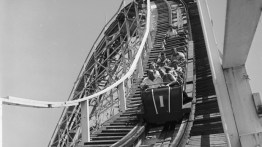
Parties launch onto General Election roller coaster

It's the first day back for MPs and even though we are still months, not weeks, away from the General Election, the parties are all already launching themselves down the campaign roller coaster. Ed Miliband is launching his General Election campaign today and the action will start to shift from the now dull and empty House of Commons to seats around the country. Both sides have spent the past few months predicting a dirty and tough campaign, and if today's diary is anything to go by, they'll all be utterly shattered by polling day too, with a tough pace to keep. We have a speech from Ed Miliband, a press conference from a good chunk of the Tories on Cabinet and Nick Clegg's press briefing all before lunchtime. Yet no-one seems to be planning to say anything new.

Cameron avoids a New Year slip-up

In 2010, David Cameron stumbled in his first New Year broadcast interview over the Tory plans for a married couple’s tax allowance. This slip-up knocked him and his party off course and was a harbinger of the disastrous Tory campaign to come. Today, there were no such mistakes from Cameron as he appeared on Andrew Marr. Instead, he stuck to his competence versus chaos message and tried, fairly successfully, to avoid making any other news. In this campaign, we will see a more disciplined Cameron than the one who fought the 2010 election. The Tories are this time, in contrast to 2010, certain of what their message should be. One challenge for Tory and Labour alike in the next few months is to avoid getting drawn into hung parliament speculation.

What the first 2015 election posters tell us about the campaign

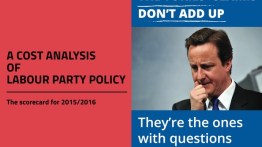
If you want a glimpse of the sort of election campaign we’re facing for the next few months, these posters from Labour and the Conservatives tell you everything you need to know. [caption id="attachment_8954872" align="alignnone" width="621"] The poster and the porkie[/caption] The Tories want to encourage voters to stay on the (apparently German rather than British and apparently heading nowhere) road to recovery, even if that involves leaping around between different measures of the deficit in order to give the impression of momentum. They want to talk about the economy because that’s their strongest issue. Similarly Labour is staying where it is most comfortable, threatening the end of the NHS as we know it in posters released this weekend.

What David Cameron must do to win (properly this time)

Almost exactly five years ago, the Conservatives fired the starting gun for a general election — and shot themselves in the foot. ‘We can’t go on like this,’ said the poster, next to a picture of an airbrushed David Cameron. ‘I’ll cut the deficit, not the NHS.’ What on earth did it mean? No one seemed sure. As early as January 2010, it was horribly clear: here was a muddled party, preparing to fight an election campaign with a muddled message. Little wonder it ended in a muddled election result. This time, it should be different. The Tories have a professional, Lynton Crosby, running their campaign. He should be able to point out the basics: a clear message is required, and it needs to be repeated.

National Theatre’s 3 Winters: a hideous Balkans ballyhoo

A masterpiece at the National. A masterpiece of persuasion and bewitchment. Croatian word-athlete Tena Stivicic has miraculously convinced director Howard Davies that she can write epic historical theatre. And Davies has transmitted his gullibility to Nicholas Hytner, who must have OK’d this blizzard of verbiage rather than converting it into biofuel and sparing us a hideous Balkans ballyhoo. Certainly the play is conceived on a grand scale. Location: a Zagreb mansion. Timeline: 1945 to 2011. Characters: several generations of clever proles plus one dangling aristo. It opens on a note of sourness and corruption. A blonde Marxist stunnah seduces a top commissar who buys her off with the freehold to a townhouse occupied by some rich bloodsuckers. The snooty vermin are kicked out.

Tony Blair, master of communication, claims his warnings about Labour were ‘misinterpreted’

Politicians really are quite unfortunate people, aren’t they? Always being misinterpreted. It’s almost as though they speak another language (some Commons debates suggest they do, anyway) and journalists wilfully translate them wrongly. Today Tony Blair has claimed that his remarks about a lefty Labour party losing to a right-wing party have been ‘misinterpreted’. This is what he told the Economist: - There could be an election ‘in which a traditional left-wing party competes with a traditional right-wing party, with the traditional result’ and when asked if that means a Tory win, ‘Yes, that is what happens’. - ‘I am convinced the Labour Party succeeds best when it is in the centre ground.

Listen: Lucy Powell tries to dodge questions on leaked Ukip document with ‘it’s irrelevant to you!’

How has Labour managed to make such a mess of its response to the leak of a document on dealing with Ukip that came out on Monday that it's still having to talk about it on Friday? I've been baffled by the poor crisis comms this week - until I heard Lucy Powell, vice-chair of the party's General Election campaign, trying to field questions on it today on the Daily Politics. Her tactics were to tell the interviewer that the origins of the report were 'irrelevant', an old but useless tactic of spinners that generally encourages the journalist to think the story even more relevant than they did when they started the interview.

Watch out Labour, Ukip are coming for you

How much of a threat is Ukip to Labour? The tanks of the people’s army have been on the Conservatives’ lawn for some time but we now have an idea why Labour has been preparing to fight the kippers on the doorstep. Lord Ashcroft has carried out his final round of marginal seats polling this year, focusing on eight seats where the Conservative majority is between 7.1 and 8.1 per cent — plus another four seats where Ukip are threatening Labour. The results aren’t too bad for the Conservatives: out of the seven seats polled on Labour’s target list, they are ahead in just two of them (Ealing Central & Acton and Stevenage).

Labour’s ‘quick and dirty’ briefing

More fallout from the Labour Ukip leak reaches me. Some sources in the party remain amazed that it apparently never crossed the desk of Yvette Cooper, given her role in the Ukip strategy group. But there is also considerable amusement about an email, passed to Coffee House, that Lucy Powell sent out describing the briefing pack as 'quick and dirty'. Some might be wishing material produced by HQ wouldn't fit such a racy description. The row over the report is fading, but it seems to have increased some tensions between party frontbenchers. And those who produced the report itself aren't in the best of moods either...

The fatal contradiction at the heart of the Tory message: there is no money, except for people we like.

Next year's general election looks like being the most gruesomely entertaining in years. Entertaining because no-one knows what is going to happen; gruesome because of the protagonists and the sorry misfortune that someone has to win it. All we can say for certain is that the Lib Dems will receive a doing. I still don't think that person will be David Cameron. In part for reasons previously detailed here. The single biggest thing preventing a thumping Labour victory is Ed Miliband. This is, it is true, a sturdy peg upon which the Tories may hang their hopes but it still may not prove sturdy enough. Not least because, by the standards they set themselves, this government has failed. It came to power promising to put Britain's finances in order.

Labour tries to deal with dysfunctional campaign machine after Ukip leak

After spending all week stamping all over their own report about how to approach Ukip, Labour is now trying to work out what on earth led to the row. It’s not so much a leak inquiry as a cock-up inquiry, as the MPs who are supposed to be in charge of Ukip strategy in the party say they hadn’t seen the report at all - though those involved in writing it claim they did. One HQ source tells me that Yvette Cooper signed off on the report, which was compiled by experts on polling and constituency data, including the man the party recently hired as the ‘Nate Silver of Bolton’, Ian Warren, other members of the field team and some MPs. But the official Ukip Strategy Group did not know about the contents of the report.

The Union needs balance

Today’s Guardian long-read on the Scottish referendum is a great piece of journalism. Both Alistair Darling and Danny Alexander argue in it that when David Cameron stepped out of Downing Street and announced his support for English votes for English laws he allowed the SNP to snatch victory from the jaws of defeat, to argue that Scottish voters had been hoodwinked.   Now, to be sure, Alex Salmond make much of Cameron’s announcement. In his Spectator interview he says that it showed that Cameron thinks Scots ‘heads zipped up the back’ and that he didn’t get the enormity of what had just happened.

It’s beginning to feel a lot like a General Election

David Cameron is talking about the ‘great, black, ominous cloud’ that Labour’s economic plans would put over the British economy. Labour is talking about its immigration policies while trying not to talk about a document that suggests it shouldn’t talk for too long about them. The Lib Dems are complaining that the Tories would damage children’s futures. It’s beginning to feel a lot like a general election, even though we’re still quite a way away from it. This is one of the benefits for political parties of the Fixed-Term Parliaments Act that is sucking all the life out of Parliament itself. They are now permanently on the campaign trail, even when they’re at Prime Minister’s Questions.

Four things we’ve learnt from the leaked Labour/Ukip paper

How will Labour respond to the threat from Ukip? Thanks to today's scoop by the Telegraph's Ben Riley-Smith, we now know. A leaked internal memo (pdf here) singles out immigration as the biggest issue to tackle and advises activists ‘moving the conversation on’ to another topic — something that has annoyed many in and outside of the party. With Ed Miliband outlining Labour's immigration plan for the general election today, the timing and contents of this document couldn't be any worse for the leader. Here are four things you need to know about the paper, entitled ‘Campaigning against Ukip’: 1.

Jim Murphy wins Scottish Labour leadership contest

Jim Murphy has been elected leader of the Scottish Labour party. He defeated his more left wing rival Neil Findlay with 55.59 per cent of the vote to Findlay's 34.99 per cent. Kezia Dugdale was elected deputy leader. Murphy is a far more formidable politician than his predecessor, Johann Lamont. But he faces a mighty task. A YouGov poll of Scotland ahead of the UK general election, published this morning, finds the SNP on 47% with Labour 20 points behind. If repeated at the election in May, and assuming a uniform swing, this would see Labour lose 34 of the 41 Scottish seats that it won in 2010.    However, Murphy has energy and no fear of the SNP, both qualities that Scottish Labour has been lacking in recent times.

Labour briefs MPs on the Ukip threat in their constituencies

Unfortunately for Labour, it cannot dismiss Nigel Farage as a ‘pound shop Enoch Powell’ quite so easily as Russell Brand did last night. The party knows that Ukip can take the voters that have already deserted it - voters that it thought still belonged to the party - and there have been increasing calls for the Labour leadership to take Ukip seriously. I understand that MPs have been receiving a series of briefings at the party’s HQ recently examining voters who are vulnerable to Ukip. The briefings, which have been produced by a number of party figures including John Healey, who has long worried about the Ukip threat, include details of the demographic of voters in each Labour constituency who are susceptible to voting for Nigel Farage’s party.

What we learnt from Miliband’s Big Speech, with no Big Announcement

Ed Miliband’s speech on reducing the deficit has attracted a fair bit of criticism for not telling us very much that’s new. It was supposed to be a Big Speech, and Big Speech normally means Big Announcement, but there wasn’t one. There wasn’t even really any bigger attempt to tell us what Labour would do after the General Election. The Labour leader spent a fair chunk of the question-and-answer session afterwards telling the audience that he had been ‘clear’, which is what politicians end up having to say when they haven’t been clear, often deliberately. But it’s unfair to say that this was a useless speech as it did articulate better than previously the Labour leader’s basic vision for the economy.

Labour now thinks it is safe to reject the Tory narrative on the economy

Labour has returned to a bit more of an even keel in the past few wintry weeks after a torrid autumn. Plotters are resigned to letting Ed Miliband fight the General Election on his terms, and given the closeness of the two parties in the opinion polls, most are concluding that a disorganised Labour party could still throw the General Election away. Of course, everyone’s still anxious, but that’s not limited to Labour. When all MPs in both parties are anxiously looking at the opinion polls every day, it’s clear that no-one’s very confident. Miliband’s team have been trying to reassure nervy MPs by pointing out, quite obviously, that this election isn’t like the others.

What’s behind the Boris Johnson show?

Coming in from the pouring rain, I make my way to the office on the eighth floor of City Hall. With its curving windows, many books and bust of Pericles tucked away in a corner, it reminds me both of a classroom and the cockpit of a spacecraft. Its occupant is waiting for me, looking a little crumpled but less dishevelled than I had expected. He greets me very pleasantly but this is what I’m thinking. Here is the most famous person I have ever interviewed. In his own way, he is almost as iconic as the Queen or Churchill, the nodding dog in those insurance commercials. He is Boris, one of a tiny handful of politicians/celebrities instantly known by their first name.

From coalition to chaos – get ready for the age of indecision

A recent email from Samantha Cameron started an intriguing debate in the Prime Minister’s social circle. It was an invitation to a Christmas party at Chequers and word quickly spread on the Notting Hill grapevine that the PM was convening an unusually large gathering of friends at his country retreat. So, the guests wondered: were they being asked around because the Camerons were having a last hurrah at Chequers, sensing that they would be evicted by the electorate? Or was the bash being thrown because they were in celebratory mood, convinced that the political tide has turned their way? This confusion is understandable. We might only be three months away from the start of the election campaign but only a fool would predict the result with much confidence.