Labour party

Night of the long claymores: the SNP are poised for a historic, momentous, victory.

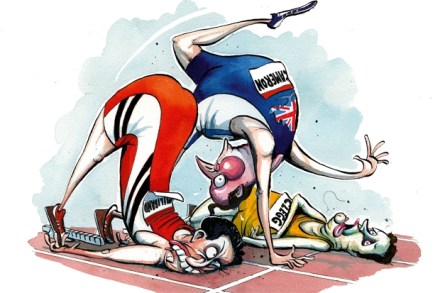
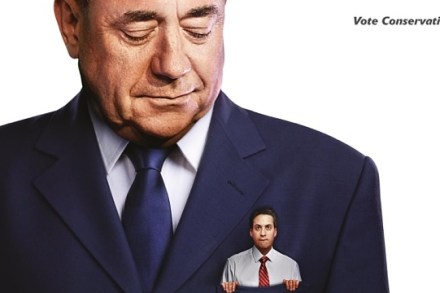
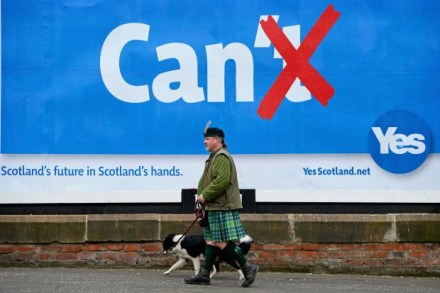
The latest Scottish polling conducted by Lord Ashcroft is another reminder, should you still need it, that this year's election looks like being an unmitigated disaster for Unionism. The noble, if mischievous, Lord's research reveals that, as matters stand, the SNP are still on course to all but wipe Labour - and everyone else - off the political map. It will be a bloodbath; a night of the long claymores. Gordon Brown's Kirkcaldy seat? Gone. Alistair Darling's Edinburgh constituency? Taken. Charlie Kennedy's Highland fortress? Sacked. Even Jim Murphy's East Renfrewshire seat is threatened by the Nationalist insurgency. So too is the last remaining Tory MP in Scotland, David Mundell.

Justin Forsyth has far more to apologise for than Tony Blair’s Save the Children award

You almost have to admire Justin Forsyth’s brass neck. He is a former Gordon Brown spin chief earning a Prime Ministerial £138,000 for running Save the Children. Or, rather, transforming it into Save the Labour Party with various attack ads claiming that kids need to be rescued from wicked Conservative austerity. Here's an example of its handiwork: https://www.youtube.com/watch?v=3eKJ972iZ-U You’d think that Forsyth would be rather embarrassed about abusing the charity’s resources in such a way, but last year Save the Children went one further and gave an award to Tony Blair. That really was too going far.

Suburban legends: Why London’s property boom seems set to help Labour win seats

Economists have for some time spoken of a ‘great inversion’ of London, whereby property price hikes in inner London, often linked to gentrification, has made suburbia comparatively more affordable. These changes, marked in the five years since David Cameron became Prime Minister, could have a profound effect on how the general election result pans out in the city. This is especially the case given the ability of such changes to affect the social and demographic makeup of London, as people from poorer backgrounds, the young and ethnic minorities are more likely to be susceptible to price increases in the private rental market.

National parties no more

All the election forecast models agree, the next election result is going to be remarkably tight. On these models, neither Labour nor the Tories are going to come close to winning a majority. They would both be about 40 seats short. Now, events could intervene to change things. But, as I argue in the magazine this week, one of the reasons Labour and the Tories are finding it so hard to win a majority is that they are not national parties anymore. Compounding this is that no party is aiming for full spectrum dominance in this campaign. Rather, they are trying to talk up the issues that are best for them and worst for their opponents. So, you hear the Tories talking about their long term economic plan and leadership. While Labour want the debate to be focused on the NHS and fairness.

Two parties, two failures of logic

Two party election policies, two failures to think things through. Or, at least, to engage with realities. First, Labour announces a cut in university tuition fees to a maximum of £6,000. Why? The sum itself isn’t important. For a potential student, £6,000 and £9,000 – or £18,000 and £27,000 – are much of a muchness. If you can pay off one, you can pay off the other. The issue, surely, is whether there should be tuition fees at all. I think not. But then I also think that the number of university places should be cut by about 75 per cent. Second, the Prime Minister announces a bunch of new measures to deprive migrants of their benefits. This is a sop to those who, like me, wish to curtail or restrict immigration. But it will do no good.

Alastair Campbell threatens a political comeback

It's probably not the news everyone wanted to hear, but Mr S feels a duty to let readers know that Alastair Campbell is considering a return to politics. Furthermore, this could involve the former Labour spinner standing as an MP. Speaking to India Knight for the April issue of Red magazine, he comments that a friend recently suggested he join parliament. His reply was: 'I’ll regret not doing it, but I know I’ll regret it if I do it as well… The size of the regrets will be big either way.

Why an SNP surge at Westminster could mean the end of Britain

[audioplayer src="http://rss.acast.com/viewfrom22/the-snp-threat-to-westminster/media.mp3" title="Alex Massie and Sebastian Payne discuss what an SNP victory will mean for the union" startat=42] Listen [/audioplayer]Anyone seeking to understand the strength of the SNP should look to those parts of Scotland where the party is supposed to be weakest. At the last election, the nationalists took just under 10 per cent of the vote in the Scottish Borders. This year, Tory canvass returns suggest the SNP may treble its share of the vote in one of the most staunchly unionist seats in Scotland. For months, opinion polls have made unremittingly gloomy reading for unionists. The nationalists are heading for a victory on a scale still not fully comprehended in England.

No one wants to fight a national campaign. This will be the least general election in years

[audioplayer src="http://rss.acast.com/viewfrom22/the-snp-threat-to-westminster/media.mp3" title="James Forsyth and Isabel Hardman discuss the not-very-general election" startat=780] Listen [/audioplayer]There’s normally an easy way to tell which party is losing a general election campaign. Whenever one side starts telling you to ignore the national polls and look at what is happening in certain key seats, it is a sure sign that they are in deep trouble. In this election, however, all the parties are arguing that what’s going on in their target seats matters more than the national polls. No one is keener to dispute the relevance of the national polls than the Liberal Democrats.

Labour unsure about health policy its own councils support

The announcement today that Greater Manchester will receive full control of health spending - worth £6bn - has left Labour in a rather interesting position. On the one hand, it is easy for Andy Burnham to say that this sounds ‘like yet another NHS reorganisation’. But on the other, Greater Manchester includes a number of Labour councils who appear pretty happy to sign up to the provisional deal. Indeed, one of those councils is Wigan, which covers Burnham’s own constituency. Now one of the reasons that spending has been devolved to this area is that councils in Greater Manchester are keen, forward-looking and ambitious.

Ed Miliband attempts to build bridges with the arts world, but where will the money come from?

After Labour confirmed that they would not reverse Tory art cuts, the luvvies turned on Ed. During a spending plans onslaught from the Tories earlier in the year, the party spin machine proudly boasted: p.44 of Tory dossier says Labour will cancel cuts to the arts budget. We won't. — Labour Press Team (@labourpress) January 5, 2015 Leading to a thorough pasting from all sorts of media darlings: This is not something to brag about. RT @labourpress: p.44 of Tory dossier says Labour will cancel cuts to the arts budget. We won't. — Neil Gaiman (@neilhimself) January 6, 2015 @labourpress And you're proud of that? Jesus. — Simon Blackwell (@simonblackwell) January 6, 2015 .@labourpress why are you proud of this?

Only a matter of free time: Labour candidate blasts ‘invisible’ MP Sir Malcolm Rifkind

Sir Malcolm Rifkind claimed to an undercover reporter during a Telegraph sting operation that they would be surprised by how 'much free time' he has, despite being the MP for Kensington. One person who would not appear to be surprised by Rifkind's admission is his Labour rival Dr Rod Abouharb. Rifkind flaunting his free time, more evidence of him being the invisible MP for Kensington. Isn't being an MP http://t.co/MO2iavJRYR — Dr Rod Abouharb (@kensingtonrod) February 23, 2015 Speaking ten days before the allegations broke, the Labour candidate claimed that only 17 people out of 100 surveyed in the Kensington constituency could successfully pick out their MP from a line-up of eight.

Tories and Labour to make pledges knowing they are bad policy

This week, the two main parties plan to make iconic pledges that they hope will appeal to their core vote, but that are pretty poor policy. David Cameron will today pledge to keep ‘pensioner perks’ - universal benefits for older voters such as the free bus pass and the winter fuel payment - while Labour expects to announce its new tuition fees policy. The only thing that gives the Tories any sense of moral high ground in this is that they have at least worked out how to fund their pledge, while Labour is still scrapping over the money for and detail of its plan to cut tuition fees. Why are these bad policies?

Ed Miliband to Cameron: show us your EU renegotiation policy

Ed Miliband has sent an angry letter to David Cameron this afternoon, demanding that he ‘set out in detail a reform agenda for the EU and a strategy for building the alliances needed to deliver it’. Now, David Cameron is quite used to receiving angry letters about Europe, but mostly they come from members of his own party rather than the leader of the Opposition. But because Ed Miliband has decided that his party’s best business policy is actually the responsibility of his Shadow Foreign Office team, he wants to get in on the angry letter-writing act too. This letter is supposed to highlight that pro-business policy, which is Labour’s opposition to an EU referendum, as well as needling Cameron a bit about whether he really holds enough influence in Europe.

Hunting may be banned, but the fight still goes on

Ten years ago today, Tony Blair’s ban on hunting with dogs came into force. Rural communities had marched, Otis Ferry had stormed the Commons, but none of it made any difference, and anti-hunt campaigners rejoiced when hunting became a banned sport. But though the law has been in place for a decade, the fight for hunting still goes on. Many hunts, especially those based in more urban areas, are still plagued by hunt saboteurs, as was demonstrated just last month when Mike Lane, a Master of the Tedworth Hunt in Wiltshire, was attacked so savagely by saboteurs wielding iron bars that he was knocked out.

If this is a debate about animal welfare, we must repeal the Hunting Act and start again

Today marks ten years of a ban on hunting a wild mammal with hounds in England and Wales, except under certain exemptions. To understand what a fundamentally bad law the Hunting Act is, and why it must be repealed, it is best to start at the beginning with the original purpose of the ban. For all the talk of animal welfare the long battle over hunting legislation was not predominantly about foxes or other mammal species it was about class, politics and a gratuitous misrepresentation of hunting and the people who do it. This is not my interpretation, but the reality as admitted by many of those who promoted the ban.

Record employment figures create more problems for Labour

Britain has reached its highest ever level of employment. According to new figures from the ONS, the employment rate has risen to 73.2 per cent — or close to 31 million people in work. This stands as the joint highest rate since records began in 1971. Unemployment is down to 1.86 million. The short-term jobless rate is also at its lowest rate since 1992. Pay is also increasing, with private sector earnings (excluding bonuses) up 2.1 per cent year-on-year at the end of 2014. Youth unemployment has increased slightly, something Esther McVey has described as a 'tiny blip.' But never in British history have there been so many job vacancies. Never have there been so many workers. These are just two facts from today's job figures, loaded with good news for David Cameron.

Former NEC chair dumps Labour for Ukip

Labour’s decision to shy away from an EU referendum has cost it a senior figure. The Telegraph reveals that Harriet Yeo, the former chairman of Labour’s National Executive Committee between 2012 and 2013, has quit the party over Ed Miliband’s refusal to offer a referendum. Although she hasn’t joined Ukip, she will be lending her support to the party at the next election. Nigel Farage is naturally pleased with the news. In a statement this afternoon, he said: ‘A life long Trade Unionist and Labour Party member who served as Chair of Ed Miliband's NEC she is yet another voice calling for Britain to have a choice about its future. We are welcoming support from across the board and Harriet's support is evidence of this.

Labour tries to resuscitate tax row

Presumably as a way of getting out of an endless debate about receipts, Ed Balls has issued a letter with some detailed questions about tax evasion and HSBC (as opposed to tax avoidance and window cleaners). The letter asks three questions: 1. Why has there only been one prosecution out of 1,100 names? Was the “selective prosecution policy” a decision made by Ministers? 2. When were you first made aware of these files, what action did you take and did you discuss it with the Prime Minister? 3. Why did you and David Cameron appoint Lord Green as a Conservative peer and Minister months after the government received these files? 4. Did you and David Cameron discuss tax evasion at HSBC with Lord Green, or did you turn a blind eye?

Labour’s tax fight turns scrappy

Well, those tax attacks worked out well, didn’t they? Tax avoidance is on the front pages of the newspapers, but not in a way that benefits either main political party. Even though George Osborne’s guide to minimising your tax bill has gone viral, Labour isn’t benefitting because it has ended up talking about receipts for hedge trimmers, not the activities of hedge funds. It was a wrong turn easily taken by Labour but one that makes week three of its tax avoidance row messy. Week one was messy partly down to Balls, too, after his ‘Bill Somebody’ interview, which fed the narrative that Labour was ‘anti-business’.

Watch: Ed Miliband mucks up his lines

Ed Miliband appears to have found some safe ground for his party this week, attacking the Tories whenever he can over tax avoidance claims. If he plans to continue on this note, Mr S suggests that he picks his words with more care in the future. Speaking at the Welsh Labour conference on Saturday about his plan to launch an HMRC review, Miliband went off message rather badly. The Labour leader promised to ‘stand up for all those who stand in the way of the success of working families'. That couldn't be what he means, could it?