John Milton

The cormorant – symbol of gluttony and the Devil

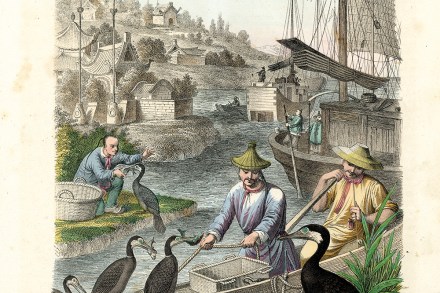
Greed, death, hate and clouds of destruction – this is the cormorant season all right. I was hungry to read Gordon McMullan’s book because I love the birds and looked forward to learning their secrets. But I gathered only a little about the green-glossy, serpentine jewel of a fowl I saw in Hebden Beck recently, hunting in the middle of town where I’d never seen it before. Look elsewhere for the creaturely particulars, such as the spur of bone at the back of the skull from which thick muscles link to the lower mandible, giving the corvus marinus a mighty bitey beak. This book is not concerned with what we know about cormorants but with the cormorants that we ourselves are.
The subversive message of Paradise Lost

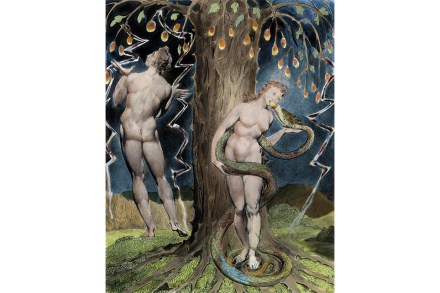
For those of us who have long loved (or hated) Paradise Lost, this is one of those rare and refreshing books that invites us to compare our feelings with other committed readers over the centuries. The poemmay well be the only major work in the western canon that nobody can avoid for long – even if it comes down to making a decision not to read it at all, or just to give up trying. Orlando Reade argues that it may also be the most ‘revolutionary’ text commonly available in modern classrooms – written by a man who, in his time, took extreme positions on everything from divorce (he was all for it) and whether kings have a divine right to keep their heads (they don’t). John Milton read widely and lived during the most conflict-driven period of British history.

A walled garden in Suffolk yields up its secrets

In the hot summer of 2020, during the Covid pandemic, Olivia Laing and her husband Ian moved from Cambridge to a beautiful Georgian house in a Suffolk village and began work on restoring the neglected, extensive walled garden behind it. She was vaguely aware that the garden had been owned and loved by the well-known garden designer and plantsman Mark Rumary, who had died in 2010. He had been the landscape director for the East Anglian nursery of Notcutts, and I remember him as a genial man overseeing extensive, award-winning tree and shrub exhibits at the Chelsea Flower Show in the 1980s. I once owned a copy of the Notcutts Book of Plants, written by him, which was an indispensable reference book for garden designers before the advent of the internet.

The woman who put the Spencer family on the map

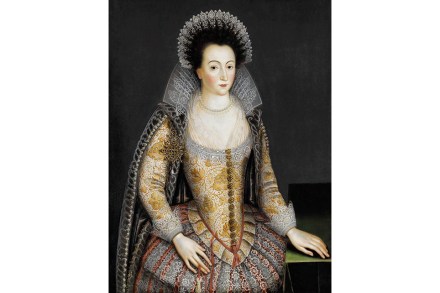
The first woman to put the Spencer family on the map was not Diana, Princess of Wales, the youngest daughter of the 8th Earl Spencer, nor even Georgiana, Duchess of Devonshire, the elder daughter of the 1st. Rather, it was their Tudor forebear Alice, Countess of Derby, the subject of this absorbing biography by Vanessa Wilkie. Born at Althorp – then a modest, two-storey red brick manor house – in May 1559, six months into the reign of Elizabeth I, Alice was the youngest daughter of Sir John Spencer, a prosperous sheep farmer and sometime sheriff of Northamptonshire, and his wife Katherine, née Kytson. At the age of about 20, Alice married Ferdinando Stanley, Lord Strange. It was a brilliant match for her and the Spencers.