Japan

A brief history of selling bath water

From our US edition

Instagram model Belle Delphine made waves in the news this month after she decided to sell tubs of her own bath water for $30 a pop. The ‘product’ sold out in just three days, and led to a bountiful trove of online content, including my own review for Spectator USA. But Delphine isn’t the first person to sell bath water to her followers. Shoko Asahara, founder of the Japanese doomsday cult Aum Shinrikyo and the man behind the Tokyo subway sarin gas terrorist attack in 1995, which killed 12 people and injured over 1,000 more, also sold his own bath water to devotees who drank it during rituals.

belle delphine bath water

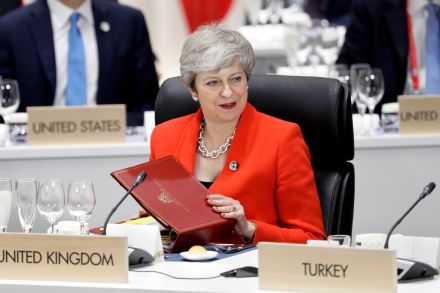
Theresa May says goodbye to old friends at Japan’s G20

Theresa May makes her final bow on the world stage in Japan, where she is attending the G20 heads of government meeting in Osaka. It’s a funny place for it all to end. Japan’s second city prides itself as the country's comedy capital. It is home to Japan’s ‘manzai’ tradition – a slapstick straight man/funny man double act which involves a lot of head slapping and cross talk. Besides their sense of humour, Osakans are known for their garrulousness, gaudy clothing and their suspicion of haughty, overly serious Tokyo. Think of Glasgow’s relationship to Edinburgh, or Newcastle’s to London, and you’re not far off.

Trump: American shogun

From our US edition

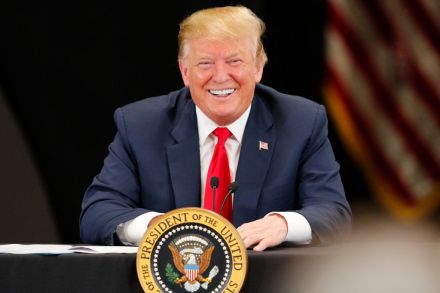
Japan has a new emperor, and so do we. Donald Trump isn’t merely president. He wants to be America’s shogun. Already Trump has repeatedly made his contempt for his Cabinet officials and staffers plain as he routinely forces them to line up and sing his praises. Now, in an episode that is more redolent of H.M.S. Pinafore than Top Gun, TVSG, or The Very Stable Genius, is enmeshed in an embarrassing brouhaha over the USS John S. McCain, which was inconveniently parked off the shores of Japan, where Trump might see it. Klaxons apparently started sounding in the White House over Trump’s Memorial Day visit to Japan. It was time to clear the decks. Under no circumstances could Trump be allowed to espy the dreaded name ‘McCain.’ It would harsh his mellow.

donald trump fundraiser shogun

Shinzo Abe and Donald Trump’s budding bromance

Whenever I see pictures of Donald Trump and Shinzo Abe together I hear the theme music from the Neil Simon comedy The Odd Couple. For Trump and Abe are indeed the Felix and Oscar of global politics, a gently comic double act with starkly different but oddly complimentary personalities and all the appearance of a twilight years bromance. The pair met soon after Trump’s inauguration when Abe rushed stateside to be the first foreign leader to pay his respects to the new president. Since then the relationship has blossomed, and they’ve met frequently, and conversed on some 40 separate occasions. There have been some choice comic moments along the way.

Japan’s reluctant princess, Empress Masako

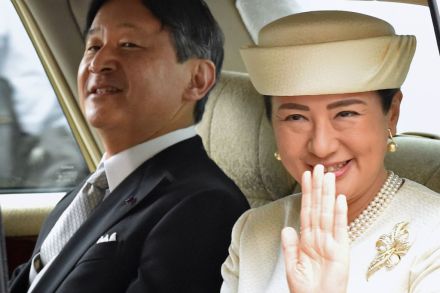
It’s been a big couple of weeks for royal events. On this side of the world, Archie Harrison Mountbatten-Windsor arrived. On the other, Emperor Naruhito’s accession to the chrysanthemum throne of Japan marked the beginning of a new era. All eyes however have been on the new Empress Masako, who has kept largely out of public view for many years. So who is Japan’s enigmatic new Empress? A month after marrying Crown Prince Naruhito in 1993, Princess Masako was seated at a state banquet between Bill Clinton and Boris Yeltsin. She chatted with Clinton in English, Yeltsin in Russian, and greeted Francois Mitterrand in French. She seemed like a breath of fresh air blowing through the staid old imperial palace.

Will Japan’s far right spoil the new Emperor’s party?

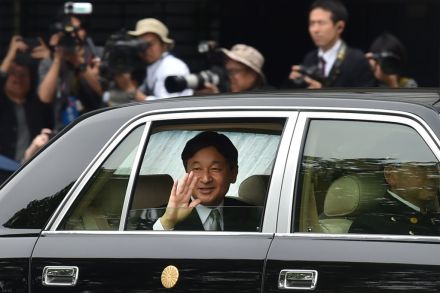
When the new Japanese Emperor Naruhito makes his first public appearance, greeting well-wishers at the Imperial Palace in Tokyo today, there is a fear that the official images of the cheering crowds will need to be carefully framed, if not cropped. For among the multitudes of proud, happy Japanese welcoming the new Emperor and the new era with openness and positivity, a darker presence – the notorious ultra right-wing nationalists known as the Uyoku Dantai – are expected to be out in force. The Uyoku are a familiar site on the streets of Japan's capital and are easy to spot. Dressed in WWII-era military uniforms and carrying the older, more militaristic of Japan’s national flags, they look like extras from the BBC series Tenko.

Seeing things

At its best audio can be a much more visual medium than the screen. Making Art with Frances Morris (produced by Kate Bland), which I caught by chance on Radio 4 last week, gave us insights into the work of the French conceptual artist Sophie Calle that were so vivid it was almost as if we had been to an exhibition of her work. Calle, now 65, is known for her unconventional approach to what art can be. In 1980 she was invited to show one of her first works, The Sleepers, a collection of photographs, in New York. ‘I asked people to give me a few hours of their sleep. To come and sleep in my bed. To let themselves be looked at and photographed,’ is her explanation of the project.

Spirit of place | 4 April 2019

In 1923, an earthquake with a magnitude of 9 struck Tokyo and Yokohama. A huge area of Tokyo burned. But, Ueno Park, protected by the water of Shinobazu pond, survived unscathed, as did many of the people from around Tokyo who sought refuge there. Emperor Hirohito visited the park and its new homeless residents soon after, and presented it as a gift to the people of the city, renaming it UenoImperial Gift Park. Ueno Park is central to this novel by Yu Miri, whose Family Cinema won the prestigious Akutagawa Prize in 1997. Almost a century on from the Great Kanto Earthquake, the homeless victims of a different type of disaster — the 1990 economic crash — have set up huts and tents there.

Big in Japan

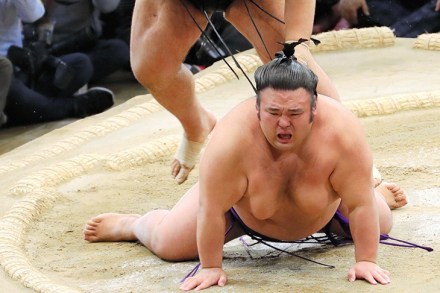
An early morning in late November in the peaceful glades that surround an ancient temple complex. A Shinto priest in sombre silks slips through a sliding door; a maple leaf catches the breeze. Suddenly, the silence is broken by the crunching thwack as two 400lb slabs of prime meat collide. It is the 15th and final day of one of Japan’s six annual sumo tournaments: the Kyushu Basho, held every autumn in the balmy southern city of Fukuoka. A group of visiting wrestlers have begun their pre-breakfast workout in one of the outbuildings of Torikai Hachiman-gu, preparing for the afternoon bouts at the arena three miles away.

High life | 16 August 2018

Gstaad I need it like Boris needs a bleach job. Another birthday, that is. Birthdays tend to make your life pass before you in a flash. As it does, I imagine, when facing a firing squad or a samurai intending harm. I mention samurai because I recently dreamt of living in a feudal society where they ruled supreme. And how happy I was until I woke up. Now soulless bureaucrats rule instead of samurai, and it makes for a crappier world. Looking back — well, there’s not much point in looking ahead, is there? — I regret some things, like missing out on an education in the classics. But most of all I wish I had gone to live in Japan when I was young. I began karate training 55 years ago and have never missed a day except when injured.

Tokyo through the lens

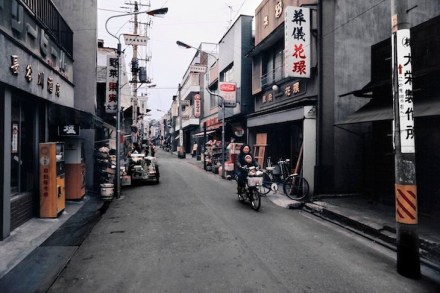
In 1975, the 24-year-old Ian Buruma (now an award-winning essayist and historian, and the editor of the New York Review of Books) left his native Holland to study film at the Nihon University College of Art in Tokyo. It was a bold move. The 1970s was a wild, tumultuous decade in Japan, often known as the Showa Genroku, after the hedonistic period at the end of the 17th century, and Tokyo came as a shock to the few Westerners who went there: a teeming, neon-strafed megalopolis, where the trappings of hypermodernity jostled with elements of a sublime tradition, and the whole culture was drenched in eroticism.

Adrift in Tokyo

Before her death two years ago, Yuko Tsushima was a powerful voice in Japanese literature; a strong candidate for the Nobel. The New York Times rated her ‘one of the most important Japanese writers of her generation’. Tsushima relentlessly quarried her damaged life for her work: she was brought up by her mother after her writer father committed suicide. Abandonment is a recurring theme in her 17 novels, her protagonist often a single mother, as was Tsushima. Joltingly honest, she doesn’t spare herself or her readers. Territory of Light charts a pivotal year in the life of a vulnerable young woman and toddler daughter — both unnamed — adrift in a hostile 1970s Tokyo.

Rising star

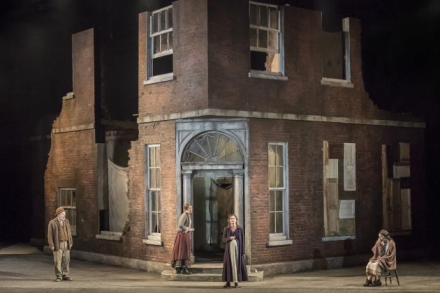
The Plough and the Stars by Sean O’Casey looks at the Irish nationalist movement during the events of Easter 1916. The setting is a Dublin tenement where the residents exchange gossip and insults and sometimes punches. What begins as an elevated soap opera develops into a tragedy of vast and harrowing proportions. Sean Holmes’s production was first seen at Dublin’s Abbey Theatre and it tells the historic tale with contemporary costumes and furnishings. These chronological confusions rarely work but the performers here have so much spirit, energy and truthfulness that the narrative feels immediate and topical. The set is spare, unlovely, brutal.

All bark and no bite | 28 March 2018

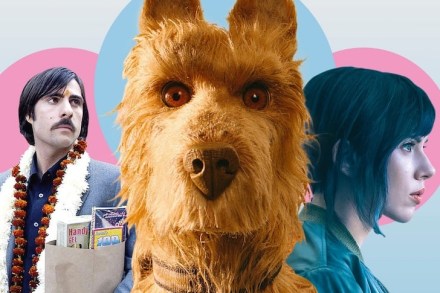
The latest film from Wes Anderson is a doggy animation set in a fantasy Japan and as there was a screening in London earlier this week for owners and their dogs I took my own dog, Monty. He said he liked it. It was ‘good’, he said. I did not especially trust his opinion so investigated further. As good as, say, drinking from the toilet? ‘No,’ he said, ‘not as good as that, obvs.’ As good as this tennis ball here? ‘No’, he said, ‘because a tennis ball is always AMAZING!’ As good as cheese? ‘Nothing is as good as cheese. Fair play, you caught me out there.

Go naked on the green mountain

‘I was last night sent officially to witness the execution by harakiri (self-immolation through disembowelling) of Taki Zensaburo… As the harakiri is one of the customs of this country which has excited the greatest curiosity in Europe… I will tell you what occurred…’ In The Spanish Ambassador’s Suitcase, my anthology of dispatches from British diplomats abroad, this one, dating from 1868, is the oldest. The first eye-witness account of harakiri ever given by a European, it’s also the most grisly. I cannot match the horror or novelty, nor can I match its author, Bertie Mitford, in fine writing.

Abe’s challenge

As the only nation to have suffered mass casualties from a nuclear bomb, Japan has been understandably nervous about Kim Jong-un’s missile tests. Sales of domestic nuclear bunkers and gas masks have soared and nationally aired TV ads with a chilling ‘Protect and Survive’ flavour urge residents to hunker behind washing machines in basements and stay away from windows. This is one reason why Shinzo Abe, Japan’s long-standing Prime Minister, felt confident enough to surprise the world this week and call a snap election. In the light of Theresa May’s recent disaster, it seemed to many like a rash move.

A tidal wave of grief

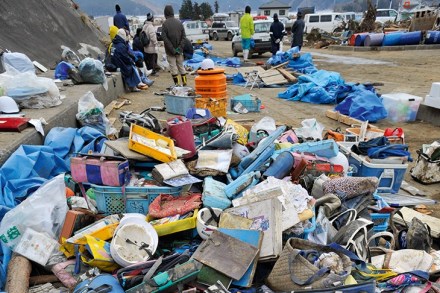
Most victims of the 1755 Lisbon earthquake — which convinced Voltaire there could be no God — perished not in the six-minute tremor, but in the tsunamis which foamed up the Tagus soon after, causing devastation as far away as Brazil. These towering sheets of water can have an impact greater than that of a nuclear explosion. The most powerful earthquake yet recorded, in 1960 off Chile, sent 80-foot waves across 10,500 miles of ocean — and struck Japan, half a world away, killing 142 people there. Japan is a magnet for super-tsunamis, which recur at intervals of 800 to 1,000 years, with lesser waves striking the north-east Sanriku coast roughly every 30 years. In 1896, 22,000 died after a moderate tremor out at sea; in 1933, 3,000 were killed by waves as high as 100 feet.

Mixed blessings | 13 July 2017

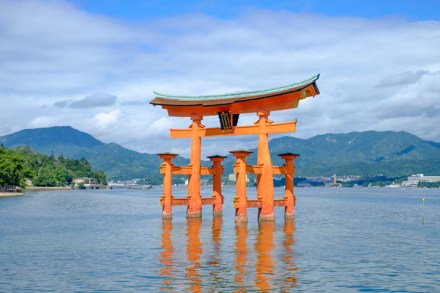
Japan is the only developed country where people openly espouse two distinct and incompatible religions at the same time — Buddhism and Shinto. The Japanese go to Shinto shrines for weddings and children’s celebrations. They go to Buddhist temples for funerals. Shinto shrines are sometimes found within the precincts of Buddhist temples, and vice versa, so it’s possible to beseech Buddha and the fox god in the same ten minutes. To confuse the picture still further, Japan is one of the most secular places on Earth: atheism is practised simultaneously with the other mutually incompatible religions. My Japanese wife, for example, visits and prays at temples and shrines, but in all other respects takes a scientific attitude to the world (and is trained in medicine).

Is the EU-Japan ‘trade deal’ real – or just a stunt?

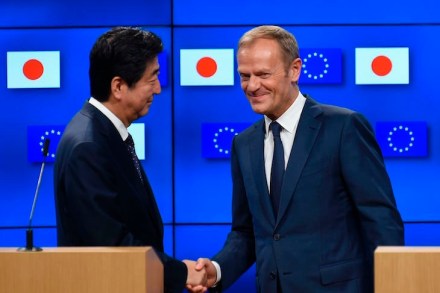
There is much celebration in Brussels today about what's being described as a EU-Japan trade deal, but for political rather than economic reasons. Donald Trump has arrived in Hamburg for the G20 summit where he finds himself cast as a wicked protectionist, at odds with a pro-free trade global order. To hammer home this point, the EU is claiming to have agreed a trade "deal" with Japan, with whom Mr Trump pulled out of talks when he abandoned Barack Obama's Trans-Pacific Partnership. At this stage, Tokyo gave precedence to Brussels – and today's, erm, political agreement is the result. Donald Tusk, president of the European Council, is already trying to use this to taunt Trump.

Mad about the girls

It’s not unusual to see a pop concert on TV where teenage girls and a group of middle-aged men are separated by safety barriers, as the glow sticks wave and the band’s name is excitedly chanted. But in Storyville: Tokyo Girls (BBC4, Tuesday), there was one fairly major twist: the teenage girls were the band, and the middle-aged men their swooning fans. As this jaw-dropping documentary explained, the girls in question are known in Japan as ‘idols’. Their songs tend to be about how demure and innocent they are; and to prove it, they often perform in school uniforms — although with skirts a lot shorter, I suspect, than is traditional in most Tokyo schools.