Japan

Eastern reflections

From our UK edition

In his introductory remarks to the Afro–Eurasian Eclipse, one of his later suites for jazz orchestra, Duke Ellington remarked — this was in 1971 — that east and west were blending into one another, and everyone was in danger of losing his or her identity. Nowhere is it easier to observe that phenomenon than on the little island of Naoshima, in the Seto Inland Sea of Japan, which I visited last month. Naoshima possesses sandy beaches and tranquil blue waters dotted with further islets stretching towards the horizon. But this is an especially heavenly spot for a relatively small and specialised, even eccentric, group of travellers.

Coffee Shots: SNP big in Japan

From our UK edition

Just when Mr S thought it was safe to go to his local watering hole now the 56 Scottish SNP MPs have chosen Parliament's sports and social as their pub of choice, it turns out that the SNP invasion has gone global. Word reaches Steerpike that the presence of the Scottish Nationalists cannot be escaped even outside of the UK. In fact, the revolution has reached as far as Japan: https://twitter.com/williamsonkev/status/598888708528472064 Well, whisky does tend to be a uniting force.

School trips go global

From our UK edition

To an older generation a school trip was something to be endured as much as enjoyed. It meant an expedition to peer at frogspawn in Epping Forest or, for the recklessly profligate, maybe a coach to Skegness. Over recent decades, however, as top schools have raised their fees in line with the international oligarchy’s ability to pay them, school trips have come to resemble the work of chichi travel agents. Designed to build character, they now build air miles. The trend was already well under way when I was at school in the austere early noughties. Twice a year we went on ‘expeditions’.

Britain’s educational empire

From our UK edition

Late last year Britain’s independent schools received a wake-up call. Andrew Halls, headmaster of King’s College School in Wimbledon, delivered it. Far too many of them, he said, have become the ‘finishing schools for the children of oligarchs’ because of an ‘apparently endless queue’ of wealthy foreigners who have pushed fees sky-high; there’s a ‘fees time bomb ticking away’ and one day, when it explodes, a lot of these schools are going to be screwed. It really was that blunt. Cue cheers from struggling parents all over the country, and squeals from school governors, who’d rather no one asked too many questions about the £30,000 price tag on a child’s yearly education.

What Samsung’s new TVs owe to Jeremy Bentham

From our UK edition

Watching brief Samsung warned users of its voice-activated televisions that what they said in front of the TV could be transmitted to other people. The story attracted comparison with the telescreens in George Orwell’s Nineteen Eighty-Four, but the principle of keeping a population under control by surveillance was foreseen a century earlier by Jeremy Bentham. — In 1791 he came up with the idea for a Panopticon, a circular prison with one-way observation holes which would allow a single gaoler to patrol several hundred prisoners, none of whom could tell whether they were being watched at any one moment. — Bentham saw the government’s eventual rejection of the scheme as ‘sinister’, a word now more likely to be used to describe the idea itself.

Don’t believe the gloom-mongers: deflation will be good for Britain

From our UK edition

Campaigning in Putney in 1978, Mrs Thatcher famously took out a pair of scissors and cut a pound note down the middle, telling her audience that the remaining stump represented what was left of the pound in your pocket after four years of Labour and high inflation. David Cameron may soon be able to repeat the stunt — except rather than cutting a note in half he will be able to stick a bit on the end to represent the extra buying power being granted to consumers courtesy of deflation. Inflation on the government’s preferred measure, the Consumer Prices Index (CPI), has fallen to 0.5 per cent. With the price of crude oil slumping and a supermarket price war in full cry, it may well dip below zero in coming months. That is to say: the cost of living is about to fall.

Let’s all become Japanese for a while

From our UK edition

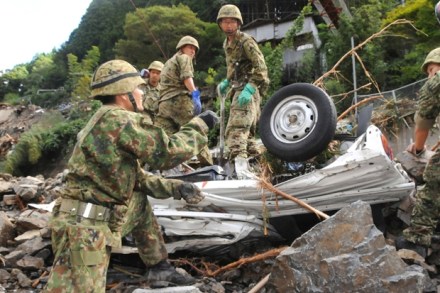
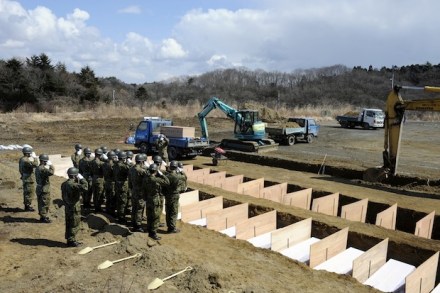
This is a good time to write about a nation’s resilience in the face of calamity. I am referring to the stoic discipline with which the Japanese bore hardship and the death of 15,000 people in March 2011 following a nine-magnitude earthquake, the strongest ever known to have hit Japan. I can remember the TV coverage as if it were yesterday. Very young and very old Japanese formed a long orderly line for disaster supplies. There was no looting whatsoever as there had been in Los Angeles or in Mexico City, no weeping on camera so that the world would send more funds, just plucky resolve (gaman in Japanese) and ganbaru (to endure with pride). As anyone who is familiar with Japan knows, tenacity is highly celebrated both as an individual and a collective trait.

Onsen: dive into another side of Japan

From our UK edition

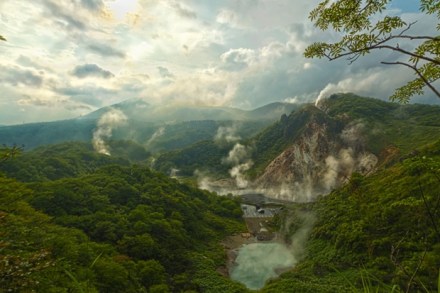
I’m hovering starkers beside a hot spring, or onsen, in a faded resort in southern Japan, while the Japanese grandmother standing naked next to me explains the form for the steaming pool I am about to enter. It’s an open-air mud hot spring, known as a doroyu and quite unusual, even in Japan, where the hyperactive geology means onsen of all kinds spring up — literally — everywhere. I love a scalding bath, so it was perhaps inevitable that I should love onsen from the moment I first dipped a toe in one many years ago, close to Mt Fuji on a day trip from Tokyo. The ritual of washing before bathing, soaking in piping hot waters, the tranquillity, the beautiful settings, the deep sense of relaxation — I simply can’t get enough.

How to fight Europe’s demons of deflation

From our UK edition

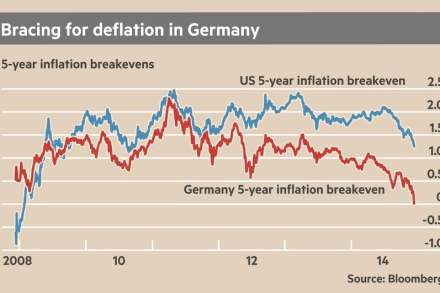
Deflation terrifies economists because once it starts, they have no idea what to do about it. When demand in an economy shrinks, companies cut jobs, and with fewer employed demand shrinks even more. The deflationary spiral is self-reinforcing. Central banks can cut interest rates to near zero and slosh money around like drunken lottery winners, but once hope flickers and dies, there is nothing they can do to persuade anyone to invest in the economy. Deflation took hold in Japan in the early 1990s and despite the government straining every sinew, its economy is still ailing 20 years on. Europe is right, then, to be in a panic. Inflation across the eurozone is just 0.

Peter Phillips is mugged by a gang of Praetorius-loving six-year-old girls in China

From our UK edition

We have read about the remarkable opening up of China in recent years: how many people live there and how good they are at business, perhaps finding the prospect of them rushing into our world rather daunting. However, a part of this process has been the sudden curiosity there for western art-forms. Not long ago the idea of a tour of China by a European early music group would have seemed completely fantastical. What space was there in a country which for many years had allowed only eight ‘model plays’ to be publicly staged — all of them about the achievements of the army — for the votive antiphons of Tallis, or the Passions of Bach? Not everyone in that vast country is ready for such delicacies yet, but a light has begun to shine.

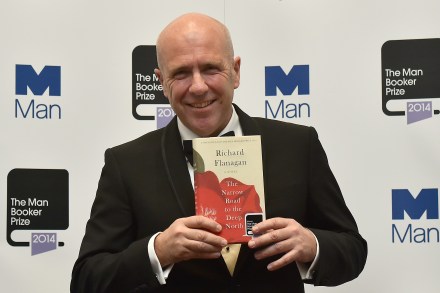
It’s about time a man won the Booker again

From our UK edition

I bet fifty quid on Howard Jacobson winning the Man Booker. My original bet was actually on a ‘Yes’ vote below 40 per cent in the Scottish referendum and Bet365 then gave me £100 to bet on something else. I spent half of it on Jacobson and the other half on the Conservatives winning the last by-election. The less said on that the better. My reasoning for plumping for Jacobson made more sense. Anti-semitism is in fashion at the moment, so a novel about a mysterious holocaust seems timely; he's a tried and tested literary heavyweight, so there'd be no accusations of dumbing down; and he’s a man - and after wins from Hilary Mantel and Eleanor Catton, it felt time to redress the gender balance.

Proof that the Japanese know how to make great Bordeaux

From our UK edition

Château Lagrange, a St Julien third growth, has the largest acreage of any Bordeaux classed growth. For much of the 20th century, this was its sole claim to distinction. Under family management, it consistently failed to justify its ranking. Then the Japanese arrived. In 1983, Suntory bought Lagrange for £4 million. There were resentments. In 1987, on the floor of the stock exchange just after the Big Bang had transformed the City, a Japanese broker asked an English counterpart if he could direct him to Wedd Durlacher. This was after lunch and the Englishman was old-fashioned. ‘You lot found your way to Pearl Harbor without any help from me. You can find your own fucking way to Wedd Durlacher.

My addiction to the bullet train

From our UK edition

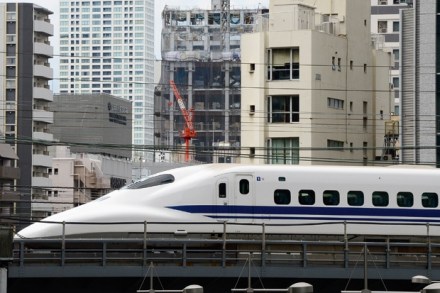
In 1963, Dr Richard Beeching, an ICI director with a PhD in physics, a qualification that clearly boondoggled his credulous political patrons, published a government report called ‘The Reshaping of British Railways’. It identified 8,000km of painstakingly created track for closure. At the time, road transport seemed just the thing. Lorries? Bring them on! Commuting by car? What could possibly be the objection? Beeching was a tragic case-study in mandarin myopia. It was not so much that he did not hit the target. He couldn’t even see it. The year after Beeching, Japan inaugurated its Shinkansen, the world’s greatest high-speed railway. The year after the Shinkansen, work began in Bristol on the prototype Concorde.

Why does the army still refuse to see any wrong in the execution of soldiers during WWI?

From our UK edition

Will the military ever see any wrong in the execution of 306 soldiers for cowardice and desertion in World War One? I ask only because I have tried and failed to stage a new musical drama on the subject in a military museum. The Imperial War Museum said straight away that it had organised its own programme of events, but the events directors at the National Army Museum and the Royal Artillery Museum in Woolwich initially showed enthusiasm. They invited in the director and I to see what spaces were available. We discussed whether we would pay a hire charge or enter a revenue-sharing agreement where we paid the museum so much for every ticket.

When a Chinese and a Japanese visit Tokyo’s Yasukuni war shrine

From our UK edition

What does freedom mean to you? That’s the question the BBC World Service has been asking of us through its season of programmes Freedom 2014. The Canadian astronaut Chris Hadfield (whose daily blog from space went viral) gave us a vivid and unusual image of what freedom, or rather the lack of freedom, looks like to him. While circling the earth in the international space station, he noticed that each time he went past the lights of Berlin were two different colours. After a while he realised this was ‘a poignant reminder’ of the city’s history; of its former lack of freedom; of how it had been divided by a wall for decades. The wall has been taken down, but the lights tell a different story.

Is there a way to live without economic growth? 

From our UK edition

During Japan’s lost decade in the 1990s I found myself handing out rice balls to Tokyo’s homeless on the banks of the Sumida river. The former salary men — it was always men — slept in cardboard boxes the size of coffins. I peered into one. Its owner had neatly arranged his last few possessions. Crockery, two wash rags and a blanket were all emblazoned with the designer logos I associated with Japan’s boom years when I had lived in Tokyo. They had washed up like artefacts from another age in this unlikely setting. They signalled more than anything else to me that Japan’s economic miracle was well and truly in the past. Financial Times Asia editor David Pilling lived in Japan for seven years.

Italo Calvino’s essays, Collection of Sand, is a brainy delight

From our UK edition

The Japanese are sometimes said to suffer from ‘outsider person shock’ (gaijin shokku) when travelling abroad. Recently in London we had a lodger from Hiroshima who wanted to practise his karate routines in our back garden. Concerned to see him chopping at our apple tree in full combat gear, a metropolitan police helicopter hovered in close to take a look. Afterwards Mr Kinoto admitted to me that he was lost in London amid alien signs and habits. ‘The object of my time in England is not sightseeing’, he told me ruefully, ‘but home-staying.’ I thought of the Japanese lodger while reading Italo Calvino’s wonderful essays, Collection of Sand, published in Italy in 1984, a year before Calvino died at the age of only 62.

China’s War with Japan, by Rana Mitter – review

From our UK edition

The Sino-Japanese struggle that began in 1937, two years before the rest of the world plunged into war, is not as unknown as Rana Mitter, a professor of Chinese history and politics at Oxford, contends in this comprehensive new book. His copious notes, after all, display how well that conflict has been studied by many scholars. But in the sense that few Westerners under the age of 80 can string more than two sentences together about those terrible eight years, he is right. It is a big story, and for the most part Mitter tells it well. The scene — China — is vast. Two competing leaders, Chiang Kai-shek and Mao Zedong, dominate it.

Tan Twan Eng interview: ‘I have no alternative but to write in English’

From our UK edition

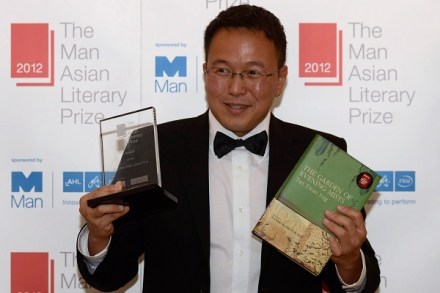
Tan Twan Eng's first novel was long-listed for the Man Booker Prize, his second was shortlisted and then won the Man Asian Literary Prize. To say that his work over the past five years has received praise and attention would be something of an understatement. Likened to Ishiguro and Ondaatje, his work explores the point at which untold personal history collides with the bellicose history of mid-twentieth century East Asia. In The Gift of Rain the elderly Philip Hutton is living out his days as a postcolonial remnant in his childhood home of Penang, with little but his memories to keep him company. These are revisited with arrival of Michiko, the former lover of Japanese diplomat Hayato Endo, with whom Philip had developed a strong relationship in the 1930s.

Investment special: How Shinzo Abe has revived Japan

From our UK edition

Thank goodness for Shinzo Abe. Back in 2007, I wrote here that ‘over the next two to five years Japan will turn out to be one of the best investments UK-based investors can make’. By the middle of 2012, nearly five years on, that wasn’t looking like much of a prediction. Then prime minister Abe appeared on the scene. Since his election in November the yen has fallen 20 per cent against the dollar and the Japanese stock market has risen not far off 50 per cent. Phew. So what’s so great about Mr Abe? The short answer is that he has promised to do something about the Japanese economy after two decades of slow growth and semi-deflation, and — crucially — everyone believes him. He has what he calls a ‘three arrow’ strategy for change.