Israel

Will there be peace in the Middle East in time for X-mas?

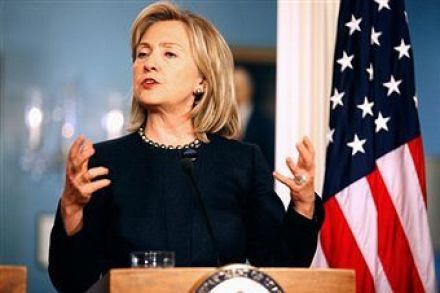
Two years into her term, and after carefully avoiding any success-free issues, Hillary Clinton has finally launched herself into the Middle East peace process. According to Roger Cohen in the New York Times, "The heavy lifting is now in Clinton’s hands". As evidence of Clinton's new role, Cohen lists a video conference with the Palestinian prime minister, where the US secretary of state announced $150 million in US aid to the Palestinian Authority and said the Obama administration was “deeply disappointed” by recent Israeli behaviour. Mrs Clinton's foray into the Middle Eastern quagmire  is interesting.
The winning entry

So just how good is it? Because of course those splendid people, the Man Booker judges, have rather prejudiced this review by going and giving their prize to Jacobson’s latest. If only they’d had the patience to wait for the launch of this blog. Because although not on the panel this year (September is such a busy time), I am always more than happy to drop the odd word of wisdom, share my insights, and generally do my bit to see that contemporary novelists are held to account for their various crimes against culture. And all in all, perhaps this year’s prize hasn’t been too badly awarded, because Jacobson has less to answer for than most. That is praise, by the way.

In international politics, the pursuit of stability is not enough

One of the biggest challenges facing the post-Iraq generation of foreign policy decision-makers, like William Hague and Hillary Clinton, is to balance the pursuit of overseas stability with promotion of the dynamic and sometimes de-stabilising forces that build countries' long-term stability and make economic and political progress possible. This may sound like an academic question but it is a very real change- and not just because the SDSR has made the task of building overseas stability a key government objective.   Take Iraq. After having lost an admirably violence-free and largely fair election, it looks likely that Iraqi Prime Minister Nouri al-Maliki will cling to power and the voter-winner, Ayad Allawi, will be denied a role in government.

Israel Notes: The Price of Gilad Shalit

Gilad Shalit's mother, speaking earlier this summer at a rally demanding his release. At dinner in Tel Aviv last week discussion turned to the strange, awful case of Gilad Shalit, the Israeli soldier captured and held prisoner by Hamas for the past four years. The rumour was that Israel was prepared to offer an extraordinary deal to bring Shalit home and that this would involve releasing hundreds, perhaps even as many as a thousand, prisoners in exchange for the life and liberty of a single Israeli soldier. What, asked our hosts, did we think of this? Would the British government countenance such a deal? No, our visiting troop of journalists thought, it probably would not. It would be seen as a sign of weakness and an invitation to capture and hold hostage other soldiers.

Hello Again

The Judean Desert, above Jericho. So, Israel was interesting. Lots more on that in the coming days. Not the least pleasure of spending a week abroad was missing George Osborne's Spending Review and, indeed, barely keeping up with the news at all. I won't claim that tootling around Israel and the West Bank produced any great sense of optimism concerning what custom demands we call the Peace Process, but avoiding whatever was happening on this rain-sodden isle and, most especially, not troubling myself with the fact that Someone Was Busy Being Wrong on the Internet was as welcome as it was relaxing. Reality and bulging RSS-feeds can only be denied for so long, however. So here we are. Back and ready to be vexed again. What larks.

Housekeeping | 17 October 2010

Yarrow. Things could be pretty quiet around here these next few days. This week, I'm visiting Israel (for the first time) and while there may be Holy Land blogging there may not be too much of it. I'm looking forward to it and though the trip is being organised by the good and kind people at BICOM I have three or four days after that to explore other things. If any readers have recommendations for mustn't miss stuff in those parts then let me know what I should see...

A hard-headed case of <em>déjà vu</em>

It was as if we’d been transported back a week – here was William Hague talking about ‘hard-headed foreign policy’, the very phrase that David Miliband had used before he swanned-off into the wilderness in a floral shirt. The details of the two speeches had much in common – an emphasis on free trade, a promise to garner new strategic and economic partnerships in South America and the Near East, balance in the Israeli and Palestinian dispute, global solutions to climate change and a promise to export human rights. Hague differed in not mentioning liberal interventionism and laying historical and partisan claim to free trade, arguing that the European Commission’s protectionist bent was ‘backward-looking and doomed to fail’.

The coalition’s inept EU referendum lock

At least this government is honest. ‘There will be,’ Europe Minister David Lidington says, ‘no referendum on the transfer of competence or power from the UK to the EU during this Parliament’. The government will ensure that there are no more EU power transfer treaties; but, as Douglas Carswell, Tim Montgomerie, and Bill Cash all note, the Lisbon Treaty is self-ratifying. The EU has already picked the coalition’s lock and garnered new powers for itself – notably the extension of the EU arrest warrant. The EU could be an economic superblock with the muscle to influence the globe strategically and culturally. But its current political operation is unnecessary and deplorably un-democratic.

The long walk

In this long and fascinating novel, Ora, an early- middle-aged Israeli woman, walks for days through Galilee to escape the ‘Notifiers’, the officers she fears will come to her door to inform her of the death of Ofer, her soldier son, at the hands of Palestinians. In this long and fascinating novel, Ora, an early- middle-aged Israeli woman, walks for days through Galilee to escape the ‘Notifiers’, the officers she fears will come to her door to inform her of the death of Ofer, her soldier son, at the hands of Palestinians.

Burning the Koran

The US constitution cannot stop Pastor Terry Jones from burning 100 Korans to mark the 9th anniversary of 11 September, and neither should it – the right to free speech is absolute when within the law. But free speech comes with responsibilities. Just as it is unwise to build, with provocative intent, a mosque near the site of Ground Zero, so too for a Christian minister to burn the Koran as a publicity stunt. Such mindlessness is grossly offensive to the peace abiding majority, and it also furthers endanger US and Allied troops abroad and the population at home by inciting contemptible extremism. Common sense and the tenets of Christian faith aside, Jones should desist and be tolerant.

A question of judgement

Up until today, the Hague-Myers story was confined to scurrilous rumour on Guido’s blog and the occasional cautious article in the Telegraph or the Mail; the rest of the media were uninterested. But, as James notes, Hague’s two extraordinarily frank statements, particularly yesterday’s impassioned denial to ‘set the record straight’, have forced the issue into the mainstream political debate. The personal always becomes political. What of William Hague’s judgement? John Redwood condemns Hague’s ‘poor judgement’ in personal matters before going on to cast aspersions on his policy judgements, particularly those relating to the EU.

Officials: Better than 50 percent chance that Israel will strike Iran next year

The Iran issue has dropped down the news agenda in recent months. But that doesn’t mean it has gone away. Even with the difficulties that Iran’s nuclear programme has faced, any decision on whether to try to use force to stop Iran becoming a nuclear-ready power will have to be taken in the next year or so as Jeffrey Goldberg’s brilliantly reported cover piece in the Atlantic reminds us. Goldberg writes, “I have interviewed roughly 40 current and past Israeli decision makers about a military strike, as well as many American and Arab officials. In most of these interviews, I have asked a simple question: what is the percentage chance that Israel will attack the Iranian nuclear program in the near future?

A foot in both camps

As a five-year-old in the Arab quarter of Jerusalem in the 1950s, Kai Bird overheard an elderly American heiress offering $1 million to anyone who could solve the Arab-Israeli conflict. Tugging on his father’s sleeve, he said: ‘Daddy, we have to win this prize.’ Crossing Mandelbaum Gate, Bird’s memoir of growing up in the Middle East, is full of such generosity and innocence. In 1956, Kai’s father, Eugene Bird, moved his young family from Oregon to East Jerusalem, where he was to serve as American vice-consul in a city divided in two by the 1949 armistice line.

Is the real love affair between Fat Pang and Dave?

We know that Chris Patten is advising David Cameron over the Pope’s visit – the Spectator interviewed him in that capacity recently. But a number of events this week suggest that Patten is very close to Cameron. Patten is currently in India, selling Oxford University with Cameron, but he has found time to pen an article about Gaza for the FT. Like Cameron, Patten believes that Gazans are serving an ‘interminable prison sentence’. He writes: ‘Gaza is totally separated from the rest of Palestine. It is cut off by a brutal siege. The objective is collective punishment of the one and a half million people who live there simply because they have a Hamas administration.

Cameron’s provocative language over Gaza serves to obscure the issue

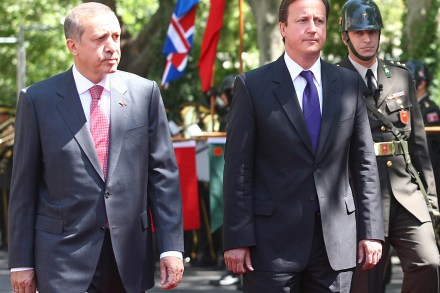
And there's me thinking that David Cameron's overtures to Turkey were newsworthy enough, when he drops this into his speech in Ankara: "Let me also be clear that the situation in Gaza has to change. Humanitarian goods and people must flow in both directions. Gaza cannot and must not be allowed to remain a prison camp. But as, hopefully, we move in the coming weeks to direct talks between Israel and the Palestinians so it's Turkey that can make the case for peace and Turkey that can help to press the parties to come together, and point the way to a just and viable solution." In a wider sense, this is indicative of the West's firmer attitude towards Israel in the wake of the flotilla incident.

No more Turkish delight?

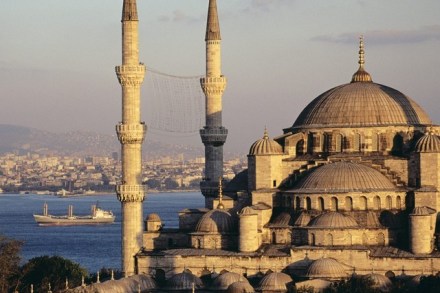
I’m sitting at the Ciragan Palace’s glass-filled halls on the banks of the Bosporus. I have joined the UN Security Council’s annual retreat, organised by the Turkish government, to give my view on what the UN did right and wrong in the Balkans from the break-up of Yugoslavia. The retreat is meant to continue the Council’s discussion on the overlap between peacekeeping, peacemaking and peace-building. No immediate action will follow the retreat, but the discussion may lead into a more concrete phase during Turkey’s presidency in September.

Trimble frozen out of government

The announcement that Lord Trimble will join the Israeli review into the flotilla incident is a reminder that he has no role in the current government. Trimble takes the Tory whip and given that the party is not overly supplied with Nobel Prize winners, it is a bit of a surprise that no role has been found for him. In opposition, the word was always that relations between him and the new leadership of the Ulster Unionists, the Tories’ electoral allies in Northern Ireland, were not great. But the UUP leader has resigned since the election. Now, it may well be that Trimble himself is the obstacle. Even his admirers admit that he is not the easiest man in the world to get along with. Or, it might be that Trimble is a victim of the Coalition.

The other Rachel

The boat the Israelis peacefully intercepted was called Rachel Corrie  - named after a young American protester accidentally killed when  offering herself as a human shield in Gaza. Her name became immortalised, some 30 songs have been written for her, a London play named after her and a film last year. But another Rachel, completely forgotten, is Rachel Thaler - a 16-year-old British citizen murdered by a Palestinian suicide bomber in 2002. Only one British publication has ever mentioned her: The Spectator.

Flotilla follies

Two groups in the Conservative party that have worried most about Con-Lib government are the social conservatives and the neo-conservatives. The latter have been particularly worried about UK relations with Israel. There is a real concern in parts of the Conservatives Party that three factors would come together to sour Anglo-Israeli relations: what the neo-conservatives see as the Foreign Office’s knee-jerk Arabism, the presence of many supposed Arabists in Cameron-Hague’s teams, and the anti-Israel bias exhibited by many leading Liberal Democrats. Whatever the truth of these allegations, they are held with considerable fervour.

Worse Than A Crime, A Blunder

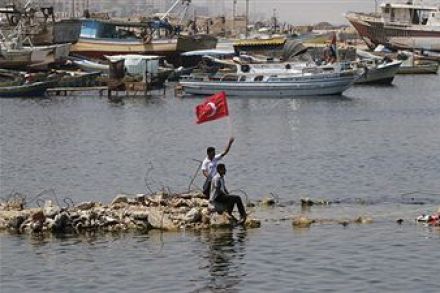
What a disaster. For Israel that is. One may appreciate two things simultaneously: that the "peace" activists en route to Gaza were not necessarily as innocent as that appellation might suggest and that the Israeli commandos were, as matters developed, compelled to use more force than perhaps they anticipated. Few sensible folk dispute Israel's right to defend itself. But how that right is exercised matters enormously, not least because Israel's predicament is doubly-asymmetrical. Each side considers itself under siege and, for once, each side is correct. Israel, surrounded by hostile or at best sceptical neighbours, is acutely aware of its regional isolation. But on the West Bank and in Gaza, Palestinians find or consider themselves besieged by Israel.