Israel

Benjamin Netanyahu’s desperate bid to avoid election defeat

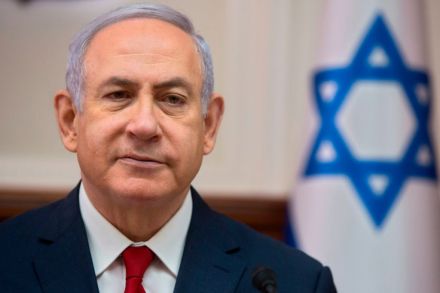
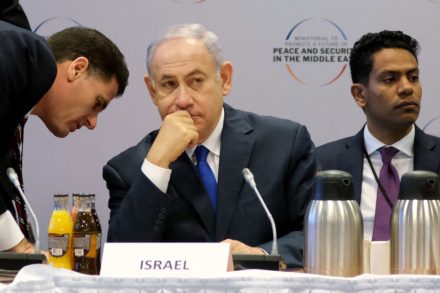
Benjamin Netanyahu, facing defeat in today’s Israeli elections, has made a final pitch to his right-wing base. Over the weekend, the Likud leader said that, if re-elected, he would apply Israeli sovereignty to both the settlement blocs and isolated communities deeper inside Judea and Samaria. ‘From my perspective, each of those settlement points is Israeli,’ he said. ‘I don’t uproot any, and I won’t transfer them to the sovereignty of the Palestinians.


Could Donald Trump unexpectedly triumph in his bid for peace in the Middle East?

Could Donald Trump win the Nobel Peace Prize? He would be following in the footsteps of his predecessor but unlike Barack Obama in 2009 his award could be for something significant: helping to bring an end to one of the world’s most intractable conflicts – the dispute between Israelis and Palestinians.  It might sound implausible but Trump may have a better chance of delivering peace – or at least a non-belligerency agreement – than previous presidents, even if those chances do still remain low. Trump's Middle East peace envoy (and ex-real estate lawyer) Jason Greenblatt, who I met recently, says that the Trump team will soon unveil their plan – the “deal of the century”, as Trump has dubbed it.

Trump’s Golan Heights stance is a big gift for Netanyahu – but the real beneficiary is Putin

From our US edition

Trump’s latest wet kiss to his pal Bibi is supposed to help the beleaguered Israeli prime minister, but really it will benefit Putin – and Xi. The unintended consequences of dumb diplomacy may prove severe here. It happened with a tweet. Because that’s how Donald J. Trump rolls. Yesterday, the president informed the world of a significant change in US foreign policy with this tweet: ‘After 52 years it is time for the United States to fully recognize Israel’s Sovereignty over the Golan Heights, which is of critical strategic and security importance to the State of Israel and Regional Stability!’ https://twitter.

golan heights coalition

What about ‘the Benjamins’ coming from the Gulf states?

From our US edition

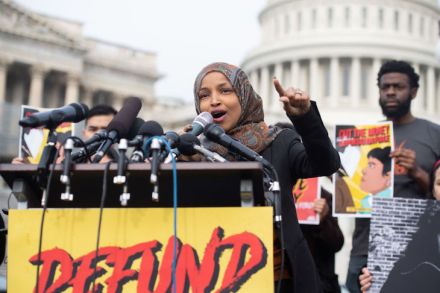
Freshman Rep. Ilhan Omar has received a lot of attention after she claimed that the relationship between the United States and Israel was ‘all about the Benjamins’ and that Israel supporters promote ‘allegiance to a foreign country.’ Omar apologized for her remarks, then doubled-down on them a few weeks later. The House proposed a toothless condemnation of anti-Semitism, then settled on a meaningless resolution condemning hate. While many have pointed out the dangerous insinuations behind Omar’s remarks, the nut of her accusation has remained more or less unexamined: do foreign nations and their money influence our policy, and is our foreign policy unduly influenced by money from Israel and Jews?

ilhan omar benjamins

Why was Rashida Tlaib following an anti-Semitic Instagram account?

From our US edition

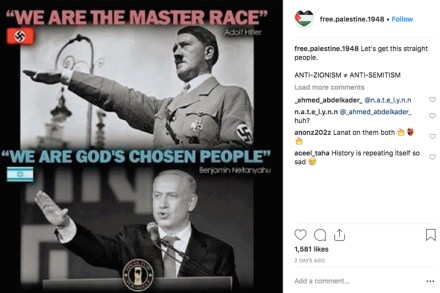
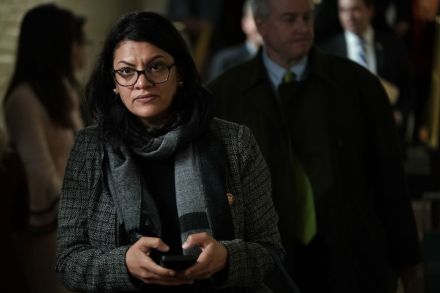
In the digital world, you are what you like. So why was Rashida Tlaib’s official Instagram page following an anti-Semitic conspiracy theorist with links to a mosque notorious for its terrorist connections? The account, ‘Free.Palestine.1948’, belongs to a British Muslim who is an accomplished promoter of extremism. Photos of Benjamin Netanyahu with Adolf Hitler are juxtaposed, and a rat superimposed on the Israeli flag.

free.palestine.1948 rashida tlaib

Why the Democrats have gone off Israel

From our US edition

Not so long ago in America, immediately after a Democratic politician announced a run for president, he or she would make a series of public gestures supporting Israel. This would range from a major address before an American-Jewish audience, to the required visit to the Holy Land. In a way, even mild criticism of the Jewish state would have amounted to political suicide when it came to a Democrat running for high office. Historical, cultural, political and geo-strategic considerations – including the influence of a politically active American-Jewish community whose members resided in key electoral states and contributed money for the Democratic party – made it politically axiomatic to back Israel.

israel

The Democrats are becoming the party of the Jew-haters

From our US edition

When Ilhan Omar says that there’s too much money in American politics, she’s stating the obvious. That’s why I support her brave campaign against the US Chamber of Commerce, the National Association of Realtors, the American Medical Association, the American Hospital Association, the Pharmaceutical Research & Manufacturers of America, General Electric, Blue Cross Blue Shield, Business Roundtable, the AARP, and Boeing. These are America’s top 10 lobby groups, ranked by total spending over the last 20 years. In 2018, the US Chamber of Commerce spent $94.8 million on lobbying. Alphabet, Google’s parent company, spent $21.7 million and surged to Number Eight on the charts. The America-Israel Public Affairs Committee (AIPAC) ranked Number 157, and spent $3.5 million.

ilhan omar jew-haters

Bibi or not Bibi?

From our US edition

Benjamin Netanyahu is manipulative, petty and deceitful. He is determined to win, regardless of the damage wrought by victory. He has few of the habits of the admirable statesman, and most of the hallmarks of political genius. This charmless man has steered Israel through the Obama presidency and the Arab Spring; presided over an economic and hi-tech boom; avoided open war with Iran and contained Hamas; and expanded Israel’s diplomatic links in Asia, South America, Africa and, in smaller but significant ways, with previously hostile Sunni Arab states. All that may no longer be enough.

Israeli Prime minister Benjamin Netanyahu bibi
jared kushner

Kushner may not be Kissinger, but at least he’s not Kerry

From our US edition

Imagine a long list of leaders that liberal pundits love to hate. It starts with Donald Trump, followed by Vladimir Putin and a series of nationalist and populist politicians, with Israeli Prime Minister Benjamin (‘Bibi’) Netanyahu stuck in between Hungary’s Viktor Orbán and the Polish and Czech leaders. One of the reasons for the deep animosity towards the Israeli Likud Party chief, especially among many liberal American Jews and European lefties, has been the perceived love affair between the Donald and Bibi and the belief that if these two BFFs would only disappear from the political universe, we will finally have peace in our time in the Holy Land.

Netanyahu’s desperate bid to cling to power

He struck at dawn, 25 years ago this week. As Jews marked Purim and Muslims Ramadan, Baruch Goldstein walked unchallenged into Yitzhak Hall in the Cave of the Patriarchs in Hebron. Here the patriarchs and matriarchs of the Jewish people are buried and here Muslims worship in what they call the Ibrahimi Mosque. Surveying the Muslims praying the Fajr, Goldstein opened fire, emptying his Israeli-made Galil of three and a half magazines in two minutes, a rate of almost one round per second. When his rifle jammed on bullet number 112, the Palestinians took their chance and overpowered the gunman, beating him to death with a fire extinguisher. Twenty-nine Palestinians lay dead and their murderer a few feet away.

Bibi’s new alliance has caused an Israeli identity crisis

From our US edition

Is Israel a Jewish state, or is it just a state of Jews? Just how Jewish can a state be without interfering with its core democratic ideals? Does a Jewish state necessarily mean a religious state? These are the sorts of questions that Jews around the world have been asking themselves since the modern state of Israel evolved from dream to reality. The questions are complicated; the answers more so. In the last few days, these questions have been given renewed importance and urgency.  The answers have inspired deep fissures within the state of Israel and within the broader Jewish community. This Monday marked 25 years since Baruch Goldstein, a Jewish terrorist, entered the cave of the Patriarchs and shot up a room full of Muslims at prayer.

netanyahu israeli

Bibi blows up Israel’s Central European alliance

From our US edition

Nationalism is a supremely powerful force in politics, but it’s perennially difficult to forge lasting alliances between competing nationalisms – as this week’s news demonstrates yet again. No country has benefited more from the growing split between Brussels and the European Union’s formerly Communist member states than Israel. In Warsaw, Budapest, Prague, and Bratislava, Prime Minister Benjamin Netanyahu found receptive European audiences, which Israel needed as the EU has soured on Israel’s occupation policies towards the Palestinians and increasingly aggressive rhetoric towards Iran. Netanyahu invested in these new relationships, which were based in more than mere convenience.

bibi warsaw

Is Benny Gantz the man who could topple Netanyahu?

From our US edition

Over his last decade in power, Benjamin Netanyahu has easily seen off all challengers. The Labour Party has gone through four leaders during this period, whose main achievement has been to transform the party which founded Israel 70 years ago in to an irrelevant relic. ‘Centrist’ leaders who tried to enter the vacuum left by Labour had their brief moments but failed to threaten Netanyahu’s primacy. Netanyahu has had three key elements working for him. His own personal standing as ‘Mr Security,’ Israel’s only remaining responsible grown-up, with the experience of navigating the country through treacherous geopolitical waters. The base of his Likud party which has held together, despite the growing national fatigue from his overbearing presence.

benny gantz

Why is Ilhan Omar still on the House Foreign Relations Committee?

From our US edition

Ilhan Omar is a confused anti-Semite. In 2012, she thought Israel (translation: the Jews) controlled the world through hypnosis. Now, seven years later, she believes something else: ‘it’s all about the Benjamins.’ Both ideas are classic anti-Semitic tropes. In a piece for Commentary magazine late last month, Abe Greenwald dissected the trope that had inspired Omar’s 2012 tweet. He writes: ‘The history of mystical anti-Semitism is long indeed. It predates Christendom and thrived, at times, long afterward. Martin Luther wrote that “a Jew is as full of idolatry and sorcery as nine cows have hair on their backs, that is: without number and without end.

ilhan omar anti-semitism

Ilhan Omar is telling the truth. How is that anti-Semitic?

From our US edition

What moves the wheels of American politics? Is it a dedicated tireless commitment to public service? A strong desire to better the lives of constituents? A genuine ideology? Maybe sometimes, in the odd rare case. But more often that not, it’s money. Money funds elections, it funds events all over Washington, it funds lobbyists who work tirelessly to make their cause seem like the only thing worth caring about at any given moment. Single issue partisan groups like the NRA, J Street and Emily’s List spent over $300m in 2018, over $230m of which went directly to candidates. Call me naive, but it seems possible that those donations, often vital to win closely contested districts, could perhaps have an impact on those candidate’s views once elected.

Why aren’t Democrats denouncing Rashida Tlaib’s blatant anti-Semitism?

From our US edition

Jews in this country have long been accused of holding dual loyalties. This week, that canard was brought back into the media and political landscape not by white supremacists chanting ‘Jews will not replace us’, but by Rashida Tlaib, a freshman Democrat, and a woman of color. In response to a bill that would, among other things, challenge the Boycott, Divestment, and Sanctions movement, Tlaib said that supporters of the legislation had ‘forgot what country they represent.’ Those words are familiar to anyone who’s read anything about anti-Semitic rhetoric. The implication is that Jews, especially Jewish public servants, are all nothing more than foreign agents – traitors, in other words.

rashida tlaib anti-semitism

The real racism against the Palestinians

This is a story about two people going to jail and the countries sending them there. Both are Palestinians and were sentenced on Monday in courts separated by an hour’s drive. Jamil Tamimi was sent down for 18 years at Jerusalem district court, in Israel, for the murder of British student Hannah Bladon. Bladon, a religious studies undergraduate at Birmingham university, was in Israel on an exchange programme. On Good Friday 2017, she was riding the Jerusalem light rail to church when Tamimi stabbed her seven times with a seven-inch knife. The frenzied assault stopped only when the other passengers managed to overpower him. Hannah was taken to hospital but died soon after arrival. She was 21 years old. The murder bore all the markers of a terrorist attack.

Amos Oz, a giant of Israeli literature and politics

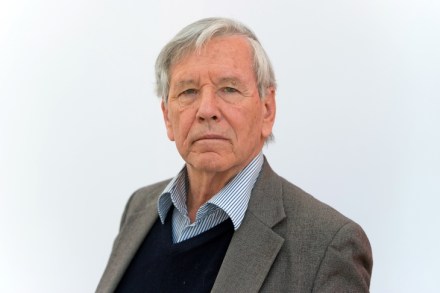
In Western democracies, literature no longer matters to politics. Once, literature and politics could co-exist on the same typewriter or in the same person: George Orwell in Britain, André Malraux in France. But that was a long time ago. Still, the powers of politics remain linguistic, whether bureaucratic or rhetorical: the war criminal at his desk, the elected representative on her Twitter. Amos Oz, the Israeli novelist who died today aged 79, was living proof of the political powers of literature. In Israel, which is a Western democracy most of the time, Oz is seen as a great writer but a failed politician. In the West, he is seen as the still-living conscience of a political failure. Nothing shows us both sides of a story so well as a novel.

Boycott Christmas!

From our US edition

O little town of Bethlehem, how still we see thee lie. Largely because of the big concrete wall that divides you from Jerusalem, and prevents Islamists from Hebron from blowing up Jewish civilians in the holy city. Such are the facts on the ground, and such is the world in which we live, and the chasm between religious aspirations and political realities. I was reminded of these facts on Saturday night when, as I flailed through the chords at our neighborhood carol-singing party, Phillips Brooks’s lyric of 1868 shot past my eyes. Now, some Jews complain about Christmas.

israel palestine christmas

Airbnb’s ban on Israeli settlements is shameful

So alongside being the only country that pop stars refuse to play in, and the only country whose academics are boycotted on Western campuses, and the only country whose dancers and violinists cannot perform in cities like London without gangs of people screaming them down, and the only country whose produce is routinely avoided by luvvies and liberals, now Israel is the only country that has been politically punished by holiday app cum conscience of the Twitterati, Airbnb. Airbnb has taken the extraordinary decision to stop advertising homes for rent in Jewish settlements in the West Bank. It is extraordinary because Airbnb still advertises places to stay in Tibet, a place many Tibetans consider to be unjustly dominated by China. And in Crimea, recently annexed by Russia.