Islam

Hanif Kureishi – portrait of the artist as a young man

From our UK edition

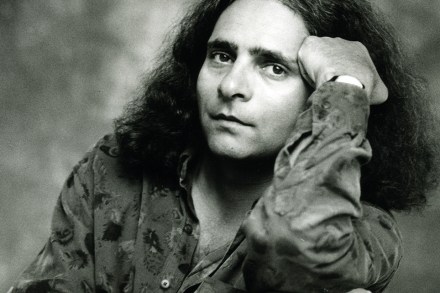
If any novelist, playwright or screenwriter of the past 40 years could be called ‘a writer of consequence’, to use the literary agent Andrew Wylie’s term, it would be Hanif Kureishi. While not shifting units on the scale of his near contemporaries Ian McEwan, Martin Amis and Salman Rushdie, Kureishi’s cultural influence – through his explorations of race, class and sexuality in novels such as The Buddha of Suburbia and films like My Beautiful Laundrette – is inestimable. In this first major biography, Ruvani Ranasinha tracks Kureishi’s progress from his birth in Bromley in 1954 to a Pakistani father and English mother, through his glittering, always provocative career, to the recent accident which rendered him unable to walk or use his hands.

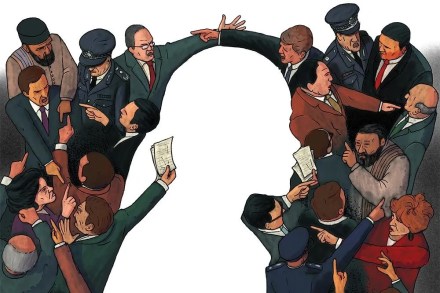
How dangerous is the Sunni-Shia schism?

From our UK edition

In 2014, with the Middle East convulsed by the murderous, self-styled Islamic State, a Daily Mail reader wrote a letter to the editor which began: ‘Are you confused by what is going on in the Middle East? Let me explain...’ Aubrey Bailey went on to describe the dizzying complexity of diplomatic relationships thrown into turmoil: So, some of our friends support our enemies and some of our enemies are our friends, and some of our enemies are fighting our other enemies, whom we don’t want to lose, but we don’t want our enemies who are fighting our enemies to win... And all this was started by us invading a country to drive out terrorists who weren’t actually there until we went in to drive them out – do you understand now?

Mehdi Hasan gets demoted

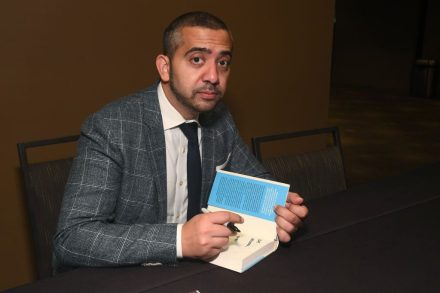
MSNBC has finally found a host that's de trop for them. Outspoken critic of Israel Mehdi Hasan had his show canceled by the network. Semafor announced the shake up on Thursday morning as part of broader changes to MSNBC’s weekend programming. Hasan’s show has been canceled but he will remain with the network as an on-camera analyst and fill-in host. Ayman Mohyeldin’s program will expand an hour to replace the vacated slot.  Hasan has been one of MSNBC’s most outspoken supporters of Palestine. During a November 16 interview with Israeli government advisor Mark Regev, Hasan attempted to get his guest to agree that Israel has wittingly killed children.

mehdi hasan

The ‘historic’ national dishes which turn out to be artful PR exercises

From our UK edition

In 1889, Raffaele Esposito, the owner of a pizzeria on the edge of Naples’s Spanish Quarter, delivered three pizzas to Queen Margherita, including one of his own invention with tomatoes, mozzarella and basil, their colours taken together resembling the Tricolore. The Italian queen loved the pizza, and Esposito duly named it after her. In that restaurant today hangs a document from the royal household, dated 1889, declaring the pizzas made by Esposito to be found excellent by the queen. And so was born the Pizza Margherita, a dish now synonymous with Naples. The queen’s seal of approval in the wake of Italian unification, which had proved difficult for Naples, came to represent the embracing by the governing royal family of an impoverished city by way of their cheapest street food.

The hijab is not a feminist symbol

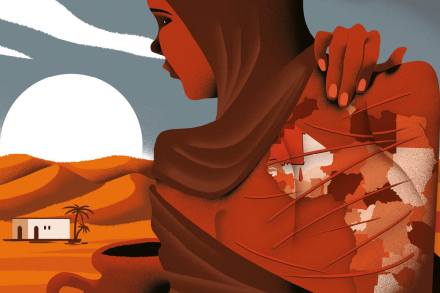
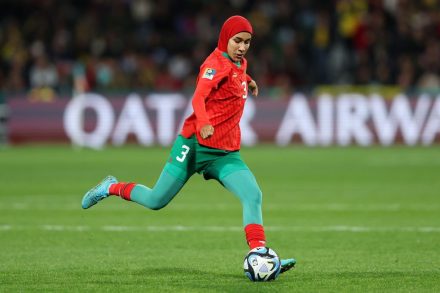
The Women’s World Cup has tied a bow around a summer of own goals in feminist ideology. Barbie — yes, that plastic blonde with impossible proportions — became the feminist icon of the summer, trans women silenced the voices of biological females and the story of Lia Thomas’s prowess remains etched in our minds. But for the grand finale of this summer's theater of the absurd? White Western women elevating the hijab onto the pedestal of feminist glory. For those who may not know, the hijab is a religious headscarf traditionally worn by Muslim women. While the practice dates as far back as the fourth century AD, the popularity of the hijab is actually quite new, with a stark rise beginning in just the 1970s.

hijab

On the ground with the Muslim Montgomery County parents protesting the school board’s LGBT curriculum

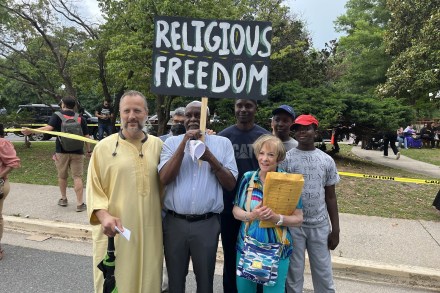
Rockville, Maryland Hundreds of protesters rallied to protest a school board in one of America’s most liberal counties that plans to mandate the teaching of books they brand "sexualized" to public-school children as young as three years old in public schools. The rally-goers, almost all of whom were first-generation Americans or immigrants themselves, demanded that Montgomery County Public Schools restore their ability to opt out of a curriculum they say violates their First Amendment rights.

montgomery county parents protest muslim

The university fighting back against the diversocrats

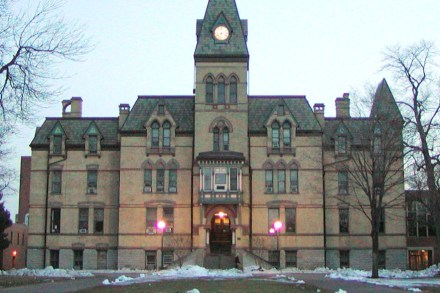
The latest news in the Hamline University saga is that a large majority of the faculty — seventy-one of ninety-two members — have called on university president Fayneese Miller to resign. Miller had played the principal part in the dismissal of art history instructor Erika López Prater, after Prater had shown two images of the Prophet Mohammed in her online art history class. One image was a slide of a fourteenth-century painting by a Muslim artist; the other was Muslim painting from the sixteenth century in which the Prophet is veiled. Condemnation of the Hamline administration for dismissing Prater has been nearly universal in American higher education.

The Qatar World Cup is sport’s Fyre Festival

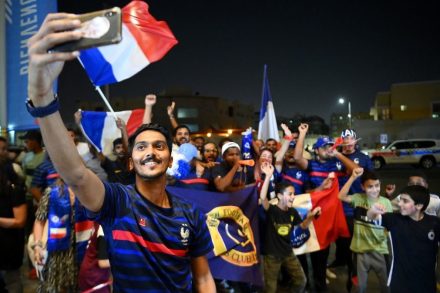
Two days before the start of the FIFA World Cup in Qatar, authorities have decided to ban the sale of alcohol within the eight stadiums hosting matches. Only non-alcoholic options will be available. Cockburn is appalled at the audacity of such a move — soccer without booze!? How will anyone cope? Beer will apparently be available at the Fan Festival among other areas, but that's little consolation. Not to mention the fact that Budweiser had a sponsorship deal with FIFA for the World Cup. Who knew that the Gulf nation could be so ruthless? (Lots of people.) Qatar is already struggling to attract fans, with inadequate lodging options and incredibly high fees.

qatar

Were the Ottoman Turks as European as they thought themselves?

From our UK edition

This is the best of times to be writing history, since so much of what has been taken for granted, especially in the West, is being revised. Assumptions about the past that we accepted as fact, and events we once looked upon with pride, are now being questioned. A dark cloud hovers over the Benin Bronzes, Elgin Marbles and Rosetta Stone in the British Museum and looks likely to burst. The same applies to figures who were considered heroes and placed on pedestals. If the statue of Winston Churchill in Parliament Square had not been covered recently, it might have followed the fate of Edward Colston’s.

She was the Queen of the West

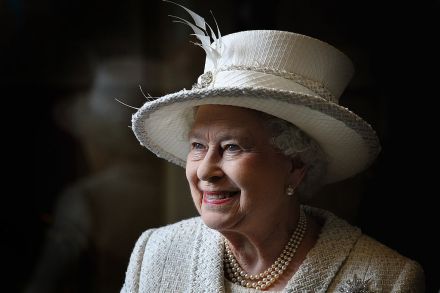
For much of my life, I confess I didn’t pay much attention to Queen Elizabeth II. My Muslim upbringing in Somalia, Ethiopia, Kenya and Saudi Arabia meant that the idea of a female figurehead was utterly foreign to me. How could a woman be the head of a church or the leader or embodiment of a nation? This was not what my god taught. Allah, for me, was the ultimate patriarchal ruler. He would certainly not countenance a figure like the Queen. But once I left Islam and became a convert to the ideals of the West, I came to appreciate her. The massive crowds following her coffin as it wound its way down from Balmoral, through Edinburgh, to London and finally to Windsor show that I am far from alone. The Queen was beloved.

queen

This production needs more dosh: Good, at the Harold Pinter Theatre, reviewed

From our UK edition

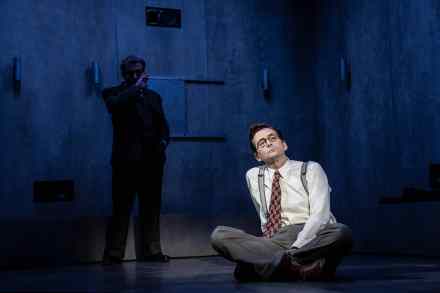
Good, starring David Tennant, needs more dosh spent on it. The former Doctor Who plays John, a literary academic living in Germany in 1933, whose cosy life is disrupted by troublesome females. His mum is a cranky basket case dying in hospital and his wife is a manic depressive who can’t look after their kids. Both women speak with Scottish accents. John has a fling with a third Scotswoman who studies Goethe at his university. Weirdly, all three women – mum, wife and girlfriend – are played by the same actress. Couldn’t the producers fork out for a proper cast? They certainly didn’t spend more than a fiver on the set, which looks like an abandoned bomb shelter made of cardboard.

Samuel Paty’s murder has still not been reckoned with

From our UK edition

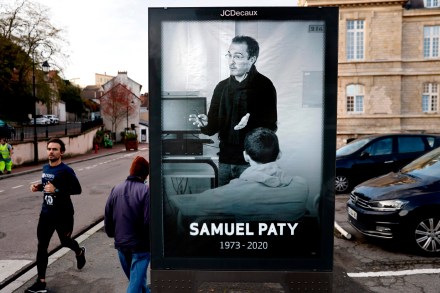
Two years ago on Sunday Samuel Paty was brutally murdered by an 18-year-old outside his school in a Parisian suburb. The teacher’s crime was to have shown an image of the prophet Mohammed during a class discussion on the freedom of expression.   Paty’s killer was a Chechen, and it’s noteworthy that the two other major Islamist terror attacks in France in recent years – the murder of three worshippers in a Nice church and the killing of a policewoman in Rambouillet – were also the work of foreign-born terrorists.   Homegrown Islamic terrorists are now a rarity in France.

Free expression after the Rushdie attack

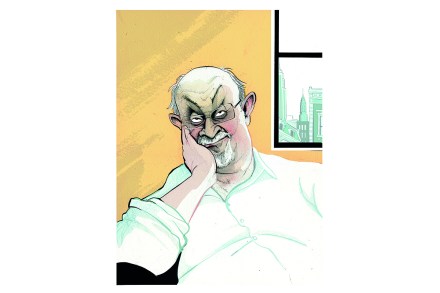
In an interview with Stern magazine at the end of July, Sir Salman Rushdie was asked about the current circumstances of his life. Given that this is a question that he has faced since 1989, Rushdie might have been expected to respond with boredom, even irritation — as, understandably, he has done in other public conversations, when the subject of the fatwa that he has been under for nearly three and a half decades has been raised by an inquisitive or prurient journalist — but he responded with reasonably good cheer. Describing his everyday existence as “very normal,” he even ventured a light-hearted remark, saying, “A fatwa is a serious thing. Luckily we didn’t have the internet back then. The Iranians had to send the fatwa to the mosques by fax.

Rushdie

A masterpiece: Rose, at Park Theatre, reviewed

From our UK edition

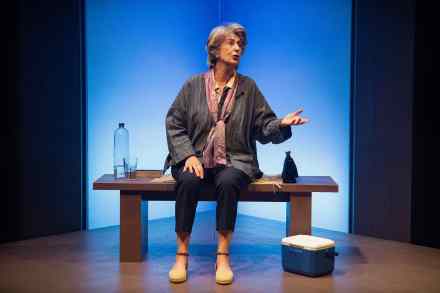
Look at this line. ‘I’m 80 years old. I find that unforgivable.’ Could an actor get a laugh on ‘unforgivable’? Maureen Lipman does just that in Rose, by Martin Sherman, a monologue spoken by a Ukrainian Jew who lived through the horrors of the 20th century. In the opening sections, Lipman plays it like a professional comic and she fills the theatre with warm, loving laughter. Rose’s dad is a hypochondriac who spends all day in bed. ‘He never stopped dying but as far as we could tell there was nothing wrong with him.’ Eventually he loses his life when a wardrobe stuffed with pills topples on to him. ‘He was crushed to death by medicine.

Why is violence breaking out in Leicester?

From our UK edition

Just what is going on in Leicester? Last night violence broke out in the city after hundreds of young men in Covid masks and balaclavas took to the streets as part of an ‘unplanned protest’. The police attempted to contain the protestors but soon lost control of the situation. Videos posted online show officers struggling to contain the crowds while bottles fly and smash on the pavement around them. In another unverified video a group of men flip a car. According to the police, two arrests have been made and they are investigating several other incidents of violence and disorder. For the past few weeks Leicester has become a kind of mini-Kashmir in the middle of England, with clashes, protests and disorder breaking out in the city between young Muslim and Hindu men.

How Amsterdam ceased to be gay heaven

Last month, in preparation for an article about the growing gay backlash against trans ideology, I spoke with Bev Jackson, the co-founder of LGB Alliance, a gay and lesbian activist group that opposes the hijacking of the gay rights movement by transfolk. Bev told me about her background — fifty years in British gay activism, a resident of Amsterdam for four decades — and asked me about mine. I mentioned my 2006 book While Europe Slept, a cri de coeur about the Islamization of Europe. I heard in her voice a degree of disquiet about its topic. Nonetheless, she asked me to participate in the LGB Alliance’s forthcoming annual convention. I accepted, but when I hung up I told my partner: “I’ve been invited to a convention in London.

Salman Rushdie was never safe

From our UK edition

The stabbing of Salman Rushdie sends a renewed message to the world: take Islamism – the transformation of the Islamic faith into a radical utopian ideology inspired by medieval goals – seriously. Ayatollah Ruhollah Khomeini, the most consequential Islamist of the past century, personally issued the edict (often called a fatwa) condemning Rushdie to death in 1989. Khomeini, responding to the title of Rushdie’s magical-realist novel The Satanic Verses, decided it blasphemed Islam and he deserved death. Initially alarmed by this edict, Rushdie spent over 11 years in hiding protected by the British police, furtively moving from one safe house to another under a pseudonym, his life totally disrupted.

The madness of France’s burkini bust-up

From our UK edition

To burkini, or not to burkini? This is the question that divides France in the run-up to the first round of voting on 12 June for the next National Assembly. The pre-election political conversation here had been pretty stale and entirely predictable. Enter the burkini. The political and media class is presently talking of nothing else. Not since Brigitte Bardot took her top off in God Created Woman has the nation obsessed so compulsively with appropriate female swimwear. Designed originally for Australian lifeguards uncomfortable with traditional swimwear, the burkini has not gone down well since arriving in France five years ago. Something about the garment seems to drive the French to distraction. The burkini has been widely banned by mayors of the left and right.

Putin and the Muslim world

From our UK edition

Several thousand Muslim Chechen fighters are reportedly massing on the edge of Kiev. Syrian volunteers, filmed this week holding assault rifles and chanting pro-Moscow slogans, are en route to the Ukrainian frontlines. Is Vladimir Putin running out of Christians for his war machine? The number of Russian battlefield casualties has certainly been high. Up to 7,000 Russian infantry have been killed since the invasion began, according to US estimates. That would put Russian casualties at more than the entire American losses in 20 years of fighting in Afghanistan and Iraq. As many as 14,000 Russians may have been injured.

Staggeringly confident and powerful: After Love reviewed

From our UK edition

As there are no stand-out films this week aside from Kenneth Branagh’s adaptation of Death on the Nile — is that the one where they all did it? Or is that the train one? — I thought I’d alert you to a film that may have slipped under your radar: After Love. It was released last year. It’s a small film, tiny. I don’t know what the budget was but it wasn’t $90 million. Yet it’s already won many awards, rightly, and has just been nominated for three Baftas and is staggeringly confident and powerful. I guess we’ll now never know who did it on that boat. Unless they all did it? This is a first feature from English-Pakistani filmmaker Aleem Khan.