Islam

The Council of Europe was right to pull its hijab campaign

From our UK edition

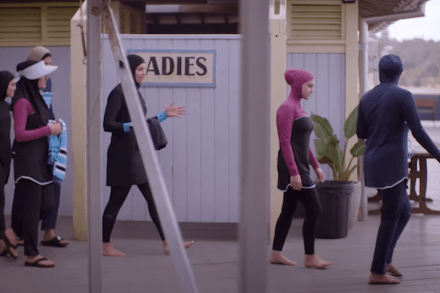
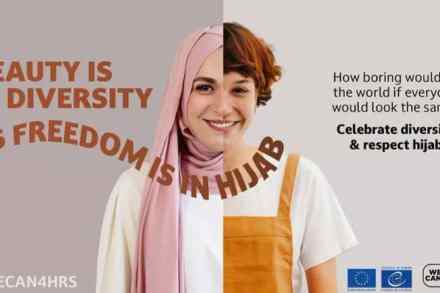
This week, the Council of Europe was forced to pull an advertising campaign promoting the hijab following a backlash from the French. As part of a campaign to promote respect for Muslim women, the European body released a number of campaign posters, one of which read ‘Beauty is in diversity as freedom is in hijab’. Shortly afterwards there was an outcry from French politicians, who called for the campaign to be dropped. Sarah El Haïry, France’s youth minister who is of Moroccan descent, said she was vocally ‘shocked’ by the campaign. The posters were also condemned by many Muslim heritage women and secular activists around the world. Some of the campaign’s messages, such as ‘my headscarf my choice’, are pretty uncontroversial.

The war that changed the world in the early seventh century

From our UK edition

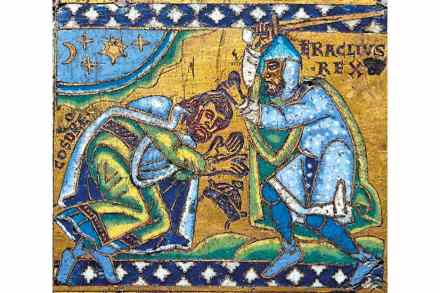
It was not a war to end all wars, writes James Howard-Johnston at the start of this illuminating and thought-provoking book about the confrontation between the empires of Rome and Persia that began at the start of the 7th century and lasted the best part of three decades; it was not even a war with ambitious goals. The ‘last great war of antiquity’ started when the Shah of Persia, Khusro II, decided that the assassination of an unpopular emperor in a palace coup in Constantinople gave him the excuse and the window he needed to try to put right a punitive settlement that had been imposed on Persia a decade earlier.

The Deobandi sect and the Taliban’s cheerleaders in the UK

From our UK edition

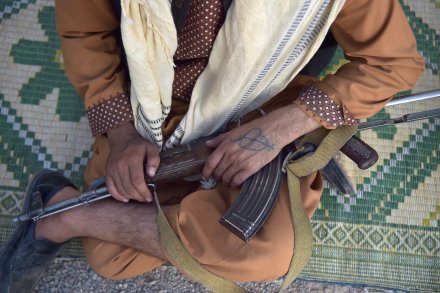
The Taliban is now bedding in for its second regime in Afghanistan and desperate Afghans continue to flee what is likely to become a brutal, heavily armed theocracy. Meanwhile in the UK it has come as a shock to many that some British Muslims applaud the Taliban’s resurgence. Speaking on BBC Radio 4’s Sunday programme, the Islamic sharia council member Khola Hasan claimed that ‘every single person that I know, as a Muslim’ was celebrating the return of the jihadist group and that ‘The problem is that we don’t give [the Taliban] a chance’, sparking outrage from more liberal minded British Muslims.

Pakistan’s profane blasphemy laws

From our UK edition

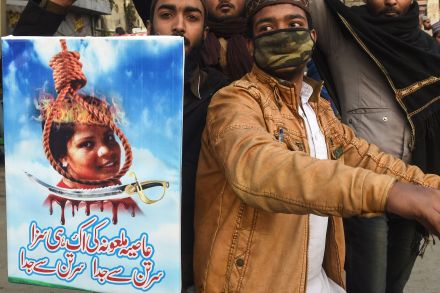
An eight-year-old Hindu boy is currently in custody in the southern Punjab. He is the youngest person in Pakistan to be charged with blasphemy. The boy, accused of urinating in a local madrassa, was released last week on bail — in retaliation, a Muslim mob vandalised a local Hindu temple. Meanwhile, on Thursday, a day after the temple attack, a transgender person was arrested on blasphemy charges in Abbottabad, around 100 miles north of the capital Islamabad, for allegedly burning the Quran. These are but the latest in an unrelenting spree of blasphemy cases, a victimless crime that carries the death penalty in Pakistan.

Tehran is repeating the Shah’s mistakes

From our UK edition

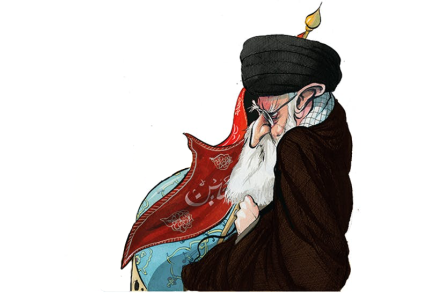
The Iranian province of Khuzestan is oil-rich but water-poor. At the best of times, the southwestern region is a problem for Tehran. On the border with Iraq, it’s home to an Arab minority that has long been targeted. The province has separatist inclinations, which led to a failed uprising in 1979 and sees the occasional attack continue to this day. Unsurprisingly, it is not favoured by central government. It’s impoverished and lacks many basic services; quality of life is poor. Khuzestan is now in its sixth straight day of protests after water shortages in its major cities.

Leave, convert or perish: The fate of Afghanistan’s minorities

From our UK edition

President Biden’s decision to ‘end the war in Afghanistan’ means the complete withdrawal of 3,500 US troops by the 20th anniversary of 9/11. However, what may be domestically popular — particularly among Trump voters — will soon have consequences for the Afghans left unguarded by foreign troops. The Taleban and other jihadist militias are already making significant territorial gains while nuclear Pakistan will be strengthened by the vacuum left by the US military. But it is Afghanistan’s non-Muslims who will really suffer. Extinction is a word normally associated with dinosaurs — but it’s no exaggeration to say some minority religions (including my own) will now face that fate at the hands of Isis, Al-Qaeda, and a resurgent Taleban.

Is anywhere in the world still safe for China’s Uighurs?

From our UK edition

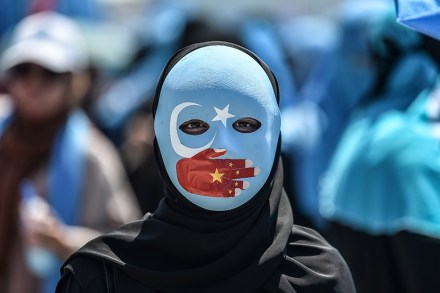
Amannisa Abdullah was in the last weeks of her pregnancy when her husband, Ahmad Talip, was arrested in Dubai. ‘He was on his way to buy a dress for our unborn girl,’ she says. Ahmad, who had lived and worked in Dubai for nearlyten years, never arrived at the shop and his family have not seen him since. He was held at a local police station for several days and then was deported to China in 2018, where he is reportedly in prison. ‘He just disappeared. We don’t know where he is or what he is accused of,’ says Amannisa, who fled to Istanbul. Ahmad is a Uighur Muslim. His story is not exceptional. Hundreds if not thousands of Uighurs, a severely persecuted minority from western China, have been detained in recent years in the Middle East and in Asian countries.

Labour’s worrying descent into communalism

From our UK edition

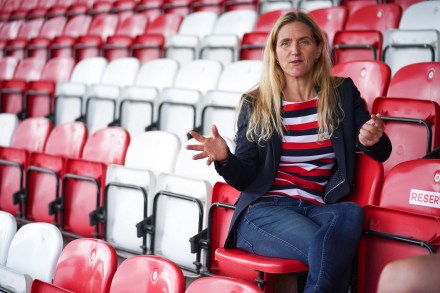
Labour’s candidate in Batley and Spen, Kim Leadbeater, reportedly pulled out of a hustings featuring George Galloway over the weekend. This makes sense. Not only is Galloway a master of bluster whose pompous bombast has a steamroller quality in a debate, but Leadbeater would have been debating the person of whom she is currently doing a dubious impression. If the organisers were concerned about getting Labour’s perspective, they could have stuck a mirror in front of Galloway and given it equal time.

Biden’s Saudi problem

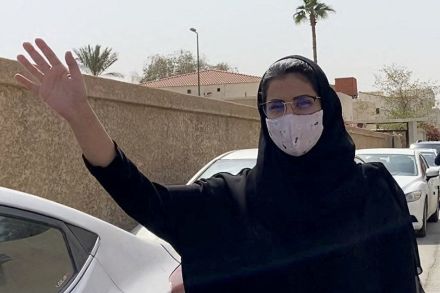
A few weeks ago, the Saudi human rights activist Loujain al-Hathloul was summoned to the offices of the General Directorate of Investigation at the Interior Ministry in Riyadh. Ostensibly, the Saudi secret police — the Mabahith — simply wanted to tell her that her appeal against her conviction for ‘treason and terrorism’ had been turned down. But her brother, Walid told me it was really a warning: Keep quiet, we’re watching you; the Americans may have got you out of prison; we can send you back whenever we want. She has been out of prison since February, serving the rest of her sentence on probation. Though aged 31, her long black hair is now streaked with gray, the outward sign perhaps of what her family say was an attempt to ‘break’ her in prison.

loujain al-hathloul

Austria’s ‘Islam map’ is dangerous

From our UK edition

Austria's government has unveiled a map detailing the locations of mosques and other Muslim associations all over the country. The publication has been swiftly condemned by Austrian Muslim groups, including the Muslim Youth Organisation which announced a lawsuit in response. But Austria's government is so far refusing to back down.  The ‘Islam map’ is a project of the government-backed Political Islam Documentation Centre and the University of Vienna. The map has been designed ostensibly in response to growing Islamist radicalism in Austria, especially in the aftermath of November’s Vienna shooting. It marks a continuation of chancellor Sebastian Kurz’s self-proclaimed fight against ‘political Islam’.

Happy corporate wokewash month!

It’s June and the biggest corporations on the planet want you to know that they are celebrating gay Pride — unless you live somewhere like Saudi Arabia in which case they couldn’t care less. On their main Twitter page, Procter & Gamble have put a Pride flag in their banner and in their pinned Tweet they proudly proclaim: 'We strive to be a champion of #LGBTQVisibility year-round, using our voice to drive acceptance, inclusion and a love for humanity.' I guess there are no gay people in Saudi Arabia to champion, which must be why P&G’s Saudi Twitter handle has not a single rainbow flag in sight and a pinned tweet simply wishing people a blessed Ramadan. But that is the beauty of corporate wokewashing.

pride wokewashing corporate

The empire that sprang from nowhere under the banner of Islam

From our UK edition

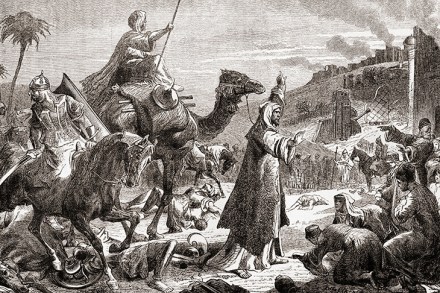
When the British formed the basis of their empire in the 1600s by acquiring territories in India and North America, they already had many centuries’ experience of foreign involvement. One of the most remarkable aspects of the force that reshaped Eurasia 1,000 years earlier is that there was no prelude: the Arab conquests, and the Islamic empire that they created, came out of nowhere. By the time of the death of the Prophet Mohammed in 632 most of the tribes of the Arabian peninsula had united under the banner of Islam, some out of faith, others from expediency. But few people outside Arabia knew who Muslims were or worried about the threat they might pose.

The Tories, Islam, and the importance of pluralism

From our UK edition

The Conservatives will be relieved that an independent investigation has not found the party to be institutionally racist, though relief is about all they can feel. Professor Swaran Singh’s report, which has taken two years to arrive, paints a picture of a party at best complacent about how its members talk about Muslims.  Professor Singh examined 1,418 complaints about 727 incidents between 2015 and 2020, of which two-thirds were allegations of anti-Muslim discrimination and three-quarters were from social media.

Richard Dawkins is an ally to the oppressed

From our UK edition

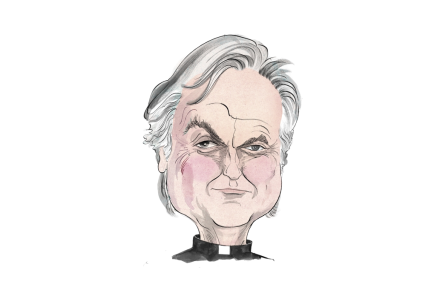
Richard Dawkins is no longer a humanist. At least, not one that deserves to be honoured as such, according to the American Humanist Association (AHA), which excommunicated him from the Humanist of the Year award last week. The fatwa issued by the AHA, which generously includes ‘critical thinking’ in a list of its own Ten Commitments, accused the evolutionary biologist of ‘demean[ing] marginalized groups’ when he asked his Twitter followers to ‘discuss’ the vilification of critics of transgender theory. Proponents of the new blasphemy codes have seemingly forgotten the decades of humanist work in favour of free speech.

France wakes up to Woke

One crisis can conceal another. While France has been distracted by COVID, a new menace is lurking. The specter haunting the republic is le Wokisme, the mutating ideology of race and identity that has found unexpectedly fertile ground here. French elites are unsettled. Those who assumed the French possessed herd immunity against such barbaric American ideas are having their complacency tested. Superficially a modern country, with iPhones, Amazon and electric cars, France is still often introspective and late to understand what’s happening in the wider — especially Anglophone — world, which is how wokeness has somewhat taken it by surprise. Woke had been happening in America for many years before the French noticed.

woke

What the demise of Quilliam teaches us about Britain and Islam

From our UK edition

There was much rejoicing among Britain’s Islamists last week when the thinktank and campaigning organisation Quilliam announced that it was closing. The Islamists were pleased because for the 14 years since its founding Quilliam has been the most prominent Muslim-run organisation arguing for a progressive, non-Islamist Islam. The exact reasons why Quilliam has shut down are not clear. The co-founder, Maajid Nawaz, has blamed the difficulties of sustaining a non-profit in the era of Covid. Perhaps it is that, or perhaps it is something else. The group never had an easy ride. But the fact that it didn’t, and that so many prominent British Muslims are celebrating its demise, points to a problem worth noting. I was there in 2007 when Quilliam started.

How Covid will change Ramadan

From our UK edition

Ramadan is one of the five pillars of Islam, based on spiritual self-discipline. It is meant to strip away materialism and to connect Muslims to God through self-reflection, fasting and prayer, thereby enhancing the spiritual connection of Muslims to the Almighty. But just as it was for Christians celebrating Easter and Jews celebrating Passover, this year’s Ramadan will be quite different in a Covid world. For the virus continues to strip away so many of the familial and personal connections that we once took for granted. The virus continues to strip away so many of the familial and personal connections that we once took for granted In times of crisis people often turn to the support of religion. It provides a sense of normalcy, community and togetherness.

Why Muslims like me are worried about the Batley protests

From our UK edition

To some, the persecution of a schoolteacher who showed his pupils a cartoon of the Prophet Mohammed may seem like a local quarrel. Does it really matter, many Britons will ask, that a few dozen men gathered at the gates of a school in West Yorkshire? Surely it will blow over before long, goes the thinking. Alas, this view – all too common in officialdom throughout the western world – is deeply naïve. To those of us in the Muslim world who work to counter Islamist extremism, what is happening at Batley Grammar School is disturbingly familiar. What may look like a local incident is in fact one with national implications and strong international parallels. That is why it draws our attention.

Why will nobody publish my religious cartoons?

From our UK edition

I am having very little success in getting my collection of cartoons of great religious founders published. Perhaps it is because I am not known as a draughtsman and publications are notoriously conservative in hiring new talent. It is all very dispiriting. My drawings are, I think, puckish and yet respectful. For example, there is one of the Ethiopian emperor Haile Selassie, the man somehow regarded as divine by Rastafarians. He is depicted in a game of ten-pin bowling with Benito Mussolini, the controversial former leader of Italy. Both men seem to be enjoying themselves — Benito is holding a pint of lager while Selassie is biting into an almond Magnum, waiting their turn to roll.

Bangladesh could pay for failing to crack down on its Islamist threat

From our UK edition

Bangladesh turned 50 last week and the country has much to celebrate. Having inherited a dismal GDP growth rate of -14 at its birth in 1971, Bangladesh's most recent figures for the growth in the size of its economy (7.8 per cent) edged out India (6.1 per cent), and comfortably outdid Pakistan (5.8 per cent). Bangladesh overtook India in per capita income last year. And of the 14 World Development Indicators measured by the World Bank – including fertility rate and life expectancy – Bangladesh is faring better than Pakistan in all but one (air pollution), and outranking India in seven. The country's life expectancy average of 72.3 is ahead of the two South Asian nuclear powers; and poverty rates have also tumbled dramatically since the country's inception.