Isis

‘It’s jihad, innit, bruv’: meet the British Muslims going to fight in Syria

From our UK edition

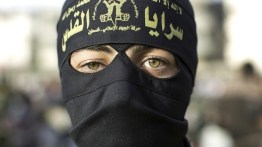
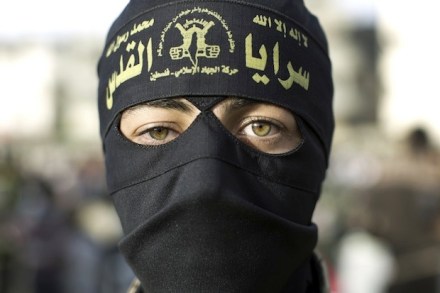
Turkey, Syria, Iraq: ‘It’s jihad, innit, bruv.’ The young British Muslim cut an absurd figure in ski mask, dark glasses and hoodie. He had not used that exact phrase but it would have summed up our faintly comical encounter. I remembered a security analyst’s remark that British Islamists in the Middle East are best explained by Four Lions, the mock documentary about some Yorkshire jihadis on an incompetent quest for martyrdom. He called himself ‘Obeid’ and he described, in a Leeds or Bradford accent, how he had arrived in Turkey on a tourist visa.
Portrait of the week | 10 July 2014

From our UK edition

Home Theresa May, the Home Secretary, ordered a review, taking perhaps ten weeks, by Peter Wanless, the head of the National Society for the Prevention of Cruelty to Children, of how her department, the police and prosecutors handled historical child sex-abuse allegations. There would also be a large-scale inquiry by the retired judge Lady Butler-Sloss. These came in response to a ferment of speculation into what the late Geoffrey Dickens had alleged in 1984 in a folder of information he gave to Leon Brittan, then Home Secretary. In 2013 the folder was found not to have been kept. Rolf Harris, the entertainer, aged 84, was jailed for five years and nine months for 12 indecent assaults against four girls. Novak Djokovic beat Roger Federer to win the men’s singles at Wimbledon.

Portrait of the week | 3 July 2014

From our UK edition

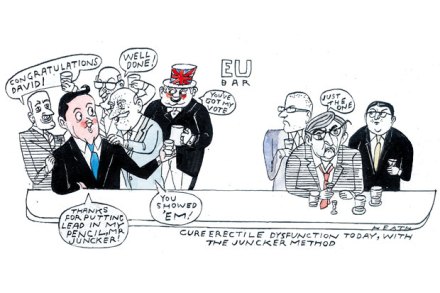
Home David Cameron, the Prime Minister, rang Jean-Claude Juncker to congratulate him on being nominated by EU heads of government as president of the European Commission. Mr Cameron had insisted the question should go to a vote at an EU summit, where 26 voted for Mr Juncker and two against: he and Viktor Orban, the prime minister of Hungary. Mr Cameron announced a review into why, in the face of resistance to antibiotics, few anti-microbial drugs have been introduced in recent years. Sir Elton John came out in favour of gay marriage for clergy: ‘If Jesus Christ was alive today, I cannot see him, as the Christian person that he was and the great person that he was, saying this could not happen.

What have we done for ISIS not to hate us?

From our UK edition

After 9/11 the Western world's response fell between two poles; on the one hand lots of people agreed with General Norman Schwarzkopf that it was not our job to forgive the terrorists, it was God's job; ours was simply to arrange the meeting. On the other hand some on the American Left asked the question: why do they hate us so? Perhaps more worrying might be the question: why don't they hate us? This week Abu Bakr al-Baghdadi, head of the lovely Islamic State of Iraq and the Levant—now just 'Islamic State'—issued a statement to the worldwide faithful in his new role as self-proclaimed caliph. In a reasonably slick document issued in several languages al-Baghdadi celebrated the month of Ramadan with his own message, rather like the Pope does at Christmas.

Baghdad notebook: “Things were better in Saddam’s time”

From our UK edition

In the passport queue at Baghdad airport, my heart sinks. This place vies with Cairo for the title of most venal airport in the Middle East. Our luggage is minutely examined by the Mukhabarat, or secret police, then customs. Early morning becomes mid-afternoon. Our papers (scrupulously in order) lie unattended on a desk. Eventually, a customs man, with a large moustache and belly hanging over his belt, waddles over. ‘We cannot stamp these today,’ he says. ‘We will have lunch now, and then we will sleep. Come back tomorrow. Or the next day.’ Our bags are moved into a room piled high with luggage seized from other TV crews: flak jackets, lights, someone’s camera and editing gear. ‘How much?’ asks our fixer, wearily.

I like the look of this exciting new Islamic State. But why don’t they want Belgium?

From our UK edition

There is something attractive about almost the whole of southern Europe being part of an immense and somewhat rigorous caliphate, as promised by the exciting Sunni Islamic movement formerly known as Isis. This new entity, stretching from Santander in what we currently know as Spain, to Cox’s Bazar on the Bangladesh and Burmese border, would handily encapsulate 98 per cent of the worst countries in the world, as defined by me out of rank prejudice, but also by various more scientific UN criteria.

After 100 years, the mess we made of the Middle East is coming full circle

From our UK edition

When I hear the words Sykes-Picot I more often than not feel like punching an Englishman or a Frog — any Englishman, any Frog — in the mouth, but then I think of François Georges-Picot’s granddaughter Olga, and my pugilistic thoughts turn to romantic mush. More about those two arrogant and ignorant fools later, but first Olga. I was 22 and she was 19 or 20 and we met in New York where she was studying acting and I was studying girls. It was love at first sight and we swore we’d never ever look at anyone else ever but then the summer ended and we never saw each other again. Well, I did see her but she was 20 feet tall and in Technicolor.

The bloody battle for the name Isis

From our UK edition

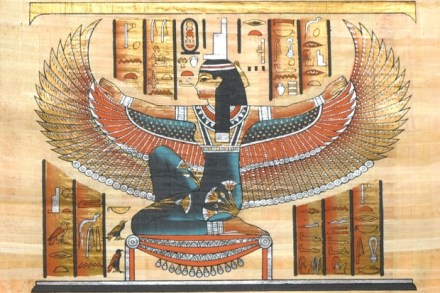
‘This’ll make you laugh,’ said my husband, looking up from the Daily Telegraph. For once he was right. It was a letter from the Pagan Federation complaining that the acronym Isis ‘is likely to form an inadvertent association in the minds of hearers between Sunni jihadists and followers of the goddess Isis’. These ‘may be caught up in unintended fallout’. They are not the only ones. Apart from the army of bloodthirsty Islamists, Isis is a centre for scientific research at Harwell, near Oxford; a group of schools teaching English; an ‘end to end’ professional photographic service in Clerkenwell; a private equity investor; and a seven-seater from Toyota.

Welcome to the era of ISIS – and pop-up terror

From our UK edition

[audioplayer src="http://traffic.libsyn.com/spectator/TheViewFrom22_19_June_2014.mp3" title="Daveed Gartenstein-Ross and Freddy Gray discuss ISIS, Iraq and pop-up terrorism" startat=49] Listen [/audioplayer]Jihadist banners flying. Victorious extremists on camera slapping and then executing dehydrated and pleading Shia members of the Iraqi security forces. Dark reports of mass slaughter. City charters released in captured territory heralding the implementation of an extreme version of Islamic law. We’ve seen it all before, but it remains shocking — and the latest advance by the Islamic State of Iraq and al-Sham (ISIS) is arguably the most disturbing development in Iraq’s already horrifying recent history.

How the Westminster hawk became an endangered species

From our UK edition

[audioplayer src="http://traffic.libsyn.com/spectator/TheViewFrom22_19_June_2014.mp3" title="James Forsyth and Isabel Hardman discuss the death of Westminster hawks" startat=726] Listen [/audioplayer]There is a slight whiff of the summer of 1914 to Westminster at the moment. The garden party season is in full swing and the chatter is all about who is up and who is down. In the Commons chamber itself, domestic political argument dominates. You would not know that a vicious sectarian war is raging in the Middle East. At the first Prime Minister’s Questions after the fall of Mosul to the terrorist group ISIS, no one asked David Cameron to explain the government’s policy on Iraq. The situation in Iraq is dire on both a humanitarian and a strategic level.

Please, Cameron – no moral grandstanding over Iraq

From our UK edition

If there’s a bright spot in the murky mess of Iraq, it’s that finally we have a war that it is impossible to paint in simple terms, as a battle of good against evil. This time, even our PM, the self-appointed heir to Blair, can’t grandstand about defeating ‘terror’ or protecting ‘innocent civilians’ because there’s terror and innocence on every side. He can’t pose as world policeman; stand side by side with Obama and say ‘we must not let this evil happen’, because clearly we already have. Take ISIS, the Islamist group once affiliated to al-Qa’eda who’ve become the world’s new public enemy number one. ISIS have captured parts of northeast Syria and Iraq, and have begun to eye up Baghdad.

The new Iraq war

From our UK edition

[audioplayer src="http://traffic.libsyn.com/spectator/TheViewFrom22_12_June_2014_v4.mp3" title="Former solider Tom Tugendhat and Fraser Nelson discuss ISIS in Iraq" startat=1758] Listen [/audioplayer]Seven weeks ago, Barack Obama proclaimed that ‘it’s time to turn the page on more than a decade of war’. The people of Iraq do not have this option. They’ve seen, in Basra, Iran-backed militias take on and defeat the British military. They’ve seen highly effective jihadis, disowned by al-Qa’eda for their brutality, take control of a major city, Fallujah, just 40 miles from Baghdad. This week they have seen their second city, Mosul, fall to that same band of psychopaths.

The one man who makes me hope for peace in Syria

From our UK edition

As Syria’s second peace conference looms, and we prepare ourselves for a lot of hot air drifting over from Geneva, I’ve been making a list of those players in the civil war who actually want peace and those who don’t fancy it one bit. The anti-peace side is easy. There’s Bashar al-Assad, of course. Hillary saw to that during the first conference. Perhaps she’s right that he shouldn’t be part of any transitional government, but if he loses all power, Assad and his Alawite clan are toast. So what use is peace to him?

Portrait of the week | 16 January 2014

From our UK edition

Home David Cameron, the Prime Minister, said that English local authorities would be allowed to receive all the business rates collected from shale gas schemes, not just the 50 per cent they’d expect. Total, a French company, said it would invest about £30 million in drilling two exploratory wells in Lincolnshire. To head off higher borrowing rates, the government announced that ‘in the event of Scottish independence from the United Kingdom, the continuing UK government would in all circumstances honour the contractual terms of the debt issued by the UK government’. The annual rate of inflation, as measured by the Consumer Prices Index, met the target set by the government for the first time since November 2009, when it fell to 2 per cent (from 2.