Isis

Why is Theresa May pretending that Islam is a ‘religion of peace’?

From our UK edition

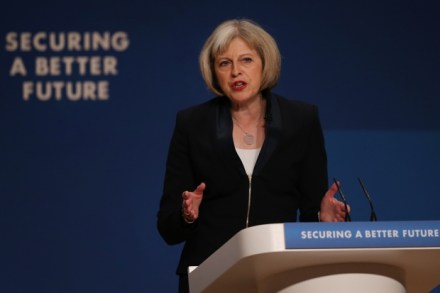
In advance of the Home Secretary’s speech today the Conservative party issued an advance briefing of its ‘new strategy for tackling extremism’. It was gratifying to see that a huge chunk of it credited a piece of mine from four and a half years ago. It is always gratifying when the political consensus catches up with you. So in my self-anointed role of prophet, let me highlight something which, four and a half years from now I will expect another Home Secretary to say. Because although there were many things to admire in Theresa May’s speech there was also one horrible, glaring and nearly unforgivable error. That is that the Home Secretary chose to speak about religion – indeed to lecture the hall, and the nation, on religion.
Commons vote for strikes against IS in Iraq

From our UK edition

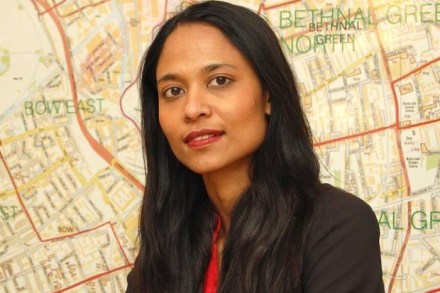
By 524 votes to 43, the House of Commons has voted to support air-strikes against Islamic State in Iraq. The margin of victory is not surprising given how limited the motion was, it rules out ground troops and makes clear there’ll be another vote before any action in Syria. But in a sign of the unease of some on the Labour side, Rushanara Ali, who represents George Galloway’s old seat of Bethnal Green and Bow, has resigned from the front bench over Labour’s support for the motion. Indeed, the first estimates are that 24 Labour MPs voted against while just five Tories opposed. The question now is whether, and when, Cameron might return to the Commons to try and gain approval for action in Syria.

If Islamic State is to be defeated, it must be attacked in both Syria and Iraq

From our UK edition

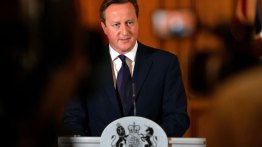
listen to ‘David Cameron's statement on Isis and Iraq’ on audioBoom Parliament will today vote for the motion authorising air strikes by the RAF against Islamic State in Iraq. The motion with its promise of a further vote before any action is taken in Syria and a commitment not to put troops on the ground has been designed to pass as easily as possible. Understandably, no one in Downing Street wants to risk a repeat of last year’s Syria vote. But the reasons why the motion will pass are also the reason why it is not fit for purpose. Islamic State has succeeded in rendering the border between Syria and Iraq meaningless, it operates on both sides of it. But British planes will only hit Islamic State on one side of this line.

Dot Wordsworth on language: Why do we call it ‘Islamic State’?

From our UK edition

I’m puzzled by the dropping of the one part of the name of the Islamic State that seems certain. That it is Islamic, many dispute. That it is a state is just as unclear. But calling it the does not bestow honour upon it, any more than referring to the Third Reich meant agreement with its behaviour. But there’s all the difference between the Queen and Queen. The Islamic State is grammatically like the Irish Free State, the Orange Free State or the Bluegrass State (Kentucky). And yet the BBC commonly speaks of ‘Islamic State’ without the definite article, like Sinn Fein or Sheffield Wednesday. In June I wrote here about the jihadist group’s good fortune in landing the English acronym Isis — easy to pronounce and remember.

The good fight

From our UK edition

It is a mark of the uncertainty of our policy in the Middle East that just over a year ago Parliament was recalled to debate whether to launch military strikes in aid of rebels in Syria. This year, it has been recalled to discuss whether the RAF should join the strikes against the rebels in Syria — or, at least, the section of them that now call themselves ‘the Islamic State’. It is a sobering thought that, had last year’s vote succeeded, Damascus might have joined Raqqa, Mosul and Tikrit among the cities now being run by this pitiless band of barbarians. Michael Fallon, the Defence Secretary, tells James Forsyth on page 29 that Parliament should have the ‘courage’ to support military action.

Michael Fallon: parliament needs the ‘courage’ to vote for war

From our UK edition

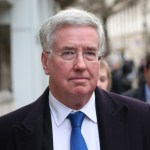
The Ministry of Defence is like a sauna on Sunday. The air circulation system has been switched off and the place is hot — and deserted. Yet when you reach the Secretary of State’s floor, a small team is hard at work. As you enter Michael Fallon’s office, you see why. On an easel sits a map of Iraq and Syria. Tellingly, though, this isn’t the only map on the stand. Sitting behind it are ones of Pakistan, the Central African Republic and Sierra Leone. It emerges later that the one of Ukraine has gone missing. Fallon is 62, but he has the energy of a man half his age. Our conversation is punctuated with regular requests from him to his staff to bring him a map, a copy of the Nato charter or some other piece of paper.

Are Syria air strikes legal? Perhaps not, but why should we care?

From our UK edition

‘Are Syria air strikes legal?’ asks the BBC as part of its lead story today. The answer is that nobody is very sure. But personally I do wonder: ‘Why should we even care?’ Is beheading people legal? Is crucifying people illegal? Probably not. But aside from some vague talk last month of international inspectors being sent in to Isis-controlled areas to try to collate evidence of war-crimes I have seen very little written about this. This debate over the ‘legality’ of hitting Isis reminds me of nothing so much as the conversation after Osama bin Laden was shot in the head.

Five main points from Michael Fallon’s hawkish interview in The Spectator

From our UK edition

James Forsyth interviews Defence Secretary Michael Fallon in this week's Spectator. You can read the full interview here. Here are five key points from the piece: 1. A ‘new Battle of Britain':  ‘We’ve had attacks on the streets of London, on our transport system, at Glasgow Airport, the murder of Lee Rigby – how much more evidence do you need that this is a very clear and dangerous threat to our way of life and to all the democracies of the west.  This is a new Battle of Britain.’ 2.

Exclusive: Michael Fallon says UK should reconsider military action in Syria to combat ISIS

From our UK edition

The Ministry of Defence is like a sauna on Sunday. The air circulation system has been switched off and the place is hot—and deserted. Yet when you reach the Secretary of State's floor, a small team is hard at work. As you enter Michael Fallon’s office, you see the reason why. On an easel sits a map of Iraq and Syria. Tellingly, though, this isn’t the only map on the stand. Sitting behind it are ones of Pakistan, the Central African Republic and Sierra Leone. It becomes clear as the interview goes on that the one of Ukraine has gone missing. Fallon is 62, but he has the energy of a man half his age.

What is to be done about a world where everything is for sale?

From our UK edition

Next time you read about an auctioneer’s gavel coming down on a $150 million painting bought by some flunkey representing the ruling family of Qatar, don’t ooh or aah, but think of those monsters in Iraq and Syria who have their children pose on video while holding up the severed heads of innocents. And no, it’s not a stretch — without Qatar’s gold Islamic State would not exist, not even in the movies. Let me put it another way: had Calvin Coolidge or Herbert Hoover given White House dinners for Al Capone, the outcry would have been heard all the way down to Patagonia.

What Romans would have made of Obama’s Syria strategy

From our UK edition

President Obama was assailed for saying that the USA had no strategy on combating Isis. Vegetius (late 4th century AD), the author of the only surviving Roman treatise on military science, would have approved, since ‘no plans are better than those you carry out without the enemy’s knowledge in advance’. Indeed, he went so far as to argue that the reason why the Minotaur was depicted on legions’ standards was because ‘he was hidden away in the innermost and most secret labyrinth’. As it is, Obama has now revealed his strategy, which is to train up and equip local armies to do the job for him. Vegetius would not have approved of that.

The John Cantlie video shows Islamic State have taken a leaf out of Vice’s book

From our UK edition

Islamic State (IS) have just released a new video that features the journalist John Cantlie. Until now, his whereabouts in Syria were unknown, but it now looks as if he has been captured by IS. This time, the video takes a different format. There is (thankfully) no beheading, but it’s sinister in different ways. Cantlie, believed to be 43, says he will broadcast a series of videos that will reveal the ‘manipulated truths’ employed by the Western media.  The video is entitled ‘Lend me your ears’. In it, Cantlie says:  ‘Now, I know what you're thinking. You're thinking: “He's only doing this because he's a prisoner, he's got a gun at his head and he's being forced to do this,” right? ‘Well, it's true.

The brutal truth? Britain lacks the reach to bring any ISIS killer to justice

From our UK edition

The words are strong, the sentiment behind them no doubt heartfelt. ‘We will do everything in our power to hunt down these murderers and ensure they face justice, however long it takes,’ said David Cameron, speaking as Britain recoiled in horror at yet another jihadist beheading video, this time of a British man, David Haines. Sadly, Cameron’s promises are empty. Ask a Whitehall official how many suspected murderers of British hostages have been brought to justice and there is a long silence. ‘Let me get back to you on that,’ said one this week. There is a depressing pattern. In 2004, Ken Bigley, from Liverpool, was beheaded in Iraq by the group led by a Jordanian militant called Abu Musab Al-Zarqawi.

The foreign hostage market is worth millions to Islamic State

From our UK edition

The horrific situation in Syria and Iraq means both aid workers and reporters are urgently needed, but as the awful murder of British hostage, David Haines shows, it's now virtually untenable for any foreigner to try to help. As Paul Wood wrote after the murder of Steven Sotloff, hostage taking has become a $100 million business for the so-called IS:  At Jim’s Foley's memorial gathering, a correspondent for one of the big American TV networks remarked that none of this should stop us going into Syria. It is a noble idea, but increasingly hard to act on. In July, we went to do a day’s filming in the rebel-held town of Azaz, just over the border from Turkey. Twenty minutes in, the rebels protecting us said we had to leave: other fighters were coming to kidnap us.

Why is Britain arming countries that support terror in the Middle East?

From our UK edition

Why is the UK still supplying arms to those who helped fund the so-called Islamic State, and what leverage does it bring? In the Prime Minister’s statement to the House of Commons following the Nato summit over the weekend, he spoke of seeking a broad base of support through the UN. Yet there was no mention of military action—as opposed to diplomatic assistance—from Gulf States. Islamic State has been bankrolled by wealthy Gulf individuals from Saudi Arabia, Qatar, and Kuwait, and their Governments have failed to act to prevent it. In March 2014, Nouri al-Maliki, the outgoing Iraqi Prime Minister, accused Saudi Arabia and Qatar of being ‘at war with Iraq’. Six names were added the latest UN sanctions list, issued on the 14th August.

The lesson of the young men fighting for Isis: evil is in all of us

From our UK edition

I had an interesting discussion with my friend Aidan Hartley earlier this week about whether the young men fighting for the so-called Islamic State are psychopaths. (This was before the news broke of Steven Sotloff’s beheading.) Aidan is better placed than most to answer this question, having worked as a war correspondent for many years and written a classic book on the subject called The Zanzibar Chest. His view is that the Islamic radicals attracted to IS are not run-of-the-mill jihadis, but a particularly nasty sub-species. Without in any way trying to defend the activities of terrorist groups like al-Shabaab, whose handiwork he’s witnessed close up, he thinks of them as being more like the IRA.

Portrait of the week | 4 September 2014

From our UK edition

Home Britain’s terror threat level was raised from ‘substantial’ to ‘severe’ in response to fighting in Iraq and Syria, meaning that an attack on Britain was ‘highly likely’. Three days later, David Cameron, the Prime Minister, in a hesitant statement to the Commons, proposed that: police should be able to seize temporarily at the border the passports of people travelling overseas; there should be all-party talks on drawing up powers to prevent suspected British terrorists returning to Britain; those under terrorism prevention and investigation measures (Tpims) should be subject to ‘stronger locational constraints’.

PMQs sketch: Was Carswell right all along?

From our UK edition

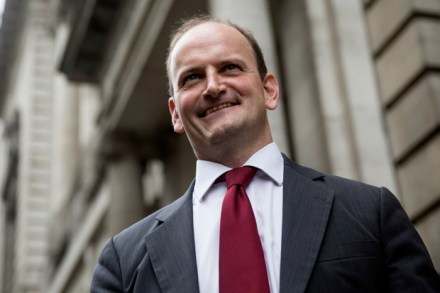
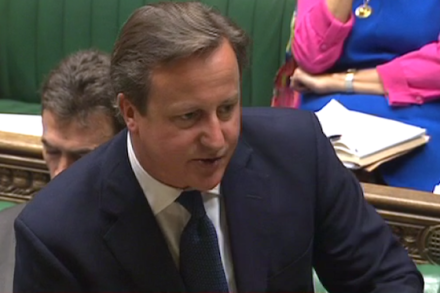
Calamities crowd in every side. Nuclear-armed Russia is already waging war with Europe, according to our NATO ally, Lithuania. At home, Douglas Carswell’s defection threatens to rob the Tories of power. Yet these crises were barely mentioned at PMQs. One source of international conflict has been resolved, at last. Is the name Islamic State? Or is it ISIS? Or is it IS? Or is it Isil? Isil it is. Both leaders used that term today as they condemned the latest savageries. Cameron made a vague attempt at karaoke Churchill. And no one particularly minded that it wasn’t up to much. ‘A country like ours will not be cowed by these barbaric killers … Our opposition to Isil will continue, at home and abroad. ... We will not waver in our aim of defeating terrorism.

PMQs: Fighting suspended as leaders respond to Iraq terror

From our UK edition

A few days ago, one would have expected the first PMQs of term to be a rowdy affair as Labour went for Cameron over the Carswell defection. But the recent, hideous events in Iraq have changed all that and today’s PMQs was instead a sober, statesmanlike affair which reflected well on both Cameron and Miliband.

Six rivals for the name Isis

From our UK edition

Not in their name The BBC decided to start calling the Islamic terror group Isis by the acronym IS instead. Some organisations who are retaining the name: — Isis Equity Partners London-based private equity group — The Isis Student magazine at Oxford University — Isis day spa and hair salon in Oxford (not to mention hair salons in Birmingham, Ascot, Sunningdale and Writtle) — HMP Isis Young Offenders’ Institution in Thamesmead — Isis Motors Secondhand car dealership in Hayes, Middlesex — Spirit of Isis Ethically sourced crystal shop in Bedford Fighting faiths It was claimed that more British Muslims are fighting for jihadist forces than have joined HM Forces. What is the declared religion of British servicemen? Christian 86% No religion 12.