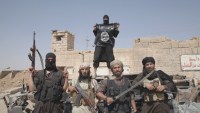
Isis

Andrew Marr’s diary: Seeing shadows of Syria in Limousin’s ghost village

From our UK edition

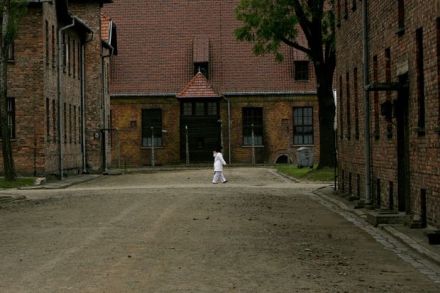
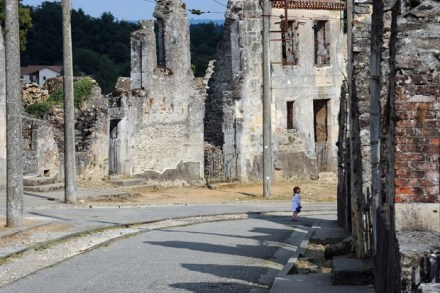
No, no, no, you don’t want a house abroad — the paperwork, the taxes, the piping, the cost of the pool. What you want are good, kind, generous friends with houses abroad. That’s what we’ve enjoyed this summer, meeting scores of interesting new people and being looked after by our best friends. We pay them back with wine, little presents and London hospitality. The only downside to ‘les vacances ligging’ is having to book extra seats home on Ryanair for our vastly swollen and moaning livers. The most striking thing we did in France was to visit Oradour-sur-Glane, the Limousin village where on 10 June 1944 a Panzer division of the SS massacred 642 men, women and children as a reprisal operation against the Resistance.
You can’t make friends with Uncle Sam and survive for long

From our UK edition

Can somebody tell me when America last got it right? Uncle Sam’s track record in selecting leaders in faraway places reminds me very much of my own where libel is concerned: plaintiffs 5; Taki 0. Let’s see, the good Uncle overthrew Mohammad Mosaddegh in Iran back in the early 1950s in order for the Shah to become his man in Persia. The Shah went gallivanting in St Moritz, threw very expensive parties in Persepolis and spent money like a Saudi camel driver-turned-prince on American weapons. But once the Shah became a pariah, the Home of the Brave chickened out. The Shah became Shah who? Only Henry Kissinger admitted knowing him and even managed to get him a bed in a cancer hospital. What about the Diem family before that?

Portrait of the week | 28 August 2014

From our UK edition

Home Theresa May, the Home Secretary, said that Britons who went to Syria or Iraq to fight could be stripped of their citizenship, if they had dual nationality or were naturalised. Her words came during a search for the identity of the British man in a video of the beheading of the American journalist James Foley. David Cameron had returned to London from his holiday in Cornwall to confer with security officials, but decided against recalling Parliament. In revenge the Daily Mail carried photographs of him in a wetsuit, which gave him a phocine look. Lord Dannatt, the former Chief of the General Staff, suggested Britain should deal with President Bashar al-Assad of Syria, but Philip Hammond, the Foreign Secretary, said: ‘That would poison what we are trying to achieve.

The wars that really are about the oil

From our UK edition

Is international conflict really just a fight over oil? It sometimes seems that way. In Syria and Iraq, the militants of the so-called ‘Islamic State’ sell captured oil while battling to establish a puritanical Sunni theo-cracy. From Central Asia to Ukraine, Russia is contesting attempts (backed by the US) to minimise Europe’s dependence on Russian oil and natural gas. Meanwhile, Obama’s ‘pivot to Asia’ allows the US to threaten the choke points through which most of China’s oil imports must pass. Conspiracy-mongering petrodeterminists who try to reduce world politics to nothing but a clash for oil are too crude (pun intended). No shadowy cabal of oil company executives pulls the strings of world politics.

The reluctance to talk about the link between beheadings and Islam

From our UK edition

Why do they behead people? Why do Islamic extremists—like those who killed the American journalist James Foley—choose beheading as their savage tactic of choice? I have not heard anybody ask that question on the media over the last week. But it is quite an important question, and its absence says a lot about our absence of thought as well as our fearfulness. This occurred to me after a BBC discussion I was involved with about ISIS and Foley on Sunday Morning Live – you can see the segment here: I was on with Dame Ann Leslie, Shiraz Maher, Lord Winston and a Muslim convert called Myriam Francois-Cerrah. We had quite a good discussion, much helped by the unanimity sprung upon us thanks to the appearance of one of Anjem Choudary’s circle who was supporting ISIS.

Have you heard the one about Isis and the ‘Ebola bomb’?

From our UK edition

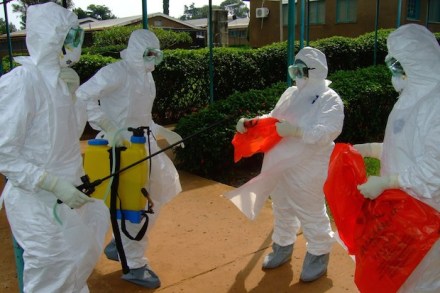
Isis has the Ebola bomb. So be very, very afraid. If you’re a nutjob, that is. The conspiracy website Before It’s News reports that ‘whistleblower and former police officer’ Greg Evensen has discovered that ‘Isis now has the weaponised Ebola virus, here in America!’ Evensen also reveals who’s pulling the strings of Isis. Yup: Barack Obama. Surprisingly, the website omitted the President’s middle name, but I imagine its readers are pretty familiar with it anyway. This is a conspiracy theory of (mostly) angry rednecks. But we shouldn’t’ be surprised if it pops up in African-American and Muslim communities – both, in their different ways, hungry markets for these fantasies.

Ghoulishness, gawking and vile gratification

From our UK edition

James Foley’s family has begged people not to share images of him being beheaded. The Met has warned that watching and disseminating the film of the murder could constitute an offence under terrorism laws. The Spectator of 1886 would have approved of the ISIS media blackout hashtag.

Portrait of the week | 21 August 2014

From our UK edition

Home David Cameron, the Prime Minister, writing of the Islamic State in northern Iraq, said: ‘If we do not act to stem the onslaught of this exceptionally dangerous terrorist movement, it will only grow stronger until it can target us on the streets of Britain.’ Anyone waving an Islamic State flag in Britain would be arrested, he said. He invoked Britain’s ‘military prowess’ but later said: ‘We are not going to be putting boots on the ground.’ British C-130 transport planes were used to drop aid; Tornados were used for surveillance in addition to a Rivet Joint surveillance aircraft; and Chinook helicopters remained on standby.

It’s time we contemplated the possibility of a post-conflict Kurdistan

From our UK edition

There’s a  curious aspect to the debate – or what passes for it – about Britain getting involved in military action against the Islamic State. Isabel Hardman put her finger on it in her piece in this week’s magazine, identifying the defeat of the PM’s bid to take action in Syria for his reluctance to take military action now in Iraq. As she says: 'This post-Syria timidity frustrates many of Cameron’s own MPs. Even under the new leadership of Michael Gove, the Tory whips made no efforts to sound out backbenchers on where they stand on a British response to the so-called Islamic State’s brutal campaign in Iraq. If they did, they might find that some of those who spoke out against action last year are far more hawkish now.

The Islamic State is destroying the greatest melting pot in history

From our UK edition

As the fighters of the Islamic State drive from village to captured village in their looted humvees, they criss-cross what in ancient times was a veritable womb of gods. For millennia, the Fertile Crescent teemed with a bewildering variety of cults and religions. Back in the 3rd Christian century, a philosopher by the name of Bardaisan was so overwhelmed by the sheer array of beliefs to be found in Mesopotamia that he invoked it to disprove the doctrines of astrology. ‘It is not the stars that make people behave the way do but rather the diversity of their customs.’ Bardaisan himself was a one-man monument to Mesopotamian multiculturalism.

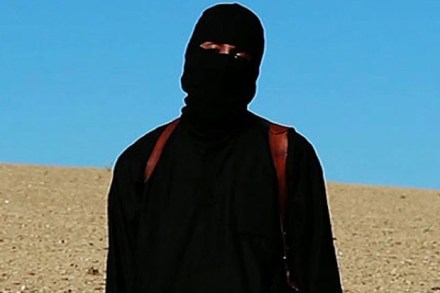
Jihadi John – a very British export

From our UK edition

It is the now familiar nightmare image. A kneeling prisoner, and behind him a black-hooded man speaking to camera. The standing man denounces the West and claims that his form of Islam is under attack. He then saws off the head of the hostage.

Philip Hammond: No plans to engage in airstrikes

From our UK edition

So Britain's long-term fight against Isis isn't, at the moment, going to involve this country doing any fighting. The Prime Minister this morning insisted that there would be no 'boots on the ground' and Philip Hammond has just told journalists that there are 'no plans at the moment to engage in air strikes'. That latter assertion does of course mean that air strikes aren't being ruled out, while boots on the ground are ruled out daily. Hammond said: 'The priority is the humanitarian situation, there are huge numbers of displaced persons, there are persistent stories of atrocities being committed against people who are fleeing from the violence going on, so that has to be our number 1 priority.

When should Britain go to war?

From our UK edition

There’s been a lot written this week about whether or not to fight the Islamic State in Iraq. This time the consensus among Spectator writers is that Britain should. There’s a clear moral case, but is it in our interests to go to war? The first time this question came up was in 1839 when China started confiscating opium from British traders. It may have been a good move to protect British trade, but the magazine was less convinced about the morality of it.

Portrait of the week | 14 August 2014

From our UK edition

Home David Cameron, the Prime Minister, resisted calls for Parliament to be recalled to debate the crisis in Iraq. Philip Hammond, the Foreign Secretary, said that the government was not considering military intervention ‘at the present time’. Mark Simmonds resigned as a Foreign Office minister, but Downing Street hastened to say that his resignation, unlike Lady Warsi’s a week earlier, had nothing to do with government policy on Gaza, since he was complaining he could not afford to rent a flat in London for his family with the £27,000 allowance. A man sought by police investigating the theft of a fish tank from a furniture shop in Leeds hid in a bush and was attacked by a swarm of wasps. Unemployment fell 132,000 to 2.

The West isn’t the solution in Iraq. It’s the problem

From our UK edition

[audioplayer src="http://traffic.libsyn.com/spectator/TheViewFrom22_14_August_2014_v4.mp3" title="Peter Hitchens and Douglas Murray discuss Iraq and Isis" startat=52] Listen [/audioplayer]To hawkish right-wingers, but also to many militant liberals, the antidote to the problem of Isis is clear: the application of military power to defeat the jihadists and lay the foundation for a humane and stable political order, beginning in Iraq but eventually extending across the Islamic world. There are several problems with this analysis. For starters, it glosses over the fact that military power in the form of the 2003 Anglo-American invasion created the opening for the jihadists in the first place. Where there had been stability, US and British forces sowed the seeds of anarchy.

We can’t afford to let Isis run wild in Iraq

From our UK edition

[audioplayer src="http://traffic.libsyn.com/spectator/TheViewFrom22_14_August_2014_v4.mp3" title="Peter Hitchens and Douglas Murray discuss Iraq and Isis" startat=52] Listen [/audioplayer]Iraq is a bloody mess. The Islamic State of Iraq and Syria has extended its hold from eastern Syria into western and northern Iraq, massacring Shi’ites, Christians and Yazidis wherever it can. Meanwhile in Baghdad there has been a constitutional crisis, with Prime Minister Nouri al-Maliki threatening to cling to power even though his own political bloc has chosen a different candidate. The situation is now so bad that it has impinged on the holiday arrangements of our own leaders in the West.

Scoops, snark and jihad – this is Vice News’s war

From our UK edition

War can reshape the medium of television. The First Gulf War was a landmark moment in broadcasting: CNN had reporters in Baghdad when the first bombs fell, no one else did, America was riveted and the concept of 24-hour news (accompanied by thousands of graphics) suddenly took off. And now, just as a third conflict kicks off in Iraq, we have a new television insurgent: Vice News, which is shaking up war reporting with its extraordinary coverage of the jihadis tearing up Syria and Iraq. The idea of watching television made by a magazine seems bizarre — or, at least, it did this time last month. Vice started life as a provocative publication. It was dubbed the ‘hipster’s bible’, but underneath all the snark, Vice had big plans.

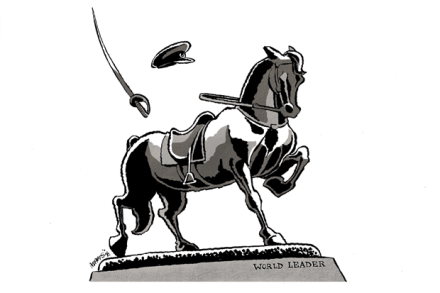
A world crisis with no world leader

From our UK edition

There was a time when having almost two hundred of your citizens blown out of the sky was a big deal for a western democracy. But when Malaysian Airlines flight MH17 was shot down over Ukraine last month, killing 193 Dutch citizens and a couple of dozen other Europeans, the response was conspicuous public mourning, some mild objections, a soupçon more sanctions, but otherwise nothing. Everyone knew which government might have handed powerful surface-to-air missiles to eastern Ukraine’s rebels. But nobody seemed willing or able to do anything much about it. There was also a time when whole swaths of the map being overrun by Islamic groups who make al-Qa’eda look like Quakers would have caused concern to the civilised world.

The MH17 disaster

From our UK edition

Home David Cameron, the Prime Minister, told Parliament that President Vladimir Putin of Russia should end his country’s support for separatists in Ukraine, some of whom it had provided with a training facility in south-west Russia. Licences to export arms to Russia were found still to be in place. Theresa May, the Home Secretary, announced a public inquiry into the death of the Russian dissident Alexander Litvinenko, a former KGB officer who died in 2006 in a London hospital after he was poisoned with polonium. Nick Clegg, the Deputy Prime Minister, was criticised by some MPs from rival parties for appearing on television sampling tequila instead of somehow doing something about the crisis. Prince George of Cambridge celebrated his first birthday.