Isis

The US steps up its involvement in the war for Iraq

From our UK edition

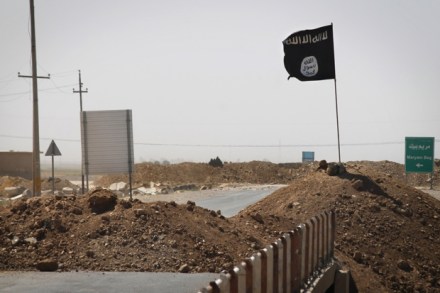
If you want to know how serious the situation in Iraq with Islamic State is, just look at what the Americans are doing. President Obama, who made his political name by opposing the 2003 invasion of Iraq, has now asked Congress to approve sending another 1,500 troops there—taking the total number of US forces in the country to roughly 3,000.   Tellingly, the Washington Post reports that, these troops will now not be based mainly in Baghdad and the Kurdish capital of Irbil as they were previously. Instead, they will have a base in Anbar Province, one of the places where the so-called Islamic State has held territory, and north of Baghdad. They will also be attempting to train nine Iraqi army brigades.
The myth of the White Widow

From our UK edition

Over the past year or so, a determined and fanatical Islamist has been waging a deadly and bloody war against the western world. This enemy is capable of moving unnoticed across continents and inflicting savage violence in each of them; inspires young Muslim men to become suicide bombers and die in their thousands. The enemy is particularly horrifying for being a traitor, born in Britain and a woman to boot. The ‘White Widow’, remember her? Samantha Lewthwaite from Aylesbury, usually described by our tabloid press as one of the most evil and powerful women alive. But is she really evil? Is she really even much of a threat?

Never mind the Baghdad politics, Iraqi Kurds need help to fight Islamic State

From our UK edition

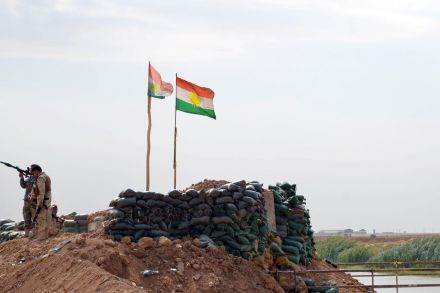
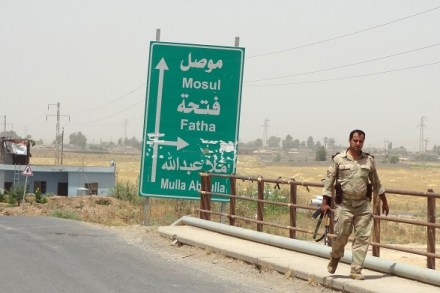
The threat from Daish, the Arabic acronym for the so-called Islamic State in Iraq and Syria, has gone from a side issue to a central imperative, judging by discussions with Kurdish leaders on my four fact-finding trips to the Kurdistan region in the last year. Last November, I was told how Daish operatives were assiduously measuring building sites in Mosul in an extortion racket. In February, I learned of their external funding and their continuing growth. In June, they captured Mosul with a small force that immediately acquired thousands of adherents, and established a 650-mile border with the Iraqi Kurds. The major shock, though, was how quickly the Iraqi Army had 'disappeared in a puff', as the governor of Kirkuk put it to me in his office in the city.

Is Canada’s foreign policy making the country any safer?

From our UK edition

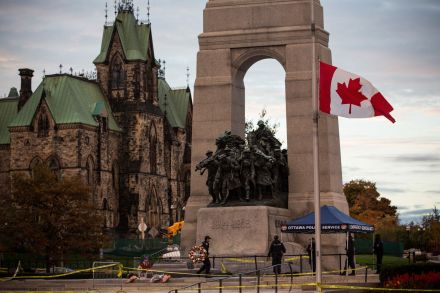
We Canadians like to think that we are a boring and peaceful nation, that nothing much ever happens here, and everybody likes us. It therefore comes as a shock when we are attacked, as we were this week in Ottawa. Yet terrorism is not a new phenomenon for Canada, as demonstrated by the assassination of one of the fathers of the confederation, Thomas D’Arcy McGee, in 1868; by the murderous behaviour of the Front de Libération de Québec in 1970; and by the destruction of Air India Flight 128 in 1985. Our legislative institutions have been regular targets of attack. A Loyalist mob burned down the Parliament of Lower Canada in Montreal in 1848.

Portrait of the week | 23 October 2014

From our UK edition

Home A hundred firemen could not prevent wooden cooling towers at Didcot B gas-fuelled power station in Oxfordshire from burning down. A consortium said it could power 2.5 million houses in Britain by 2018 with solar energy generated in southern Tunisia. The Bank of England indicated that interest rates would stay low for longer because of a poor outlook for the global economy. Government borrowing rose to £11.8 billion in September: £1.6 billion more than a year earlier. HSBC offered a mortgage at 0.99 per cent interest. The government is to pay a bounty of £55 to GPs for every patient they diagnose with dementia.

So what if the Canadian terror attacks are blowback?

From our UK edition

Anti-NSA crusader Glenn Greenwald published an article on Wednesday morning where he explained that the recent murder of a Canadian soldier by a radicalised Muslim convert was down to Canadian foreign policy. The important sentence in Greenwald’s piece is this one: ‘A country doesn’t get to run around for years wallowing in war glory, invading, rendering and bombing others, without the risk of having violence brought back to it.’ To put it another way, it was inevitable that the jihadists would come after Canadians, given that Canadians had meted out some fairly ripe treatment to the jihadists – first in Afghanistan and now against the Islamic State in Iraq and Syria (I’m being generous to Greenwald here, I grant you).

Wear a veil if you like – but don’t treat women like that

From our UK edition

What sort of clothing do you wear when you go to the opera? I assume some of you do go to the opera, otherwise the Royal Opera House could be turned into a giant Wetherspoon’s pub. I have never been. Given a choice I would rather browse through a collection of photographs of Brooks Newmark MP’s penis, or indeed gnaw off my right leg. If I were somehow coerced into attending, then without question the costume of choice for me would be a niqab. Then I could sleep without being noticed. Or listen to something more interesting on headphones, such as a collection of Danny Alexander’s speeches or a greatest hits compilation from the Radio 4 programme Does He Take Sugar?

The Spectator’s portrait of the week | 22 October 2014

From our UK edition

This is a sneak preview from tomorrow's magazine: Home A hundred firemen could not prevent wooden cooling towers at Didcot B gas-fuelled power station in Oxfordshire from burning down. A consortium said it could power 2.5 million houses in Britain by 2018 with solar energy generated in southern Tunisia. The Bank of England indicated that interest rates would stay low for longer because of a poor outlook for the global economy. Government borrowing rose to £11.8 billion in September: £1.6 billion more than a year earlier. HSBC offered a mortgage at 0.99 per cent interest. The government is to pay a bounty of £55 to GPs for every patient they diagnose with dementia.

Hannibal (and Alexander the Great) vs the Islamic State

From our UK edition

Whatever the Islamic State hopes ultimately to achieve by its current onslaught on all and sundry in the Middle East, Philip II of Macedon, father of Alexander the Great, would certainly understand why it has been successful (so far); but Hannibal, who came within an ace of conquering Italy, might offer a word of warning. In the ancient world, conquest of territory was the route to enrichment: other people’s resources became yours to use as you wished. By 358 BC Philip had trained up what would turn out to be an almost unbeatable army. Moving south from Macedon, he picked off Greek city-states one by one, until by 338 BC he had gained effective control over all of Greece. He then planned an assault on Persia, but was assassinated in 336 BC. Alexander fulfilled his father’s ambitions.

Here’s how to remain cheerful in the face of such a multitude of scares

From our UK edition

I don’t think I can remember a time when there have been so many scares about. They come at us from every direction, and even sometimes from out of the blue, with names we’ve never heard before. Take Isis, for example, or maybe Isil (there’s not even now a consensus on what to call it). Yet neither name was known to any normal, newspaper-reading person until it was already in control of half the Middle East and beheading western hostages at will. Now the Prime Minister says that we must bomb the Islamic State in Iraq because it threatens our security at home. How can such a powerful and terrifying organisation appear on the scene so suddenly and without warning?

If Turkey turns on the West, what hope is there for Syria and Iraq?

From our UK edition

Turkey has long been a bridge between the West and the Middle East. Its record on free speech may be lamentable and it treats its Kurdish minority shoddily, but against that stands a genuine will to improve its human rights record and an ambition to become a modern, free and prosperous state. This has long been the basis of Britain’s support for Turkey joining the European Union. But this week we have seen a reminder of how far the priorities of Turkey’s political establishment are from those of Europe. Its parliament recently consented to the use of an airbase at Incirlik by US forces launching airstrikes against the Islamic State, a move that could dramatically increase the number and effectiveness of such missions.

Podcast: Tory-Ukip relations, terrorist negotiations and Brighton’s Green problems

From our UK edition

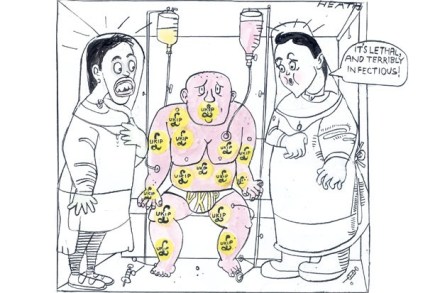
In this week’s issue, Lord Pearson, the former leader of Ukip, describes how he tried to offer the Tories a pact before the last general election, but Cameron refused to  meet with him to discuss it.  Now it's too late, says Lord Pearson, and Cameron has forced Ukip to fight him to the end. Lord Pearson and Damian Green, the Conservative MP for Ashford, join Lara Prendergast on the podcast to discuss relations between the Tories and Ukip. Should we ever negotiate with the Islamic State? Jonathan Powell has recently suggested we should consider it. Jenny McCartney takes issue with his stance though.

Does Jonathan Powell really want to negotiate with the Islamic State?

From our UK edition

I think I’ve finally worked out the time-honoured Jonathan Powell formula for promoting a new book: take which-ever group constitutes the most bloodthirsty terrorist organisation of the day — in this case IS, the warped Islamist force currently enslaving and beheading its way across Iraq and Syria — and create a media fizz by boldly declaring that sooner or later we’re going to have to negotiate with them. Powell’s predicted circumstances in which the ‘talking’ to IS should actually happen, however, are hedged with unrealised conditions. At other moments he will daringly hint that talking is best without any preconditions at all.

The Spectator’s portrait of the week

From our UK edition

Home Checks began at British airports for passengers who might have come from west Africa with Ebola fever (even though there are no direct flights from the countries most affected). People who rang 111 with suspicious symptoms were to be asked whether they’d come from a high-risk country. Police arrested three men and three women from Portsmouth, Farnborough and Greenwich as part of an anti-terrorism operation. Of five men arrested the week before, two were released. The trial began before a jury at the Old Bailey of Erol Incedal on charges of preparing for acts of terrorism; parts of it will be held in secret.

A brief history of biker gangs at war – Islamofascist Iraq edition

From our UK edition

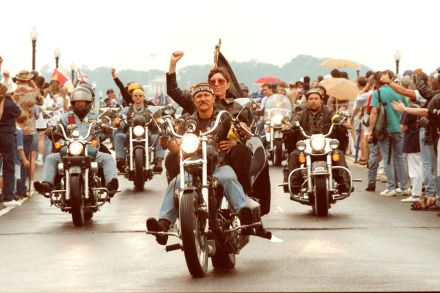
America and Britain are still fumbling for policies to deal with nationals joining the Islamic State in Iraq and Syria. In Holland, meanwhile, authorities faced a more cheering task: sorting out Dutch motorbikers who've joined the Kurdish Peshmerga against Isis. To accomodate freelance counter-jihadists, the ever-progressive Dutch have amended their rules against joining foreign armies, Agence France-Presse reports. The three Dutch Peshmerga we know of so far belong to a biker club called 'No Surrender',  whose chief concerns were heretofore limited to motorcycling and brawling with Hell's Angels. Speaking of Hell's Angels, Dutch hog-heads aren't the first to take interest in a foreign freedom-fight.

Your enemy’s enemy is not your friend

From our UK edition

The United States faces a very difficult task in Syria. It is trying to use air raids to contain and weaken ISIl. But, at the same time, it is trying to prevent the Assad regime from turning this intervention to its advantage. However, as the Washington Post reports today, the Assad regime have taken advantage of ISIl being pinned back to turn their fire on the moderate rebels, the very group that the US is trying to help. As the situation in Iraq is demonstrating, air strikes against ISIl can be effective when paired with ground operations. But in Syria, the US has no effective allies on the ground. The Turks could assist. But they are sitting on their hands. They aren’t even coming to the relief of Kobani, which sits on the Syrian Turkish border.

Portrait of the week | 9 October 2014

From our UK edition

Home Alan Henning, 47, a British volunteer aid worker taken captive in Syria by Islamic State, was murdered, and footage of his death, which included an appearance by a man with an English accent nicknamed Jihadi John, was posted online. David Cameron, the Prime Minister, said: ‘We will do all we can to hunt down these murderers and bring them to justice.’ Four men were arrested in London on suspicion of terror offences; MI5 sources suggested that the arrest might have ‘foiled the early stages’ of a planned attack. A 12-year-old girl in a wheelchair was saved from injury by her arm-braces when two men set a pit bull dog on her in a Northamptonshire wood. Fungicide injections derived from garlic were tried out on trees suffering from ash dieback in Northamptonshire.

US warns it will take a year to wrest Mosul back from Islamic State

From our UK edition

The problem posed by Islamic State will, sadly, not be dealt with quickly. The New York Times reports that John R. Allen, the retired US general coordinating the international coalition against IS, has warned that it will take up to a year before Iraqi forces are ready to try and re-take Mosul.   Given that IS is more firmly entrenched in Syria than Iraq, this suggests that defeating it there will take even longer. Indeed, the Syrian problem is compounded by the fact that there are not credible ground forces there to take the fight to IS.   Air strikes against IS are aimed more at disrupting its momentum and containing it than eliminating it.

What will it take for us to stop doing business with Qatar?

From our UK edition

On 17 June, a meeting of the Henry Jackson Society, held in the House of Commons, discussed (according to the minutes published on the society’s website) how a tribal elder in northern Cameroon who runs a car import business in Qatar has become one of the main intermediaries between kidnappers from Boko Haram and its offshoot Ansaru and those seeking to free hostages. It was alleged that embezzlement of funds going to Qatar via car imports might be disguising ransom payments. It was also alleged that Qatar was involved in financing Islamist militant groups in West Africa, helping with weapons and ideological training, and (with Saudi Arabia) funding the building of mosques in Mali and Nigeria that preach a highly intolerant version of Islam.