Ireland

The Irish laugh in the face of EU regulations

From our UK edition

Our house was suddenly shrouded in a thick, grey mass of cloud and it felt like a sea fog had descended. The Irish could not give a damn for rules and regs and no one is going to tell them what they can set fire to To some extent it had, but the fog grew in density until it wasn’t feasible that this was coming off the sea. The builder boyfriend came in from the stable yard and reported an acrid smell in the rain. This is what happens when fog descends. People burn their most difficult and illegal waste when visibility is low. ‘It’s the plasticky dew,’ said the builder b, who likes an Irish republican song.

Ireland is not ready for Trump

From our UK edition

It will be an uncertain year for Ireland. The Irish economy has for a long time been artificially propped up by the billons it accrues in tax revenues from American tech companies based in the country. Many dread Donald Trump’s return, fearing he will force these firms to move back to the US. Those fears have been compounded by the Irish government's bizarre quest to stigmatise and sanction Israel – perhaps the only country in the world to be more popular in American minds than Ireland. In February, then-taoiseach Leo Varadkar and Spanish President Pedro Sanchez wrote to EU Commission President Ursula von der Leyen and asked her to conduct an ‘urgent review’ into the bloc’s trade relationship with Israel.

How working-class Dublin turned on Conor McGregor

From our UK edition

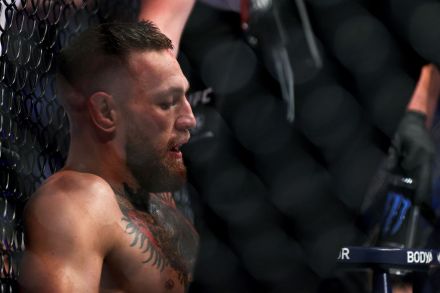
When Conor McGregor stood in the dock for his civil rape trial last week, the controversial MMA fighter was receiving the kind of global media attention he had always craved. Just not for the reasons he would have wanted. In court, the 12-person jury found him liable for the rape and sexual assault of Nikita Hand, and awarded her £208,000 in damages. This was the latest nail hammered into a career which has been marred by sporting controversies, sexual misbehaviour and appallingly thuggish behaviour. The circumstances which brought McGregor before the civil court were as tawdry as people had come to expect from the Dublin brawler. One Friday night in December 2018, McGregor had booked a hotel suite where he planned to finish the night.

In defence of first past the post

From our UK edition

Here comes a new law in political science: Joe’s Law. As I write, the Republic of Ireland is still working out, after its general election, what sort of a coalition government will be entailed by its system of proportional representation. And the Germans are fretting already about whether and how a new coalition might be put together, the last one having disintegrated. A new election looms, held according to Germany’s ‘personalised proportional representation’ voting system. Voters may not have agreed on much but they did share a longing for bold and decisive government Joe, meanwhile, is a first cousin twice removed whom I didn’t even know. He’s 16, and has a paper to write about our ‘first past the post’ (FPTP) voting system.

Tenerife is a soap opera in the sun

From our UK edition

A warm Sahara wind was blowing and by late afternoon the western sky where it met the sea was the colour of golden sand. Surfers bobbed like seals on the milky ocean, waiting for a wave. It stretched like a sheet of silk all the way to the golden horizon. Lying by the hotel pool facing the seafront, I was watching the surfers, the fishing boats, the palm trees waving on the promenade, and something else. ‘John, I just need to be honest with you,’ said a glamorous, buxom, pink-lipsticked blonde lady in her sixties wearing a leopard-print sarong, sitting on a sunbed sideways facing the back of a slim, frightened-looking man, also in his sixties. She spoke in a soft Scottish accent, coquettishly stirring a cocktail in a poolside cardboard cup.

Ireland’s centre has held

From our UK edition

Two years ago, I secured an apartment in Dublin through a gay dating app. I was desperate and there was a housing shortage in Ireland so I was prepared to ignore safety concerns to get a roof over my head. ‘You must be used to this in London’, Irish friends would say to me. But I was not. In London if you’re happy to compromise on cost or location, there are plenty of rooms available. In Dublin you can double or triple your budget or look further afield and still not find a place. There are some very high-spec, new-build apartments in the city’s docklands (its ‘tech hub’), which can cost around €3,000 for a two-bed, and are designed primarily for expats and American tech workers.

Kneecap are basic but thrilling

From our UK edition

It was Irish week in London, with one group from the north and one from the south. Guinness was sold in unusual amounts; green football shirts were plentiful; and so, at both shows, was a genuinesense of joyful triumph – these were the biggest London venues either group had headlined. The Irishness was much more visible onstage at Kneecap, not least because, as a proudly Republican group, they can’t really not make a big deal of being from west Belfast. Their statements have prompted the inevitable fury from some quarters: Kemi Badenoch (as business secretary) refused them a £15,000 grant to help them tour, on the grounds that the British state should not be aiding those who despise it.

Matthew Parris, Joanna Bell, Peter Frankopan, Mary Wakefield and Flora Watkins

From our UK edition

38 min listen

On this week’s Spectator Out Loud: pondering AI, Matthew Parris wonders if he is alone in thinking (1:10); Joanna Bell meets the leader of the Independent Ireland party, Michael Collins, ahead of the Irish general election later this month (8:41); Professor Peter Frankopan argues that the world is facing a new race to rule the seas (17:31); Mary Wakefield reviews Rod Dreher’s new book Living in wonder: finding mystery and meaning in a secular age (28:47); and, Flora Watkins looks at the Christmas comeback of Babycham (34:10).  Produced and presented by Patrick Gibbons.

‘We want to put common sense into Irish politics’: inside Ireland’s new populist party

From our UK edition

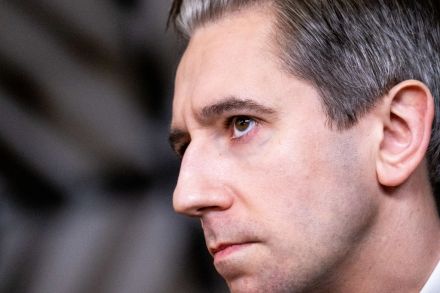
When the Taoiseach Simon Harris called a snap election for 29 November, Ireland’s electricity board asked political parties not to put election posters on telegraph poles. They might as well have asked them to take the time off on holiday. As I drive through the Irish countryside on my way to County Cork, I notice plenty of posters on poles, but the usual suspects – Fianna Fail, Fine Gael, Sinn Fein and Labour – are now joined by a new force in Irish politics – a grouping dedicated to a punchier, more populist, anti-immigration and pro-family agenda.

Hands off my empty plastic bottles!

From our UK edition

‘Where are my empty plastic bottles?’ I ran around the house screaming, after discovering my stash had disappeared. The government in Ireland has done something with the recycling laws that has made people into wild-eyed scavengers. It has introduced a scheme whereby you can feed all your empty bottles and cans into a machine in the supermarket that crushes them down and spits out a voucher – by which I mean about 20 small plastic water bottles, for example, makes you two or three euros, which is enough for a coffee, a sandwich or some money off your shopping bill.

Out of the depths: Dante’s Purgatorio, by Philip Terry, reviewed

From our UK edition

Many readers of Dante get no further than the Inferno. The inscription over the gates of Hell, the demon-haunted circles, the howling winds that buffet the lovers Paolo and Francesca, even the poet’s grim profile and bonnet, are part of the world’s literary and artistic heritage. Several translators also stop at the point that the dazed poet and his guide Virgil emerge from the bowels of the Earth into the astonishing starlight. It’s no surprise that Inferno seizes the imagination, but it’s only a third of the story; and possibly for Dante himself just the part you have to plunge through before you get to the good bits. Philip Terry’s witty, transgressive canto-by-canto Dante’s Inferno came out in 2014.

Doctor in trouble: Time of the Child, by Niall Williams, reviewed

From our UK edition

In the early 1960s, glimmers of change start to appear in the Irish ‘backwater’ parish of Faha. A smuggled copy of Edna O’Brien’s banned The Country Girls is read surreptitiously by the doctor’s daughter, Ronnie Troy; a photograph of John F. Kennedy, the first Catholic president of the USA, hangs proudly on the postmistress’s wall. But in the main the rhythm of life persists much as it has for generations. Like Ronnie, Niall Williams clearly feels that Faha represents ‘the full of humanity, in its ordinary clothes’, since Time of the Child is his third visit to the fictitious County Clare village, following History of the Rain and This is Happiness. Indeed, Noel Crowe, the protagonist of the latter, remains a potent, albeit unseen, presence here.

How I found Love on Airbnb

From our UK edition

‘My name is Love,’ typed the help assistant, ‘and I’m a member of the Airbnb community support team.’ I was using one of those chat boxes, where someone from the company you’re grappling with, embodied in a flashing cursor, interacts with you in print on a live chat screen. I am kind and polite, I thought. No one has ever really given me credit for that before Now, I’m a big fan of the chat box. The chat box works when all other forms of customer service fail. Chances are you will get much better service if you stop expecting companies to speak to you on the phone, and start letting them do what they do best, which is to solve your issue without speaking to you, because speaking to you is where all the problems start, let’s face it.

Why is it so hard to hire a car?

From our UK edition

My passport and driving licence sat on the counter but the girl stared back at me, repeating her demand. ‘I need your DVLA check code,’ she said. I told her I didn’t have the slightest idea what she was on about. ‘I need your DVLA check code,’ she said again, doing her best ‘computer says no’ stare. The Sixt rental office was in the atrium of the Hilton Hotel Gatwick, which for some reason had been heated to something like sauna temperature.

Man of mystery and friend of the Cambridge spies

From our UK edition

In April 1967 Tony Scotland, a cub reporter for Australia’s ABC television news, drove with a cameraman from Hobart to a sheep station in Fingal to interview Lord Talbot de Malahide, an Anglo-Irish aristocrat who had edited a book about Tasmanian flora. This was a delicate assignment. Lord Talbot was a retired British ambassador to Laos who divided his time between his family’s Tasmanian property and one of Ireland’s grandest castles. He was fearsomely well-connected, peppery and ‘not good with people’. ABC had been trying for years to interview him, and he only grudgingly allowed in the cameras to publicise the book. Scotland, a 22-year-old English public schoolboy, wondered why he’d been given the job. His cameraman smiled knowingly.

Letters: The case for assisted dying

From our UK edition

Craic down Sir: If Ireland had been investing in infrastructure as Ross Clark writes (‘Bog down’, 21 September), Dublin would have a metro, Galway a ring road, and primary school parents wouldn’t be forced to pay for basic necessities. And when the only local hotel cancels wedding and birthday parties because government has block-booked it for migrants and refugees, no wonder people beyond the Dublin bubble are mutinous. Rural areas often lack broadband or even piped water (just ask Melissa Kite) and where the blue pipe does reach, ‘boil water’ orders are common. Corporation tax is 27 per cent of government revenue (per head of population, more than four times that in France or Germany) and 90 per cent of it is paid by foreign multinationals.

Paul Wood, Ross Clark, Andrew Lycett, Laura Gascoigne and Henry Jeffreys

From our UK edition

33 min listen

On this week’s Spectator Out Loud: as Lebanon reels from the exploding pagers, Paul Wood wonders what’s next for Israel and Hezbollah (1:24); Ross Clark examines Ireland’s low-tax project, following the news that they’re set to receive €13 billion… that they didn’t want (8:40); Reviewing Ben Macintyre’s new book, Andrew Lycett looks at the 1980 Iranian London embassy siege (15:29); Laura Gascoigne argues that Vincent Van Gogh would approve of the new exhibition of his works at the National Gallery (22:35); and Henry Jeffreys provides his notes on corkscrews (28:01).  Produced and presented by Patrick Gibbons.

How the EU turned on Ireland’s low-tax project

From our UK edition

First, the good news. The Irish government is about to receive a €13 billion windfall in the form of back taxes from tech giant Apple, after the European Court of Justice (ECJ) ruled against the company. That should pay for a good few social homes in a country that has an even bigger housing crisis than Britain’s. It could even go some way to providing universal free public healthcare (at the moment most adults have to pay something, even at public hospitals). Why should countries which have been successful at managing their finances be forced to jack up tax rates? Now the bad news. Ireland doesn’t actually want to receive the money any more than Apple wants to pay it. It has spent millions of euros fighting the European Commission (EC), which initiated the case.

Confessions of a hypochondriac

From our UK edition

My neighbour had a surgical procedure and keeps telling me about it. Every time she starts, I shout ‘No! Please stop!’, because I’m squeamish. At the risk of distressing anyone else who is squeamish, I do need to say that she had her eyeball injected, because of what followed. Three people in four days – so having your eyeball injected must be no more unusual than having your hair cut A day after visiting my neighbour and having to cover my ears as she explained her eye op, I bumped into a lady I know outside church and when I asked after her husband she said he was going into hospital because: ‘He’s having his eye injected.

A romantic obsession: Precipice, by Robert Harris, reviewed

From our UK edition

London in the long hot summer of 1914. A city of gold sovereigns, chaperones and muffin men, but also a place where war looms, paranoia breeds and secret papers mysteriously disappear. The world that Robert Harris brings to life in Precipice is both close to that of Buchan’s The Thirty-Nine Steps and simultaneously very far away. In place of rugged heroes giving dastardly spies what for, he offers a subtle drama about the distasteful and ultimately destructive love affair between a young aristocrat, Venetia Stanley, and a man 35 years her senior who, not coincidentally, happens to be the prime minister H.H. Asquith.