Ireland

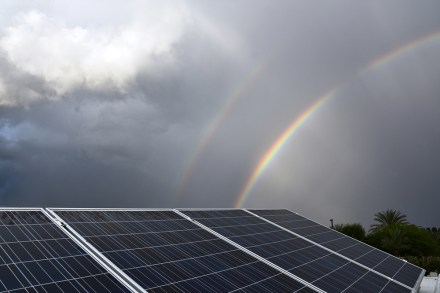
The folly of solar panels

From our UK edition

The house fell silent as the last of the tourists took their oat milk and pretend cheese from the guest fridge. Winter came in the nick of time. I’ve bitten my lip for six months while the B&B guests have forced their pro-Palestine, anti-Trump views on me, while refusing to eat normal food or use the dishwasher because, in leftie parlance, dishwashers cause neurological damage. ‘What does the shower cause?’ I wanted to ask some of them, who didn’t even use one towel or open one wrapped mini-soap in a week-long stay. Is soap carcinogenic now? Are you staging some sort of Gaza protest by not washing? The bookings dried up just before I lost it completely with the next long-haired hipster asking for coconut milk or declaring themselves gluten-free.

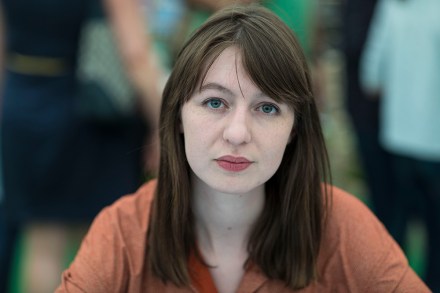
The oppression of Sally Rooney

From our UK edition

Almost a decade ago the Irish academic Liam Kennedy published a tremendous book with the title Unhappy the Land: the Most Oppressed People Ever, the Irish? It is a dissection of one of the most curious pathologies in the world: the desire to have been oppressed; a glorying in being repressed. Kennedy, like a few other brave writers (Ruth Dudley Edwards, Malachi O’Doherty, Kevin Myers) has the courage to point to an under-examined seam in Ireland’s history. Specifically he takes aim at the mawkishness that exists in contemporary Irish affairs. The desire to be the first victim, perhaps the greatest victim, of all victims, anywhere in the world. You see similar strains of aspiring victimhood in other mini-nationalisms.

Haircuts are a human right!

From our UK edition

During the immigration deluge in the wake of Russia’s invasion of Ukraine, it seems one Afghan and one Indian national who threw themselves on the mercy of much-besieged Ireland got lost in the shuffle. Fobbed off with €25 vouchers, they were obliged to sometimes sleep rough for two months, without access to food and hygiene and exposed to hardship and fear. They’ve sued the Irish state. Knowing Irish NGOs, I bet they got help. The government has argued that the pressures on Ireland’s hospitality at the time were severe enough to qualify as a force majeure. Their reception centres were full to bursting and there was no room at the inn (and haven’t we heard that before). The Irish High Court sought a ruling from the European Court of Justice.

Britain fought on the wrong side of the first world war

From our UK edition

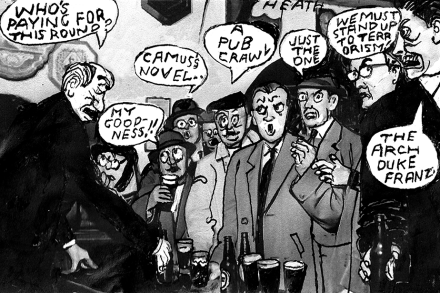
It’s more than two months since I returned from Dublin, and at last the hangover is beginning to fade. I flew out with our team at The Rest is History to record a series about the Irish War of Independence and Civil War. Our guests were Paul Rouse, a professor at University College Dublin and former manager of Offaly’s Gaelic football team, and Ronan McGreevy, an Irish Times journalist and author of a terrific book about the murder of Sir Henry Wilson. On the first night Ronan took us for an excellent curry; on the second, Paul organised a pub crawl. Well, I say a crawl, but in truth we barely got beyond the first pub, the Gravediggers, which is just a few hundred yards from the graves of Michael Collins and Eamon de Valera.

John Connolly, Gavin Mortimer, Dorian Lynskey, Steve Morris and Lloyd Evans

From our UK edition

26 min listen

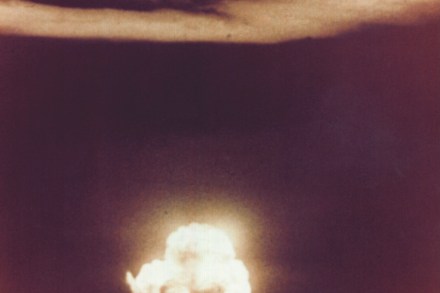
On this week’s Spectator Out Loud: John Connolly argues that Labour should look to Andy Burnham for inspiration (1:51); Gavin Mortimer asks if Britain is ready for France’s most controversial novel – Jean Raspail’s The Camp of the Saints (4:55); Dorian Lynskey looks at the race to build the first nuclear weapons, as he reviews Frank Close’s Destroyer of Worlds (11:23); Steve Morris provides his notes on postcards (16:44); and, Lloyd Evans reflects on British and Irish history as he travels around Dublin (20:44).  Produced and presented by Patrick Gibbons.

Will the Irish ever forgive the English?

From our UK edition

Leaving home is the best way to find out who you are. In my case, it’s a muddle. Welsh dad. Irish mum. English upbringing. And I feel pleasantly detached wherever I go. In England, I’m considered Welsh. In Ireland, I’m considered English. In Wales, I’m considered inadequate because I don’t speak the language, apart from the odd term like ‘popty ping’ (microwave). From childhood I’ve been a scholar of English preconceptions about my Celtic brethren. ‘Welsh? Cave-dwellers who love sheep.’ ‘Irish? Bog-trotters who love horses.’ The Irish are preferred, especially by the English upper classes, who are infatuated with Ireland as an abstract concept. But they’re less keen on the real thing. An Irish accent in the family is an ornament.

I’ve become a slave to my Airbnb star rating

From our UK edition

‘Right, we’re going to book into Pauline’s B&B and give her a four-star rating and that will drop her down from a perfect five,’ I said, in a state of utter lunacy. We were sitting in front of the fire at the end of a rainy West Cork day during which another difficult customer had rated us four stars, which should not be terminal but is, because of the way Airbnb plunges your overall rating the second one guest doesn’t rate you five stars. I was so upset at our latest downgrading that I was comparing myself with other B&B listings in the area with a perfect five, and had become so deranged that I was proposing we level down the competition by spending €124 for a night at Pauline’s, rating her four stars to drop her down too.

The past is another country: Ripeness, by Sarah Moss, reviewed

From our UK edition

Sarah Moss is a prolific and vital novelist whose books encompass an array of subjects from Victorian social reform and 19th-century Japan to broken Brexit Britain and eating disorders. She combines teaching at University College, Dublin with writing in real time: The Fell, set during the second lockdown, came out in the summer of 2021, while My Good Bright Wolf, an experimental memoir about her anorexic breakdown in late 2020, was published last year. A forthcoming Channel 4 adaptation of Summerwater, which explored national identity and isolation against the backdrop of a soggy Scottish holiday park, may catapult her into the sort of gold-foil territory enjoyed by Maggie O’Farrell or Ali Smith. If not, then perhaps Ripeness, her ninth novel, will.

Why does Irish art avoid the Troubles?

Almost three decades after the Good Friday Agreement was signed in 1998, it is possible, if not always easy, to see the funny side of the Troubles. Derry Girls, Lisa McGee’s coming-of-age television series, and Milkman, Anna Burns’s surreal novel, wring laughs as well as tears out of mayhem. There are few laughs in Steve McQueen’s Hunger, which did “for modern film” according to one critic, “what Caravaggio did for Renaissance painting.” For those who prefer horror unmediated by fiction, Patrick Radden Keefe’s Say Nothing is the best example of longform journalism since Capote’s In Cold Blood. But along with their setting, these dazzling creations have something else in common: to get made, they all needed the backing of a producer or publisher from the UK or US.

Irish

The two young women who blazed a trail for modernism in Ireland

From our UK edition

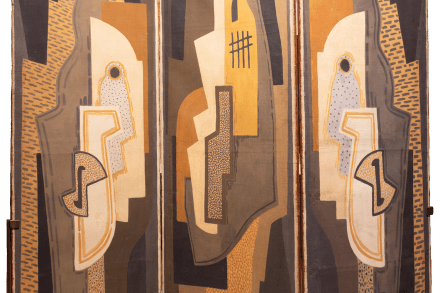
In 1921, the sternly abstract cubist Albert Gleizes opened the door of his Parisian apartment to two young women in their twenties, the Irish artists Evie Hone and Mainie Jellett. They explained that they wanted him to teach them his method of ‘extreme cubism’. He wasn’t sure that he had a method, nor whether it was teachable. They were inexorable. Their gentle voices and their tenacity, he wrote later, terrified him, and he capitulated. They had accepted his pronouncements on ‘painting without subject’; now they wanted to know how. They were to be trailblazers for modernism in the newly independent Ireland, Jellett as a painter and Evie as both painter and artist in stained glass – the striking east window in Eton College is her work.

Pure gold: My Master Builder, at Wyndham’s Theatre, reviewed

From our UK edition

My Master Builder is a new version of Ibsen’s classic with a tweaked title and a transformed storyline. Henry and Elena Solness are a British power couple living in the Hamptons whose relationship is in meltdown after the accidental death of their son. Elena has scrambled to reach the top of the publishing world but she feels bitter that Henry’s career as an architect came to him so easily. When their marriage went awry, she played the field, seducing both men and women, and now she lusts after Henry’s protegé, Ragnar, a camp young stud who may be bisexual. Ragnar is almost too complicated to understand. He’s a philandering black Norwegian with dyed blond hair who speaks English in a Billy Bunter accent that includes flourishes such as ‘crikey!

The Airbnb guest from hell 

From our UK edition

‘Is there a secret passageway behind that door?’ said the weirdly difficult Kiwi as she eyed a door marked ‘private’ leading off the central staircase. ‘Yes, sort of,’ I said. Behind that door is the rear part of the house, unrenovated. So if you open it, the secret is you fall into a gap in one of the smashed floorboards, trip over a box of books or ten, fall against a stack of mattresses and tumble down a rickety staircase that lands you in the boiler and machinery room, where you will find the unfathomable clutter that is the builder boyfriend’s tool collection, the vast water tanks, groaningly driven by electric pumps, and my overflowing baskets of laundry.

Tender and gripping portrait of Edna O’Brien

From our UK edition

You could say it’s impossible to make a poor documentary about the writer Edna O’Brien as she’s never said or done anything uninteresting in her life. Point a camera and we’re away. But Sinead O’Shea’s Blue Road: The Edna O’Brien Story is especially rewarding as it is not only beautifully constructed but also includes diary entries that have never been made public before, plus an interview conducted with O’Brien in July last year just before her death. She was 93 and frail but as extraordinarily vivid as ever. She was born, she says, ‘ravenous for life’ and, blimey, what a life it was.

I’m more convinced than ever that Ian Bailey was innocent

From our UK edition

Over coffee in a seafood restaurant in the harbour, I talked with the most notorious accused man in Ireland and, I have to say, I liked him and thought he was most likely innocent. It was shortly before Ian Bailey died of a heart attack in January 2024, and I had just moved to West Cork. I bumped into him at a market day and asked if he would like to meet for lunch. I had long been fascinated by the unsolved murder of the French woman Sophie Toscan du Plantier, whose body was found by the gate of her remote West Cork cottage in 1996. After initially working on the case as a journalist, Bailey became the chief suspect and, following innumerable twists in a most bizarre case, he was eventually convicted in absentia in a court in Paris, although he managed to fight extradition.

William Blake still weaves his mystic spell

From our UK edition

Everyone has their own William Blake and each age finds something new in the ocean of his work: revolutionary Blake, Christian Blake, humanist Blake, Jungian Blake, Freudian Blake, free-love Blake, hippy Blake, occult Blake, eco-Blake. The only time that missed out was his own – then he was mad, delusional and ignored Blake. Philip Hoare brings the fizz of his own sensibility to bear on the work of a man whose progeny of artistic spin-offs multiply with each passing generation. The result is a book that is neither Blake biography nor critical analysis nor legacy-tracing nor personal odyssey but a capacious mixing of them all. As the author of Leviathan or, The Whale, and Albert and the Whale and the film Hunting for Moby-Dick, Hoare begins by giving us whale Blake.

Which Saint Patrick are we celebrating?

From our UK edition

Time was, you knew where you were with the patron saint of Ireland whose feast is 17 March. He was a Briton and he tells us in his Confessions that, when he was a teenager, he was captured by Irish slave traders and taken to Ireland, where he herded sheep. He turned to God and was told that he would escape; he duly got a passage back home. But in a dream, he heard the Irish calling out to him to come back to Ireland and walk again among them, and he knew his mission was to bring them the gospel. So he had himself consecrated bishop, returned to Ireland in AD 432 and converted the Irish in short order, with many miracles.

What my Irish passport means to me

From our UK edition

I’m now officially Irish – the proud recipient of a shiny red passport. It arrived, with the luck of the Irish, in time for St Patrick’s Day. But as I gaze fondly at the words ‘European Union’ and ‘Ireland’ embossed in gold on the front, I do feel the awkward guilt of the hypocrite. I may have voted Remain just to avoid any upheaval but I’ve never been much of a fan of the EU. And while I’m in the confessional box, I should perhaps mention that I’m not even properly Irish – my mum was English. I’ve seldom visited the green fields of Erin and have never finished a whole pint of Guinness. So I’m afraid Paddies don’t come more plastic than me.

Three’s a crowd: The City Changes its Face, by Eimear McBride, reviewed

From our UK edition

Nearly a decade after Eimear McBride published The Lesser Bohemians (her second novel after the success of A Girl is a Half-Formed Thing),the Irish writer has returned to the drab, smoke-filled world of 1990s London. The City Changes its Face is told from the perspective of 20-year-old Eily, two years after she has left Ireland to study drama in London and has met Stephen, an established actor 20 years her senior. In the interim period, the pair have moved from Kentish Town to Camden. Eily has taken time out of drama school, and Grace, Stephen’s daughter from a previous relationship, has made an appearance. The novel consists largely of a conversation that takes place over the course of one night, with flashbacks to the intervening years.

Reversing our economic decline is not easy, but it is simple

From our UK edition

Our immiseration came swiftly and stealthily. At the start of the 21st century, Britain was a prosperous country. Ambitious people fought to come here. We trusted that, over time, we would become wealthier – an expectation that had been accurate for most of the previous two centuries. Since the millennium, Britain and western Europe have pretty much stopped growing – especially if we ignore the impact of immigration and calculate GDP per head. Reversing this slowdown should be the top issue at every election, but it is surprisingly under-discussed. In theory, almost all our politicians want growth. Keir Starmer and Rachel Reeves keep describing it, nasally and tautologically, as their ‘number one priority’.

A painful homecoming: The Visitor, by Maeve Brennan, reviewed

From our UK edition

Maeve Brennan (1917-93) was a supremely gifted Irish/American writer, whose work is periodically rediscovered, only to vanish again. It’s as if her literary reputation (she has been compared with Joyce, Flaubert and Chekhov among others) won’t stay fixed and is as homeless as she herself became. Arriving home to Dublin, Anastasia expects a warm welcome – only to be steadily spurned by her grandmother Aged 32, she secured a job at the New Yorker, contributing sardonic observations of city life as well as wry, melancholy short stories, part-fiction, part-memoir. The Visitor, her only novella, written in her late twenties when she was working as a journalist in Manhattan, remained unpublished in her lifetime.