Ireland

Iberian blues

I’m finishing a two-day trip to Spain and am about to board a plane, just as the bond markets turn their attention to the Iberian Peninsula. As James wrote yesterday, the gap between Spanish 10-year government bonds and those of Germany has widened to as much as 2.59 percentage points – the biggest gap since the introduction of the euro. For its part, the Portuguese government said it was under no pressure from the European Central Bank or other Eurozone member-states to accept financial aid to ease its debt and deficit problems. That sounds like the noise before the defeat. Portugal was brought to a halt yesterday by a strike
Why Spain matters to Britain

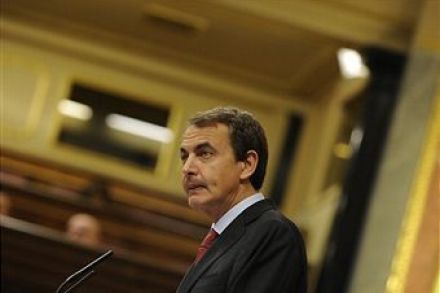
So far Ireland and Greece have been bailed out with relative ease. If Portugal required external assistance, Europe could run to that too. But bailing out Spain would be another matter entirely. As The New York Times points out today, the Spanish economy is twice as big as the Irish, Greek and Portuguese ones combined. Spain’s situation is not yet critical. But as the NYT piece sets out very clearly, there are some extremely worrying signs. The gap between Spanish and German gilt yields is now at the biggest point it has been since the introduction of the euro. Spanish banks are also heavily exposed to Portuguese debt. Compounding these

The End of the Party?

Following this post on Fianna Fail, a Dublin correspondent cautions against underestimating the stubbornness of their hold upon the people: Fianna Fail will rise again. For two reasons: i) Fine Gael and Labour may need the support of lots of other parties to get anything done. The scope for internal disagreement is immense. It is likely that they will lose popular support very quickly if they preside over savage cuts, which they will have to do; ii) For those of us old enough to remember, Fianna Fail acted like thugs in opposition. They opposed everything (including the Anglo-Irish Agreement) and whipped up popular hysteria against the government over the smallest

Cowen will seek a dissolution next year

There has been much consternation and intrigue swirling around both Dublin and Westminster this afternoon about the near-collapse of the governing coalition in Ireland. The Greens, who support Brian Cowen’s Fianna Fáil-led government, pulled out; seeking a dissolution in the hope that it might save their skins from the fate that is likely (though not certain) to befall Fianna Fáil. If the government had collapsed, then IMF would have postponed the bailout. At least now Cowen can formulate a monetary plan, hopefully under the oversight of Ireland’s international creditors, to free the country from its current extremis.   

A Christmas Present for George Osborne

You can get yours here. In passing, let’s observe that Osborne is right to offer the Irish whatever assistance he can. Not because of economics or even politics but because it’s the right thing to do. Friends help friends and that’s about all that really need be said on the matter. [Via Joe Wiesenthal]

The End of the Party

You’d never guess that Brian Cowen and Brian Lenihan are members of Fianna Fail, would you? Oh, you would? Fancy that. Grotesque. Unbelievable. Bizarre. Unprecedented. Ireland has known crises before, many of them extremely serious. But the GUBU days now seem the stuff of comic opera when set beside the battering Ireland has taken these past few weeks and months. The game is up and all that’s left is the reckoning. Today the Green party pulled the plug on the coalition in Dublin. The Greens may not fare well in this poll but they deserve some modest amount of praise for recognising, as Fianna Fail patently did not, that an

Ireland’s crisis is the fault of Fianna Fáil, not just the euro

In all likelihood, George Osborne will rise this afternoon to groans if not jeers. Britain looks set to lend Ireland £7bn as part of multilateral and bilateral bailouts. Many, particularly the Eurosceptic right, question our involvement, given our straitened financial circumstances and the apparent fact that Britain is sustaining the eurozone’s monetary and debt union, and will have to borrow to do so.     George Osborne has been adamant throughout: Ireland is too important to Britain’s recovery to risk collapse – British and Irish banks are closely linked, debts and borrowing are often co-dependent, trade is very profitable. That the bailout should strengthen the euro is a natural consequence of Ireland

The death knell for the Euro?

Are we witnessing the start of a very long death scene for the Euro? Asked if the Euro will survive, William Hague replied simply: “who knows?”. The new president, Herman Von Rompuy, has said that the Euro faces an “existential test”. We are looking at the very real prospect of the Euro’s collapse. And that “if we don’t survive with the eurozone, we will not survive with the European Union”. This would, by necessity, require a new treaty – and give Britain an unprecedented opportunity to renegotiate its membership on terms the public regard as acceptable. In my News of the World column today, I say (£) that this presents Cameron

Britain may not be able to avoid bailing out the Irish

This morning, it sounds as though Ireland has finally buckled to demands that they accept a bailout from the EU. Their central bank governor, Patrick Honohan, has said that he expects a “very substantal loan” from Europe – although the details, and debtees, are yet to be clarified. In the UK, of course, backbench MPs and others have been quick to condemn any move which would force British taxpayers to cough up cash under the EU’s various bail-out arrangements. Only problem is: the UK may not have a choice. The part of the eurozone bail-out package which Britain could be underwriting to the tune of £6-7 billion – the so-called

Blaiming the Euro for Irish Woes

On the other hand, Philippe Legrain makes the case that too much blame is being apportioned (perhaps opportunistically) to the euro and not enough is being fixed to the Irish government: The problem is not that savings flowed from Germany to Europe’s periphery. It is that they funded property bubbles rather than productive investment. But the blame for that lies with herd-like investors, flawed banks and foolish governments, not the euro. After all, America, Britain, Iceland and other non-euro countries all had huge property bubbles too. Granted, joining the euro did slash Irish interest rates, creating cheap borrowing that fuelled the boom. But at a macro level the Irish government

The British taxpayer should not be bailing out Ireland

Everyone is talking about the royal wedding today.  It will be a great occasion but the public finances are tight and people are already asking about the cost.  There is a bigger issue for British taxpayers, though.  Our politicians have arranged for them to get hitched to the bride from hell: the ongoing fiscal disaster in the eurozone.   Under current plans it is reported that we could be liable for up to £7 billion in any Irish bailout.  At the TaxPayers’ Alliance, we have just this morning started a petition against British taxpayers’ money being put at risk for a euro-bailout of Ireland; you can sign it here.  

To Solve The Irish Question, Ireland Must First Admit there Is a Question

Alas, poor Hibernia. According to RTE, Brian Cowen Denies Any Bailout Talks. The rest of the world is not so easily fooled, however. These may be “technical” discussions but they’re not discussing the finer points of hurling, are they? Among the more creative solutions to Ireland’s predicament: rejoin sterling. According to Mark Reckless, Tory MP for Rochester: Every MP I have spoken to says they would be happy for Ireland to have a guaranteed seat on the Bank of England’s monetary policy committee. This would mean that, unlike before 1979, Ireland as a sovereign country would have a proper say in setting sterling interest rates. When we raised the idea

Sovereignty, and the loss of it

The superb Slugger O’Toole blog highlights what is certainly the most resonant quote if the day: “When you borrow, you lose a little bit of your sovereignty, no matter who you borrow from.” Those words were uttered by the Irish finance minister Brian Lenihan this morning, and they capture his country’s grisly predicament perfectly. The Irish government has been fighting the European attempt to bail them out because they believe, quite understandably, that it would mean a final handover of control to Brussels and Berlin. But their loose economic policy – built on debt, and structured around a stubborn currency – has already seen them lose control to the point

Another Irish Loser: Alex Salmond

There are precious few heroes in Ireland today and no gods either. But not all the losers are Irish either. Some are Scottish. Chief among them, Alex Salmond and the Scottish National Party. Not because an independent Scotland would necessarily have been destroyed by the financial tsunami that swept the globe (though, to put it mildly, it would have been “difficult” to cope and might well have required a humiliating begging-trip to London) but because an independent Scotland would have made some of the same mistakes and unfortunate assumptions that have helped cripple poor Hibernia. Europe, you see, was an important part of the SNP’s slow rise to power. At

Ireland's nightmare becomes Europe's problem

“We certainly haven’t looked to Europe.” That was the message spilling from the mouths of Irish Cabinet ministers last night – but, as Alex suggested in a superb post on the matter this morning, their utterances may come to naught. After all, Europe has certainly looked to Ireland – and it doesn’t like what it sees. Already, Brussels’ moneymen are urging a bailout on the country, and Ireland’s moneymen are thought to be in “technical discussions” about how that might work. The upshot is that a financial intervention from Europe is now considerably more likely than not. And with that come European demands over how Ireland should manage its public

"It's a Very Bad Thing When Economists Start to be Interesting"

Yes it is. Despite what the Irish government says, it’s now surely a matter of when Ireland has a bailout forced upon it. We left “if” behind some time ago. Even the non-denial denials are specific enough to be revealing. As Shane Ross put it on Sunday, “The game is up.”  Perhaps it won’t happen today and pehaps it won’t be tomorrow but it will happen soon. And the worst of it is that it’s not really about Ireland at all. The history of the Greek and Irish experiences (for all their differences) suggests that saving one patient merely endangers the next sickly country in the waiting room. None of

Tales from an Older Ireland

Lord knows, in matters such as these the Catholic church can enforce it’s own disciplinary regime. But, really, didn’t this particular horse bolt some time ago? An Irish Catholic priest has been banned by the Vatican from publishing any more of his writings after he suggested homosexuality is “simply a facet of the human condition”. This follows an article on homosexuality by Capuchin priest Fr Owen O’Sullivan, published in last March’s edition of the Furrow magazine. Described as “a journal for the contemporary Church”, the Furrow is published at St Patrick’s College Maynooth. […]The Congregation for the Doctrine of the Faith at the Vatican contacted the Capuchin secretary general in Rome with

Apocalypse soon

Writing in the Irish Times, Morgan Kelly has denigrated the Irish government’s handling of the economy. Comparisons are often counter-factual – Irish politics is not divided along lines of left and right, and the Celtic Tiger was made of tissue paper. But, to English readers – servicing a colossal national debt with their punitive tax bills, facing crumbling house prices, waiting for the moment when mortgages become beyond the reach of all but the cash rich, and encumbered with billions in worthless global bank assets – it is a truly terrifying read. I urge CoffeeHousers’ to read the whole piece, but here is its essence: ‘By next year Ireland will

Ireland's Last Growth Industry: Pitchforks and Torches

Morgan Kelly’s piece in today’s Irish Times is a brutal and alarming analysis of Ireland’s next nightmare: a mass “strategic default” on mortgages. This could, he suggests, change the politics of the state forever: My stating the simple fact that the Government has driven Ireland over the brink of insolvency should not be taken as a tacit endorsement of the Opposition. The stark lesson of the last 30 years is that, while Fianna Fáil’s record of economic management has been decidedly mixed, that of the various Fine Gael coalitions has been uniformly dismal. As ordinary people start to realise that this thing is not only happening, it is happening to

Irish Austerity Diet Revealed: Cheese

Somehow, I don’t think this kind of government assistance is going to be enough to soothe Irish woes: The Government is to distribute some 53 tonnes of free cheese to people in need in the run up to Christmas. Minister for Agriculture Brendan Smith announced the EU-funded scheme today following talks with a number of charitable organisations. He said the cheese will be available free of charge for distribution to those most in need. It will be available from November 15th “in time for Christmas”. The State has been given more than €818,000 from the EU budget to purchase the cheese and the Irish Dairy Board has been awarded the