Iraq

How the UK messed up Iraq: what the Chilcot Inquiry says about post-conflict planning

From our UK edition

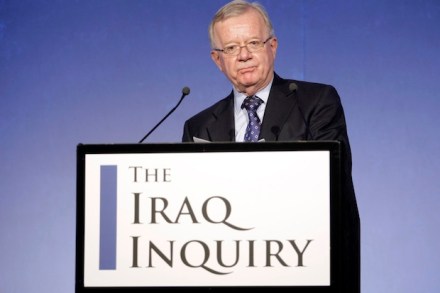
The Iraq Inquiry dismisses claims that the aftermath of the invasion could not have been foreseen. It describes the planning and preparations for the country after the fall of Saddam Hussein were ‘wholly inadequate’. In his statement, Sir John said that ‘despite explicit warnings, the consequences of the invasion were underestimated’. The report details both an awareness of the inadequacy of plans and a marked lack of effort from Whitehall. It says: ‘The scale of the UK effort in post-conflict Iraq never matched the scale of the challenge. Whitehall departments an their ministers failed to put collective weight behind the task.
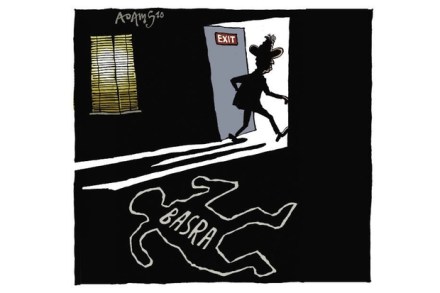
As Basra slid towards hell, Blair looked the other way

From our UK edition

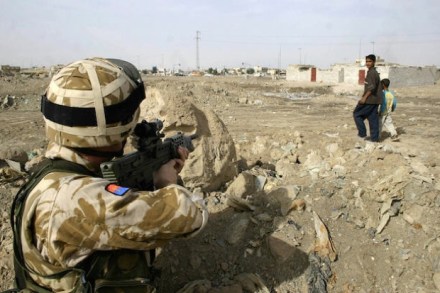
There has always been a faction of the Labour party that wanted Tony Blair in the dock for the Iraq war — no matter how pointless it would be. This was the sole purpose of the Chilcot inquiry. Gordon Brown agreed to it simply to assuage his backbenchers, and the whole exercise was intended to be more a mischievous distraction than an inquisition. But almost by accident, the inquiry has exposed the real scandal of Iraq: the appalling mismanagement of the war and the defeat of the British army, which left the people of Basra to the death squads. The WMD have become weapons of mass distraction. Mr Blair spent years answering questions about the case for war in Iraq, but he has answered far too few questions about the conduct of that war.

At last! The Chilcot Report into the Iraq war will be published

From our UK edition

At last. We now know that the long-awaited Chilcot Inquiry report into the Iraq war will be published on July 6th. Writing to the Prime Minister, Sir John Chilcot said today: ‘National security checking of the Inquiry’s report has now been completed, without the need for any redactions to appear in the text. I am grateful for the speed with which it was accomplished.’ Given how long the report has taken, it’s probably the first time we’ve heard the word ‘speed’ associated with the Chilcot Inquiry. The wait for its findings has been tremendous: more than seven years or some 2,579 days since Gordon Brown set it up in June 2009. It’s also cost more than £10.

A genocide is underway in Iraq and Syria. Why won’t the government recognise this?

From our UK edition

Later today the House of Commons will vote upon a motion expressing belief that a genocide is underway against Christians, Yazidis and other ethnic and religious minorities in Iraq and Syria. The motion, proposed by Fiona Bruce MP, is supported by a large number of MPs from all parties. The Government is expected to oppose, as they did when a similar measure was debated in the Lords. At the time of writing, party enforcers are rumoured to be whipping MPs on the payroll to abstain from the vote. This is an old parliamentary tactic intended to undermine the legitimacy and clout of the measure under consideration by reducing the number of MPs going through the lobbies (about 150 are on the payroll). Surprised by this Machiavellian scheming? You shouldn’t be.

The EU has become a victim of Obama’s Middle East policy

From our UK edition

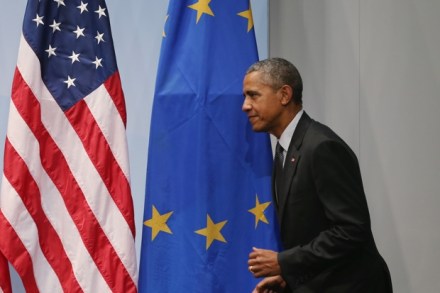
A Middle Eastern friend put to me the other day a point so big that I felt silly for not having thought of it. Why are so many people fleeing from Syria and Iraq, and other parts of the region, beyond the huge, obvious reason that they fear for their lives? Because they believe that the Shias have gained the whip hand over the Sunnis. George Bush’s mishandling of Iraq after he conquered it opened the way for Iranian power. Barack Obama’s abandonment of Saudi Arabia, his refusal to restore order in Syria and his nuclear deal with Iran have erected this mistake into a policy. So one of this policy’s victims is the EU. This is an extract from Charles Moore's Notes. The full article is available here.

Alastair Campbell is confronted by his namesake: ‘have you got any idea what my life has been like?’

From our UK edition

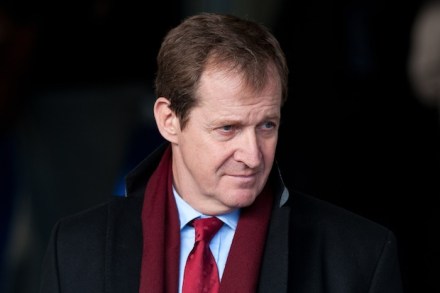
Although Alastair Campbell no longer works in politics, he remains a divisive figure in Westminster thanks to the reputation he earned as Tony Blair's spin doctor. During this time, Campbell is said to have been instrumental in using spin to win parliamentary approval for Blair's call to invade Iraq. Still, Campbell appears to think that it's about time people got over any ill-feelings towards him as a result of this. Speaking at Portland's Rising Stars party, Campbell gave a speech to the spin doctors of tomorrow.

The trouble with the Kurds

From our UK edition

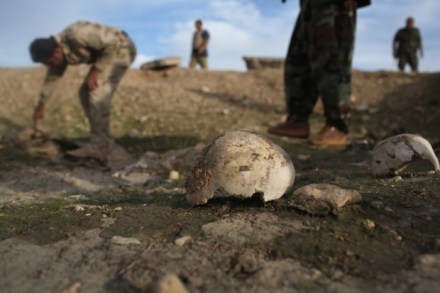
On Nawroz, the Persian New Year, last March, Isis sent a holiday greeting to the Kurds. They published several videos of Peshmerga fighters, now prisoners, kneeling, handcuffed and wearing the usual orange jumpsuits. In one video, a prisoner is shot in the back of the head; the rest have their heads sawn off with a knife. In a deliberate twist, no doubt relished by the leadership of the so-called Islamic State, the killers were themselves Kurds. ‘You all know the punishment for anyone who fights the Islamic State,’ says one. ‘It is death.’ The executioners did not wear masks and were quickly identified by Kurdish intelligence. Retribution followed.

Anyone who joins Isis should be tried for treason

From our UK edition

Fifteen months ago Philip Hammond talked about treason. In an exchange with Conservative backbencher Philip Hollobone in the House of Commons, the Foreign Secretary declared: 'We have seen people declaring that they have sworn personal allegiance to the so-called Islamic State. That does raise questions about their loyalty and allegiance to this country and about whether, as my honourable friend rightly says, the offence of treason could have been committed.' Mr Hammond promised to refer the matter to the Home Secretary, Theresa May, but the silence since has been deafening. Meanwhile the number of Britons travelling to Syria to join Isis continues to rise.

Portrait of the week | 21 January 2016

From our UK edition

Home David Cameron, the Prime Minister, said that Muslim women must learn English, and that those who had entered on spousal visas would be told halfway through their five-year spousal settlement: ‘You can’t guarantee you can stay if you are not improving your language.’ He said that learning English had ‘a connection with combating extremism’. A heterosexual couple went to the High Court to claim the right to enter into a civil partnership. MI5, the security service, was rated as Britain’s most gay-friendly employer, following a survey by the organisation Stonewall. Mark Carney, the governor of the Bank of England, said: ‘Now is not the time to raise interest rates.

Our leaders’ suicidal urge to sex it up

From our UK edition

It has been over a month since Parliament voted to bomb Isis in Syria, yet in that time there have been fewer raids than there are Lib Dem MPs. A flurry of three attacks took place immediately following the vote on 1 December, but since then there has been only one — by an unmanned Reaper drone on Christmas Day. And even that only ‘probably’ killed some Isis guards at a checkpoint. The three earlier manned missions had focused on an oil field that a US military spokesman later described as having previously suffered ‘long-term incapacitation’ at the hands of the US air force.

Desperate state

From our UK edition

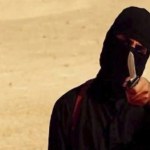
The latest video from Isis introduces a new British executioner, a successor to ‘Jihadi John’, and it is a classic of the genre: bombastic, pompous, ridiculous yet terrifying. ‘O slave of the White House, O mule of the Jews,’ says a man in a ski mask, addressing David Cameron, ‘how strange it is that the leader of a small island threatens us with a handful of planes. Only an imbecile would dare to wage war against a land where the law of Allah reigns supreme.’ He has a cold, arrogant look in his eyes and brandishes a pistol held sideways, aping American ‘gangsta style’. Kneeling before him are five men in orange jumpsuits identified as ‘British spies’.

I used to mock non-interventionists like Corbyn, but events have proved them right

From our UK edition

I hate to say it, but Jeremy Corbyn is right where I have been wrong. Corbyn’s protest that the Syrian intervention displays a 'lack of a strategy worth the name, the absence of credible ground troops, the missing diplomatic plan for a Syrian settlement…' was spot on. I am embarrassed to say that last year, I penned a rather conceited piece – for Spectator Australia, no less – in which I mocked proponents of non-intervention against the millennial, genocidal fascists of Isis. Having watched events since publication, I feel little but embarrassment.

Letters | 3 December 2015

From our UK edition

Bombers without borders Sir: To define this week’s debate as being about ‘bombing Syria’ (‘The great fake war’, 28 November) is ludicrous. That’s not what it’s about. It’s about fighting Isis. Whatever you call them, and wherever they are. The current deal, under which we bomb Isis in Iraq but not in Syria, is as if we are content to fight them in Yorkshire but not in Lancashire. If people do not think we should be engaging Isis at all, that’s a different argument. But I would ask, ‘Where do they need to get to before you would engage them?’ Two years ago, we had a similar situation to today. The vote was similarly not about ‘bombing Syria’. It was about fighting and punishing Assad, which was a bad idea.

It is time to join the fight against IS in Syria

From our UK edition

The Islamic State is as monstrous an enemy as we have seen in recent history. It crucifies and decapitates its victims, holds teenage girls in slavery and burns captives alive. It is wrong to call it a medieval force, because such institutionalised barbarity was seldom seen in medieval times. As far as five centuries of records from the Ottoman Empire can establish, stoning was authorised only once. Isis now regularly stones suspected adulterers to death. It is not seeking inspiration from the Middle Ages. We are witnessing a modern form of evil — and it is spreading fast.

After Labour’s Syria shambles, step forward Major Dan

From our UK edition

[audioplayer src="http://rss.acast.com/viewfrom22/thegreendelusion/media.mp3" title="James Forsyth and Fraser Nelson discuss Labour's civil war over Syria airstrikes" startat=700] Listen [/audioplayer]It makes no sense for Britain to bomb Islamic State in Iraq but not Syria. Attacking a group that does not respect international borders on only one side of a border makes no strategic or military sense. From the Prime Minister down, government ministers are acutely aware of this absurdity. That is why they have been so keen to gain the Commons’ permission to extend the strikes to Syria. Yet this week Westminster has been gripped, not by the strategic case for taking the fight to Islamic State in Syria, but by the effect that this debate has had on the Labour party.

Military action against Isis needs a coherent strategy. . . . here it is

From our UK edition

Like most British soldiers of my generation, I fought in Iraq and Afghanistan. Few would now justify the reasons for invading Iraq; most of us who fought there at first recognised the amateurish nature of the strategy and its lack of realistic political objectives. But in 2007, under General Petraeus, the coalition adopted a new strategy that was underpinned by coherent policy. This stemmed from the recognition that unless common cause was found with moderate Sunnis, a workable Iraqi polity could never be established. The rapid improvements that flowed from this change were impressive but disgracefully shortlived.

The pretend war: bombing Isil won’t solve the problem

From our UK edition

[audioplayer src="http://rss.acast.com/viewfrom22/thegreatfakewar/media.mp3" title="Andrew J. Bacevich and Con Coughlin discuss the West's war with Isis" startat=35] Listen [/audioplayer]Not so long ago, David Cameron declared that he was not some ‘naive neocon who thinks you can drop democracy out of an aeroplane at 40,000 feet’. Just a few weeks after making that speech, Cameron authorised UK forces to join in the bombing of Libya — where the outcome reaffirmed this essential lesson. Soon Cameron will ask parliament to share his ‘firm conviction’ that bombing Raqqa, the Syrian headquarters of the Islamic State, has become ‘imperative’. At first glance, the case for doing so appears compelling.

Portrait of the week | 19 November 2015

From our UK edition

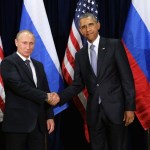
Home After the killings in Paris, David Cameron, the Prime Minister, said that seven terrorist attacks on Britain had been prevented in the past six months. He met President Vladimir Putin of Russia at a G20 meeting at Antalya in Turkey. Mr Putin said: ‘We should join efforts in preventing terror. Unfortunately our bilateral relations are not of the best.’ Mr Cameron said in the Commons: ‘Raqqa, if you like, is the head of the snake… we need to deal with it not just in Iraq but in Syria too.’ He said funds from maintaining defence spending at 2 per cent of GDP would go to special forces, drones and fighter aircraft. MI5, MI6 and GCHQ would be able to recruit an extra 1,900 officers to their 12,700 staff.

Obama’s failure is Putin’s opportunity

From our UK edition

[audioplayer src="http://rss.acast.com/viewfrom22/parisattacksaftermath/media.mp3" title="James Forsyth and Ben Judah discuss whether the West should work with Putin" startat=824] Listen [/audioplayer]The principal strategic objective in the war on terror has been a failure. Ever since 9/11, the aim has been to deny terrorists sanctuary. That, after all, is why the United States and Britain went into Afghanistan — troops were sent in only after the Taliban refused to hand over the al-Qaeda leadership and shut down the terrorist training camps. But now, a large terrorist enclave exists in the very heart of the Middle East. President Obama’s reaction to this massive strategic failure has been lack-lustre.

Isis bombs have exiled the Vicar of Baghdad to Surrey… but he’s itching to go back to the Middle East

From our UK edition

Canon Andrew White, the vicar of Baghdad, is not, in person, at all as I’d imagined him. His memoir, about life as first a medic, then a cleric, is chock-a-block with famous friends. Pope John Paul II was a pal, the Grand Ayatollah of Baghdad, General David Petraeus. ‘Oh, Andrew knows everyone,’ I was told when I asked anyone about him, and I’m afraid my heart hardened. I arrived in the rain at his house in Liphook, Hampshire, preparing myself for a vain man, full of his own derring-do. More fool me. Canon White is instantly, unusually lovable. He greets me wearing a sweatshirt with the caption ‘Real men become vicars’. ‘Look!’ he says delightedly. ‘Look at my hoodie!