Iraq

Fear, loathing and an Ottoman shrine in the cold war between Isis and Turkey

From our UK edition

Turkey and the Islamic State in Iraq and Syria (Isis) are engaged in a cold war. Although they despise each other, they will avoid direct engagement, for fear of the massive damage that could result. A little known Turkish exclave that lies inside Syria, known as the Tomb of Suleyman Shah and currently under siege by Isis, is a case in point. The Tomb of Suleyman Shah - a 2.47-acre sovereign Turkish district that houses the shrine of an Ottoman patriarch - holds immense emotional value for the Turks. It is the burial place of the grandfather of Osman Bey, who founded the Ottoman Empire, and is guarded by 80 Turkish infantry troops.

Never mind the Baghdad politics, Iraqi Kurds need help to fight Islamic State

From our UK edition

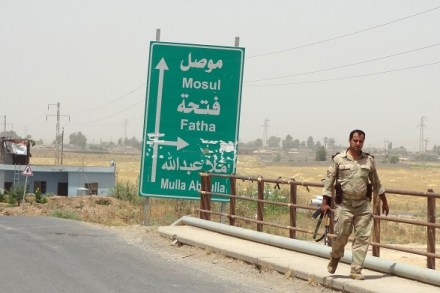
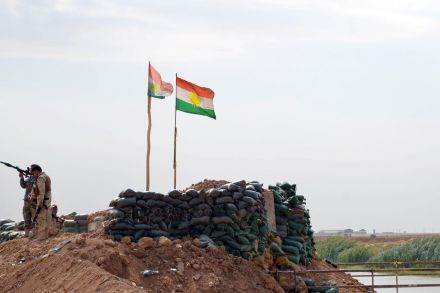
The threat from Daish, the Arabic acronym for the so-called Islamic State in Iraq and Syria, has gone from a side issue to a central imperative, judging by discussions with Kurdish leaders on my four fact-finding trips to the Kurdistan region in the last year. Last November, I was told how Daish operatives were assiduously measuring building sites in Mosul in an extortion racket. In February, I learned of their external funding and their continuing growth. In June, they captured Mosul with a small force that immediately acquired thousands of adherents, and established a 650-mile border with the Iraqi Kurds. The major shock, though, was how quickly the Iraqi Army had 'disappeared in a puff', as the governor of Kirkuk put it to me in his office in the city.

Is Canada’s foreign policy making the country any safer?

From our UK edition

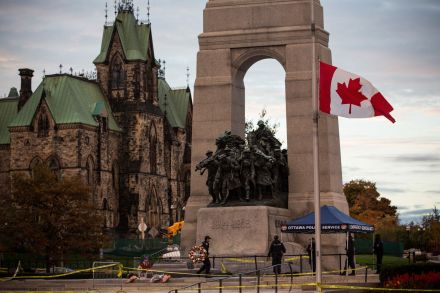
We Canadians like to think that we are a boring and peaceful nation, that nothing much ever happens here, and everybody likes us. It therefore comes as a shock when we are attacked, as we were this week in Ottawa. Yet terrorism is not a new phenomenon for Canada, as demonstrated by the assassination of one of the fathers of the confederation, Thomas D’Arcy McGee, in 1868; by the murderous behaviour of the Front de Libération de Québec in 1970; and by the destruction of Air India Flight 128 in 1985. Our legislative institutions have been regular targets of attack. A Loyalist mob burned down the Parliament of Lower Canada in Montreal in 1848.

So what if the Canadian terror attacks are blowback?

From our UK edition

Anti-NSA crusader Glenn Greenwald published an article on Wednesday morning where he explained that the recent murder of a Canadian soldier by a radicalised Muslim convert was down to Canadian foreign policy. The important sentence in Greenwald’s piece is this one: ‘A country doesn’t get to run around for years wallowing in war glory, invading, rendering and bombing others, without the risk of having violence brought back to it.’ To put it another way, it was inevitable that the jihadists would come after Canadians, given that Canadians had meted out some fairly ripe treatment to the jihadists – first in Afghanistan and now against the Islamic State in Iraq and Syria (I’m being generous to Greenwald here, I grant you).

Wear a veil if you like – but don’t treat women like that

From our UK edition

What sort of clothing do you wear when you go to the opera? I assume some of you do go to the opera, otherwise the Royal Opera House could be turned into a giant Wetherspoon’s pub. I have never been. Given a choice I would rather browse through a collection of photographs of Brooks Newmark MP’s penis, or indeed gnaw off my right leg. If I were somehow coerced into attending, then without question the costume of choice for me would be a niqab. Then I could sleep without being noticed. Or listen to something more interesting on headphones, such as a collection of Danny Alexander’s speeches or a greatest hits compilation from the Radio 4 programme Does He Take Sugar?

Winter is coming – the other terror stalking Iraqi Kurds

From our UK edition

The heroic Kurdish resistance in Kobane rightly commands headlines. A larger disaster, however, looms in Iraqi Kurdistan where - absent urgent action by the UN and Iraq - thousands of vulnerable people who fled from the Islamic State (Isis) could die in weeks from cold-related illnesses. It was comfortably warm in the Kurdish capital of Erbil last week, but in December temperatures will drop to below zero in the cities and much lower in the mountains. The warmth made the makeshift camp I visited in the Christian enclave of Ankawa look almost bearable. It occupies a public park and houses 50 families, mainly Christians from Mosul, in increasingly threadbare tents. Soon, torrential rain can be expected to turn the hard ground here into a muddy lake, soaking everything and reducing hygiene.

‘Islamophobia’ strikes again – national students’ union refuses to condemn Isis

From our UK edition

[audioplayer src="http://traffic.libsyn.com/spectator/TheViewFrom22_16_Oct_2014_v4.mp3" title="Sean O'Callaghan and Govinda Clayton join Lara Prendergast to discuss talking to terrorists." startat=808.5] Listen [/audioplayer] In a world often devoid of good news, there has been a fine development on the farthest-flung shores of insanity. The British National Union of Students aspires to represent students, though traditionally tends only to represent those students who are politically ambitious and possess left wing views. In any case, its latest idiocy is that it has tied itself in knots over the Islamic State in Iraq and Syria - Isis. A condemnation of the ebullient Islamic group was tabled by a student of Kurdish descent.

Does Jonathan Powell really want to negotiate with the Islamic State?

From our UK edition

I think I’ve finally worked out the time-honoured Jonathan Powell formula for promoting a new book: take which-ever group constitutes the most bloodthirsty terrorist organisation of the day — in this case IS, the warped Islamist force currently enslaving and beheading its way across Iraq and Syria — and create a media fizz by boldly declaring that sooner or later we’re going to have to negotiate with them. Powell’s predicted circumstances in which the ‘talking’ to IS should actually happen, however, are hedged with unrealised conditions. At other moments he will daringly hint that talking is best without any preconditions at all.

A brief history of biker gangs at war – Islamofascist Iraq edition

From our UK edition

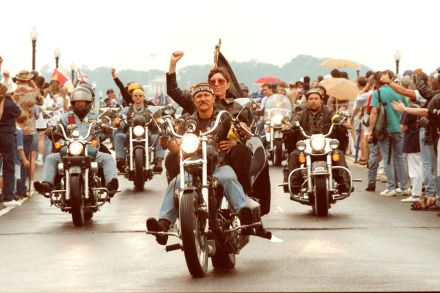
America and Britain are still fumbling for policies to deal with nationals joining the Islamic State in Iraq and Syria. In Holland, meanwhile, authorities faced a more cheering task: sorting out Dutch motorbikers who've joined the Kurdish Peshmerga against Isis. To accomodate freelance counter-jihadists, the ever-progressive Dutch have amended their rules against joining foreign armies, Agence France-Presse reports. The three Dutch Peshmerga we know of so far belong to a biker club called 'No Surrender',  whose chief concerns were heretofore limited to motorcycling and brawling with Hell's Angels. Speaking of Hell's Angels, Dutch hog-heads aren't the first to take interest in a foreign freedom-fight.

Your enemy’s enemy is not your friend

From our UK edition

The United States faces a very difficult task in Syria. It is trying to use air raids to contain and weaken ISIl. But, at the same time, it is trying to prevent the Assad regime from turning this intervention to its advantage. However, as the Washington Post reports today, the Assad regime have taken advantage of ISIl being pinned back to turn their fire on the moderate rebels, the very group that the US is trying to help. As the situation in Iraq is demonstrating, air strikes against ISIl can be effective when paired with ground operations. But in Syria, the US has no effective allies on the ground. The Turks could assist. But they are sitting on their hands. They aren’t even coming to the relief of Kobani, which sits on the Syrian Turkish border.

Jonathan Powell interview: middle-man to the terrorists says ‘secret talks are necessary’

From our UK edition

Jonathan Powell is a British diplomat who served as Tony Blair's chief of staff from 1997 to 2007. During this period, he was also Britain's chief negotiator for Northern Ireland. These days, Powell runs a charity called Inter Mediate, which works as a go-between among terrorist organizations and governments around the globe. David Cameron appointed him last May as the UK's special envoy to Libya. His book 'Talking to Terrorists' was published this month, a review of which can be found in the October 4 edition of The Spectator. In it, Powell argues the British government has failed to learn lessons from the history of diplomacy with guerrilla groups.

The US military should be winning wars, not fighting Ebola

From our UK edition

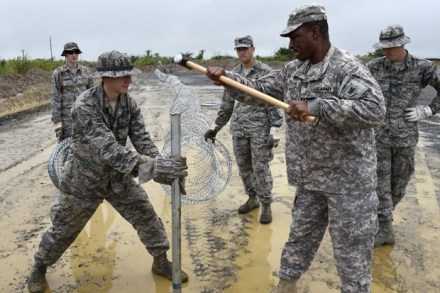
As a general rule, soldiers should be employed in the business of soldiering — preparing to fight or actually fighting (preferably infrequent) wars. In response to the Ebola outbreak afflicting West Africa, the Obama administration has decided to waive that rule. His decision to do so has received widespread support. Yet the effect of his decision is to divert attention from questions of considerable urgency. Drawing on the increasingly elastic authority exercised by the US commander-in-chief, President Obama has directed the deployment of up to 4,000 troops to Liberia, ground zero of the epidemic. These are not war fighters but support troops, mostly construction engineers and medical personnel.

I’ve spent years in war zones. And the most terrifying moment of my life just happened in Norfolk

From our UK edition

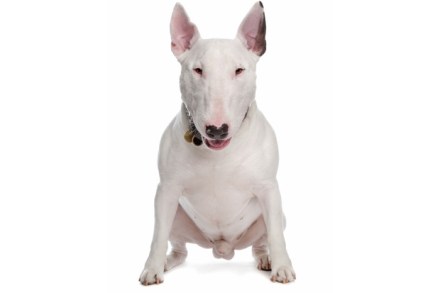
[audioplayer src="http://traffic.libsyn.com/spectator/TheViewFrom22_9_Oct_2014_v4.mp3" title="Justin Marozzi and Caroline Kisko, Kennel Club Secretary, discuss vicious dogs" startat=1287] Listen [/audioplayer]It happened so quickly, as these things always do. My wife Julia and I were pootling about on Wells beach with our fluffy mongrel Maisie when suddenly two fighting dogs, English bull terriers, came flying towards us like calf-high missiles. Declining the usual canine politesse of a bit of bum-sniffing, one immediately locked its jaws around Maisie’s throat, the other clamped its teeth into her right back leg. They then tossed her around like a rag doll, as my wife and I desperately tried to haul them off. Maisie was howling in terrible distress.

US warns it will take a year to wrest Mosul back from Islamic State

From our UK edition

The problem posed by Islamic State will, sadly, not be dealt with quickly. The New York Times reports that John R. Allen, the retired US general coordinating the international coalition against IS, has warned that it will take up to a year before Iraqi forces are ready to try and re-take Mosul.   Given that IS is more firmly entrenched in Syria than Iraq, this suggests that defeating it there will take even longer. Indeed, the Syrian problem is compounded by the fact that there are not credible ground forces there to take the fight to IS.   Air strikes against IS are aimed more at disrupting its momentum and containing it than eliminating it.

Portrait of the week | 2 October 2014

From our UK edition

Home The Commons, having been specially recalled, passed, by 524 votes to 43, a motion supporting ‘the use of UK air strikes to support Iraqi, including Kurdish, security forces’ efforts against Isil in Iraq’. Only after four days did RAF Tornados from Akrotiri in Cyprus find some targets in Iraq to bomb. In support of her contention that Isil’s ‘hateful ideology has nothing to do with Islam’, Theresa May, the Home Secretary, in a well-received speech at the Conservative party conference, quoted the Qu’ran: ‘Let there be no compulsion in religion’ (Sura 2:256).

What will it take for us to stop doing business with Qatar?

From our UK edition

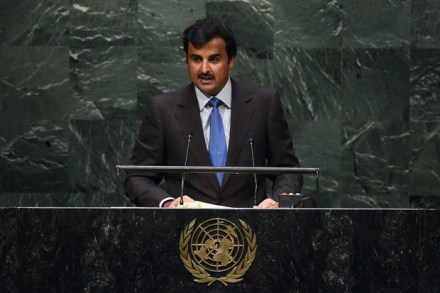
On 17 June, a meeting of the Henry Jackson Society, held in the House of Commons, discussed (according to the minutes published on the society’s website) how a tribal elder in northern Cameroon who runs a car import business in Qatar has become one of the main intermediaries between kidnappers from Boko Haram and its offshoot Ansaru and those seeking to free hostages. It was alleged that embezzlement of funds going to Qatar via car imports might be disguising ransom payments. It was also alleged that Qatar was involved in financing Islamist militant groups in West Africa, helping with weapons and ideological training, and (with Saudi Arabia) funding the building of mosques in Mali and Nigeria that preach a highly intolerant version of Islam.

Commons vote for strikes against IS in Iraq

From our UK edition

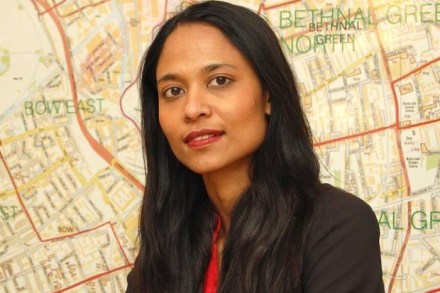
By 524 votes to 43, the House of Commons has voted to support air-strikes against Islamic State in Iraq. The margin of victory is not surprising given how limited the motion was, it rules out ground troops and makes clear there’ll be another vote before any action in Syria. But in a sign of the unease of some on the Labour side, Rushanara Ali, who represents George Galloway’s old seat of Bethnal Green and Bow, has resigned from the front bench over Labour’s support for the motion. Indeed, the first estimates are that 24 Labour MPs voted against while just five Tories opposed. The question now is whether, and when, Cameron might return to the Commons to try and gain approval for action in Syria.

Multiculturalism makes Isis a threat to Britain

From our UK edition

So we’re back to bombing Iraq again, by the looks of things, for the third successive decade – this time to destroy the Islamic State, or Isis or whatever they’re called. David Cameron, asked by an MP whether Isis was a ‘threat to the British people’, answered ‘yes’ and said: ‘This is about psychopathic terrorists who are trying to kill us. Like it or not they have already declared war on us. There isn't a walk-on-by option.’ But has Isis declared war on us, and is it actually a threat to us, and if so why? Isis certainly poses a grave threat to its neighbours, and as with all militant Islamic groups its biggest victims are Muslims. But otherwise the group should not be a threat to Britain, a country with nuclear weapons.

ISIS are a scourge on humanity; the UK must play its part in confronting this horror

From our UK edition

Doing nothing is always an option. Sometimes it can even be a sensible policy. There is much to be said for modesty and restraint and an awareness that unforeseen consequences lurk around every corner. Even so, doing nothing has consequences too. But the United Kingdom is not going to war in Iraq again. It is not going to war in Syria either. There are two parts to the battles against ISIS: an on-the-ground war and an in-the-air police action. We are, today's vote in the Commons permitting, taking part in the latter element of the battle. A punitive action designed to make it easier for those doing the real fighting - the Kurds and others - to prevail. So let's not exaggerate the military significance of deploying half a dozen jets to hit ISIS.