Iraq

Portrait of the week | 21 August 2014

From our UK edition

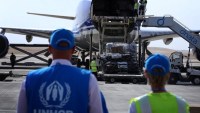
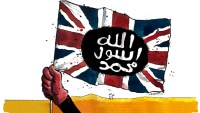
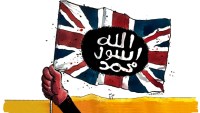
Home David Cameron, the Prime Minister, writing of the Islamic State in northern Iraq, said: ‘If we do not act to stem the onslaught of this exceptionally dangerous terrorist movement, it will only grow stronger until it can target us on the streets of Britain.’ Anyone waving an Islamic State flag in Britain would be arrested, he said. He invoked Britain’s ‘military prowess’ but later said: ‘We are not going to be putting boots on the ground.’ British C-130 transport planes were used to drop aid; Tornados were used for surveillance in addition to a Rivet Joint surveillance aircraft; and Chinook helicopters remained on standby.
It’s time we contemplated the possibility of a post-conflict Kurdistan

From our UK edition

There’s a  curious aspect to the debate – or what passes for it – about Britain getting involved in military action against the Islamic State. Isabel Hardman put her finger on it in her piece in this week’s magazine, identifying the defeat of the PM’s bid to take action in Syria for his reluctance to take military action now in Iraq. As she says: 'This post-Syria timidity frustrates many of Cameron’s own MPs. Even under the new leadership of Michael Gove, the Tory whips made no efforts to sound out backbenchers on where they stand on a British response to the so-called Islamic State’s brutal campaign in Iraq. If they did, they might find that some of those who spoke out against action last year are far more hawkish now.

Podcast: Britain’s jihad, the Pope vs the Vatican, and the existence of ‘The One’

From our UK edition

[audioplayer src="http://traffic.libsyn.com/spectator/TheViewFrom22_21_August_2014_v4.mp3" title="Britain's jihad, the Pope vs the Vatican, and the existence of 'The One'" fullwidth="yes"] The View from 22 podcast [/audioplayer]The murder of James Foley by an Isis fighter ‘with a London accent’ has been treated with understandable revulsion. But we shouldn’t be surprised, says Douglas Murray in his cover piece this week. On this week’s podcast, he outlines how Britain came to be the West's leading producer of 'foreign fighters'. Shiraz Maher, one of Britain’s leading authorities on radicalisation, joins him, and explains why the British jihadis are regarded as some of the most vicious and extreme fighters.

Our boys in the Islamic state: Britain’s export jihad

From our UK edition

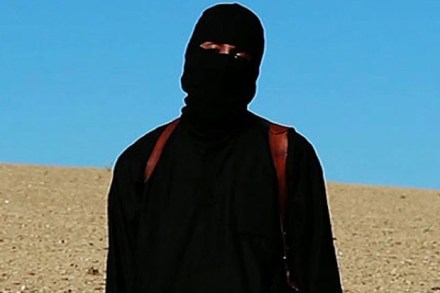
[audioplayer src="http://traffic.libsyn.com/spectator/TheViewFrom22_21_August_2014_v4.mp3" title="Douglas Murray and Shiraz Maher discuss Britain's jihadis"] Listen [/audioplayer]It is the now familiar nightmare image. A kneeling prisoner, and behind him a black-hooded man speaking to camera. The standing man denounces the West and claims that his form of Islam is under attack. He then saws off the head of the hostage. Why did Wednesday morning’s video stand out? Because this time the captive was an American journalist — James Foley — and his murderer is speaking in an unmistakable London accent. The revulsion with which this latest Islamist atrocity has been greeted is of course understandable. But it is also surprising.

Jihadi John – a very British export

From our UK edition

It is the now familiar nightmare image. A kneeling prisoner, and behind him a black-hooded man speaking to camera. The standing man denounces the West and claims that his form of Islam is under attack. He then saws off the head of the hostage.

Breaking: David Cameron returns to Downing Street after journalist beheaded

From our UK edition

Downing Street has announced that David Cameron is returning to Westminster from his holiday. A Number 10 spokesperson said: 'If true, the brutal murder of James Foley is shocking and depraved. 'The Prime Minister is returning to Downing St this morning. He will meet with the Foreign Secretary and senior officials from the Home Office, Foreign Office and the agencies to discuss the situation in Iraq and Syria and the threat posed by ISIL terrorists.' That the apparent murderer of James Foley spoke with a British accent was not, according to Philip Hammond this morning, a surprise to those tracking radicalised Britons joining the conflict. But this development still has big implications, surprise or not. More to follow...

My enemy’s enemy: Philip Hammond on Isis and Assad

From our UK edition

Philip Hammond made quite clear on the Today programme that this government is 'utterly opposed' to everything that Isis stands for: it's difficult to say anything else when militants who clearly luxuriate in evil have beheaded a journalist who was covering their monstrous deeds. The Foreign Secretary was asked whether this country was prepared to 'wage war' on Isis. He dodged saying that the West was waging war, but explained that as Isis was doing this, we have to deal with them on that basis. Here's his full quote: 'Oh look, it's far too late for that debate: we are very clear that we are utterly opposed to the evil ideology of this organisation and the barbaric, cruelty that they have displayed.

Britain abandons foreign policy. And abandons debates about foreign policy too.

From our UK edition

Cynics have long suspected that Britain's foreign policy is as independent as its nuclear deterrent. Cynics have a point. Perhaps, as some suggest, it's time to concede the game's a bogey and cease even pretending to pretend this remains a country of at least some modest importance and influence. Except, if we choose to, we do retain some influence, even some importance. Nevertheless, we certainly do not have an Iraq policy at present. Nor do we really have an ISIS policy. The Foreign Secretary is long on what we're not doing and very short on what we are. Of course this reflects past misadventures. Not just those pertaining to Iraq but others too, including last year's parliamentary determination to avoid having a Syria policy too. So, yes, Prudence runs foreign policy these days.

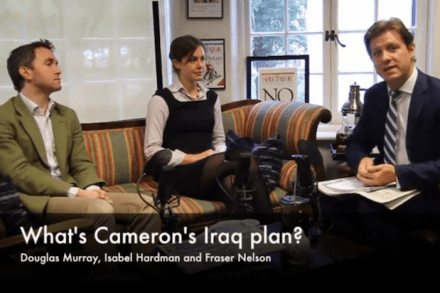
Video: Does Cameron have an Iraq policy? Or is he just making it up?

From our UK edition

The Prime Minister has returned from his holidays, and yesterday wrote an intriguing piece in the Sunday Telegraph about the ongoing struggles in Iraq and Syria. ‘True security will only be achieved if we use all our resources – aid, diplomacy, our military prowess – to help bring about a more stable world’ he wrote, and this morning Defence Secretary Michael Fallon sounded distinctly hawkish about British involvement in Iraq. But what does any of this actually mean? Fraser Nelson tries to get to the bottom of things in our look at the week ahead, while Isabel Hardman wonders whether anyone – including Cameron – knows what our policy is anymore.

Philip Hammond: No plans to engage in airstrikes

From our UK edition

So Britain's long-term fight against Isis isn't, at the moment, going to involve this country doing any fighting. The Prime Minister this morning insisted that there would be no 'boots on the ground' and Philip Hammond has just told journalists that there are 'no plans at the moment to engage in air strikes'. That latter assertion does of course mean that air strikes aren't being ruled out, while boots on the ground are ruled out daily. Hammond said: 'The priority is the humanitarian situation, there are huge numbers of displaced persons, there are persistent stories of atrocities being committed against people who are fleeing from the violence going on, so that has to be our number 1 priority.

David Cameron: Britain is not going to get involved in another war in Iraq

From our UK edition

That there are just two weeks now until MPs return from summer recess to discuss Britain's response to the events in Iraq, Palestine and Syria will give Downing Street some hope that a recall of Parliament is now unnecessary. That as may be, but the new British stance outlined by David Cameron and Michael Fallon yesterday would be the subject of an urgent statement and lengthy debate were the Commons sitting. Events and British involvement are changing fast and the legislature is getting no more opportunity to probe what the executive is up to than the rest of us.

What are David Cameron’s plans for the fight against Isis?

From our UK edition

David Cameron warns today that Britain must act against Isis in order to prevent terrorist attacks on this country. But what does he actually intend to do? In his article in the Sunday Telegraph, the Prime Minister argues that a 'broader political, diplomatic and security response' is needed, but also says that 'we should avoid sending armies to fight or occupy'. He writes: 'Britain – our economy, our security, our future – must come first. After a deep and damaging recession, and our involvement in long and difficult conflicts in Iraq and Afghanistan, it is hardly surprising that so many people say to me when seeing the tragedies unfolding on their television screens: “Yes, let’s help with aid, but let’s not get any more involved.

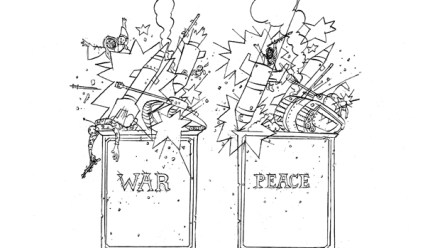
When should Britain go to war?

From our UK edition

There’s been a lot written this week about whether or not to fight the Islamic State in Iraq. This time the consensus among Spectator writers is that Britain should. There’s a clear moral case, but is it in our interests to go to war? The first time this question came up was in 1839 when China started confiscating opium from British traders. It may have been a good move to protect British trade, but the magazine was less convinced about the morality of it.

Vice News and Isis have formed a bizarre symbiotic relationship

From our UK edition

If you haven’t watched Vice News’s five-part documentary about Isis yet, I’d highly recommend it. They've gone where no other media company has managed: into the heart of the Islamic State. As a result, Isis and Vice have formed a bizarre symbiotic relationship. Both are youth-focused, both have global ambitions and both have a pioneering spirit. Even their black-and-white branding is similar. The documentary veers between the terrifying and the absurd, and wouldn't pass any of the BBC’s impartiality tests. But Vice scooped their deep-pocketed rivals by bedding in with these mad jihadis. They may be the new kids on the block, but they deserve to be taken seriously.

How dare they sell the beaches where I played as a child

From our UK edition

 Porto Cheli Nothing is moving, not a twig nor a leaf, and I find myself missing the cows, the mountains and the bad weather. The sun has become the enemy, a merciless foe who can be tolerated only when swimming, something I do for close to an hour a day. Nothing very strenuous, mind you, except for an all-out 50-stroke crawl towards the end. For someone who has swum every year since 1940, I’m a lousy swimmer. Not as bad as Tim Hanbury, who swims vertically rather than flat on the water, and who resembles a periscope, but I’m no Johnny Weissmuller, the late great Tarzan of the Forties. From the verandah of my house I look down on a beautiful bay and a private beach, which is no longer private.

Violence, fear, confusion: this is what comes into a leadership vacuum

From our UK edition

The old cliché that ‘nothing happens in August’ has again been brutally disproved. From the centenary of the outbreak of the first world war to the Russian invasion of Georgia six years ago, August is a month often packed with violence — but rarely more so than this year. In Syria, Christians are being crucified for refusing to convert to Islam. In northern Iraq, there are reports of mothers throwing their children from mountains rather than leaving them to the jihadis who are parading the severed heads of their victims. Russian convoys are rolling towards the Ukrainian border as Vladimir Putin tests the resolve of the West. Barack Obama has watched this unfold from his holiday spot in Martha’s Vineyard; David Cameron from the Portuguese coast.

Obama: ‘We broke the ISIL siege of Mount Sinjar’

From our UK edition

When President Obama finally turned up to his press conference on Iraq and the situation in Missouri, he made quite clear that he does not intend to increase US involvement in the country. He said Americans could feel 'proud' of the campaign that their country had led, pointing to the discovery that there were far fewer Yazidis trapped on the mountain than previously thought. The President added that he did 'not expect there to be an additional operation to evacuate people' from the mountain, and that the majority of military personnel who assessed the situation will be leaving Iraq in the coming days. He did add that the situation remains 'dire' for religious minorities in the country, and that the US would provide assistance where it could.

Inaction is easy; action is harder but needed now

From our UK edition

It’s easier to oppose than propose war. The conflict between Israel and Hamas inspired #NotInMyName on Twitter, and opposition to the invasion of Iraq in 2003 was spearheaded by the ‘Stop The War’ Coalition. It is easy for ‘anti-interventionists’ to cite negative consequences of action already documented, for example in post-invasion Iraq, than for ‘interventionists’ to make their case. Insults like ‘warmonger’ or ‘blood on your hands’ slip off the tongue more readily than complicated arguments to the effect that inaction can cause even more blood-letting and chaos, and that those who advocate it bear some responsibility for the ensuing carnage.