Iraq

The Christian communities helping to heal Iraq’s wounds

From our UK edition

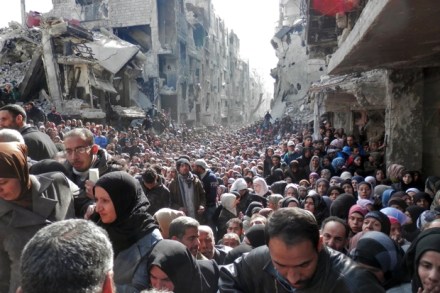
Iraq remains a dangerous and difficult place for everyone there but especially for its religious and ethnic minorities.  Assassinations, kidnappings for ransom, expulsions from villages and towns of whole communities and illegal occupation of properties remain common throughout the country. The Ecumenical delegation of bishops, which went to Iraq recently, as guests of the Chaldean Catholic Church, heard horrendous stories of people being frog-marched out of their houses, villages and towns, their property confiscated by ‘Islamic State’ or simply taken over by erstwhile neighbours.  Women and children are missing and many of the younger men were simply murdered.

Portrait of the week | 28 May 2015

From our UK edition

Home A Bill to enable a referendum on whether voters wanted Britain to ‘remain’ in the European Union figured in the Queen’s Speech. Another Bill prohibited any rise in income tax rates, VAT or national insurance before 2020. Tenants of housing associations would be given the right to buy their homes. Provision for Scottish devolution was promised in fulfilment of the recommendations of the cross-party Smith Commission. A ‘powerhouse’ in the north was to come into being through cities being given powers over housing, transport, planning and policing. Laws on strikes would be tightened. Red tape for business would be reduced, and a new quango set up to invigilate late payment to small businesses. Apprenticeships would be encouraged and childcare expanded.

The will to fight

From our UK edition

[audioplayer src="http://rss.acast.com/viewfrom22/defeatingisis/media.mp3" title="Andrew Bacevich and Douglas Murray discuss how ISIS can be crushed" startat=39] Listen [/audioplayer]War is a contest of wills. Although determination alone does not guarantee final victory, its absence makes defeat all but inevitable. Way back in the 1770s, Britain lost most of its north American colonies because rebellious Americans cared more about gaining their independence than George III and his ministers cared about preserving their empire. Today, if Isis fighters care more about creating their caliphate than Iraqis do about preserving their country, then Iraq may be doomed.

How to defeat a caliphate

From our UK edition

[audioplayer src="http://rss.acast.com/viewfrom22/defeatingisis/media.mp3" title="Andrew Bacevich and Douglas Murray discuss how ISIS can be crushed" startat=39] Listen [/audioplayer]Last Sunday Isis raised their black flag over Palmyra. Below the flag, in the days that followed, the usual carnage began: beheadings, torture, desecration. Syrian state TV has reported that over 400 civilians have been killed already, and the big question globally has become: how could this have happened? What went wrong with the Iraqi and Syrian troops? Isn’t there anything the West can do? Lord Dannatt, the former head of the army, has called on the British government to ‘think the previously unthinkable’ and send troops.

Smash Isis now

From our UK edition

[audioplayer src="http://rss.acast.com/viewfrom22/defeatingisis/media.mp3" title="Andrew Bacevich and Douglas Murray discuss how ISIS can be crushed" startat=39] Listen [/audioplayer]For months, the White House has been saying that it has Isis on the run. Yet each week the world sees that Isis is only running forwards. Last week, the US state department briefed that Isis was ‘a significant threat to all of our partners in the region’ and ‘a significant threat to the [US] homeland. We’ve never seen something like this. This is a formidable, enormous threat.’ Which is fine as an observation. But governments aren’t only in a position to make observations.

Away from the herd

From our UK edition

 Erbil, Iraq The Kurds here are fighting Isis — everyone knows that. Most of us are at least peripherally aware that the brave Peshmerga (Kurdish militia) have proved an effective force against the Islamists, and we cheer them on. What we don’t realise is that as they battle the world’s latest bogeyman, the Kurds are also simultaneously suffering from another sort of crisis. Traditionally the Iraqi Kurds are nomadic pastoralists. They’ve herded sheep since biblical times, leading their flocks from the mountains to the lowlands and back. The passion they feel for their land is rooted in this pastoral tradition. It’s a weird irony, then, that as their dream of a separate state grows close to being realised, their way of life is dying.

Diary – 23 April 2015

From our UK edition

Lunch with the man who hanged Saddam. My irrepressible old Baghdad friend Mowaffak al-Rubaie, Ealing neurologist turned Iraqi national security adviser, is on top form. This may not be unrelated to the news that the noose with which he hanged Saddam is up for auction. Interested buyers are said to include Kuwaiti businessmen, an Israeli family, a bank and an Iranian religious organisation. Mischievous tales are circulating about an offer of $7 million being rejected. Hearing Rubaie relive Saddam’s execution reminded me of the late Sir Wilfred Thesiger recalling how he shot up a tent full of sleeping Germans during the Allied campaigns in North Africa. ‘It felt like murder,’ he said, and you knew he rather liked it. Never mind the general election.

The Plame game

From our UK edition

Nothing is capable of undermining American democracy more than its legal system. Amid the plea bargains, perp walks and 95 per cent conviction ratings for some crimes, one feature of the system stands out as particularly rank — the role of ‘special prosecutor’. A new piece of evidence relating to a high-profile conviction eight years ago provides a perfect demonstration. The case relates to a legal dispute spanning President George W. Bush’s period in office. In late 2003 the situation in post-war Iraq had already begun to go horribly wrong. In the US, many who had eagerly supported the invasion and warned of the risks of WMD were flaking away and seeking scapegoats. In the ‘Plame affair’, the perfect outlet seemed to have been provided.

A deadly silence

From our UK edition

One Friday, 28 people were rescued by the Italian coastguard when the boat on which they were fleeing Libya capsized in the Mediterranean. Arriving homeless and without prospects in a strange land, these were — relatively speaking — the lucky ones. As many as 700 are thought to have drowned. Add them to the tally. On Monday, another boat capsized with 400 souls feared lost. Last year more than 3,000 died in the Mediterranean trying to get to the West. It has become a phenomenon of our times. We do not hear much about life in the supposedly liberated Libya, but the fact that even immigrants into Libya would rather risk death than stay there gives a fair idea.

The Iran deal heralds a new era for US policy across the Middle East

From our UK edition

What is it about a nuclear deal with Iran that induces hysteria in certain quarters of the West?  In recent weeks, editors at both the New York Times and the Washington Post have seen fit to run op-eds calling for preemptively bombing Iran, apparently under the impression that preventive war has not yet received a fair shake.  Sure, Iraq didn’t work out, but why quit now?  By ensuring that the American people and their leaders do not overlook the possibility of giving war one more chance in Iran, these newspapers are presumably performing a public service.    In the Times, John Bolton, Dr. Strangelove with an unkempt moustache, describes a situation on 'the brink of catastrophe,' entirely attributable to President Obama’s folly.

Don’t expect to hear anything about Islamic State during the election campaign

From our UK edition

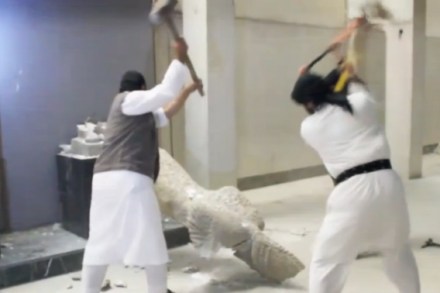
Granted, you don’t really expect foreign policy to feature much in an election campaign – we’re not saints - but it’s still shaming the way that the biggest foreign policy issue simply doesn’t register on the radar right now. I refer obviously to Islamic State, the group that just keeps on giving when it comes to reasons to want them wiped out. It’s a toss up really whether you go for the recently exhumed mass graves of the soldiers they massacred in Tikrit, the Yarmouk Palestinian refugee camp they seized control of, the images they obligingly posted of themselves smashing artefacts at Hatra or the blowing up an Assyrian church over Easter. Take your pick. And the response from the British Government?

The last thing Yemen needs is more war. But that is what it’s getting

From our UK edition

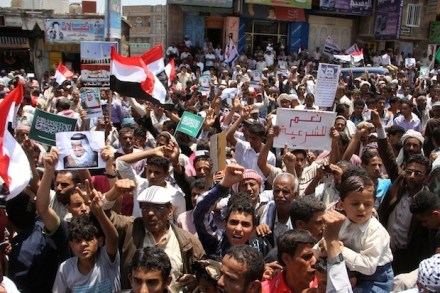
After years of hearing how terrible Western interventions are in the Middle East (Exhibits A, B and C the fiascos of Iraq, Afghanistan and post-Gaddafi Libya), it will be interesting to see how a Saudi-led all-Muslim intervention fares in Yemen. My prediction is it won’t be much better than those of the infidels. For a start we are dealing with the poorest country in the Arab world. Whereas Iraq sits on a lake of oil, squandering the proceeds with a venality that is ghastly to behold, Yemen is running out of water, let alone oil. With an estimated GDP per capita of $2,500, the country comes 187th in the world. The figure for Saudi Arabia, incidentally, is $31,300. The last thing Yemen needs is more war.

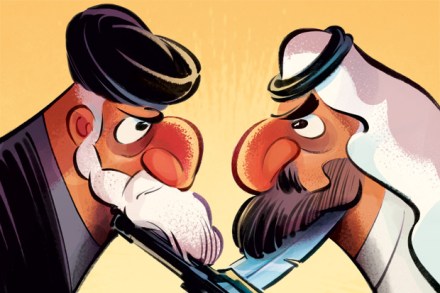
Forget Geneva: the real US-Iran carve-up is happening in Iraq

From our UK edition

 Washington DC and Iraq   We stood on a bleak hillside in eastern Iraq looking at a makeshift grave. It held a dozen Shia Arabs, according to the Kurdish troops escorting us. The dead were men, women and children murdered by fighters from the so-called Islamic State as they retreated, said the Kurds. We stepped gingerly around scraps of women’s clothing and a bone poking out through the dirt. In the town on the dusty plain below, Shi’ite militias were busy taking revenge on Sunnis, our escorts said, looting and killing. The town’s Sunni Arab population had fled to a miserable camp. Streams of sewage ran between their tents. But they wouldn’t go home, they said, until the militias left, replaced by the army. They may be there a while.

The Labour party loves to hate Tony Blair

From our UK edition

I’ve met people at political events who seem otherwise normal, and then Tony Blair’s name is mentioned and their eyes light up in a way that suggest a chemical reaction has taken place in their brain. Likewise whenever the former Labour prime minister is mentioned online, it’s like a hand grenade has been thrown into the loony pond. Up they all chirp on social media, announcing how the war criminal must be sent to the Hague one day. The most recent case was Tony Blair’s offer to fund Labour candidates at the election, and the decision by two of them to turn it down; in both constituencies, Northampton North and Dundee East, Labour are close behind an incumbent party and really need the money, especially as the election will be the closest in decades.

Was Netanyahu’s message worth the diplomatic damage it caused?

From our UK edition

For weeks before his plane set off for Washington, Benjamin Netanyahu's speech to the US Congress was exhaustingly analysed here in DC. Did Speaker Boehner adequately notify the White House about the invitation? How angry was the President really about this fait accompli? Were the Republicans using the invite to try to show themselves to be more pro-Israel than their Democrat rivals? Or were certain Democrats talking of no-shows and walk-outs during the speech only in order to show themselves more critical of Israel than the Republicans? By the day of the speech it seemed both sides had need of the fight. Of course Netanyahu had not single-handedly created this problem. As any member of Congress will tell you, the House has never been more divided, nor its partisan atmosphere more toxic.

The assault on IS-held Tikrit could trigger sectarian war in the region

From our UK edition

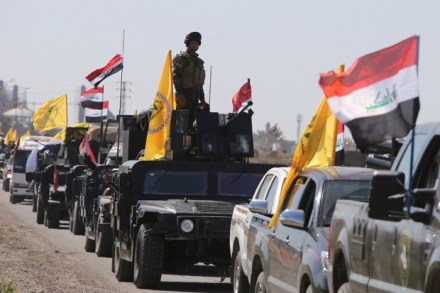
The Iraqi military’s attempt to retake Tikrit from Islamic State tells us several things about the current politics of the region. First, the Iraqi state is heavily reliant on the Iranians for military assistance. The Iranian Fars News Agency has reported that this assault is being backed by the Iranian Revolutionary Guard including the commander of its elite Quds Force, Maj. Gen. Qasem Soleimani. Reuters says that Soleimani can be seen directing operations from a hill and that his presence is crucial in terms of controlling the Iraqi Shi’ite militias, many of whom are Iranian trained. Second, there is a danger that Islamic State might succeed in precipitating the sectarian war within Islam that it so desperately wants.

If Isis doesn’t like Twitter, it should invest in its own tech companies

From our UK edition

Isis has a new bête noir: Twitter. Employees at the social media company have received death threats, as has Jack Dorsey, the co-founder of Twitter. Why? Because the site has been blocking accounts linked to the group. In retaliation, Isis members posted an image on the website JustPaste.it which warned that Dorsey and co had 'Become a target for the soldiers of the Caliphate and supporters scattered among your midst!’ The message reads: ‘You started this failed war … We told you from the beginning it’s not your war, but you didn’t get it and kept closing our accounts on Twitter, but we always come back. But when our lions come and take your breath, you will never come back to life.'   Punchy stuff.

For modern-day Assyrians their present is under attack from Isis, as is their past

From our UK edition

The historian Tom Holland tweeted this morning: ‘What ‪#ISIS are doing to the people & culture of ‪#Assyria is worthy of the Nazis. None of us can say we didn’t know.’ What #ISIS are doing to the people & culture of #Assyria is worthy of the Nazis. None of us can say we didn't know: http://t.co/Ndi02TeueK — Tom Holland (@holland_tom) February 27, 2015 He linked to a Washington Post article about how the Islamist group had kidnapped at least 200 Assyrian Christians from their homes in north-east Syria, and may well be preparing to murder them.

Why the apologists for the Islamist far right must make Jihadi John a victim

From our UK edition

Islamic State allows its adherents to be both cultists and psychopaths: an L. Ron Hubbard and a Fred West rolled into one. The reasons why young men want to travel across the world to fight its wars and lend a hand to the murder of its victims ought to be brutally and boringly obvious. Psychopaths are always less complicated, less rewarding, less interesting than their victims. They're not hard to explain. Where is the difficulty about Abelaziz Kuwan , for instance? His case opens ISIS: Inside the Army of Terror by Michael Weiss and Hassan Hassan.