Iraq

If Islamic State is to be defeated, it must be attacked in both Syria and Iraq

From our UK edition

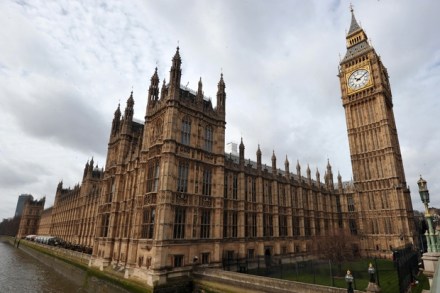
listen to ‘David Cameron's statement on Isis and Iraq’ on audioBoom Parliament will today vote for the motion authorising air strikes by the RAF against Islamic State in Iraq. The motion with its promise of a further vote before any action is taken in Syria and a commitment not to put troops on the ground has been designed to pass as easily as possible. Understandably, no one in Downing Street wants to risk a repeat of last year’s Syria vote. But the reasons why the motion will pass are also the reason why it is not fit for purpose. Islamic State has succeeded in rendering the border between Syria and Iraq meaningless, it operates on both sides of it. But British planes will only hit Islamic State on one side of this line.

Parliament recalled to discuss airstrikes on Isis in Iraq

From our UK edition

Number 10 has just confirmed that Parliament will be recalled on Friday to vote on a motion authorising British involvement in air strikes against Isis in Iraq. A spokesman said: 'The Speaker has agreed to the Prime Minister's request to recall Parliament this Friday to debate the UK's response to the request from the Iraqi government for air strikes to support operations against Isil in Iraq. 'The Commons will meet on Friday for a debate on a substantive motion. The Prime Minister will open the debate and the Deputy Prime Minister will close the debate. The Prime Minister has called a meeting of the Cabinet tomorrow at 1pm.

Who is the rogue person asking MPs about attacks on Syria?

From our UK edition

MPs are still waiting to hear confirmation that Parliament is being recalled on Friday, although many have been told to expect a sitting to discuss military intervention against Isis. The chances are that it won't be announced until the Iraqi Prime Minister Haider al-Abadi has made a formal appeal for British involvement, and the Labour conference has finished, so that this cannot in any way be interpreted as a bit of politicking from a Conservative party keen to sabotage the Opposition's gathering. The whips have been phoning MPs this morning asking about their support for strikes on Isis in Iraq. But some have also been asking about attacks in Syria, too, which has led MPs to believe that the question before them on Friday will be about action in both countries.

Westminster prepares for recall to discuss air strikes

From our UK edition

Parliament is expected to be recalled on Friday to discuss British military intervention against Isis. David Cameron will hold talks with his Iraqi counterpart today, with Haider al-Abadi expected to make a formal request that Britain join the military action. Labour is staying supportively non-committal at the moment, with Ed Miliband saying again on the Today programme that Labour hadn't yet been approached, but that it would consider anything the government put on the table: 'I think the situation in Syria is somewhat different, in that’s it’s not a democratic state, we’ve got the Assad regime in Syria, we called yesterday, we supported the American action, but we called yesterday for a UN security council resolution.

Five main points from Michael Fallon’s hawkish interview in The Spectator

From our UK edition

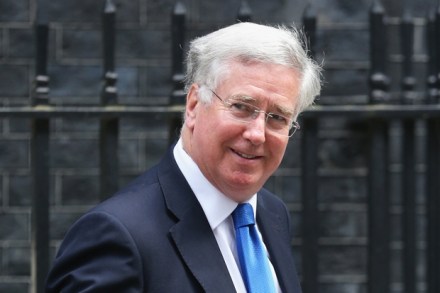
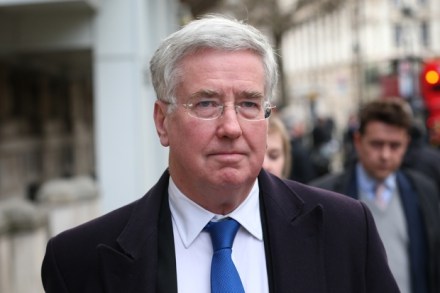
James Forsyth interviews Defence Secretary Michael Fallon in this week's Spectator. You can read the full interview here. Here are five key points from the piece: 1. A ‘new Battle of Britain':  ‘We’ve had attacks on the streets of London, on our transport system, at Glasgow Airport, the murder of Lee Rigby – how much more evidence do you need that this is a very clear and dangerous threat to our way of life and to all the democracies of the west.  This is a new Battle of Britain.’ 2.

Exclusive: Michael Fallon says UK should reconsider military action in Syria to combat ISIS

From our UK edition

The Ministry of Defence is like a sauna on Sunday. The air circulation system has been switched off and the place is hot—and deserted. Yet when you reach the Secretary of State's floor, a small team is hard at work. As you enter Michael Fallon’s office, you see the reason why. On an easel sits a map of Iraq and Syria. Tellingly, though, this isn’t the only map on the stand. Sitting behind it are ones of Pakistan, the Central African Republic and Sierra Leone. It becomes clear as the interview goes on that the one of Ukraine has gone missing. Fallon is 62, but he has the energy of a man half his age.

What is to be done about a world where everything is for sale?

From our UK edition

Next time you read about an auctioneer’s gavel coming down on a $150 million painting bought by some flunkey representing the ruling family of Qatar, don’t ooh or aah, but think of those monsters in Iraq and Syria who have their children pose on video while holding up the severed heads of innocents. And no, it’s not a stretch — without Qatar’s gold Islamic State would not exist, not even in the movies. Let me put it another way: had Calvin Coolidge or Herbert Hoover given White House dinners for Al Capone, the outcry would have been heard all the way down to Patagonia.

Four-wheel-drives are to ISIS what longbows were to the English at Agincourt

From our UK edition

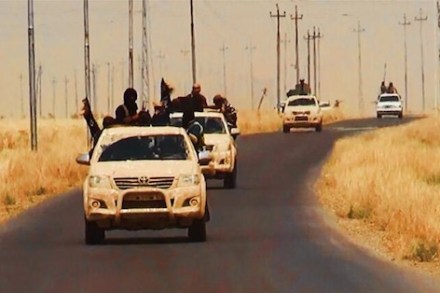
What exactly, I found myself wondering, would jihadists do without modern four-wheel-drives? Car ads are customarily shot on the French Riviera's Grande Corniche or on a very particular road in Tuscany that all art directors know. But the sight of 43 brand new and coruscatingly white Toyota Hiluxes rolling across the infernal Syrian-Iraq border added a hard-edge nightmare venue to the ad-man's soft-focus dreamscape. If there's a micron of comfort to be had from the horrors of the Middle East, it's that the medievalising ISIS has a keen admiration for the consumer goods their despised enemies manufacture. In an earlier conflict, The New York Times called the same Hilux 'the ride of choice' for Somali pirates.

Portrait of the week | 11 September 2014

From our UK edition

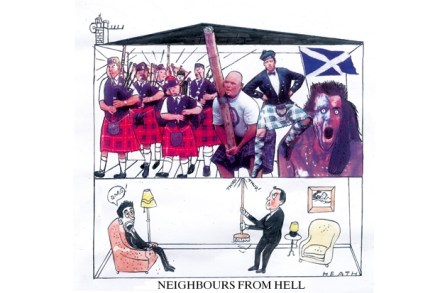
Home England suddenly began to take the prospect of Scottish independence seriously after a poll of 1,084 people by YouGov put support for it at 51 per cent and opposition at 49 per cent. A survey by TNS showed 38 per cent of Scots backed independence compared to 39 per cent opposing it (with 23 per cent not knowing). The pound fell to its lowest for ten months against the dollar. George Osborne, the Chancellor of the Exchequer, in concert with Labour and the Liberal Democrats, promised a timetable for further devolution if voters in Scotland would only reject independence. The Prime Minister and the leader of the opposition agreed to cancel Prime Minister’s Questions and fly to Scotland, in the apparent belief that it would help. Nick Clegg, the Deputy Prime Minister, went too.

Why is Britain arming countries that support terror in the Middle East?

From our UK edition

Why is the UK still supplying arms to those who helped fund the so-called Islamic State, and what leverage does it bring? In the Prime Minister’s statement to the House of Commons following the Nato summit over the weekend, he spoke of seeking a broad base of support through the UN. Yet there was no mention of military action—as opposed to diplomatic assistance—from Gulf States. Islamic State has been bankrolled by wealthy Gulf individuals from Saudi Arabia, Qatar, and Kuwait, and their Governments have failed to act to prevent it. In March 2014, Nouri al-Maliki, the outgoing Iraqi Prime Minister, accused Saudi Arabia and Qatar of being ‘at war with Iraq’. Six names were added the latest UN sanctions list, issued on the 14th August.

Portrait of the week | 4 September 2014

From our UK edition

Home Britain’s terror threat level was raised from ‘substantial’ to ‘severe’ in response to fighting in Iraq and Syria, meaning that an attack on Britain was ‘highly likely’. Three days later, David Cameron, the Prime Minister, in a hesitant statement to the Commons, proposed that: police should be able to seize temporarily at the border the passports of people travelling overseas; there should be all-party talks on drawing up powers to prevent suspected British terrorists returning to Britain; those under terrorism prevention and investigation measures (Tpims) should be subject to ‘stronger locational constraints’.

It’s time we apologised to Assad – he had a point about those rebels

From our UK edition

I saw MPs Peter Hain and Andrew Mitchell agreeing with each other on Newsnight about the need, now, to talk to President Assad, so that we might better combat the Islamic savages running amok in Syria and Iraq. Yee-haw. If I could see, two years back, that Assad was infinitely preferable to the majority of those people who took arms against him, then why couldn’t our politicians? Do they really still cleave to the idiotic view that the Arab people are 'just like us' and are ready and waiting for a pluralistic, representational democracy, perhaps with the alternative vote in place for local council elections, and maybe Baroness Ashton and the Howard League for Penal Reform ('can’t you just cut off his hand, rather than the whole arm?'). How could any sane person believe that?

Support grows for British air strikes against Isis

From our UK edition

If there is a strategy buried under the 'no strategy' response by the US and the UK to Isis, it seems to be that David Cameron and Barack Obama have preferred to make the case for greater military involvement by waiting for everyone else to get frustrated that nothing is happening. Where a few weeks ago, there was plenty of muttering about the polls and the public being weary of intervention, we see today that voters are starting to push for greater UK involvement. They are not, of course, in favour of boots on the ground (one of those phrases that is as worn out now as a very old boot, along with 'knee-jerk response'): the Sun's poll finds 58 per cent of voters are against ground troops.

Andrew Marr’s diary: Seeing shadows of Syria in Limousin’s ghost village

From our UK edition

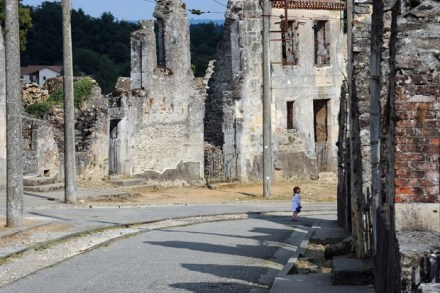
No, no, no, you don’t want a house abroad — the paperwork, the taxes, the piping, the cost of the pool. What you want are good, kind, generous friends with houses abroad. That’s what we’ve enjoyed this summer, meeting scores of interesting new people and being looked after by our best friends. We pay them back with wine, little presents and London hospitality. The only downside to ‘les vacances ligging’ is having to book extra seats home on Ryanair for our vastly swollen and moaning livers. The most striking thing we did in France was to visit Oradour-sur-Glane, the Limousin village where on 10 June 1944 a Panzer division of the SS massacred 642 men, women and children as a reprisal operation against the Resistance.

Portrait of the week | 28 August 2014

From our UK edition

Home Theresa May, the Home Secretary, said that Britons who went to Syria or Iraq to fight could be stripped of their citizenship, if they had dual nationality or were naturalised. Her words came during a search for the identity of the British man in a video of the beheading of the American journalist James Foley. David Cameron had returned to London from his holiday in Cornwall to confer with security officials, but decided against recalling Parliament. In revenge the Daily Mail carried photographs of him in a wetsuit, which gave him a phocine look. Lord Dannatt, the former Chief of the General Staff, suggested Britain should deal with President Bashar al-Assad of Syria, but Philip Hammond, the Foreign Secretary, said: ‘That would poison what we are trying to achieve.

The nun who took down an Isis flag – and stands up for east London’s Muslims

From our UK edition

Not so long ago disaffected youngsters would take to a life of crime and hard drugs, a trajectory which would often kill them. These days, some young men from our Muslim community sign up instead to the so-called Islamic State, and the dream of a distant Caliphate. Why? Well, forget theology or even the prestige which comes from being a warrior — if Sister Christine Frost is right, it all comes down to housing. Sister Christine has worked on the Will Crooks Estate in Poplar, east London, for over 40 years. She accidentally got into the news in early August when she removed the black flag of radical Islam which was flying over the entry to the estate, and the press were fascinated that a small, lone woman aged 77, would take such a risk.

The wars that really are about the oil

From our UK edition

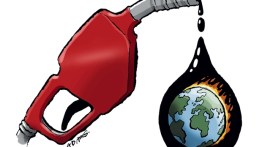
Is international conflict really just a fight over oil? It sometimes seems that way. In Syria and Iraq, the militants of the so-called ‘Islamic State’ sell captured oil while battling to establish a puritanical Sunni theo-cracy. From Central Asia to Ukraine, Russia is contesting attempts (backed by the US) to minimise Europe’s dependence on Russian oil and natural gas. Meanwhile, Obama’s ‘pivot to Asia’ allows the US to threaten the choke points through which most of China’s oil imports must pass. Conspiracy-mongering petrodeterminists who try to reduce world politics to nothing but a clash for oil are too crude (pun intended). No shadowy cabal of oil company executives pulls the strings of world politics.

Boris Johnson is not fit to be leader of the Tory party, never mind Prime Minister

From our UK edition

Awkward, especially here, I know, but there you have it. But, look, if any other high-profile politician were suggesting the burden of proof in criminal trials should be switched from the accuser to the accused we'd be properly - in both senses - appalled. So we should be appalled that Boris suggests in his Telegraph column today that anyone travelling to Iraq or Syria should be presumed a jihadist unless and until they can prove otherwise. The state will not have to make a case you convict you but you must make a case to avoid conviction. And, lo, centuries of criminal law are undone. Worse still, I think, Boris considers this 'a minor change' to the law. What, one wonders, would constitute a major change? 'It is hard' Boris laments, 'to press charges without evidence'.

No partnership with Assad (and no scrutiny till summer’s up)

From our UK edition

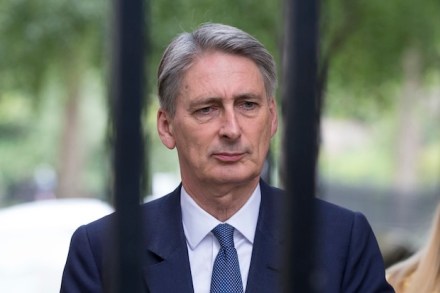
Philip Hammond this afternoon ruled out Britain working with President Assad in the fight against Isis, arguing that simply being aligned against a common enemy 'doesn't make us friends with someone'. It is nearly a year since the Commons rejected intervention in Syria against the Assad regime, and now figures such as Sir Malcolm Rifkind and Lord Dannatt are arguing that there may need to be some kind of alliance against the Syrian leader in order to defeat Isis. But the Foreign Secretary said: 'We may very well find that we are aligned against a common enemy, but that doesn't make us friends with someone It doesn't make us able to trust them, it doesn't enable us to work with them.