Iran

Eighty years after Wannsee

Eighty years ago in January, fifteen men sat around a table at a villa near Berlin and decided to eradicate a nation. To be precise, they decided how to eradicate a nation. Their decision, their “solution” as they perversely termed it, would lead to the murder of more than six million European Jews, though that is the easy-to-remember round number to which we so often default. The murders had started long before the Nazi leadership met at Wannsee in January 1942: this was not the first time a group of European leaders had planned to rid themselves of the Jews. The meeting clarified not just the goal of wiping out Europe’s Jewry, but the path to solving the “Jewish problem” by modern means.

jews

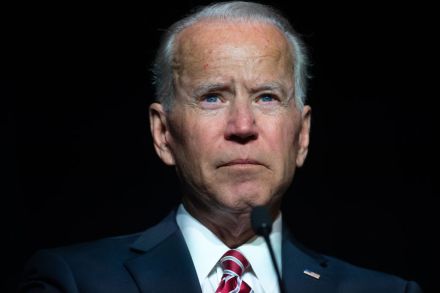
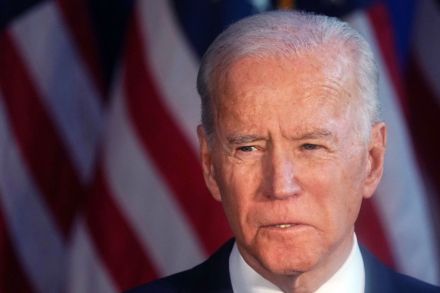
Inside Joe Biden’s disastrous negotiations with Iran

From our UK edition

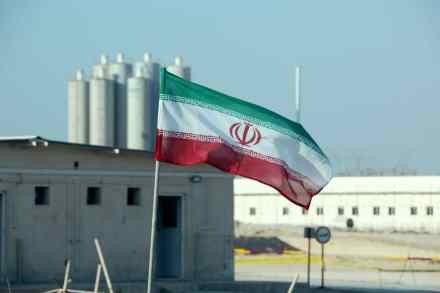
One of the West’s great foreign policy failures of 2021 was the Iran nuclear negotiations, which remained bitterly unresolved as the clock passed midnight. Having spoken to a number of diplomatic sources on different sides in recent weeks, it is hard to avoid the conclusion that the process has been woefully inept. Not only has there been a dramatic failure to extract any concessions from Tehran – even a meaningful freeze on progress towards the bomb has remained elusive – but western negotiators have become enveloped themselves in an Asterix-style dust cloud of infighting, competing agendas and tension. All of this, of course, is a gift to the Iranians, who have entered 2022 in a commanding position. In truth, the project was all but doomed to begin with.

Biden’s diplomacy with Iran is falling apart

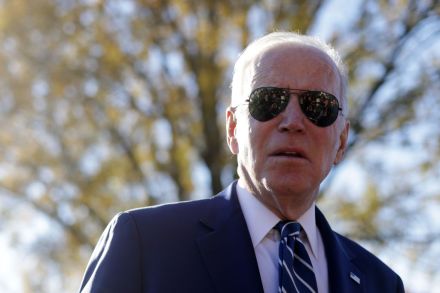
While American and Iranian negotiators continue to clash in Vienna, policymakers back in Washington are debating the right course of action should nuclear diplomacy collapse. Ever since negotiations between the US and Iran resumed in late November after a five-month hiatus, the Biden administration has repeatedly told their Iranian counterparts that Washington’s patience for diplomacy isn’t unlimited. In the ensuing weeks, American officials have grown frustrated by Iran’s hardening stance, including its insistence on verified sanctions relief before Tehran rolls back its own nuclear advances. According to the State Department, the current round of talks, the eighth since April, are making scant progress toward a mutually agreed-upon resolution.

iran

Joe Biden, foreign policy realist

President Joe Biden talks the liberal internationalist talk but walks the realist walk. The recent Summit of Democracies wasn't idealism but part of a strategy to contain China and Russia. Internationalist rhetoric aside, Biden has a dark Realpolitik side — which explains why he was able to survive so many decades in Washington and get elected as president. Some of my friends on the right have criticized me for recommending Biden for the diplomatic move that should have earned him the 2021 Machiavelli Award. Announcing a new military pact with Britain and Australia (AUKUS) to deter China stabbed France in the back — or to put it another way, emulated the modus operandi of traditional French diplomacy.

Was it inevitable that Iran would go nuclear?

Was it inevitable that Iran would one day gain nuclear weapons? Identifying causality in human actions is a tricky exercise, especially when it comes to historical events, like the outbreak of World War Two. Was appeasement the cause? Or perhaps a war with Germany was unavoidable as long as Adolf Hitler was in power? It may also be fated that a nation of ninety million people, proud about its history and place in the world — Persia was already an advanced civilization when barbarian tribes roamed the British Isles — would become a nuclear military power. That nuclearization process actually commenced under Mohammad Reza Shah and continued because of concern that, thanks to French assistance, Iran’s adversary Iraq was on its way to developing a nuclear weapon.

iran nuclear

Biden’s diplomacy of disaster

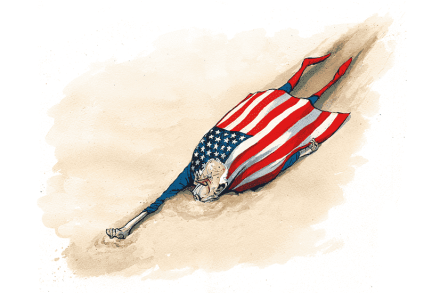
Fool me once, shame on you. Fool me seven times, shame on the United States, whose leaders seem determined to drive it into a decline whose rapidity and extent is unparalleled in the history of great powers. Shame on the Democrats too, for putting domestic vanity over the national interest. Shame on Barack Obama and, should he be aware of what’s going on in Vienna, shame on Joe Biden, for pursuing the diplomacy of disaster. The State Department’s envoys are back in Vienna in the hope of starting a seventh round of negotiations over reviving Obama’s “Iran deal.” But there seems to be nothing left to talk about. Iran is increasingly intransigent, and its latest demands give the US and its allies a choice between surrender or defeat.

Mossad is preparing to strike at the heart of Iran’s nuclear programme

From our UK edition

Iran is about to be hit by a fresh wave of Mossad operations, sources in Jerusalem have told me. This is the result of a change in Israeli policy: from now on, when Tehran’s proxy militias make trouble in the region, the Jewish state will retaliate on Iranian soil. ‘No more attacking the tentacles of the octopus,’ one source said. ‘Now we will go for the head.’ For the foreseeable future, I can confirm, this will not take the form of air raids, missile strikes or drone attacks. Instead, Israel’s feared secret service has been told to carry out pinpoint operations inside the Islamic Republic, inflicting surgical but devastating punishment.

Exclusive: How Israel is attacking Iran’s nuclear sites

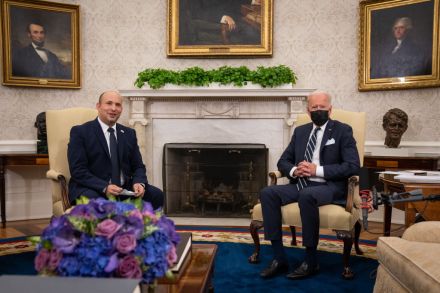
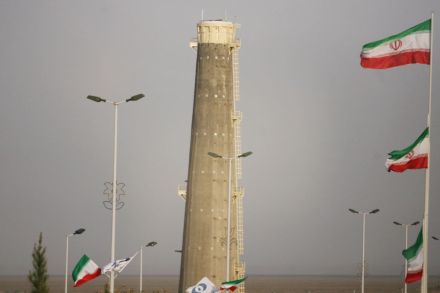
Israel has carried out three major operations over the last eighteen months against Iran's nuclear sites. These attacks involved as many as a thousand Mossad personnel and were executed with ruthless precision using high-tech weaponry including drones and a quadcopter — and spies within Tehran's holy of holies, its nuclear program. While Joe Biden’s nuclear negotiators try to snatch catastrophe from the jaws of defeat in Vienna, Israel is taking things more seriously. Last week, Naftali Bennett, the Israeli prime minister, pivoted to a new policy on Tehran: retaliating against aggression from militias backed by Tehran with covert strikes on Iranian soil. This builds on the extensive capabilities that the Mossad has built up in the Islamic Republic in recent years.

Giving thanks in the Land of the Free

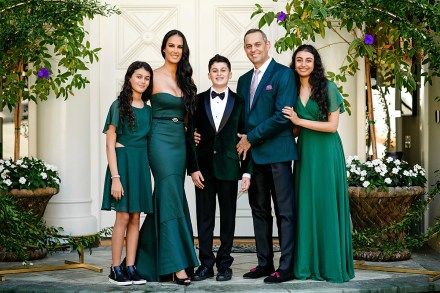
Thirty-six years ago, I stepped off a plane and planted my feet firmly on American soil. It’s that day that my mind drifts to as my family of surgeons bickers over who exhibits the most precision in turkey-carving. My journey to the United States was not easy. I was born in Tehran during the Iranian Revolution. Soon after Ayatollah Ruhollah Khomeini overthrew the Shah, his regime rendered the Jews of Iran powerless. Much of what my family had owned was taken from us. After our home was seized, my parents understood that we had to flee, but the authoritarian rulers restricted our movement. This was in 1985 and the Iran-Iraq war raged throughout the country.

nazarian iran thanks

Can America avoid the next crisis in Iran?

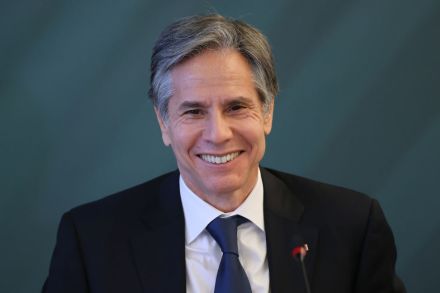
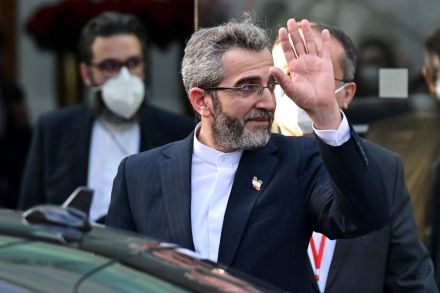
After meeting with his Israeli and Emirati counterparts on October 13, Antony Blinken emerged from behind closed doors with a message for Iran: you are running out of time to negotiate a return to the 2015 nuclear deal. “We are prepared to turn to other options if Iran doesn't change course,” the secretary of state told reporters. US envoy to Iran Robert Malley exhibited similar frustration on October 25, saying US officials, in coordination with its partners in the Middle East and Europe, have “given a lot of thought to what we will do if Iran doesn’t go back to the table.” The Iranian government appears to have gotten the message, at least to a degree. Ali Bagheri Kani, Iran’s chief nuclear negotiator, has said talks will resume on November 29.

iran

Iran, a dammed nation

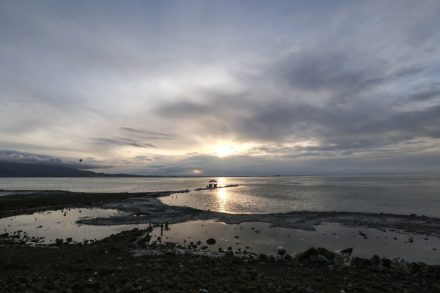
The recent events in Afghanistan have made us think we know what regime collapse looks like. Militias roaming the streets, soldiers scrambling to helicopters, up against the clock to escape the anarchy below. But in some instances, the reality can be far more mundane. Across from Afghanistan’s own border, another Islamic theocracy — Iran — is struggling to manage a dangerous water shortage. As one hardline Muslim regime arose in Central Asia this year, another could yet be at the very beginning of its fall. In July, during the worst drought in half a century and scorching heat of over 120°F, protests erupted in the oil-rich province of Khuzestan as a water crisis that has been slowly bubbling for decades hit boiling point.

dammed water

Biden stole Trump’s foreign policy

When President Donald Trump in 2020 signed a trade deal with China after years of escalatory tariffs, then-presidential candidate Joe Biden blasted the agreement. 'China is the big winner of Trump’s "phase-one" trade deal with Beijing,' Biden said after the agreement was finalized. He wasn’t alone. Many trade experts at the time believed the purchasing targets Beijing was required to meet were highly unrealistic. Sure enough, China’s compliance has been less than ideal. According to the Peterson Institute for International Economics, China is roughly 70 percent of the way there with two months left to go. Yet despite Biden’s past comments about the accord, not to mention the tariffs that set the stage for the deal, the White House isn’t fully breaking with the pact.

foreign policy

Exclusive: the New York Times stole my story

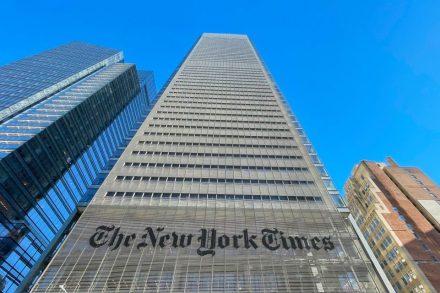
Question: When is a New York Times exclusive not a New York Times exclusive? Answer: On Sunday, when America’s paper of record stole my scoop. It sounds bizarre, but it’s true. Last February, I revealed top-secret details of the killing of the Iranian nuclear scientist Mohsen Fakhrizadeh in the pages of London’s Jewish Chronicle, the world’s oldest Jewish newspaper. Among the revelations — given to me by impeccable sources that I know well — were that the top Tehran official had been killed by Mossad using a remote-controlled gun that weighed one ton and had been smuggled into Iran piece by piece over several months.

new york times

Iran is an immediate winner of the Taliban takeover

From our UK edition

A staple of observing politics is watching rhetoric curdle into reality. Operation Enduring Freedom, thought up and slapped together in the wake of 9/11, was supposed to put down the ‘global terror threat’ and bring freedom to the subjugated peoples of Afghanistan and the Middle East. It ended last week with images of despairing Afghans tumbling to their deaths from the undercarriages of fleeing US planes. The rights and wrongs of leaving are sundering US foreign policy elites, but leaving the United States is most certainly doing. So what next? When the United States high-tails it out of the region you can be sure that everyone around is watching — no more so than in neighbouring Iran. Iran has a peculiar relationship with the Taliban.

Iran’s ‘Ghost Armada’ and its secret alliance with China

From our UK edition

When a British security guard was killed in an Iranian drone attack last month, the response from the government was robust. Boris Johnson warned that Iran will have to ‘face up to the consequences’. But has the West fully grasped the reality of what Iran and its 'Ghost Armada' is really up to at sea? And how can Britain deal with Iran's silent partnership on the waves with China? Back in March, the two countries signed a 25-year, £300 billion trade and military partnership which included Chinese investment in exchange for regular, heavily discounted oil and a strengthened cooperation between the military, security and defence departments. China is investing in Iran for the long haul because it is key to its Belt and Road Initiative (BRI).

Can Iran’s ‘butcher’ president make peace with the Saudis?

From our UK edition

It’s official: after eight years of a relatively pragmatic administration, Iran is now under new management. Ebrahim Raisi, a disciple of Supreme Leader Ayatollah Ali Khamenei and the former judiciary chief, was inaugurated this week as Iran’s next president. Clad in a white shirt, black robe and thin-framed glasses, Raisi accepted a task that will likely prove to be his toughest assignment in a decades-long career serving the Islamic Republic system.  Protests over poor public services, like water shortages, are becoming more frequent. While the International Monetary Fund projects Iran’s economy to grow at 2.5 per cent this year, the country is in the midst of a highly fractious period.

Will America rescue the mullahs?

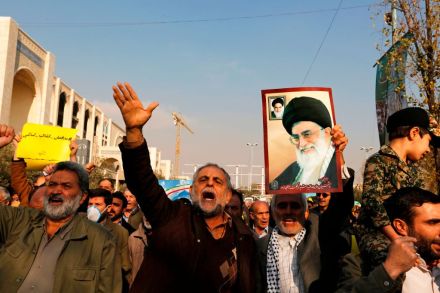
‘Death to Khamenei. Death to the dictator.’ Iran’s new president, Ebrahim Raisi, is sworn in today against a backdrop of protest, the sound of chanting echoing in his ears, whether literally or figuratively. The chants are often about the Supreme Leader, Ali Khamenei, but are also directed at the regime as a whole. ‘Clerics get lost’ is another favorite. Street demonstrations began three weeks ago in the province of Khuzestan but spread to many other places, including the capital, Tehran. People are angry about water shortages and the wretched, broken state of the economy. The question now is whether the protests will build and, if so, whether Raisi will live up to his terrifying reputation and crush them.

iran mullahs

Why Iran is stepping up its maritime piracy

From our UK edition

On Tuesday there was an attempted hijacking of a tanker in the Gulf of Oman. According to the UK Maritime Trade Operations (UKMTO), nine armed men boarded a Panama-flagged tanker before leaving several hours later – reportedly after the ship’s crew sabotaged the vessel’s engines. The UK believes this attempted hijacking was the latest in a string of maritime attacks perpetrated by Iran or one of the several militant groups it backs in the Middle East. The failed hijacking follows a drone attack last week on the tanker Mercer Street in the Arabian sea, which is owned in part by the Israeli shipping magnate Eyal Ofer. This attack claimed the lives of British and Romanian nationals onboard the ship.

Why is the EU attending the butcher of Tehran’s inauguration?

From our UK edition

At the beginning of the year Donald Trump’s Secretary of State, Mike Pompeo, was forced to hastily cancel a diplomatic trip to Europe, reportedly after top EU officials refused to meet with him following the storming of the US Capitol building. In the aftermath of the event, Luxembourg’s foreign minister suggested that Trump was a ‘political pyromaniac’ and Pompeo soon found that the United States was no longer a welcome presence in the hallowed halls of Brussels. If that was how the European Union admonished America – arguably the most important democracy in the world – one can only imagine the treatment it planned to dole out to the world’s tyrants and dictators this year.

Iran is running out of water

From our UK edition

It’s far from an exact science, but if you want to get a sense of where the world is heading in terms of resource scarcity then you could do worse than considering the cost of a litre of oil versus a litre of water. These days a litre oil of crude is worth around 45 US cents (33p); a litre of bottled water in the UK will generally set you back around 65p. Oil has dropped around 100 per cent since its high in 2008 while water’s value has held firm, and even risen across the Middle East and Asia. This is probably unsurprising. Right-thinking opinion now considers oil an anathema while water is drying up almost everywhere — and nowhere more so than Iran.