Iran

‘I came here to escape radical Islam’: the asylum seekers who understand the rioters’ fears

From our UK edition

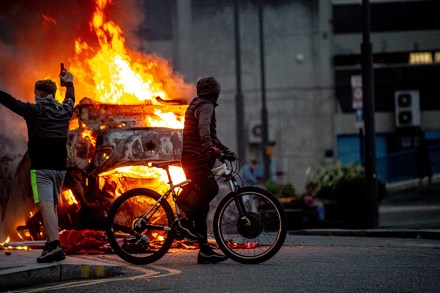
Sousou is a 24-year-old Syrian-Palestinian woman who arrived in Britain a few weeks ago in a rubber dinghy from Calais. Her husband was also on the boat, along with 70 other men and women. Sousou was (and is) pregnant and the passengers all nearly drowned – as her aunt had done on a previous crossing attempt. There were too many people on board and the overloaded dinghy began to take in water. Sousou and her husband were rescued by the British coastguard and for a while they felt safe – until the riots began. Now, after things seem to have quietened down, she talks to me from a hotel in south London. ‘I was scared. I was watching it all on the news,’ she says.

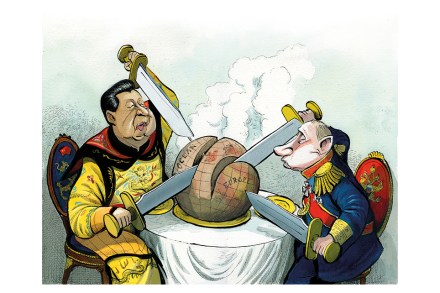
The new alliances dedicated to destroying democracy

From our UK edition

After staging a failed coup and going to prison, the Venezuelan army officer Hugo Chavez ran to be president in 1998, campaigning against corruption and offering revolutionary change. His nation was seen as a prosperous beacon of stability, built on its great oil wealth, envied by many people elsewhere in the region. He won by promising to tackle the inequality that scarred it so badly and take on the oligarchs enriching themselves through favours and nepotism. Western celebrities, journalists and politicians, from Sean Penn through to Jeremy Corbyn, started flocking to South America to hail their new progressive hero supposedly fighting for social justice.

Anti-Semitism has returned to French politics

From our UK edition

New Caledonia is an archipelago in the South Pacific not far from Australia. James Cook discovered it in 1774, but, after concluding that too many languages were spoken there, he declined to annex it to the British Empire. France, not as cautious, made it a distant colony under Napoleon III. Today, riots are convulsing the territory. Supposedly ‘decolonial’ in aim, they are most certainly violent and fuelled by the anti-white racism that, from London to Brussels and Paris, has become the trademark of the new radical left. The strangest thing is that among the flags of the Kanak independence movement, one also sees Azeri flags. Why Azeri?

Who has the worst voice in parliament?

From our UK edition

For the first time in more than two decades we are dog-less, and the house feels horribly empty. Our Patterdale terrier, Bonnie, led a long, vigorous life but her balance had gone and her breathing was heavy, so we called the vet. Patterdales are little imps and Bonnie was ‘known to the police’. I never discussed politics with her but she liked Lib Dems; that is, she liked biting them. A public footpath bisects our garden. Most ramblers escaped intact but Bonnie had a habit of nipping tall, grey-ponytailed men with walking poles. She nipped the vicar, too, tearing a cartoon-style square out of the seat of his chinos. The language! Despite that, we remain hopeful Bonnie is in doggy heaven. ‘St Peter won’t know what’s hit him,’ said my wife.

Is Venezuela preparing for war?

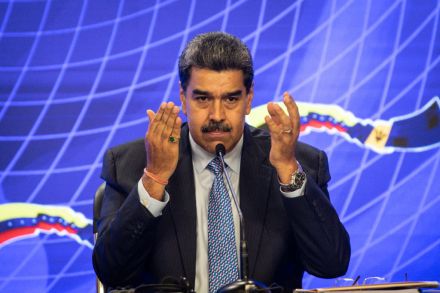
Earlier this month, two American supersonic fighter jets flew over Georgetown, the capital city of Guyana. The US show of force is not only for the attention of Venezuela’s socialist regime who has been escalating toward a military conflict with its smaller neighbor since at least September 2023 when Nicolás Maduro returned from Beijing. The message of sending two F/A-18 Super Hornets flying from a nuclear-powered aircraft carrier sailing in the Caribbean Sea is also for the Islamic Republic of Iran. At first glance, the Venezuela-Guyana conflict is about a century-old border dispute of a dense territory called the Esequibo that makes up two-thirds of Guyana’s land mass but only 15 percent of its population.

nicolas maduro venezuela

Will Iran’s foreign policy change after Raisi’s death?

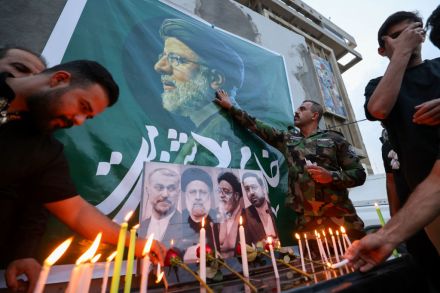
Ebrahim Raisi, the hardliner jurist-turned-president of the Islamic Republic of Iran, died in a plane crash over the weekend after coming back from a ceremony marking a new joint dam project with Azerbaijan. Iranian foreign minister Hossein Amir-Abdollahian, who was also on board, perished in the crash as well.  Few Iranians outside the political system will mourn their deaths. Raisi, for instance, was a notorious, unapologetic defender of the Iranian regime and first got involved in its machinations in his mid-twenties. In 1988, he served on a panel that handed down death sentences for thousands of dissidents.

iran ebrahim raisi

Gangs of Tehran: how Iran takes out its enemies abroad

From our UK edition

‘It was Friday afternoon, around 2.45. I came out of the house and was going towards the car on the driver’s side,’ Pouria Zeraati says casually. Zeraati – a presenter at the London-based TV station, Iran International – is recounting what was probably an Iranian state-sponsored attack. ‘I was approached by a man who pretended to be someone asking for £3. The second man then approached. They held me strong, very firmly, and the first person stabbed me in my leg.’ The Iranian regime is reshaping the murder-for-hire market in the US and parts of Europe Zeraati is talking on his first day back at work since he was knifed on Good Friday in Wimbledon. It’s still too painful for him to sit down, so we’re standing for our conversation.

The ayatollah’s birthday surprise

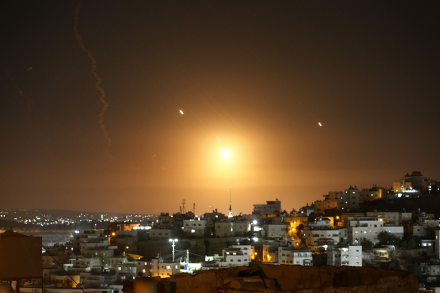
Did Iran’s ayatollah have the worst birthday ever? His eighty-fifth kicked off with a bang, as Israel retaliated after Iran’s unprecedented strike across the Jewish state that featured a failed barrage of lethal drones over the weekend. What comes next from Iran remains anyone’s guess — but the Israeli response, which struck an Iranian military but not nuclear site, served as an undoubted shot across the bow to the largest state sponsor of terrorism. The message was that it can’t attempt to directly attack Israel’s homeland without consequences and that Israel has the capability to attack Iran’s nukes if they so please. Iranian proxies, like Hamas, not only invaded Israel on October 7, but have been plaguing global shipping routes for months.

Inside the new Arab-Israeli alliance

From our UK edition

As Jordanian fighter jets shot down Iranian drones heading for Israel on Saturday night, there were joyful cries of Allahu Akbar on the ground as some people lent out of their windows to cheer the drones they thought were getting through. King Abdullah II was depicted on social media wearing an Israeli military uniform complete with the Star of David and he must dearly wish that Israelis would shut up about their ‘new strategic alliance’ with old enemies like Jordan, Egypt and Saudi Arabia. Jordan’s foreign minister was forced into an unconvincing declaration that they would shoot down anyone’s drones, not just Iran’s. Yet, the important fact remains: this is the first time, as far as anyone can remember, that Jordan’s armed forces have fought to defend Israel.

My letter from Chris Packham

From our UK edition

I do not know Chris Packham, the BBC nature broadcaster, personally, but he wrote me a letter last month, enclosing a book called Manifesto, The Battle for Green Britain by Dale Vince which, he tells me, ‘has something very important to say at this most important time’. In his letter, Chris says that ‘irrespective of any party politics’, ‘The coming election will be the most important of our lifetimes’ because we are ‘halfway through the last decade’ left to avoid ‘the worst of climate breakdown’. So ‘we must help young voters navigate the new voting rules’. Politics has ‘become the final frontier for a real greener Britain’. What Chris does not mention is that party politics is very important in this most important book.

The Lebanese always return home

From our UK edition

Beirut You might have thought that the threat of the Gaza war spiralling into an all-out regional conflagration, along with breathless travel advice from western governments urging their nationals to leave the country, would have deterred Lebanon’s expats from flying home to celebrate Eid al-Fitr this year. Not one bit. Flights, hotels and restaurants were fully booked despite Iran’s drone strike. The Lebanese know that even if there is fighting (and in South Lebanon, there is on an almost daily basis), if it isn’t on your doorstep, there’s no reason to stop the party. The Lebanese know that even if there is fighting, if it isn’t on your doorstep, there’s no reason to stop the party In any case, the Lebanese always think they have the inside track.

What Iran’s attack on Israel means for the Jewish state, America and the region 

Iran’s unprecedented attack on Israel Saturday night represents a dangerous escalation for three reasons. The first is its scale, some 300 drones and missiles. Second, it marks the first time the Islamic Regime has launched a lethal attack on Israeli territory from Iran itself, rather than through proxies. Most important of all is the combination of the first two: a major attack launched against Israel from Iranian territory. Although Israel, the US, the UK and, surprisingly, Jordan managed to shoot down nearly all the incoming drones and missiles, it was the thought that counts. And it was a very dangerous thought. Within hours, the Iranian attack changed the region’s strategic landscape.

israel iran

On the anniversary of the Iraq invasion, spare us the sermons

Twenty-one years ago today, the United States committed its worst foreign-policy mistake in generations: invading Iraq to overthrow Saddam Hussein, the despot who ruled the Arab country with an iron fist for nearly a quarter-century. The entire operation was supposed to be a “cakewalk,” in which the mighty US military, stocked with the best technology and weapons the world had to offer, would pummel a decrepit Iraqi army that was hobbled by international sanctions for the better part of a decade. The mood at the time was serious but stoic. Donald Rumsfeld, the US defense secretary, argued that the entire war wouldn’t last more than five months.

iraq war

Nixing BRICS: how to counter the China-led alliance

Americans are used to exercising influence through international entities such as NATO, the World Trade Organization or the World Bank. Each of these groups was set up with American leadership or at its instigation; all have been used to advance Washington’s vision of global liberal-democratic capitalism. No comparable international organization or collection of nations has been influential since the Soviet Union’s collapse. That may be changing. The so-called BRICS alliance (its founding countries were Brazil, Russia, India, China and South Africa) recently added new members Iran, Ethiopia, Egypt and the United Arab Emirates.

BRICS

Biden’s action in Iraq and Syria is merely delayed reaction

What do you think of the apothegm “Better late than never?” I think it is often dubious. For confirmation, I adduce the airstrike the Biden administration just conducted against eighty-five targets in Iraq and Syria. The attacks, against infrastructure associated with Iran’s Revolutionary Guard, are billed as the opening salvo in response to last week’s drone attack by Iranian assets in Jordan that left three Americans dead and more than forty injured. Taking a page from an earlier, square-jawed time, officials from the administration tersely commented that America’s “multi-tiered” response would continue at a “time and in a manner of our choosing.”  Spoken like a real administration. I wonder from what storeroom they got the script?

air strikes iraq syria

What are Biden’s options on Iran?

The drone strike that struck near the sleeping quarters of a small US outpost in northeastern Jordan, killing three American troops in the process, has landed like a thud in the corridors of the Biden administration. Hawkish lawmakers who have been jonesing to bomb Iran into the Stone Age for years, such as Lindsey Graham and Tom Cotton, are using the weekend’s travesty to push the argument to an even higher decibel. The logic: Iran and its proxies need to understand that the US won’t be pushed around. It’s an emotionally satisfying response, but one that could get the United States into a heap of trouble if not thought through and tailored appropriately. President Biden and his advisors have spent the last forty-eight hours talking through options.

joe biden iran

Senator Lankford defends his immigration deal

Senate Republicans who are negotiating an immigration reform bill with Democrats are defending their efforts after conservatives reacted angrily to leaked details for the deal. The lead negotiator, Senator James Lankford, said on Fox News Sunday that his detractors are relying on “internet rumors” to fuel their opposition to the bill.“This bill focuses on getting us to zero illegal crossings a day,” Lankford said. “There’s no amnesty, it increases the number of border patrol agents, it increases asylum officers, it increases detention beds so we can quickly detain and then deport individuals.

james lankford

How dangerous is the Sunni-Shia schism?

From our UK edition

In 2014, with the Middle East convulsed by the murderous, self-styled Islamic State, a Daily Mail reader wrote a letter to the editor which began: ‘Are you confused by what is going on in the Middle East? Let me explain...’ Aubrey Bailey went on to describe the dizzying complexity of diplomatic relationships thrown into turmoil: So, some of our friends support our enemies and some of our enemies are our friends, and some of our enemies are fighting our other enemies, whom we don’t want to lose, but we don’t want our enemies who are fighting our enemies to win... And all this was started by us invading a country to drive out terrorists who weren’t actually there until we went in to drive them out – do you understand now?

Why hasn’t Hamas freed its American hostages?

Hamas’s most valuable assets are the American hostages it holds. That simple fact means the terrorist organization will demand the highest value in return. What can America give Hamas in exchange? Not prisoners, since the US doesn’t hold any Hamas fighters. That means the US cannot follow the Israeli pattern of giving Hamas three Palestinian prisoners in exchange for every one held by Hamas. Nor can America provide boatloads of cash, as the Biden administration has for Iran. Biden could continuing giving Iran money, but that is much harder in the midst of war. And it is untenable politically to pay Hamas directly while the fighting continues. The Biden team might promise to help rebuild Gaza later, but that’s not valuable to Hamas right now, as it fights for its life.

hamas

Facing the facts of the West

The century began with a global celebration — the West’s belief in liberal democratic capitalism had battled foes for centuries and emerged victorious. All that remained was for the rest of the globe to melt into the West’s soft and loving embrace. Two decades in, things look much less rosy. China’s rapid rise has not spurred democratization, as many suggested it might; instead it has nourished a massive ideological and political competitor that may supplant the West not only economically but as an arbiter of global culture and behavior. Western decline is not yet inevitable, but Western values will survive and spread only if leaders recognize two clear facts. The first is that the spread of Western values has in large part been due to the dominance of Western power.

west