Interview

‘Cocaine addiction is time-consuming’: the rise and fall of Kevin Rowland and Dexys

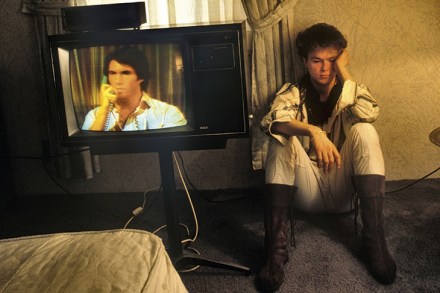
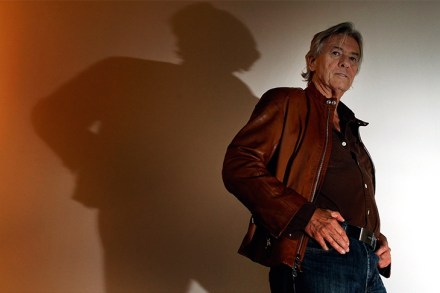
When Dexys Midnight Runners reached No. 1 in the singles charts in spring 1980 with the song ‘Geno’, the band had to travel to London for their coronation appearance on Top of the Pops. For the first time they could afford the train fare. But Kevin Rowland — their singer, leader, creative director, boss, whatever you want to call him — insisted they continue to jump the barriers at Birmingham New Street. ‘I said, “Come on lads, we’re still going to bunk the trains.” And they went, “What?” “Come on, the inspector’s coming. We’ve got to get in the toilets.” And the drummer said, “Kev. We’re No. 1 in the charts and we’re bunking the trains…”. “GET IN!
Meet Dion, one of the last living links to the earliest days of rock ’n’ roll

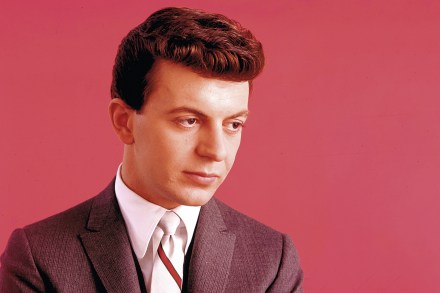
Only two of the Beatles’ pop contemporaries are depicted on the cover of Sgt. Pepper’s Lonely Hearts Club Band. One is Bob Dylan. The other is Dion DiMucci. In a pleasing third-act twist, Dylan contributes the liner notes to Dion’s new album Blues With Friends — an act of deference that the recipient is still processing. ‘I asked him, I didn’t know if he had the time, but he sent me back those paragraphs and said that I knew how to write a song.’ He whistles. ‘That’s from a Nobel Prize winner. I thought, I’ll take it, I’ll take it!’ So he should. Dion — like Kylie, a single moniker suffices — is one of the last living links to the early days of street-corner rock ’n’ roll.

Everyman

Toby Jones shuffles into the café in Clapham where we are meeting. He’s wearing a duffle coat and a hat and carrying a rucksack. He looks just like one of those unsung characters that he specialises in, the kind of person you don’t take much notice of unless you have to. Today we are talking about his new ‘vehicle’ (sorry), Don’t Forget the Driver. It’s an everyday tale of an everyday coach driver (Peter Green) from Bognor Regis, his daughter Kayla, who turns ennui into an artform, and mother Audrey, who’s going downhill fast with Alzheimer’s. It is going to twang the nation’s heartstrings. What makes it different is that it is Jones’s first go at writing a TV comedy — or co-writing one.

The write stuff | 3 January 2019

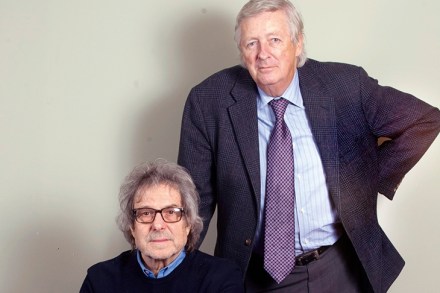
Given their track record, you might think that Dick Clement and Ian La Frenais would be spared the struggles that lesser screenwriters go through to see their writing on screen. But this, it turns out, would be naive. Clement and La Frenais may have written some of the best-loved programmes in British television history: Auf Wiedersehen, Pet; Porridge; The Likely Lads; Whatever Happened to the Likely Lads? Their CV may contain the huge hit film The Commitments — as well as more recently acclaimed TV dramas like The Rotters’ Club and Archangel. Yet, when I meet Clement on a solo visit to London, the two most striking things about him are how driven he remains at 81, and how driven he apparently needs to be.

Renaissance man | 13 December 2018

The first thing Gary Kemp bought when Spandau Ballet started making money was a chair. He’s very proud of that chair. He talks about his chair in tones midway between one of Monty Python’s four Yorkshiremen and Nicholas Serota. ‘I wasn’t making any money until “True” was successful, in 1983,’ he says. ‘The first thing I really bought was a William Morris chair. What the fuck is a 22-year-old boy living in a council house with his mum and dad doing going out and buying a William Morris chair?’ It was the first chair anyone in the Kemp family had ever owned outright, he says. ‘Everything in our house was on HP, apart from the cat. It’s very different to the old Alan Clark thing. We were handed down no furniture.

Now that’s what I call music

One of the members of the government’s HS2 Growth Taskforce is remembering the first time he went to a gay club. ‘There was a club in Coventry that was only open on a Sunday night, at the Quadrant, and a mate of mine said, “There’s a DJ there who plays some fantastic music that I know you’ve never heard, so why don’t we go down?” It was a gay club, or a queer’s club as it was known then. I loved it. Oh, I loved it. I couldn’t believe that blokes were dancing with each other. The music was awesome.

‘And now for my next guest – Adolf Hitler!’

Having thoroughly enjoyed Graham Norton’s recent forensic cross-examination of Hillary Clinton on BBC1, I’m thrilled that the corporation intends to use Graham for yet further heavyweight political interviews. Here’s an exclusive preview of one coming up soon: GN: ‘Halllllllo! How lovely to see you all! I hope you’ve been behaving yourselves. [Audience titters.] Well, do we have a feast for you this evening — so let’s get started. My first guest needs no introduction. Probably the most famous man from the 20th century — ladies and gentleman, please welcome, Adolf Hitler!’ [Hitler makes his entrance, waves, shakes Graham’s hand and sits down next to him. Audience cheers wildly.

The Maestro, Ennio Morricone, interviewed: ‘I am a real composer’

Ennio Morricone, the Oscar-winning Italian film composer, has died at the age of 91. Here, Richard Bratby spoke to the 'Maestro'. Ennio Morricone’s staff wish it to be known that he does not write soundtracks. ‘Maestro Morricone writes “Film Music” NOT “Sound Tracks”’, explain the printed interview guidelines. ‘Maestro Morricone is a composer. Composers do not use the piano to compose music with, they write their music down directly in musical notes without the interference of any musical instrument.’ Well, that’s Beethoven told. In the classical music world, you hear tales about ‘riders’, the Spinal Tap-like lists of minimum requirements that pop stars issue before consenting to walk among mortal men.

Not easily Suede

‘I always think they’re not lusting after me,’ Brett Anderson says of the middle-aged fans who still turn up to see his band Suede and leave the shows a little flushed and excited. ‘They’re lusting after something that doesn’t really exist. They’re remembering their wild youth. It’s faintly comical to me when I think about myself in the 1990s and the sexuality of it. That got a bit out of control, I suppose. And it’s odd, because I’m quite a reserved person in lots of ways, so I don’t really know what was going on there.’ Oh, Brett, you do yourself a disservice. Look at yourself! Not an ounce of flab, dressed like a clothes-horse, face all sharp lines and clean planes. You’re a well-preserved man.

The legend of Lawrence

‘I could still be a pop star,’ says Lawrence, sitting on a footstool in his council flat, high up in a tower block above London EC1. ‘I know I’m not going to be a person who has a million hits on the internet. Do they call them hits? Views, or streams, whatever they are. I’m not going to be that person, but I still think I could have a hit record. For me a song like “Relative Poverty” is a song for this generation, and I don’t know why it shouldn’t be an anthem for today.’ Lawrence is now 57, and he has been trying (and failing) to become a pop star since 1979.

On the offensive

‘I’m an amateur,’ Barry Humphries tells me. The Australian polymath uses the word in its older sense of ‘enthusiast’ rather than ‘bungler’ and he feels no need to point out the distinction. He’s in London to perform a three-week residency at the Barbican — Barry Humphries’ Weimar Cabaret — with his fellow Australian Melissa Madden Gray, who uses the stage name Meow Meow. The show was inspired by Humphries’ fascination with Germany’s culture during the interwar years. ‘It was the last song before the nation slid into moral squalor.

Of human bondage

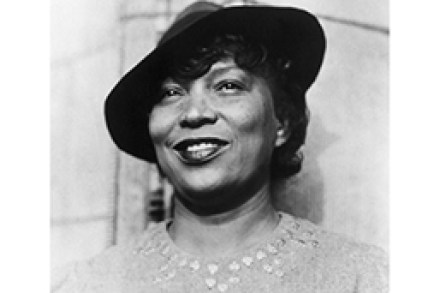
Zora Neale Hurston, the African-American novelist-ethnographer, was a luminary of the New Negro Movement, later renamed by American scholars the Harlem Renaissance. ‘Harlemania’ took off in jazz-age New York, as white thrill-seekers danced to Duke Ellington hothouse stomps and enthused over so-called primitive art. Hurston made a ‘black splash’ of her own in 1920s Harlem. Among her admirers was the dance critic and photographer Carl Van Vechten, whose deliciously Firbankian 1926 account of life uptown, Nigger Heaven, gloried in blackamoor jungle dances and other Uncle Tom minstrelsy. (‘Period piece’ would be the most charitable description.

A man of many parts | 24 May 2018

A most excellent fellow, Roger Allam. On the stage he brings dignity to all he does, in the noblest traditions of the British theatre. Off it he is a fully paid-up member of the human race, admired by his comrades as a man no less than as an actor. Some mummers, eager to let off steam, occasionally let the side down. Allam is the sort of chap — star and team player — who brings the profession into repute. Three times a winner of an Olivier award, twice for best actor, he is currently to be found on the West End stage in The Moderate Soprano, David Hare’s touching portrait of John Christie, Etonian, commissioned officer, eccentric and founder of Glyndebourne Festival Opera on the family estate in Sussex. ‘I’ve grown to love the man,’ says Allam.

Animal attraction | 30 November 2017

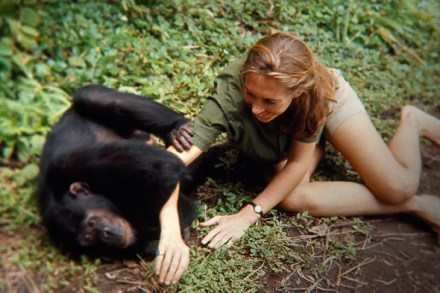
There are times when our national passion for cutting people down to size is a little tiring. I left Brett Morgen’s new documentary about Jane Goodall, the chimpanzee expert, in a rare flush of excited enthusiasm. ‘You’ve got to see it!’ I said to everyone. Most replied along these lines: ‘Goodall, didn’t she turn out to be a fraud?’ Or: ‘Wasn’t it all Leakey’s work she took credit for?’ ‘Yeah, what’s with that?’ says Brett Morgen hunched over his toast in a very hipster Soho hotel. ‘In the Times of London today, in the review, it says Jane can’t hold a candle to David Attenborough. I’m like, he’s a fucking TV presenter!

Fighting talk | 23 November 2017

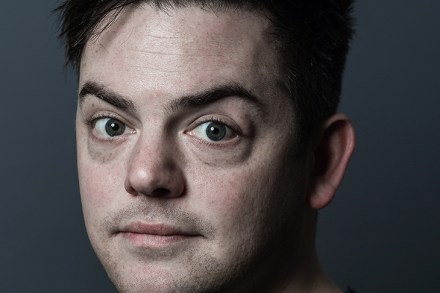
There’s a scene in Alfred Hitchcock’s Marnie in which Tippi Hedren is emptying a safe while a cleaning lady silently drags her mop towards her. Can Hedren, playing the disturbed Marnie, slip down the stairs before the woman turns her head? I felt a twinge of the same panic last week interviewing the composer Nico Muhly, whose opera Marnie — based more closely on Winston Graham’s novel than on Hitchcock’s film — was given its world première by English National Opera last Saturday. Would I make it out of the room without asking the Wrong Question? Muhly, who made his name as the cherubic, prodigiously gifted but prickly protégé of Philip Glass, is scary to interview. This is well known in New York.

His dark materials | 3 August 2017

Randy Newman is already struggling to keep up with himself. His dazzling new album, Dark Matter, was written before the changes of the last year, and no matter how pointed and current some of it is, there’s something missing. ‘There was a newspaper article that said Donald Trump is like a character in a Randy Newman song,’ he says. ‘I didn’t think there were any real people like the guy in “Political Science” or “My Life Is Good”. But he’s close.’ He’s had a bash at something for the Potus. ‘I just had an idea for a Trump song,’ he says, sounding rather like Yogi Bear’s rather smarter brother. ‘But then I didn’t do anything about it.

Brief encounter | 22 June 2017

How do you follow a film like Shoah? The nine-hour Holocaust documentary, released in 1985 after 11 years of work and 350 hours of interviews — with survivors and perpetrators, saviours and collaborators, historians and bystanders — is considered one of the greatest films ever made. For decades, director Claude Lanzmann kept returning to the subject, raking over the same material, finding it impossible, maybe indecent, to move on. Of the five documentaries he has made since Shoah, four were substantial footnotes to the original, extended — and often extraordinary — out-takes from the acres of unused footage. But Lanzmann did have an answer to the question of what to do next — even though it sounded like a joke.

Roving eye

Photography has many genres, even more than painting, and most photographers achieve fame by focusing on one of them. There are technical reasons for this. Armed only with a bunch of brushes and a palette of colours, a painter can achieve a variety of effects — close-up, distance, soft or sharp focus, motion — for which a photographer needs a battery of cameras and associated paraphernalia in the form of lenses, films, lights and filters, and the technical know-how to get the best out of each. There is also professional snobbery. Jobbing photographers who work across genres for magazine assignments are less likely to be taken seriously as artists. The distinction may be artificial (pun intended) but it exists, and it explains why New York photographer Marvin E.

His dark materials | 16 March 2017

The enticingly subversive films of Paul Verhoeven were very tempting to me as a schoolboy. When I hit 14, the Dutch director released RoboCop and the excitement among me and my friends at catching two hours of unmitigated ultra-violence reached fever pitch. He did not disappoint. That was in 1988 and it was interesting later on to read several newspaper articles accusing Verhoeven of having made a fascistic screed in favour of zero-tolerance law enforcement. This was not something any of us had considered up to that point, but satire, yes, even back then we had an inkling of what that was and RoboCop seemed to fit the bill nicely. Verhoeven’s latest movie Elle (reviewed by Deborah Ross last week) shows the old powers haven’t waned.

Flunking the interview

I still get a hot flush of embarrassment when I recall my first interview. It was for a summer job at Selfridges in London when I was 17. The lady from personnel asked me how my friends would describe me. Maybe it was the heat or nerves but all I could think of was the funeral oration by John Hannah’s character in Four Weddings and a Funeral where he describes his deceased partner, played by Simon Callow, as ‘so very fat and very rude’. So I did something you should never ever do in an interview: I tried to be funny. ‘Rude — my friends would describe me as rude,’ I replied. I didn’t get the job. People from my background are meant to sail through such interviews.