Internet

Are there ways in which virtual exhibitions are better than real ones?

Six months ago I published a book about travelling to look at works of art. One such journey involved a round trip of about 6,000 miles to contemplate minimalist sculptures in the Texan desert. But the point wasn’t so much the distance as the importance of standing physically in front of the works themselves. Seeing the actual thing, I argued, was fundamentally different from looking at it in a book or on a screen. Nowadays, of course, unless you live within walking distance of a notable sculpture, that’s really all there is. A week ago my inbox was flooded with messages announcing that the art institutions of the world were closing until further notice. A few days later there was another deluge of announcements, but this time it was online exhibitions.

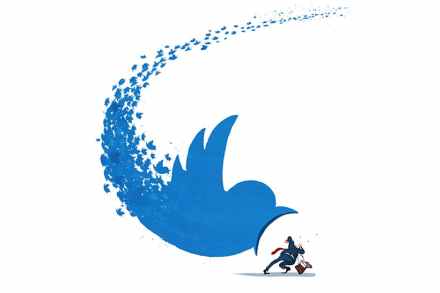
How to beat Twitter cellar-dwellers at their own game

From our US edition

For an ordinary girl from Florida whose Twitter presence is largely focused on her rescue pets (shout out to Jolene, Dixie Belle and Mean Cat) and her love of pop culture, I get trolled a lot. Perhaps people don’t enjoy my hot takes on J.Lo’s Oscar snub as much as I’d hoped. Or maybe the internet has lost its appetite for cute pictures of dogs — a sign of the apocalypse if ever there was one. But it’s probably because this Florida Man is my older brother. For the record, I wouldn’t have it any other way. Though, like most siblings, we don’t agree on everything, I love him and am deeply proud of him.

twitter internet

Washington’s war on internet free speech

From our US edition

The United States is apparently angling to outpace its European counterparts when it comes to silly, censorious, and sometimes dangerous internet policies. The latest batch of bad proposals in Congress and the White House would, if enacted, kill social media, search engines, and so much other online life as we know it. While conservative politicians here grumble about ‘hate speech’ and ‘data protection’ laws abroad, the alternatives they keep proposing here are just as speech-squelching and business-burdening. And while Republican party leaders have historically hated US plans like the ‘Fairness Doctrine’ and ‘net neutrality’, they keep pushing their own versions of these for social media.

internet

The bizarre, normal death of Bianca Devins

From our US edition

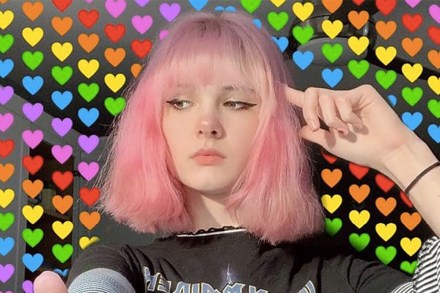
Twenty years ago, the death of Bianca Devins would have been a small town horror story. Tragic. Brutal. Stomach-turning. Essentially local. A jealous man stabbed her to death in a fit of outrage before trying, and failing, to kill himself. Something of this kind happens too often for anyone to hear about them all. Bianca Devins's killer did something different, though: he took pictures of the 17-year-old’s dead body and posted them online, to a private forum on the app Discord. He also took pictures of himself after his suicide attempt and uploaded them as well. Little information on the murder is reliable. Rumors spread that Devins's killer was an 'incel' and a 'stalker'. Other rumors spread that he was in fact her boyfriend.

bianca devins

Deepfakes could be good news

From our US edition

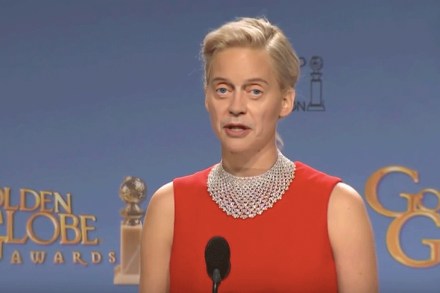
Are you scared of deepfakes? Perhaps you should be. A few years old and continually growing more sophisticated, deepfakes are digital simulacra generated through machine learning that are barely distinguishable from the real thing. They’ve been used to fake celebrity porn videos, make Barack Obama seem to call Donald Trump a ‘dipshit,’ and most recently, superimpose Steve Buscemi’s face on to Jennifer Lawrence’s body in a video that was at once mesmerizing and scary (Buscemi/Lawrence bore a strange resemblance to Tilda Swinton).

deepfakes jennifer buscemi

How digital media killed itself

From our US edition

As a young digital journalist in the late 2000s, my industry peers and I often reminisced about the era we felt we’d just missed: the glamorous, fin-de-siècle age of New York media, the time of seven-figure budgets for magazine launches and outsize editorial personalities that commanded celebrity attention in New York. We were the ones scrambling to keep our jobs afloat in the aftermath of the 2008 recession. As it turns out, we still had it pretty good. The other evening, right after the brutal layoffs at digital publications such as BuzzFeed and HuffPost were announced, I found myself in a dive bar (of course) with a handful of the aforementioned elder millennials of digital media.

buzzfeed digital media

The agonizing death of Hillary Clinton’s ‘Internet Freedom’ agenda

From our US edition

Has there ever been a more fitting corporate meltdown than that endured by Facebook over the last two years? After perhaps swinging an election or two in 2016, the company has been dragged bawling through the mud more times than an Medieval Estonian peasant caught stealing horses. There have been non-apologies and listening tours, rebrands and reach-outs, Senate committee hearings, slap-downs and back-pedals, faked humility and conspiracy theories, inquests and campaigns and furious denunciations, ponderous op-eds and stock-price massacres, would-be trust-busters on the make, crisis management PR operations and parade ground about-faces.

hillary clinton internet freedom

The Best Talks and Debates on the Internet

The internet has changed beyond recognition in recent years. In the noughties we consumed short, digestible bursts of information online. But now there’s a growing appetite for long-form intellectual content – the internet is chockablock with podcasts, discussions and debates. People are going online to explore ideas that, before, would never have been found beyond the bounds of a university campus. As Douglas Murray revealed here on Spectator Life, the most radical contemporary thinkers are joining the likes of Jordan Peterson in tapping into this growing desire to discuss philosophical and political questions online. In doing so, they sidestep the censorious culture of some universities and reach an online audience of millions.

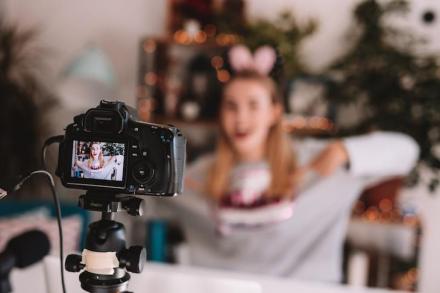
The vlogging fantasy that bewitches children

My friend’s ten-year-old daughter has a new hobby. Like many of her school pals, she hopes to become a video blogger — a ‘vlogger’. She has started to record clips of herself for others to watch, share and ‘like’. She showed me a few, then gave me a list of famous vloggers to watch: JoJo Siwa, iJustine, Noodlerella, Zoella. Their names sounded so bizarre. But they are totally familiar to tweenage girls. Like an earnest marketing executive, my friend’s daughter then explained to me that it was all a matter of numbers. If her videos are viewed 40,000 times on YouTube, she can have adverts placed on them; 100,000, and companies would start sending her products to promote. One million and she’d be a bona fide YouTube star.