Identity politics

What hope is there for the Church of England today?

From our UK edition

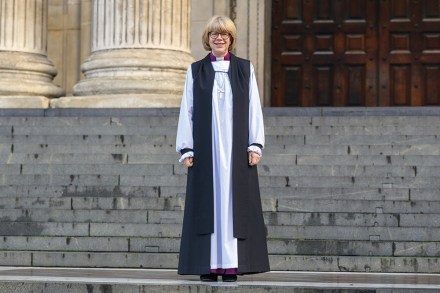
A familiar defence of Anglicanism holds that flowers of principle bloomed in the mucky soil of compromise. Yes, this idea runs, the Church of England that evolved from Henry VIII’s marital strife was indeed a theological hotchpotch; but there is nevertheless much to be said for a tolerant strand of Christianity forming a middle way between Roman Catholic and hardline Protestant alternatives.   The perceived breadth of Anglicanism has long remained its selling point. Like the proverbial Australian farm, it is (or was) a Church with few fences but many wells. Elasticity over matters of secondary importance used to apply at a structural level.
The true villains of our TV crime dramas? The creators

Idly watching the first episode of a TV crime drama series recently, I found myself in a slightly troubled frame of mind. We were already 35 minutes in and no probable villain had shown their face. We had seen black people, Chinese people, lesbians, the disabled, the impoverished and powerless, Muslims, the young and idealistic… yikes, I thought to myself, it simply can’t be any of them, can it? Surely not. And then, as if the scriptwriter had heard my private worries, for lo, a very rich, marble-mouthed white woman emerged and was shown being beastly to some young and idealistic people and I thought: bingo! We have our villain. There is no need to watch the remaining five episodes. She did it, the rich cow. The only slight surprise is that it was a woman rather than a bloke.

Mickey Down, Charlie Gammell, Sean Thomas & Douglas Murray

From our UK edition

32 min listen

On this week’s Spectator Out Loud: Mickey Down, co-creator of Industry, reads his diary for the week; Charlie Gammell argues that US intervention could push Iran into civil war and terrorism – warning that there are more possibilities than just revolution or regime survival; false dichotomy at the heart of; Sean Thomas bemoans the bittersweet liberation from his libido; and, Douglas Murray believes Britain has a growing obsession with race. Produced and presented by Patrick Gibbons.

Iran’s useful idiots, Gordon Brown’s second term & the Right’s race obsession

From our UK edition

43 min listen

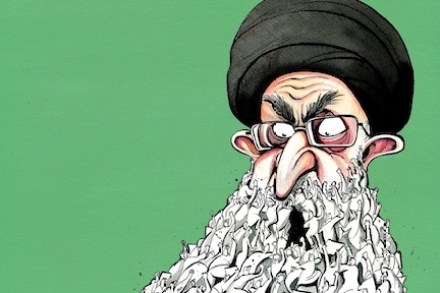
As the world watches events in Iran, and wonders whether the US will intervene, the Spectator’s cover this week examines 'British complicity in Tehran’s terror’. When thinking about what could happen next in the crisis, there is a false dichotomy presented between regime survival and revolution; the reality is more complicated, though there is no doubt that this is the biggest threat to the theocratic regime in decades.  For this week’s Edition, host Lara Prendergast is joined by political editor Tim Shipman, columnist Rachel Johnson and features editor – and Edition co-host – William Moore. They commend the bravery of Iran’s protestors but criticise the ‘inept, naive and wrong’ response of the Foreign Office.

Art and moralising don’t mix

From our UK edition

Against Morality is not against morality. But it is against moralising. Which is a start. Anti-cancel culture, anti-identity politics, Rosanna McLaughlin’s small book of essays is the first insider-artworld publication to condemn the Savonarolan turn within culture. A cause for celebration, you might think. Her argument is perfectly sound. ‘Morality has become the central pillar, the justification for art, the bar by which we measure whether something is good or bad’, and it’s been a disaster.

Candace Owens: on the Macron lawsuit, anti-Semitism and Trump

Candace Owens joined Freddy Gray on the Americano show last Friday to discuss her recent lawsuit with the Macrons, Trump's intervention, the Epstein Files and accusations of anti-Semitism. Here are some highlights from their conversation. Why did Macron and his wife sue Candace Owens? Freddy Gray: Candace is being sued or threatened with legal action by the Macrons, Emmanuel and Brigitte Macron, the President and First Lady of France. Because, Candace, you believe that Brigitte Macron is a man. Why do you think the Macrons are choosing to sue you? Candace Owens: Because they were trying to stop the story. I think it was an effective PR strategy.

Freddy Gray and Candace Owens on the Macron lawsuit

Daniel Cameron and the cost of racial mudslinging

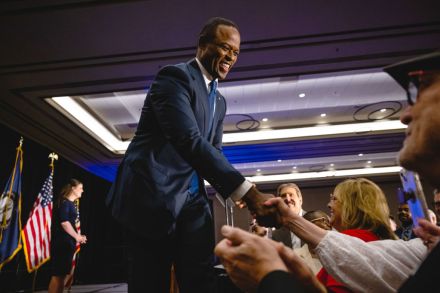
Racial slurs are being hurled at Daniel Cameron, the Republican candidate for Kentucky governor. That’s despicable. It doesn’t matter what race the victim is or what race his accuser. Those slurs should be called out loudly and promptly.  They would be despicable if a black candidate faced them from a white opponent, or vice versa. They are no less despicable when a black candidate, like Cameron, faces them from other blacks. The epithet in this case is “Uncle Tom” and it has been leveled against him in paid advertisements. His crime: he’s conservative.  Those ads are the work of Black Voters Matter Action PAC. They feature the loathsome slogan, “All skinfolk ain’t kinfolk.

daniel cameron race uncle tom

How political activism in medicine is failing patients

Trust in the public healthcare system declined among Americans during the Covid-19 pandemic. It’s no wonder: public health bureaucrats pushed for various insane policies that ran counter to common sense, admitted to deceiving the American people and worked to shutter debate surrounding the national and global coronavirus response. But instead of doing everything they can to restore trust in the system (and prove that they’re still deserving of it), government officials and medical associations have continued to politicize the healthcare field, sowing discord between patients and their doctors.  A consistent theme throughout the pandemic was that while Americans were less likely to trust the medical establishment, they mostly liked their personal doctors.

Our great art institutions have reduced British history to a scrapheap of shame

From our UK edition

Let’s indulge in some identity politics for a second: I am from Hong Kong, born as a subject of the last major colony of the British Empire, minority-ethnic, descended from Chinese refugees, now living here in exile. This summer, both the National Portrait Gallery and Tate Britain are presenting new displays that are meant to reflect the ‘inclusive’ and ‘diverse’ identities of Britain. Supposedly, I fit nicely among their target audience. In reality, as an immigrant looking to be included in this nation, I am perplexed by my visits.

How politics killed theatre

From our UK edition

Hope can be remarkably persistent. And so, despite several years of experience pointing in starkly the other direction, a recent weekend saw me at Who Killed My Father at the Young Vic, the latest from ubiquitous Belgian director Ivo van Hove. A young friend had gone with his father the previous week and both described it as ‘excellent’. Intense, but in a good way. Worthy broadsheet publications gave it four stars. I had my doubts: Édouard Louis, on whose angry memoir about growing up in a working-class, homophobic home in northern France the play was based, is not my cup of tea.

superman

Man of Sssssssteel

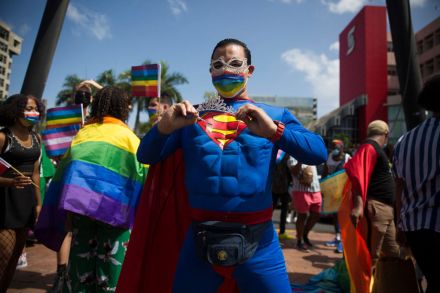
So — Superman has come out. He’s gay. I know, stop the presses, another figure of the comic book universe is being stripped of his straight, white, maleness and tossed into the volcano of intersectionality. It’s about as edgy and groundbreaking as a consumer-product survey. I was less surprised to learn Superman was getting pinkwashed than I was to find out Superman isn’t Superman anymore. There’s a new Superman, apparently, and it’s Clark Kent and Lois Lane’s son, Jonathan Kent. According to DC Comics sometime this month he’s going to kiss a dude and, poof, be gay, or bisexual, or whatever. It’s a bird! It’s a plane! It’s a pillow-biter! What it isn’t is believable. I mean, have you met any of us gay men?

The president who cried ‘extremist’

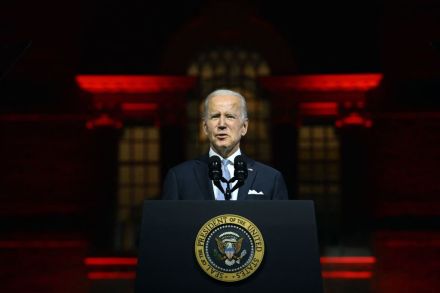
In a primetime television address on September 1, President Joe Biden declared that a large share of the nation’s voters threatened the “very soul of America.” This creepy, unprecedented presidential alert opened the midterm elections, which are now going into their mail-in phase. Waving his arms, the presidential simulacrum barked imprecations at teleprompters. His spooky, dark, red-and-blue tableau with stiff Marines in parade dress was ominous and intentionally staged. To hear a president talk and act this way was one of the political shocks of a lifetime. Make America Great Again Republicans, it was indicated, constituted an enemy within, Merrick Garland’s domestic terrorists writ large. Be very afraid.

Identity politics is in retreat in Hollywood

From our UK edition

‘Diversity is woven into the very soul of the story.’ If those words of praise from a rave review in a left-leaning journal sound to you about as inviting as a cup of cold sick, then my advice would be to stay well clear of The Sandman. Neil Gaiman’s epic graphic novel series (launched in 1989), set in the world of dreams, was relentlessly inclusive long before it became the norm. ‘I wanted to change hearts and minds,’ Gaiman has said in an interview. ‘I had trans friends and still do, and it seemed to me that no one was putting trans characters into comics. And I had a comic.’ If this TV version had been made five years ago, it would probably have been considered very cutting edge.

Has identity politics had its day?

From our UK edition

Have we reached peak woke? In Hollywood, that seems to be the emerging consensus. Thanks to the box office success of Top Gun: Maverick and the disappointing performance of Pixar’s Lightyear, in which Buzz Lightyear’s commanding officer is a black lesbian, the studios think audiences may be tiring of being lectured to. The same is true of the streaming platforms, with the biggest hits of the year being shows that take the mickey out of corporate virtue-signalling (The Boys) or just celebrate old-fashioned American heroism (The Terminal List).

Has liberalism destroyed itself?

From our UK edition

According to Vladimir Putin, liberalism is an ‘obsolete’ doctrine, a worn-out political philosophy no longer fit for purpose. In this well-timed, rather urgent book, Francis Fukuyama attacks that view and puts a vigorous case for the defence. Despite its faults, liberalism is a force for good, he says, and it remains the only political philosophy capable of taking on the authoritarians of Moscow and Beijing. But the despots are not the central focus of his argument. The biggest threats to the liberal society, he writes, come from within. In Fukuyama’s crisp retelling, the liberal ideal emerged in the aftermath of Europe’s wars of religion. The notion that people could only exist as part of a rigid group had led to division, antagonism and slaughter.

Francis Fukuyama on Ukraine, liberalism and identity politics

From our UK edition

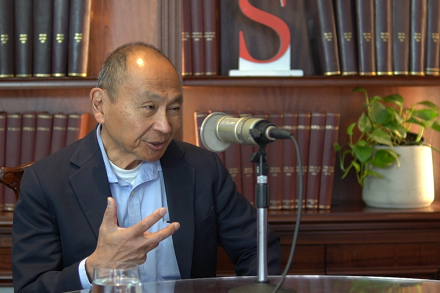
This week, Sam Leith spoke to Francis Fukuyama – the author of 'The End of History and the Last Man' and the newly released 'Liberalism and its Discontents' on the latest episode of The Book Club. You can watch their conversation below, listen to it here or read this transcript. The conversation has been edited for length and clarity. https://www.youtube.com/watch?v=btOHGuzdDVY   Sam Leith: Liberal is a word that means something very different in Tennessee than it does in Muswell Hill. What exactly are the parameters of what you call classical liberalism? Francis Fukuyama: It does have a very different meaning in the United States than it does in Europe. My definition of it is closer to the European one.

When victimhood is a game, everyone loses

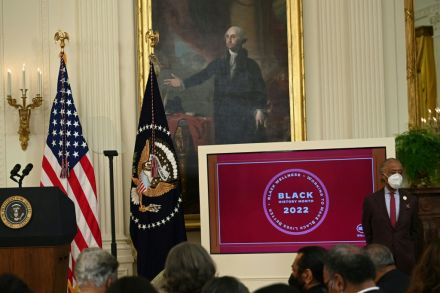
Black History Month is now over, and we’ve moved on to Women’s History Month. In April, we’ll get the best of both worlds, with Black Women’s History Month. May will be Jewish-American Heritage Month, and then in June the nation will enjoy a blowout celebration of LGBT Pride Month, if the normalization (and commercialization) of the cause in recent years is any indication. The point of all of this is to serve as an annual national re-ratification of diversity, inclusivity and equity as America’s preeminent causes (and doctrines, as Spectator World editor Matt Purple has so perceptively assessed).

How to resist the age of grievance

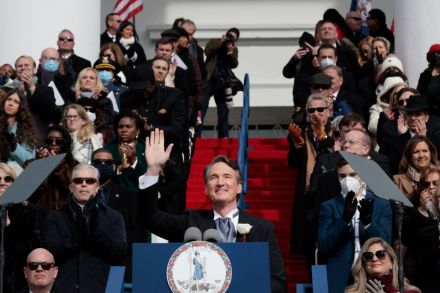
At a recent session of the Virginia House of Delegates, Don Scott, a Democrat, blasted Republicans for employing “the old southern strategy to use race as a wedge issue.” He was referring to Virginia governor Glenn Youngkin’s repudiation of Critical Race Theory in public school curricula during his recent gubernatorial campaign. Scott further warned Republicans not to use racially charged politics to “rally your base.” That’s a bit rich, given how much energy liberals expend accusing conservatives of racism to rally the base during, oh I don’t know, every election cycle. “The Republicans aim to reinstitute Jim Crow; the Republicans are stoking white supremacist movements; the Republicans want to whitewash American history.

youngkin grievance

A law school excommunicates a heretic

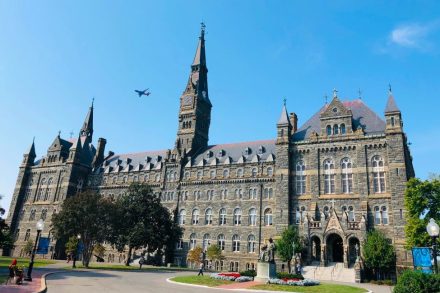
In Christianity, it’s referred to as “excommunication.” In Judaism, it’s known as “Herem.” On today’s law school campuses, where one misconstrued tweet can land you an ecclesiastical censure, it’s called “administrative leave.” Ilya Shapiro, senior lecturer and the executive director of the Georgetown Center for the Constitution at the university’s Law Center (GULC), is the latest casualty of the puritanical terror currently bedeviling higher education.

georgetown

Musical conservatives ought to love identity politics

From our UK edition

It’s 2022 and classical music is, again, dead. It’d be surprising if it wasn’t. In 2014 the New Yorker published a timeline by the industry analyst Andy Doe showing the precise chronology of the decline and fall. Ageing audiences in the 21st century, the gramophone in the 20th, the dangerous new technology of the pianoforte in the 1840s: all, in their time, were considered proof that the rot was terminal. Doe traced the root of the problem back to a papal bull in 1324, giving new potency to Charles Rosen’s remark that ‘the death of classical music is perhaps its oldest continuing tradition’. Anyway, the fatal blow this time is the Great Awokening.